Tag: dinosaurs

  • Happy Misfortune

    Why do some derive pleasure from some other’s misfortune, a strange joy often described as schadenfreude? The English version is epicaricacy. Now there’s a good word, suggesting epic caricature. A form of sadism, maybe. It’s not one of the seven deadly sins, though it could be related to wrath or envy. Or moral desert.

    Is it a weakness not to feel happy at a bad person’s misfortune? Is it impossible for a bad person to experience misfortune? Is misfortune a precursor to happiness? Can we even recognize true misfortune? What appears to be divine retribution may turn out to be a blessing in disguise. Likewise, do we know luck when we find it? Trina wins a lottery in Frank Norris’s novel “McTeague.” She ends up sleeping on the coins, literally, a bed of coins.

    The blessing in disguise is of course impossible to know. We can’t know what does not happen, only imagine it. But we’re good at imagining things. And our predispositions and assumptions often make no sense. We don’t believe in God, but we think people get what they deserve. We stick to the belief that good deeds are rewarded while bad acts get punished even as the headlines are proof of an alternative reality. Pride, greed, and envy are well-dressed floats in our celebration parades.

    We scan the headlines for signs of redress: the writer whose best seller is found to be plagiarized; the preacher who kept a mistress; the scholar who misspells, mispronounces, misses tenure; the sports hero hooked on drugs; the politician prosecuted. But the schadenfreude feelings these misfortunes stir up are no substitute for kindness and humility. What we seem really to be looking for is vengeance. But our code of disbelief has already struck down any possibility of such a judge.

    We are given then to randoms. We don’t know why things happen the way they do. And no event seems final. The so-called extinction of the dinosaurs is belied by the hummingbird and crocodile. I’ve been thinking of the dinosaurs recently, the ones we once thought now fill the gas tanks of our cars, but that’s a myth. Life doesn’t pass so much as alter – allegro non troppo: fast, but not so fast we can’t see or feel it go; and for the most part happy, though not permeating or permanently so. In any case, and as Slavoj Zizek points out in his segment of the Astra Taylor film “Examined Life,” the catastrophe of one species may be the good fortune of another.

    Is happy misfortune a universal truth, like the constant speed of light or theories of relativity? In the absence of proof of life elsewhere in the universe, is life on Earth a happy misfortune? Or is life elsewhere already over, ended, and not so happily? And would we feel a sense of schadenfreude to find out?
  • Lugubrious Fog

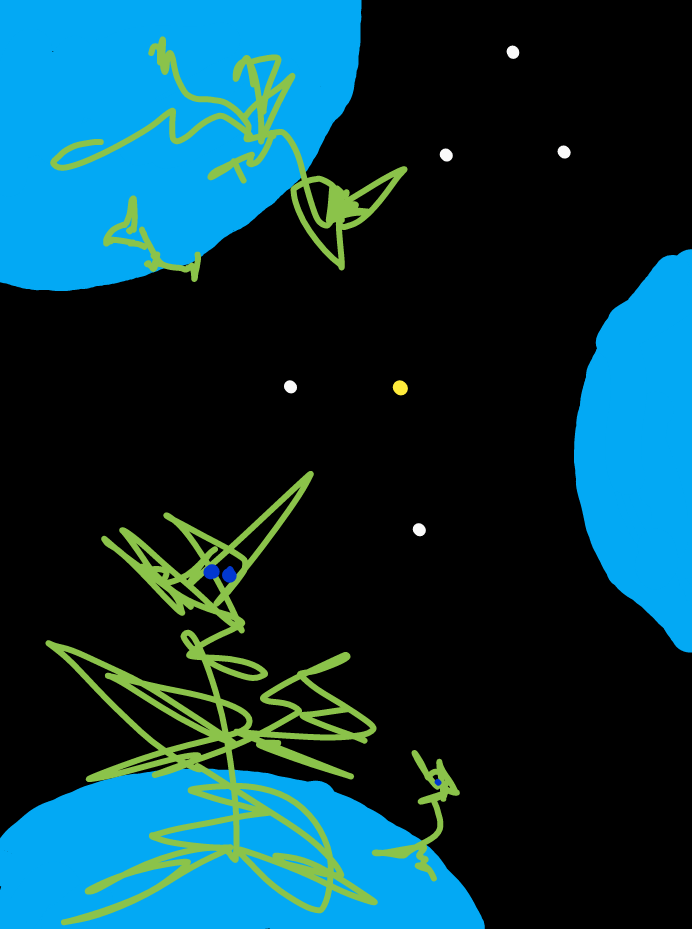
    Lugubrious etymologically descends from the dinosaurs in “Allegro Non Troppo” (1976) when the great reptilian gargantuans gentle and armored alike move south ahead of the ice and melt into tar. In Bach fugue file they march.

    I was sitting in bed four nights ago typing this, under a pile of covers, plus fully clothed, wearing two pairs of pants, three shirts, a sweater, a vest, a wool watch cap, and a pair of wool socks. It was 12 degrees Fahrenheit outside, windchill below zero. The house had lost power eight hours ago, years ago, the vicious east winds having blown down enough trees around town to put mist local folks in a freezer. But I gave up the typing in the cold. It was now 30 degrees inside the house. I pulled my hands inside the covers like a turtle for the long cold night and we decamped the wood igloo the next morning moving happily south to a warm house full of warm children.

    Frost’s promises to keep keep us sustained, moving, to keep warm. Yes, “The woods are lovely, dark and deep,” but what melancholy invites us in? Our horse still questions why we might stop here. The museums are also lovely, though well lit, still dark and deep, security guards meandering the lost empty halls, the paintings wired, the statues as still and as cold as ice sculptures, and they don’t allow horses in. Anyway, we prefer trees wandering in the wind full of birds and squirrels and lost kites and balls and flying saucers and climbing kids.

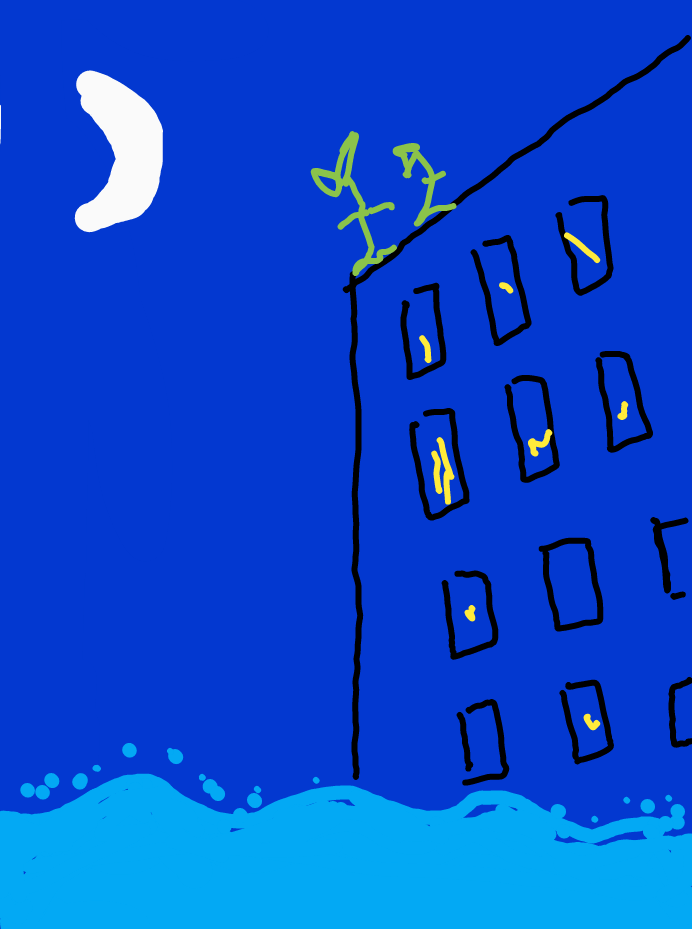
    Earlier that afternoon, I was in the backyard, preparing a place for Zoe, when I heard a rushing sound, a falling dinosaur come to roost, and heard the voice of the tall Sauroposeidon, a wind and wood splintering crash and crush, and looked north to my neighbor’s backyard to see the 100 foot 100-year-old east Pine limbs still shaking off the ice and snow where it had come to rest breaking through the ridge beam, the tree’s upper girth shattering off and coming to rest in the front yard.

    The frightfully freezing cold day moves slowly lugubriously on and we learn that pine tree but one of hundreds of trees falling all about town in the east wind in soaked soils across power lines, cars, streets, houses, parks and lots.

    Back home now, five days on, power restored, but morning after ice storm moving across last night, but still now, windless, half inch of ice coating tree limbs, cars, street, wires, the downed dinosaur leaning across the roof next door. Fog. The dickens of a cold fog. But should we lose power again the air is at least warmed up some, to just below freezing outside.

    A lugubrious fog has settled in, sifting down through the firs, down the street, over the houses and yards dotting the rotting old volcano.

  • The Symbolists

    The golden goblets
    the silver symbols
    crashed down on us
    brazen stars falling
    into a sea of flowers.

    The good news was
    there’d be no more
    dinosaurs.

    A few of us
    we survived
    underground
    with the littles.

    We dug tunnels
    to a comfort zone
    not exactly Paradise
    but warm and moist
    plenty of bugs to eat.

    And we drew signs
    on the walls waiting
    for the dust to clear
    above in the Dear
    One’s celestial home.

    We tilled the new land
    built boats and bridges
    peopled the prairies
    where ran the rivers
    down to the sea.

    In church we celebrated
    the symbols of the dinos
    and prayed they’d never
    return even their stories
    in time seemed surreal.