Tag: Course of Mirrors

  • A Googol of Rain

    Rain. Inside still reading “Traveling Sprinkler” while outside rain falls, sprinkles, showers. Yesterday briefly it rained hard, but mostly (and the forecast is now calling for ten more days of this) a light, light to moderate rain, periods of partial clouds amid dashes of partial sun. But it’s beautiful, the multi-blue-grey cruisers and destroyers, heavy-hefty frigates idling by, littoral patrol boats, submarines up in the sky. Loose Cs strolling by. Anyway, I reached page 160 in Nicholson Baker’s “Traveling Sprinkler,” beginning the day at page 92, so close to 70 pages for the rainy day. When I left you yesterday, I might have sounded a bit worked up about his getting the Best Buy guitar. And later, I even looked it up, and sure enough, there it was, for $40, at Best Buy, a Gibson acoustic, but out of stock.

    Back at the first paragraph of Chapter Four, Paul Chowder, the first person narrator of “Traveling Sprinkler,” opens with:

    “I’m out in the garden, Maud, and the very fine clouds have, without my noticing, moved across the moon and collected around it like the soft gray dust in the dryer. I want to scoop the gray clouds away and see the moon naked like a white hole in the sky again, but it isn’t going to happen” (29).

    Why does he call it dust, the dryer lint? Because dust sounds better than lint coming just before dryer, and the st gives off the flavor of the stuff.

    I took numerous breaks from “Traveling Sprinker” yesterday, one to play The New York Times “Spelling Bee” game with Susan. We’ve been playing it together nearly every day. We sit next to one another on the love seat and prop my tablet against a pillow between us and use our stylus pens to enter words, making mistakes as we go, talking about the words. Coco, for example, which we’ve seen before, not acceptable (“not in word list”), not to be confused with cacao or cocoa, both acceptable. Sometimes the rules seem a bit illogical. Yesterday, the middle letter was O, and the other six letters were G, L, A, I, C, and Z, the other letters arranged in a circle around the O, and I saw emerging like a photograph being developed, zoological, and so we started with the day’s only pangram.

    But we ended up getting stuck a few words away from a Queen Bee finish, found a couple more, but then couldn’t find our last word, a 6 letter GO word. We took a break to stretch and cut an apple into slices and came back to the couch lightheartedly determined to reach Queen Bee for the day, only one word away. In 179 Spelling Bee game-puzzles, we’ve reached Queen Bee only 19 times. I decided to ask AI (Artificial Intelligence) for some help, explaining to Susan the difference between cheating and getting some help. I asked Gemini, and this is the answer I got:

    “Let’s see… using only the letters G, O, L, Z, A, I, and C, and starting with GO, a six-letter word we can make is GOLGI.”

    Do you see the problem with that answer? So much for getting some help.

    I was reminded of a recent post over at Ashen’s blog, “Course of Mirrors.” The post is titled …Thoughts on AI and ChatGPT …, and in it, Ashen creatively questions the implications of Artificial Intelligence. She quotes a 70s poem by Wislawa Szymborska – here are a couple of lines: “The Tree of Understanding, dazzling straight and simple,/ sprouts by the spring called Now I Get It.” And I am reminded of the Richard Brautigan poem, “All Watched Over by Machines of Loving Grace.” Machines, who, like all parents, it would seem to be developing, make mistakes.

    I woke up this morning thinking of rain and W. Somerset Maugham’s short story titled “Rain.” The story is about restraint and strain and torrential tropical rain. But what I was thinking about was what we mean when we say, “It’s raining.” What’s the it? I wasn’t fully awake yet when I thought later I’d ask Gemini to explain. I just now asked, and here is Gemini’s answer:

    “Ah, that’s a fun little linguistic puzzle! The “it” in the sentence “It is raining” is what we call a dummy pronoun or an expletive pronoun.

    Think of it this way: the “it” doesn’t actually refer to any specific thing. It’s a grammatical placeholder that we use because English sentence structure generally requires a subject. In this case, there isn’t a real subject doing the raining. Rain is a weather phenomenon, not an action performed by a particular entity.

    So, the “it” is just there to make the sentence grammatically correct. We use similar dummy pronouns in other impersonal constructions, like:

    • It is cold outside.”
    • It seems like a good idea.”
    • It‘s important to be on time.”

    In these sentences, the “it” doesn’t point to anything concrete; it simply fills the subject slot.

    Isn’t language fascinating? We have these little grammatical tools that help our sentences flow even when there isn’t a literal subject performing an action.”

    Not a bad answer. I wasn’t expecting that bit of editorializing at the end. And now I’m thinking back to the short story “Rain”:

    “If he remonstrated or sought to put his meaning into an intelligible phrase, Walker would fly into a passion and cry: ‘What the hell do I care about grammar? That’s what I want to say and that’s how I want to say it.’”

    But back to yesterday. While I was chatting it up on my phone with Gemini, Susan said, “Look at the [tablet] screen.” And there it was, the page that appears when you’ve reached Queen Bee! Susan had come up with the missing word: Googol.
  • Shapers: Part Two of Ashen Venema’s Mythical Odyssey

    I’ve been reading Ashen Venema’s Course of Mirrors blog for over 10 years now, and in that time, she’s shown remarkable reselience and steadfastness, sharing essays, poetry, photography; recollections, insight, learning; humor, pathos, teaching – all the while working on a major work, which might become a trilogy (along the lines of Dune, Rings, Star Wars, Potter). The first part, a novel titled “Course of Mirrors: an Odyssey,” I reviewed in June 2017. Its sequel, titled “Shapers,” is now out. I purchased an ebook version via Amazon. A paperback version is also now available via Amazon US and other channels. Both books were published by Troubador.

    If you’re looking for a quick read, “Shapers” is not it. Its 360 pages are dense with encyclopedic-like entries that explain the far-out world readers must navigate. At the same time (though time is presented as protean), this new world won’t seem entirely foreign. For example, Chapter Two begins with a description of a fictional place and time that sounds uncomfortably familiar – uncomfortable if we go to fantasy to escape our real-time predicament:

    Rhonda, the larger of the Western Isles, used to be an empire competing with rival powers in seizing territory around the world. Indigenous people were uprooted and traded as slaves, until colonies were gradually granted independence. Over time, migrations ensued. People left ancestral homes to seek education and work in the lands of their conquerors, including Rhonda. Traditions mingled, sparking rapid industrial and technological growth along with a moral, intellectual and spiritual freedom that promised each individual unlimited potential.

    This sudden material expansion exhausted earth’s resources and caused rivers of waste flowing into oceans. Machines replaced hands, feet, eyes and even brains. Citizens with nothing meaningful to do were prone to emotional outbursts, filled prisons, or were over-medicated for stress. The ideal of freedom was like an inflated balloon. It burst into anarchy.

    Rhonda concluded that freedom was dangerous. By AD 2540, a correction project had long been in operation, employing the aid of a shunned people known for their unconventional approach to science, psychology and psychic phenomena – the Shapers. As long as they left politics alone, they were granted autonomy of research and funding. Their underground dwellings and laboratories circled around air-funnels lined with mirrors, through which sunlight was reflected down. Rhonda’s rationality project seemed a success. Emotionally unstable citizens were sent to the Shaper Portal for correction. They returned relaxed. The methods through which such miracles were achieved remained unquestioned, as long as they worked.

    Page 37

    Myth is a fictional story used to explain something real – an event, person, thing – even if the telling incorporates unreal (fantastical, imaginary, other-worldly) tools. The theme of “Shapers” explores the human existential crisis of individual freedom that entropically devolves into chaos or extinction, versus imprisonment in some structure of rule or servitude that leaves one arguably safe from existential dread but at the cost of one’s freedom. Where myth survives as something real, believed in, its explanation is simultaneous with the culture that creates it or evolves from it, its aims, its reality. One can’t see beyond one’s own mythical circumstance. Myth helps explain the errors of one’s way, should one go astray. Some contemporary myth, like the life stopping descriptors used in modern psychology, may seem to have the aim of self-actualization, but like most New Age approaches, simply attempt to justify one’s lifestyle – to oneself; the other doesn’t matter. Myth communicates using symbol, metaphor, and a great deal of hyperbole. We can read “Shapers” as myth, and explore symbols and structure, or we can go to it for entertainment and pleasure.

    Another characteristic, apart from myth, of the science fiction genre, is its tendency to waver between camp and seriousness, such that much if not all sci-fi is to so-called serious literature what the B movie is to film. In any writing, the verisimilitude of dialog quickly becomes problematic. If the setting is completely made up, how should the characters talk? How will people talk in the year 2540 – like they do today? Do people talk in paragraphs or in quips?

    “I like feeling secure and comfortable, it makes for peace,” Shakur said.

    “Pockets of peace, I like them too,” Oruba said. “I relax into habits, beliefs, attitudes, but all too easily fall asleep to the wavelength of universal guidance.”

    Shakur frowned. “I thought a calm mind maintains that wavelength.”

    “Not when creative intensity is lost, then the spiral of life falls flat and we’re stuck in a sluggish labyrinth of time, not in harmony with the ever-changing cosmos.”

    “Aren’t we one with the cosmos anyway?” Shakur asked.

    “Yes and no. There’s the yearning for the womblike feeling of oneness and safety, and there’s the resonance with forces that animate us. These forces make for eccentricity and difference, but when constrained for the sake of order and control, leaders become bloated with power. The more rigid the system, the more it imprisons people.”

    “I get it,” Shakur said, grinning. “Leo thought he was a god and now he’s a rat.”

    Oruba roared so suddenly, he dropped his plate of canapés. “He’s luckier than you imagine, he found love – he’s gone on a journey. He escaped the system.”

    Mesa was not amused. “I can see how Rhonda’s system is corrupt,” she said, “and change is necessary. But Armorica is not corrupt, its people are peace-loving.” She paused. “Maybe too much, I admit… we slowed change, and with it, time.”

    Forming a square with his fingers and thumbs through which he looked at his friends, Oruba said, “We observe through frames. We line up these fragments to create a composition.” He popped a quail’s egg into his mouth and chewed it slowly to relish its taste. “We continually shuffle and weave these fragments into new compositions of light. But for truly new visions to emerge we must suffer collisions. They tend to shift surfaces and expose the roots of our memory and experience. There you find the sap of life, from which spins the golden thread of intention and vision.”

    “I’ll shut up for now,” Shakur said, “but I will ask you the question again.” He made a sweeping gesture at the garden. “We had a collision here, and I’m digging towards Tilly’s vision of a rose garden.” Filling up glasses, he added, “A toast to celebrate our friendship! I’ve no right words for this, other than I’m going to miss you terribly!”

    Page 352

    How does one travel in time? But we all do it, are doing it now. The week or day passes quickly or slowly, we think, the longest day the longest suffering. But to shift from one time to another is the provenance of sci-fi. Why time travel? To warn, to fix, to meddle? Can we look forward to a future of gourmet meals as we discuss modes of reality? The scientists seem in charge, in more ways than one. And what of the trinity? If God is three for the price of one, do we also, made in his image and likeness, share our individual reality with two others who also claim to be us? We lived once, why not again? Is once any less mysterious than twice?

    Ashen Venema is both a scientist and an artist. In “Shapers,” we find her bringing the two perspectives together to view our contemporary predicament. She asks the question, What will happen given our current trajectory? The narrative of “Shapers” includes third-person omniscient and first-person diary. The technique adds diversity and interest to the writing. There are other aids provided to help the reader navigate and keep place, including glossary and cast of characters and other front matter, and 29 numbered chapters, each broken into several titled parts.

    Of course, any book today may quickly pass unnoticed. Which ones should we read? Without ad campaigns, movie deals, marketing ploys – alas – the challenges become surreal. But a book review might help. If you’ve read this far into this one, your next move should be to get Ashen’s “Shapers” and join the fun. It might be noted that English is not Ashen’s native language. This is a strength for someone traveling to distant worlds and conversing with diverse cultures. And she is a scientist only if psychology is a science. Psychology experiments with and explores inner worlds; the other scientists explore and tinker with outer worlds; the artist brings the two together in a single view. All of which, in a recipe of fiction, makes for good reading.

  • There’s No Place Like Home

    “Homeless in Space” brought a thoughtful, if aphoristic, response from Ashen, heroic reader and writer over at Course of Mirrors:

    “Your post sparked a thought. Some people don’t experience their early home as a safe place to root and grow. Frustrated expectations may foster a sometimes unconscious element of resistance, not to fit in, as it were, like… being homed can mean being owned
    being holed can mean being controlled
    being placed can mean being traced
    being named can mean being framed or tamed”

    Thoughts, too, of home, whatever the experience, I was reminded of the end of the film The Wizard of Oz, when the good witch Glinda tells Dorothy she’s always had the capability of going home, and tells her to tap her heels together three times while saying: “There’s no place like home.”

    Indeed, there is no place, existentially speaking, like home. Home is an idea, often reduced to an ideology, that doesn’t necessarily match what’s really happening (growing equity, capital). Also I was reminded of the song from “Inventories,” new book (from the serial novel started here last July as a pandemic quarantine exercise), in which the word home appears 38 times:

    “Back Home Again”
    What I know about love,
    I wrote on a postage stamp,
    mailed myself halfway to the moon.
    I’m in stardust singing I do, I do, adieu,
    and I can’t go home again.
    Born in the back of a beach bum shack,
    I sailed the seven seas.
    Never made it back home again.
    Adieu, adieu. You can’t go home again.
    Born in a corral of a rodeo,
    off a road they call Route 66.
    Between the cowboy and the clown she broke free.
    Goodbye, goodbye. She won’t be back again.
    The moral of this story, the point of this tale,
    when you leave home, you can’t go back again,
    because you won’t be there when you arrive.
    Goodbye, my love, goodbye my love, goodbye.
    And it’s home again, I want to go back to you,
    see my family and my old friends too,
    but I can’t go home again.
    Goodbye, my love, goodbye my love, adieu.

    “Inventories” is a journey book about a semi-god (a type, allegorical, character, an oligarch on the run) who wants out (to escape his life of privilege and its human costs), to leave home, only to find himself engaged in any number of other homes along his way.

    There’s no place like home, and no way to escape.

  • On a Clear Day, You Can See England

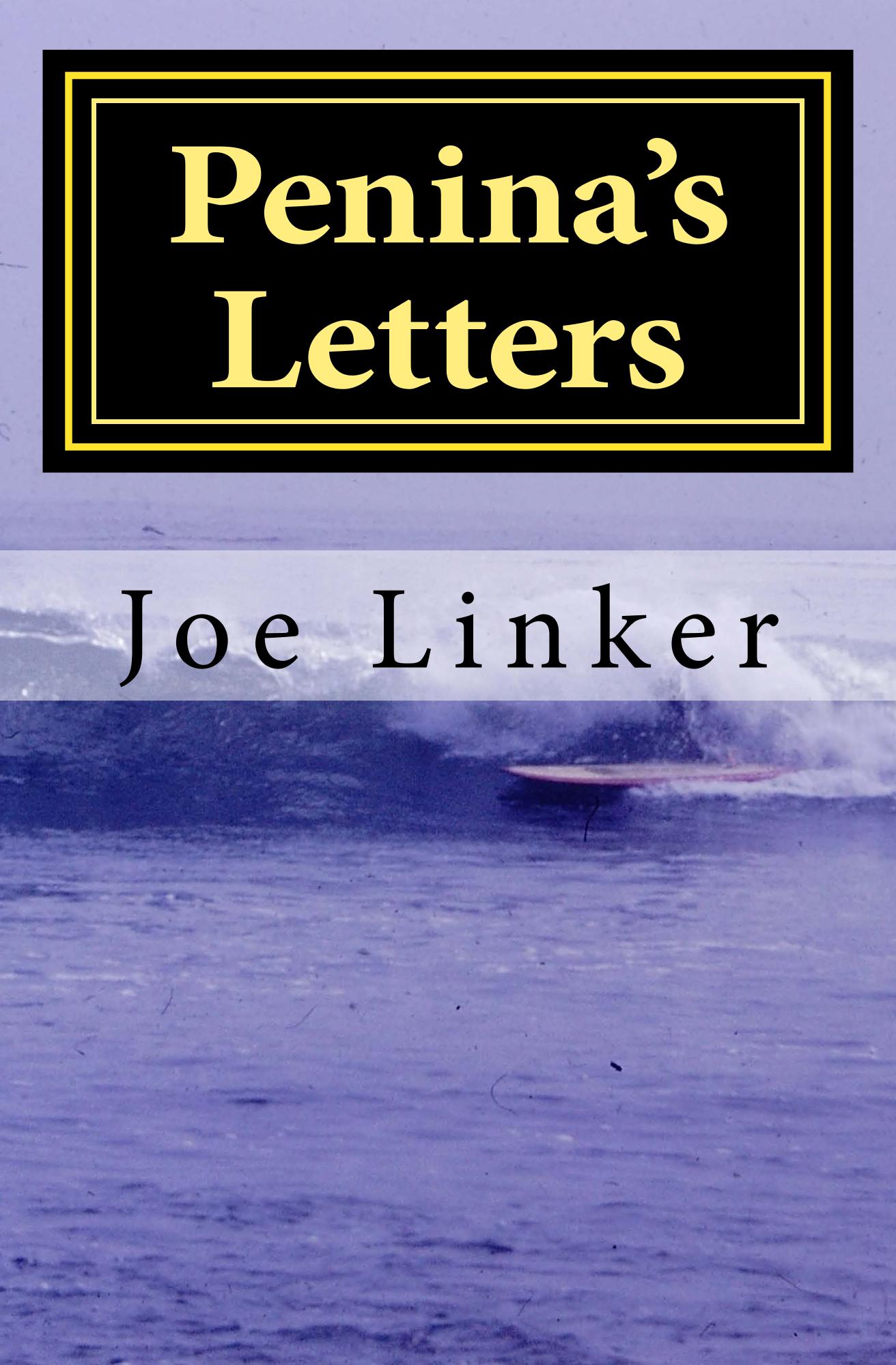
    Over at Course of Mirrors, Ashen has posted a review of my novel “Penina’s Letters.”

    Ashen’s is a very clear, insightful, reading.

    Please swim on over and check it out!

    Peninas_Letters_Cover_for_Kindle


  • On Angels

    A post this past week over at Course of Mirrors prompted me to brush up on Angels. I have not read the book mentioned in the post, “The Wonderful Visit,” by H. G. Wells, but according to Ashen, it’s about an angel shot from the sky by a hunter all atwitter after a strange bird has been sighted in the area. Imagine shooting an angel. I’m going to have to read Wells’s “The Wonderful Visit.” Ashen says it followed “The Time Machine,” yet I don’t even recall ever hearing of it, let alone reading it. Well, Wells was a super-prolific writer, an angel of a higher order. Part of Ashen’s theme, I think, is that we have come to think of angels as cute, cuddly Cupids, innocuous Hallmark Card versions of a much more potent and potentially dangerous entity.

    Was Rainer Maria Rilke a blogger? In “The First Elegy,” he wonders if any angel might hear him, “wenn ich schriee,” (“if I cried”). But various translators (perusing the Web) have given, “if I cried out” (but not William Gass, whose version I want to read). My copy of the “Duino Elegies” (The Norton Library, N155, 1963) shows the German next to the English, and was translated by J. B. Leishman and Stephen Spender. They give, “Who, if I cried, would hear me among the angelic orders,” and in their introduction they explain that Rilke was visiting a friend, a Princess Marie, at “Schloss Duino,” a castle near Trieste. He’d received a disturbing letter, a “business letter,” and went out onto a castle “bastion,” for a walk, and “a voice had called to him” with what became the first line of the Duino Elegies. According to the introduction, there was a “roaring wind” blowing around the castle. No one would hear him if he cried, or if he cried out. Yet surely an angel can hear through the noise.

    Still, to “cry out” suggests some danger or risk at hand, some fear escaping in a scream of alarm. To simply “cry” does not necessarily suggest a yell, and might not mean a sound at all, but to cry tears, which can be done quietly. The German word Rilke used is “schriee,” which seems in German a form of yell, scream, and cry. Yet, it may not matter, for Rilke decides, in “The First Elegy,” to “keep down my heart.” He does not cry or cry out. For if he did, and an angel did hear him, and suddenly embraced him, he would disappear into the Angel’s super human existence. Yet, the angel “disdains to destroy us.” The angels ignore us, our cries, our crying, our predicament. Yet the “Elegies” might be Rilke’s cry, or his crying.

    Here’s the opening of “The First Elegy,” by Rainer Maria Rilke, translated by Leishman and Spender:

    “Who, if I cried, would hear me among the angelic
    orders? And even if one of them suddenly
    pressed me against his heart, I should fade in the strength of his
    stronger existence. For Beauty’s nothing
    but beginning of Terror we’re still just able to bear,
    and why we adore it so is because it serenely
    disdains to destroy us. Each single angel is terrible.”

    I posted my own version in a comment to Ashen’s post, thinking of updating the Rilke to a contemporary setting, keeping the irony. I’ve added to it just a bit here:

    I rant in a memo to an Angel
    perched high on a wire
    of flow chart bureaucracy,
    but her beauty ignores me;
    it’s just as well,
    for the beauty of her instant reply
    would replace me.
    Every memo from the angel is terrible.

    Rilke seems to be suggesting that an angel, compared to the human, is like a light bulb to the moth. The moth is drawn to the heat and light by some desire to fly out of the shadows of its nightly existence, but is consumed by the giant bulb. And Rilke calls this being consumed by the object of one’s desire, “beauty,” which is why he says “terrible beauty,” which is why the angel is terrifying. Yet Rilke also says the angel “disdains to destroy us.” Apparently, we can only just bounce off the light bulb. We can’t penetrate it, and its light does not embrace or consume us. We cannot fully embrace beauty, which is a terrible predicament.

    Joseph Campbell has an interesting discussion of angels, and of Satan. Satan was thrown into hell, Campbell reminds us in “The Power of Myth,” but why? What did he do wrong? Campbell suggests that God wanted the angels to serve his new creation, man, but that Satan so loved God that he refused to bow to any other. He was thrown into hell for not bowing to man. Thus man had bagged his first angel.

    “The Second Elegy” begins with a line from the first. Rilke’s not giving up on his angels:

    “Every Angel is terrible. Still, though, alas!
    I invoke you, almost deadly birds of the soul,
    knowing what you are.”