Tag: Comics

  • The New Yorker Turns 100

    The New Yorker is celebrating this month its 100th anniversary. I discovered the magazine in its mid-40’s, visiting Susan’s aunt Joan at her beach studio-pad a door from the boardwalk in Venice in 1969. She gave me her discards. I started with the cartoons, of course, then read the short stories, always one or two, which back then followed the Talk of the Town section. I read all the small print stuff about the goings-on in New York, where I’d never been, never wanted to go. I thought short stories more interesting writing, but I soon grew to enjoy the short pieces in the Talk of the Town section. And I started reading the non-fiction pieces, the articles in those days on average longer than today’s, sometimes much longer, spanning two or three issues.

    The February 1, 1969 issue included a story by Linda Grace Hoyer, the mother of the prolific writer frequently found in The New Yorker over the years, John Updike. The February 21, 1970 anniversary issue included a short story in epistolary form by the editor and baseball writer Roger Angell, and a poem by Roger’s stepfather, E. B. White, titled “In Charlie’s Bar,” about a woman who was refused service at a bar in England because what she was wearing that visit happened to reveal her belly button. There’s also a story by Donald Barthelme, tilted “Brain Damage.” That I can’t really say that I now remember any of those pieces precisely probably says more about my brain than the keeping power of the writing.

    This year I came close to letting my subscription lapse. Maybe it’s my lapsing attitude, another sign of too many winters in a row of discontent, living away from the ocean. I’ve always liked The New Yorker because it is a general interest magazine, witty but sincere and without specialty or academic brouhaha. But as Jill Lepore puts it in her article titled “War of Words” in the 100th anniversary issue:

    “The stock criticism of Brown [Tina Brown, former editor from 1992 who shortened articles, among other at the time some thought controversial changes. David Remnick took over as editor in 1998] is that she made everything about celebrity; the stock criticism of Remnick is that he made everything about politics. The same could be said of America itself, across those years.”

    That everything is about any one thing brings an emphasis that goes against the grain of general interest. And what will happen to the editorial stance now that celebrity and politics have merged into one? That’s what I’m not sure I want to see. But while there have been a few ownership and editorial changes over the years, changes in form and content have not been deep. What’s changed is out on the street. But maybe that’s not so new either. Let’s take a look.

    From the Notes and Comment section of the February 28, 1970 issue (and if I hadn’t just told you it’s from 1970, you might have thought this was today):

    “The government’s campaign against the press, which has proceeded swiftly from threats of action to action, in the form of subpoenas of reporters’ notes and tapes and films, has already heavily damaged the press’s access to the news.”

    Surely someone would say something. After all, it was still almost the 60’s. But in the same piece we get this:

    “The Democrats complete silence on those issues throughout the program [a Democrat television special titled State of the Union: a Democratic view – a response to Nixon’s State of the Union address] struck us as an extreme instance of the more general avoidance of controversial issues which has been noticeable among politicians and on the networks and in the press.”

    Certainly not much seems to have changed from Andy Logan’s comment in the Around City Hall section of the same issue. Writing about the state’s budget hearings, he says:

    “According to one theory of public life, the winning politician is not the man who spends his time gathering civic credits to himself but the operator who can most often persuade the public that whatever went wrong was somebody else’s fault.”

    A valuable benefit of subscription is access to The New Yorker archive. I found myself, in solo celebration of its 100th Anniversary, browsing through past issues from the years I first started reading the magazine. In that February 28, 1970 issue, for example, I perused the Nightlife section, wondering where I might have gone had I been in New York at the time. I could have sat in at The Bitter End, where “Folks, both long- and short-haired, sit on wooden benches and sip coffee.” I could have eaten, copiously, no less, at Bradley’s, “a wood-paneled bar and rest where people come, and frequently return, to sit and talk and copiously dine.” Not only that, but I could have listened to Bobby Timmons play electric piano until three in the morning. And if that wasn’t enough music, I could have at three headed over to the Red Onion and heard “Two banjos and a piano until four.” And that went on every night. Did people never sleep in New York? There was a lot to choose from: “music, bar, dinner, dancing, discos, cabarets.” At the movies (still called Motion Pictures in one section of the magazine), I could have seen, drawing now from the alphabetical listing: Belle de Jour, The Bible, Bob and Carol and Ted and Alice, or Butch Cassidy and the Sundance Kid.

    I seldom read The New Yorker fiction anymore, and some of the poems I don’t make it out of the first stanza or two. I’ve grown prosaic maybe in my dotage. And if you think the point of a cartoon is to make you laugh, you might be in for a disappointment.

    One measure of good writing is whether or not it can be read comfortably and naturally aloud. This week, I’ve been reading aloud to Susan from J. D. Salinger’s Nine Stories. In Salinger’s story titled For Esme – with Love and Squalor (from the April 8, 1950 issue, not April 9 as Wiki has it) about a US soldier in WWII, the narrator meets a young English girl in a Devon tearoom:

    “May I inquire how you were employed before entering the Army?” Esme asked me.
    I said I hadn’t been employed at all, that I’d only been out of college a year but that I liked to think of myself as a professional short-story writer.
    She nodded politely. “Published?” she asked.
    It was a familiar but always touchy question, and one that I didn’t answer just one, two, three. I started to explain how most editors in America were a bunch –
    “My father wrote beautifully,” Esme interrupted. “I’m saving a number of his letters for posterity.”

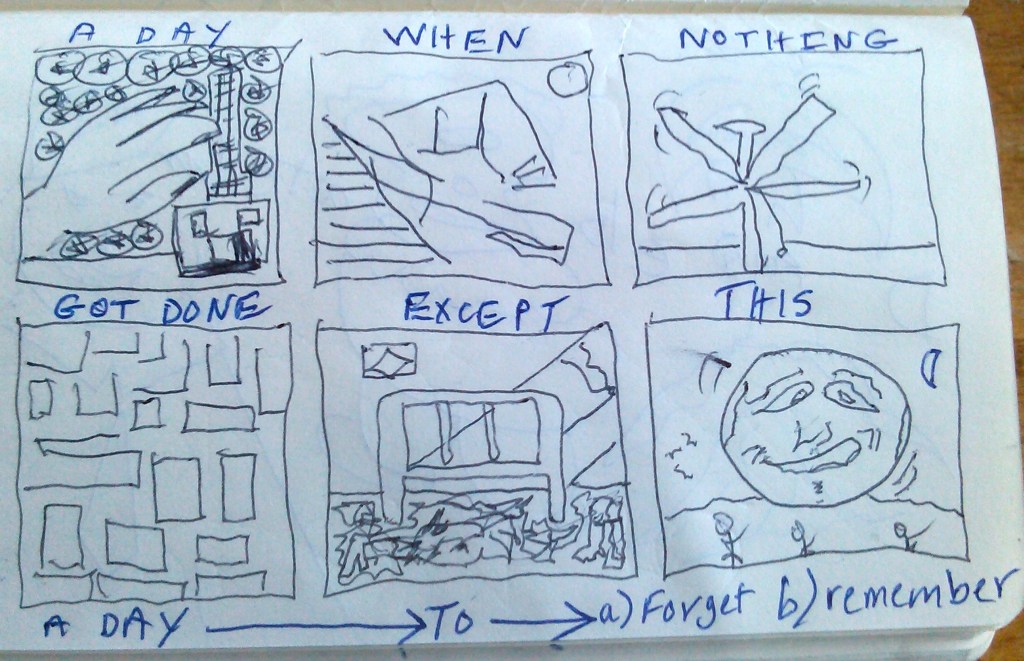
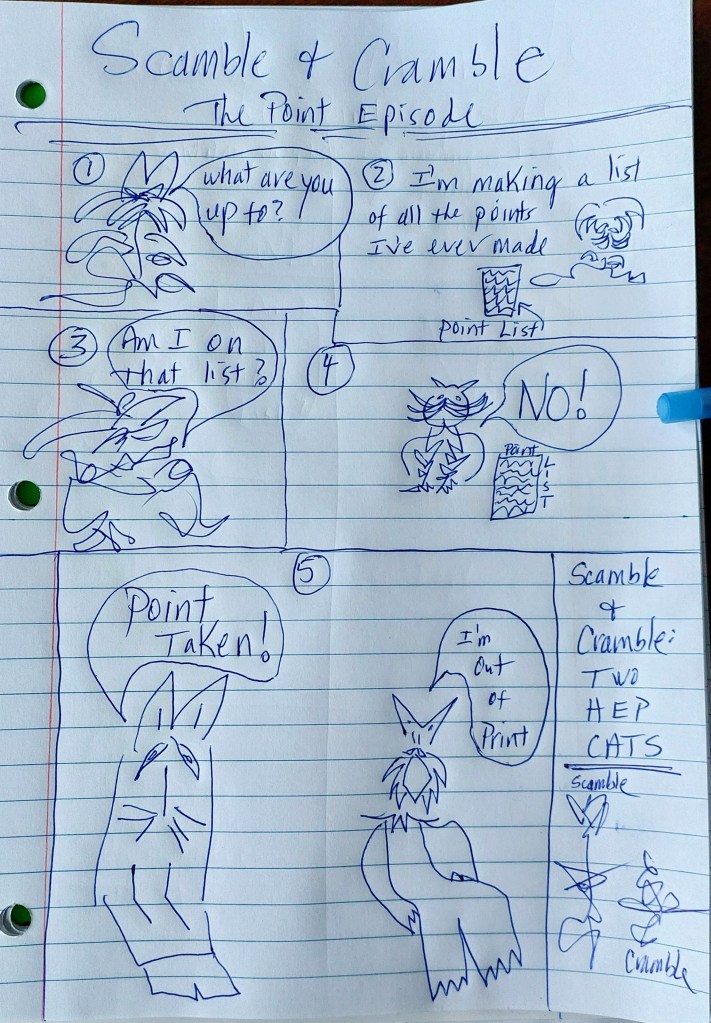
    This post being about The New Yorker, and The New Yorker being known for its cartoons, I thought I’d end with a cartoon:

  • As You Were

    any how should be as free as be
    without some conditional mood
    what is not what it is all about
    where from barely relevant and
    who remains surely a mystery

    when now knocks but no one is
    there not even a cat or a mouse
    a game afoot no chance of fame
    a bluebird flaps by like a blouse
    in a backyard clothesline breeze

    this is for those who comprehend
    without understanding they read
    to the end do not think themes
    building blocks or memes at all
    they are as they should be free


  • Bananas

    When Samuel Becket wrote “Krapp’s Last Tape” (1958), could he have picked any fruit other than the banana for Krapp to cram in his pocket? Were bananas a fave in Paris at the time? Did Beckett eat daily bananas? Surely at Somewhere U there’s a thesis on this. By the time of Krapp’s writing, WWII rations had ended in Europe, the new concern, regarding bananas, tariffs and costs. How much would one pay for a banana? What is it about the banana that inspires both commodious jokes and serious art as well as market speculation and spectacle?

    Or all of the above. Reference the recent banana art installation that apparently sold at auction for $6.2 million. The banana is taped to the wall with duck tape. (Where’s Andy Warhol when you need him?) The duck taped to wall banana used the traditional gray colored duck tape. But duck tape now comes in various colors, and we would have picked a bright blue, which might suggest, mixing with the yellow, green, the color of money, which is what it’s all about, though at the same time, ok, it might say something about art, or art collecting, anyway.

    The duck taped banana, titled “Comedian,” is acoustic, unlike the “electrical banana” in Donovan’s 1966 song titled “Mellow Yellow.” We won’t go into the suggestive meaning behind the banana electric, but it is easily looked up. In any case, an electric neon lit banana might have fetched even more than the $6.2 MM, with a wire dangling down to an outlet, perhaps requiring one or two additional strips of tape to secure it to the wall.

    No telling what Beckett might have thought of all the current brouhaha over the banana. But “Krapp’s Last Tape” does contain both banana and tapes, at last count at least three bananas, all eaten, the peels discarded on the stage.

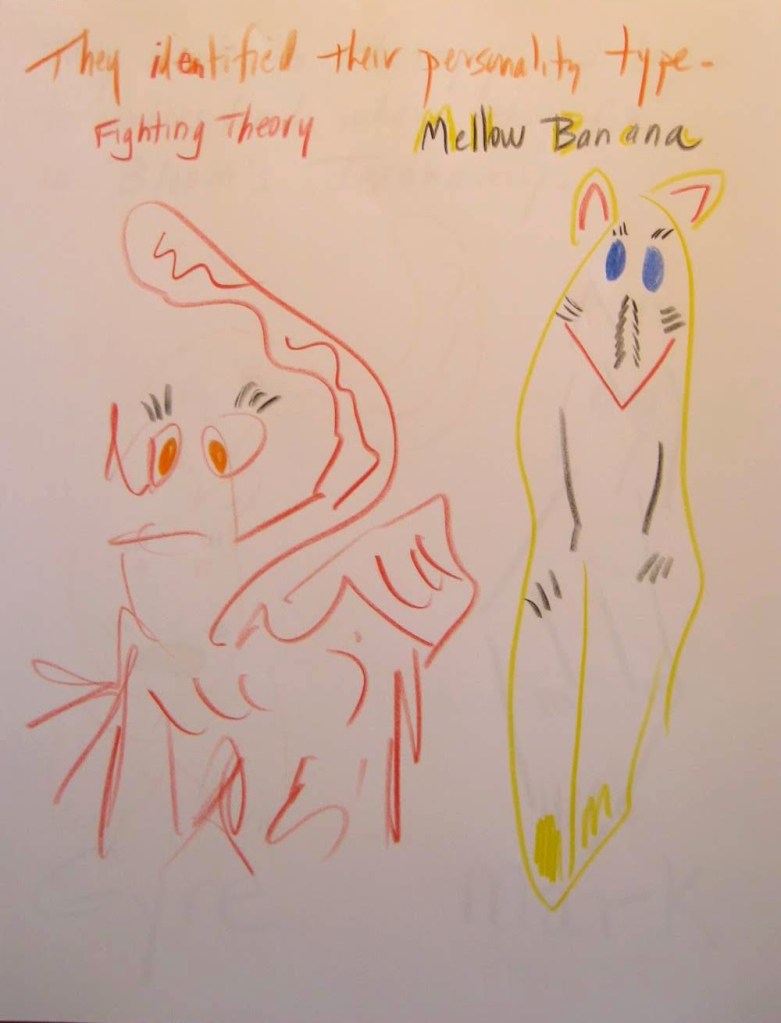
    Speaking of bananas, below is a page from a draft sequel to “Scamble & Cramble: Two Hep Cats and Other Tall Tales.”

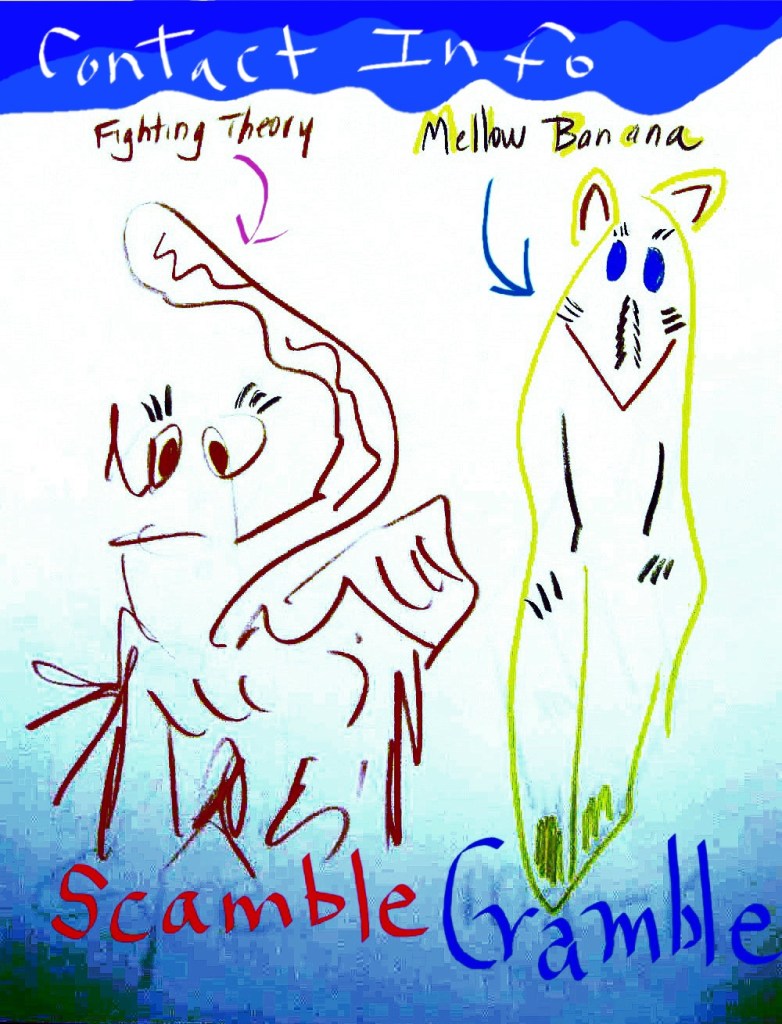
    And below, a newer draft, in which the cats get hep to social media:

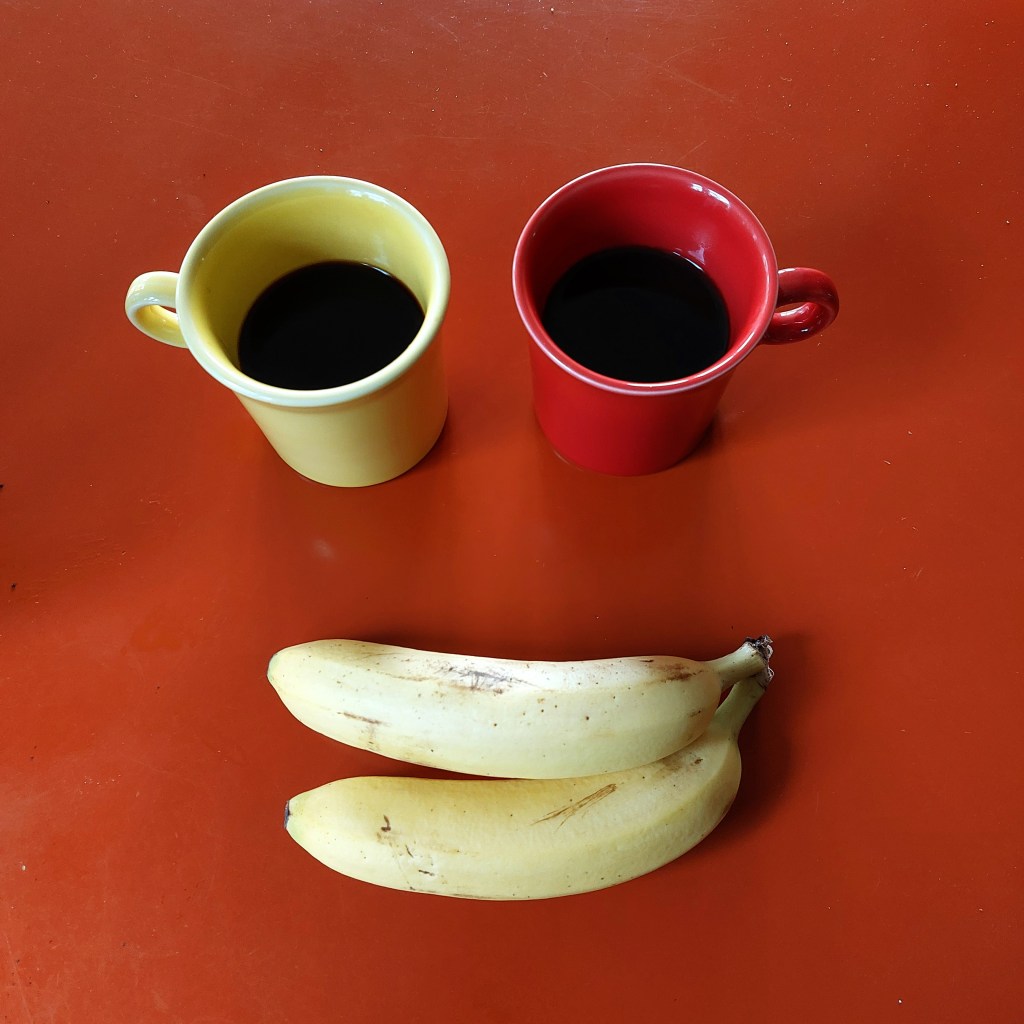
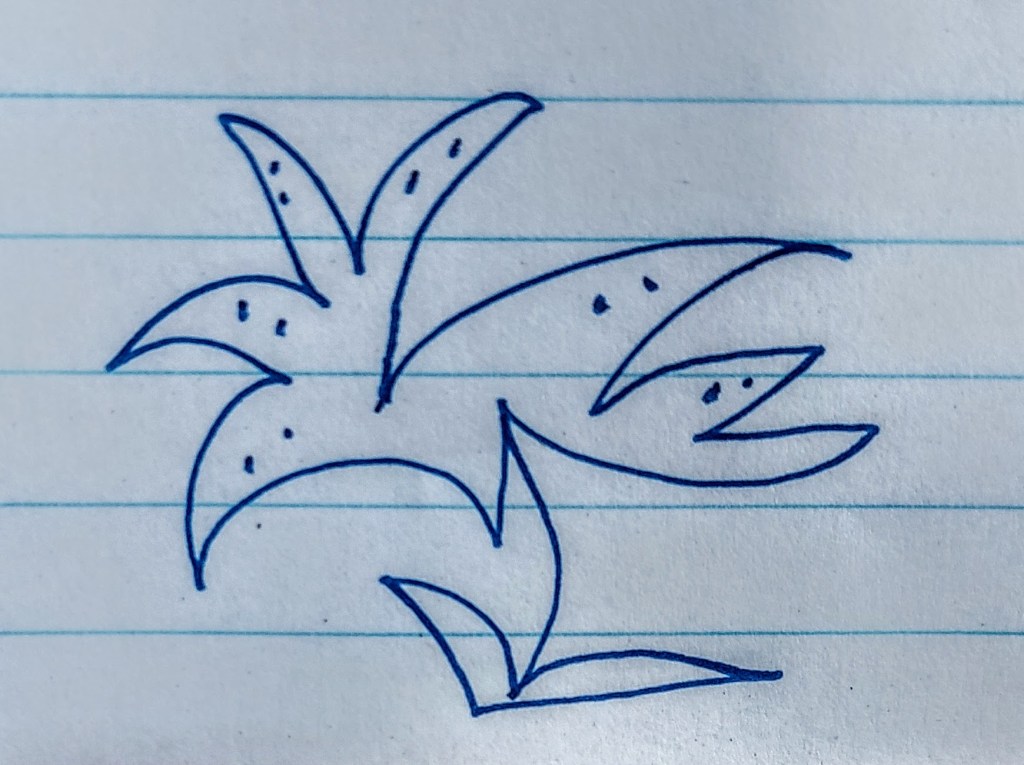
    And this morning, bananas and coffees with Susan:
  • Outtakes

    Once upon a space.

    These are souls that try men’s times.

    Give me liberty or a couple pints after close.

    To see or not to see, to knock to hear
    all the rot and rub, to touch and shock,
    stop here not there in such nonesuch.

    Let’s stay in tonight then, you and I,
    blue light spread against the walls,
    and stream Seinfeld reruns.

    Of Engelond, to wander wonder they wende,
    twas the 60’s and bell-bottoms they wore.

    To define behavior is to limit freedom.
    Give me a clone.

    Through the fence he watched the absurd land usurpers playing golf, and when one of them yelled Caddie, it set off a chain link reaction as he was bombarded with memory particles.

    You are all a fond generation.

    The overfed Buck came up to shave and ruck a go at Catsbody.

    The day was blue
    the guitar green
    he tossed all he’d seen
    of words for notes.

    And they all loved hoppily ever before.

     Sources:
    1. Folk Tales
    2. Thomas Paine: “The American Crisis”
    3. Patrick Henry, speech attribution
    4. Shakespeare, Hamlet
    5. T. S. Eliot, The Love Song of J. Alfred Prufrock
    6. Chaucer, The Canterbury Tales
    7. Oscar Wilde, The Picture of Dorian Gray
    8. William Faulkner, The Sound and the Fury
    9. Ernest Hemingway, A Moveable Feast
    10. James Joyce, Ulysses
    11. Wallace Stevens, The Man with the Blue Guitar
    12. Folk Tales
  • World Not Serious

    Following Baseball, one finds a respite from the vicissitudes of world calamity. Then comes the 2024 World Series, and the 5th Inning of Game 5, when the wheels fall off the Yankee machine. In a sense, that inning was a baseball cartoon, three errors by the Yankee fielders, a fourth error if failing to cover first base on a right-side infield grounder is counted, and the Dodgers catch up from a no hit 5 to 0 deficit to tie the score 5 to 5. The Yankees then go ahead 6 to 5 in the 6th, but the Dodgers go ahead 7 to 6 in the 8th, which they hold for the win, taking another storied series 4 games to 1.

    “Back, back, to the wall!…and it’s gone! A home run!”
    The New York Yankees baseball team is a big book of stories, every year a new chapter.
    5th Inning, Game 5: The wheels fall off the Yankee Machine
    The Los Angeles Dodgers, since 1958, first season after moving out West from Brooklyn – along with millions of others from around the States, pouring into Gold Rush Country.
    Celebration Parade, Downtown Los Angeles
  • On the End of the Road with Rimbaud

    It wasn’t enough for Rimbaud to disassociate himself from his society, which he found decadent, hypocritical, false – in a word, selfish. He would also derange his language and senses, and when he was finished, or abandoned, that writing life project, but which would survive to influence so many still working on literature, he moved on and rejected his and all other writing:

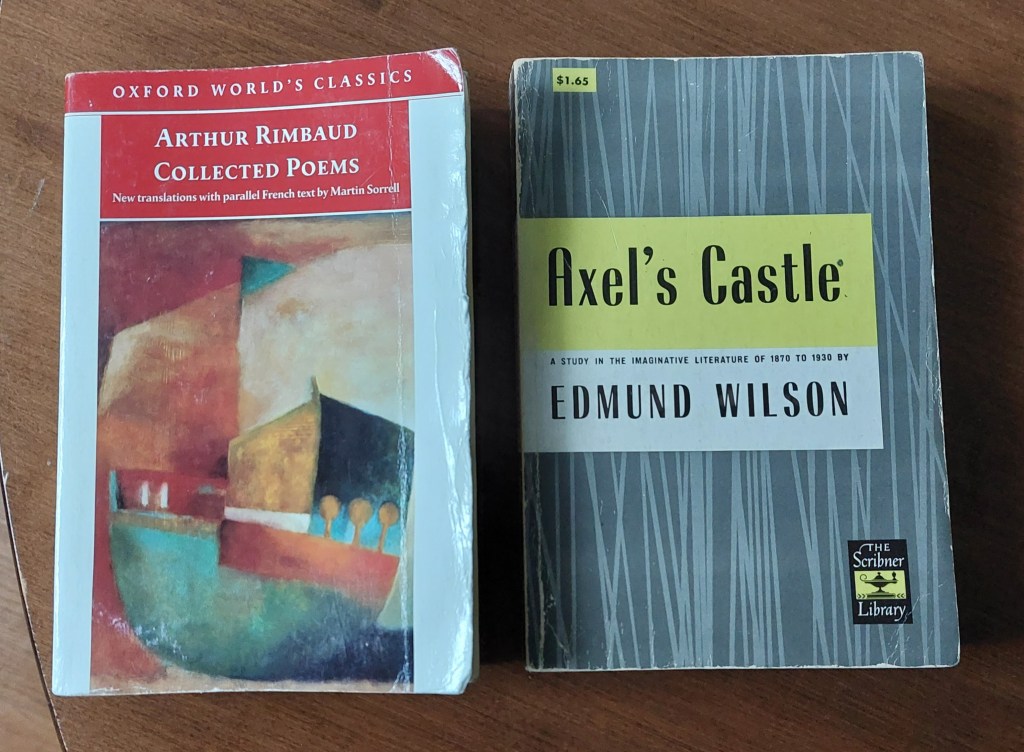
    “When a friend asks him [Rimbaud] whether he is writing nowadays, he replies with annoyance and scorn: ‘I don’t do anything with that anymore’; and when, on the eve of his departure the next spring, he hears one of his friends congratulate another on having just bought some Lemerre editions – Lemerre had been the publisher of the Parnassians – he bursts out: ‘That’s a lot of money wasted. It’s absolutely idiotic to buy books – and especially books like that. You’ve got a ball between your shoulders that ought to take the place of books. When you put books on your shelves, the only thing they do is cover up the leprosies of the old walls’” (Wilson, 279).

    For Edmund Wilson, the question of lighting out for the territory ahead of the rest meant reading and sitting down to his journal. (What might Wilson have done with a blog?) He quotes Yeats, from his “Vision”:

    “It is possible that the ever increasing separation from the community as a whole of the cultivated classes, their increasing certainty, and that falling in two of the human mind which I have seen in certain works of art is preparation….It will be concrete in expression, establish itself by immediate experience, seek no general agreement, make little of God or any exterior unity, and it will call that good which a man can contemplate himself as doing always and no other doing at all….Men will no longer separate the idea of God from that of human genius, human productivity in all its forms” (291-292).

    The problem then, for Wilson, is indeed what to do:

    “Nor can we keep ourselves up very long at home by any of the current substitutes for Rimbaud’s solution – by occupying ourselves exclusively with prize-fighters or with thugs or by simply remaining drunk or making love all the time….The question begins to press us again as to whether it is possible to make a practical success of human society, and whether, if we continue to fail, a few masterpieces, however profound or noble, will be able to make life worth living even for the few people in a position to enjoy them” (293).

    Quotes from “Axel’s Castle: A Study in the Imaginative Literature of 1870 to 1930,” by Edmund Wilson. Scribner Library, 1931, 1959.

  • Slide Show: How They Spent Their Summer Vacations

  • Independence Day Eyeglasses

    We got a new pair of eyeglasses. Things look different now. Epiphanic frames. There’s seldom a guarantee others will see things the same way we do. Was he safe or out sliding into second base? Nine replays from nine different angles in slow motion and still the umpires are not certain. And we don’t see things the way we used to. The way we were. The light ever changing, en plein air an open challenge. Take away the mirrors!

    We were using non-prescription readers. Look over the top rim to see distance. The readers are inexpensive, and we had several pairs, easy to grab here or there, easily lost, broken, discarded, get a new pair, be found using someone else’s pair. The new eyeglasses are prescription, bifocal, a bit spendy, not to be lost, scratched, misplaced, stepped on.

    We used the readers for close up work: Chromebook, phone life, ingredients, books and magazines and sheet music, pics, shaving, mail call, is that a bug? Habit forming, may have used them when we didn’t really have to. Convenient.

    The new spectacles will take some getting used to. Evolution. Natural selection. We once tried to argue the impressionists painted what they saw – their vision blurred, eyesight not so good; someone said they painted from a well worked out theory. We still think theory comes later, what keeps the academics employed, the art appreciationists. Artists paint what they see. They don’t all see the same thing in the same way, and even if they do, are not trying to paint a photograph, but what they see feels like, the experience of the changing light. If you look closely at a Monet, you might see a slide show in progress. Might need a special pair of glasses.

    So we are now dependent on glasses. They won’t change the way we dream:

    “And I dreamed I was flying
    and high above my eyes
    could clearly see
    the Statue of Liberty
    sailing away to sea”

    Paul Simon, “American Tune,” 1973

  • Commencement

  • So It Goes

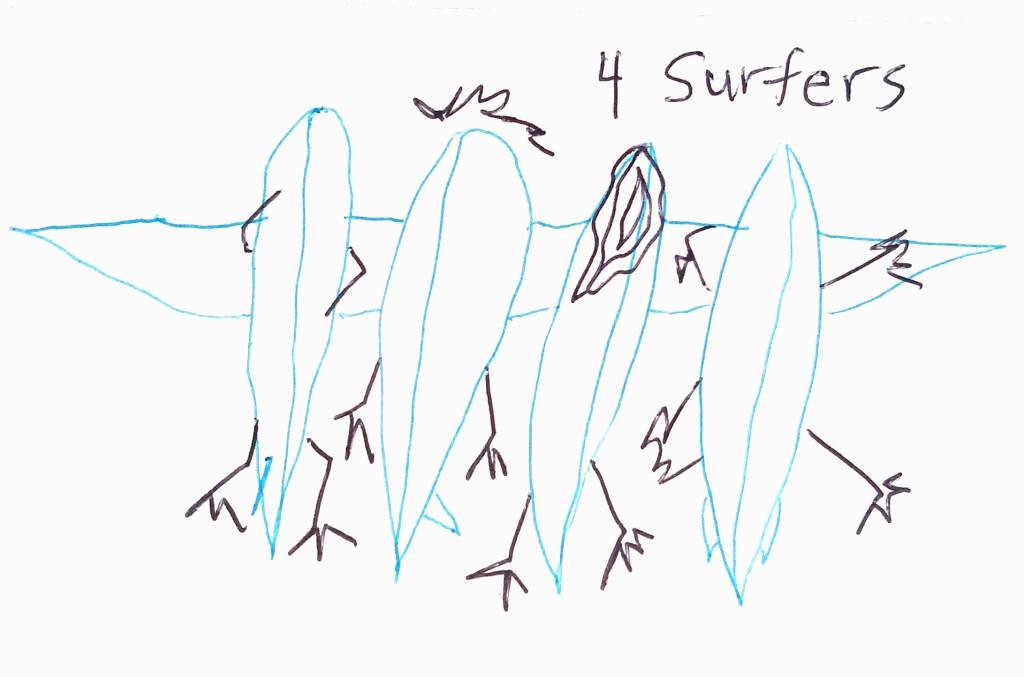
    Those who travel back and forth through time, to and fro, up and down, in and out, with the tides, over and under the swells, stopping now and then to visit. They were here, now they’re gone, return to sender. Sisters, first, then brothers, then ten of us, thoughts like tinnitus that echo like a whiffle ball others can’t hear, sounds won’t leave us alone, to night us, all ten nights of us, Knights of Tinnitus, while these guitars gently sleep, and surfboards drift. A banjo plays brightly, its tabor head a full blue moon, up on the beach. So it goes.

    But how does it go?

    Ah, but ask the winged burds!

    We look before and after,
    And pine for what is not:
    Our sincerest laughter
    With some pain is fraught;
    Our sweetest songs are those that tell of saddest thought.

    But what did they bring along, if not knotty pine – oak or peonies?

    They brought along their come-a-longs, and along the river they walked, while in the wet reeds the wee birds nested and rested. There were peonies and pizza aplenty.

    And along the river, did they sing songs?

    Of chords they sang songs, serious songs, silly songs, songs of love and despair. Cover songs and under cover songs. Songs with no words.

    What songs did they sing?

    So it goes, so it goes. They sang so it goes.

    But where did it go?

    I don’t know. “While we look not at the things which are seen, but at the things which are not seen: for the things which are seen are temporal; but the things which are not seen are eternal.”

    And what did they take back?

    Don’t look back, but they took back a weighty tome, a mighty book, a reference book, a history book, a look into our times, past times, out of time, a book of songs.

    And did they play it as surfers or hodads?

    They played it both dolce or metalico, as the moon prevailed.

    Why did they leave so soon?

    “Blue moon of Kentucky, keep on shinin’. Shine on the one that’s gone and said, ‘Goodbye.’” So it goes.

    So it went?

    So it goes.

  • On Television

    They might be called Smart TVs for their clever capability to befuddle the old fashioned viewer. Long ago and far away are the days you walked up to the television set, turned a knob to On, turned the other knob to Channel 2, 4, 6, or 10, TV Guide in hand, reached over the set to fidget a bit with the rabbit ears antennae, and slid back to the couch to watch a recorded picture version of what your parents when young had listened to on live radio.

    Television has grown, if not matured; still, we haven’t quite reached the television walls Ray Bradbury predicted in “Fahrenheit 451,” where the entire wall is a television, and keeping up with the Joneses means adding additional TV walls until your room is entirely enclosed in TV, the effect being that you are part of the television show you are watching. But the new virtual reality headsets are probably skipping over Bradbury’s wall sets.

    One advantage of old television was that at the end of the broadcast day, TV rested – it went off, off the air. A sign off screen appeared. The station transmitters shut down, the Star-Spangled Banner played (absurdly, no game following), then a test pattern with a shrill hum signal, a high E organ note. Nothing more to watch. Midnight. You either went to bed or read a book. Or went out walking, nothing on television.

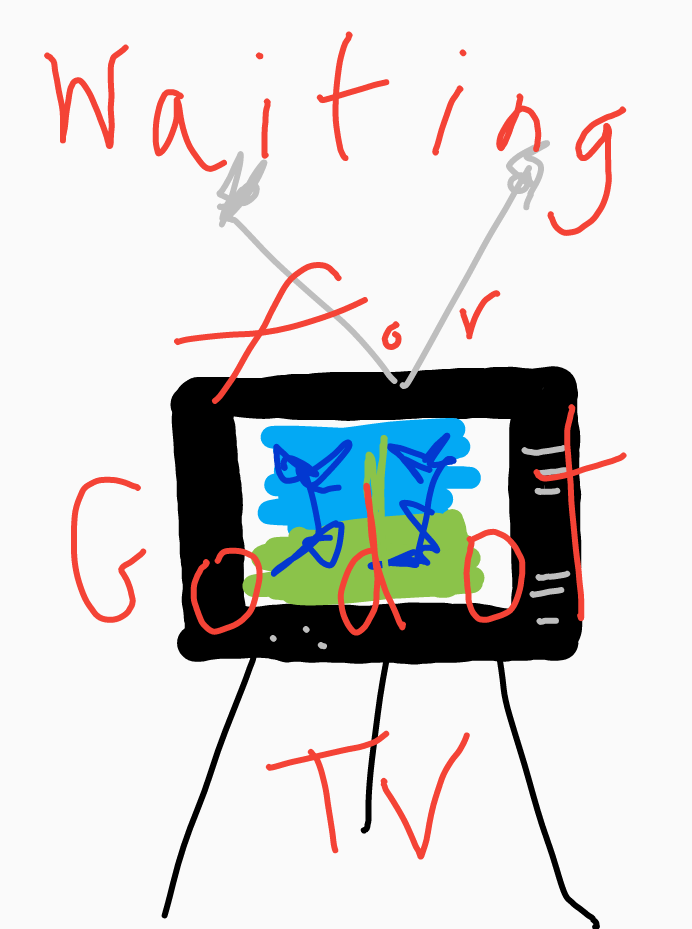
    Not that it matters what’s on television. Whether you’re watching “Masterpiece Theatre” or “All in the Family,” the “Red Skelton Show” or the “Andy Griffith Show,” “The Colgate Comedy Hour” or “Arthur Godfrey and His Friends,” you have to fill in the dots. Television is a DIY proposition.

    “The structural qualities of the print and woodcut obtain, also, in the cartoon, all of which share a participational and do-it-yourself character that pervades a wide variety of media experiences today. The print is clue to the comic cartoon, just as the cartoon is clue to understanding the TV image.”

    Marshall McLuhan, Understanding Media, 1964, p. 151, Signet Mentor