Tag: books

  • Writing Books

    It took writing and publishing eight books before I learned what Huck did after one:

    “… there ain’t nothing more to write about, and I am rotten glad of it, because if I’d a knowed what a trouble it was to make a book I wouldn’t a tackled it, and ain’t a-going to no more.”

    On that note, somewhat similarly, Anita Brookner’s “A Start in Life” begins:

    “Dr Weiss, at forty, knew that her life had been ruined by literature.”

    My life’s not in tatters due to books, but I would have a very different life had I, like my father, never read a book. But that’s the subject of another book, which I probably won’t write.

    The eight books are all different in scope and form (four are novels, two poetry, one a children’s book, and the last a collection of odds and ends). Below are brief summaries of all eight books with cover pics and links to Amazon. I really don’t think any will spell anyone’s ruin. And you might even enjoy them, though that’s not guaranteed.
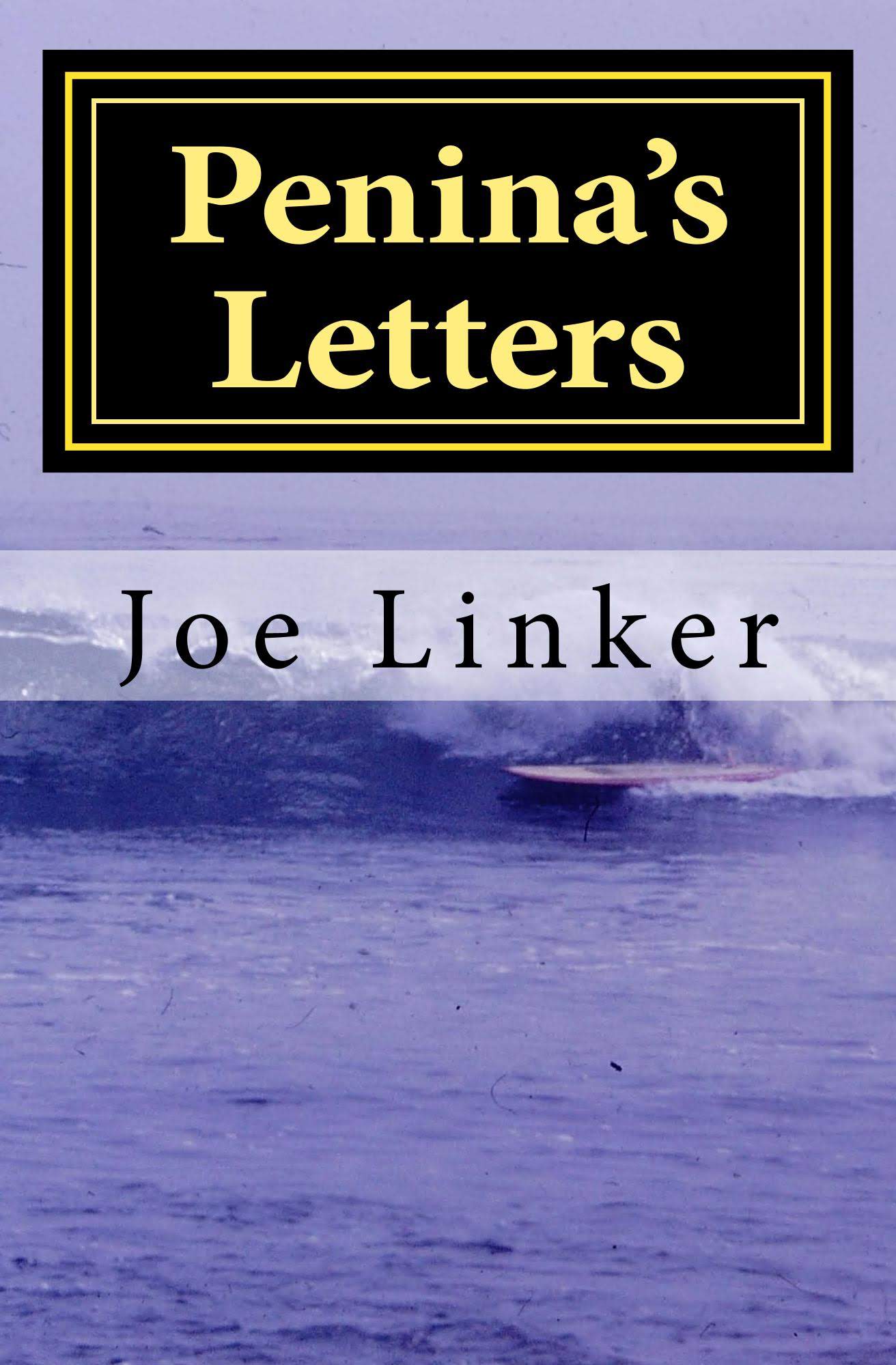

    Book cover for "Penina's Letters" by Joe Linker, shows a surfboard with surfer sliding off into the breaking wave, photo taken with an Exakta 500 in 1969.

    Penina’s Letters”

    Salty hopes for a quiet return to his old life. Instead, he is thrust into a chaotic homecoming party at Puck Malone’s surfboard shop, where the intense, romantic, and often surreal letters he wrote to Penina from the war zone are passed around and read aloud, introducing the rift between his romanticized longings and the discord of the present. What he does next surprises everyone:

    “All the fuss and hullabaloo, and a war just peters off. But none of that matters here. This isn’t going to be about the war. I don’t have any gory stories, nothing painting war as hell. Hell is an ocean with no waves. This is going to be about surfing and how I paddled out to live on the water after throwing Penina’s letters off the end of the Refugio jetty.”

    Set in the surf-soaked culture of late 1960s Santa Monica Bay, “Penina’s Letters” follows Salvador Persequi’s homecoming weeks as he trades the grease and grit of the motor pool for the familiar scents of sea salt and surfboard resin in Refugio, navigating a landscape of changed lives, fractured loyalties, and the “sound effects” of a mind still adjusting to the silence of peace and the noise of the ocean.

    Buy “Penina’s Letters” on Amazon


    Book cover for "Coconut Oil" by Joe Linker shows a photo by the author of a tree outlined with the shadow of a person, with  mushrooms like bird eggs in a chest-like opening.

    “Coconut Oil”

    Penina and Salty return to Refugio, a fictional beach town on Santa Monica Bay, forty years after the close of “Penina’s Letters.” Married for decades, they come back to a community altered by time, pressure, and quiet need, where questions of belonging and responsibility surface in daily life. As a nearby homeless encampment and a young girl named Waif enter Penina’s orbit, the boundaries between private marriage and public obligation blur. Lyrical but grounded, reflective, quietly and wryly comic, this character-driven but experimental novel explores marriage, community, and displacement.
    Buy “Coconut Oil” on Amazon


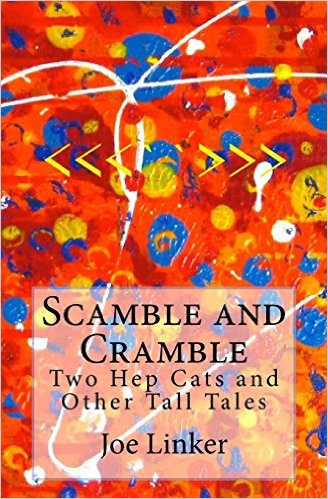
    Cover photo of "Scamble and Cramble: Two Hep Cats and Other Tall Tales" by Joe Linker. Photo is of a colorful painting by the author titled "Portrait of Zoe."

    “Scamble and Cramble”

    Scamble is a hep cat with stripes moving in every direction, while the wiry, frazzled Cramble often finds himself sitting in the shape of a literal ampersand. The cats are featured in this collection of “tall tales” that uses concrete poetry techniques (created with standard keyboard symbols and accessible fonts) to bring a cast of characters to life, including Emmet the Ant, who marches across pages of the book, Peepa and Moopa, two true friends building sandcastles by the surf, Frankie and Roxy, sisters discovering the difference between the “inside” and the “outside,” Ms. Dress and Mr. Shorts, who enjoy “garage sailing” and tea time, and Juicy Droolzy, the dog from across the street who is “all over the place.”

    From the high-flying adventures of ZZ swinging over the moon to the poignant memories of Oliver the orange tabby, the stories celebrate the curious, playful, and sometimes moody nature of our feline friends. Whether it’s a “Punctuation Parade” or a quiet moment in a “Portrait of Zoe,” this book is a children’s work for readers of all ages.

    “What a hep cat is and what a hep cat does is the same thing…”
    Buy “Scamble and Cramble” on Amazon


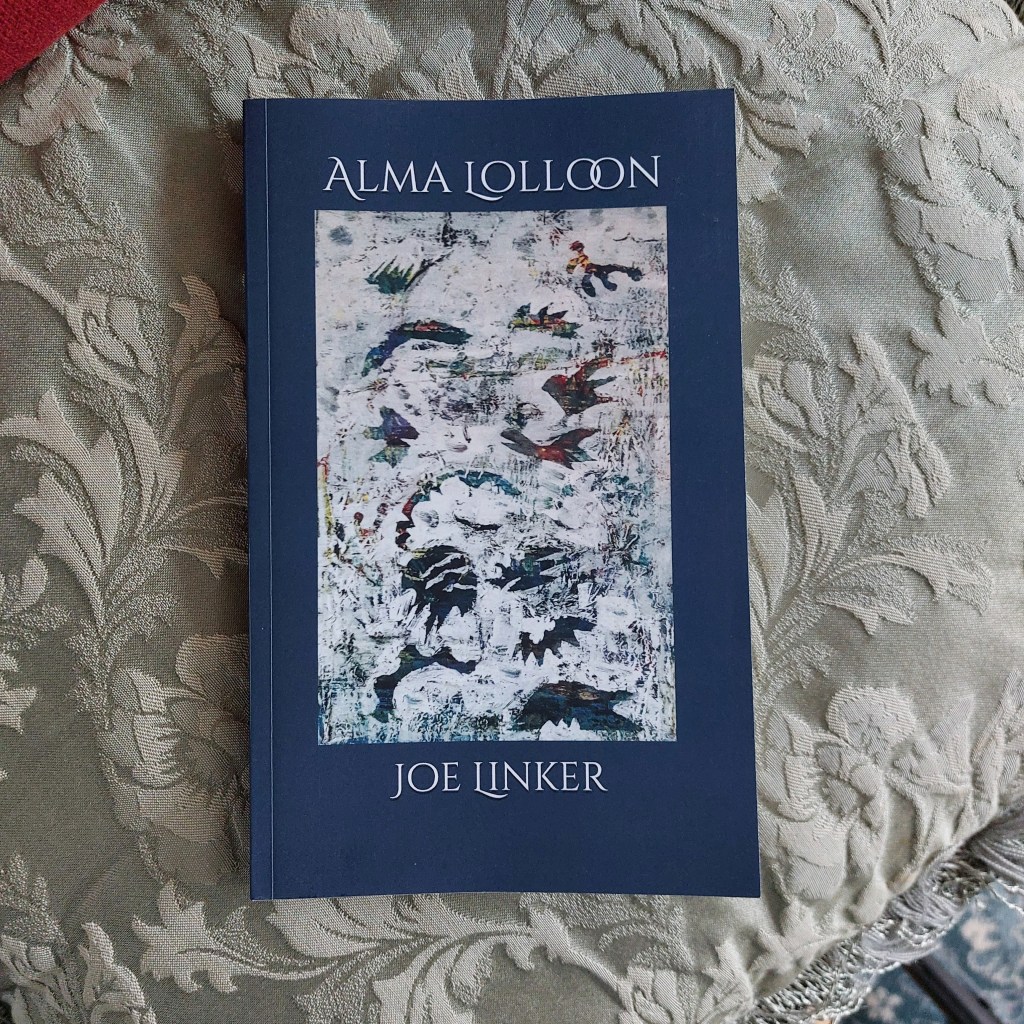
    Copy of "Alma Lolloon" by Joe Linker, book on pillow, its cover an untitled abstract painting by Joe of bird and fish shapes floating.

    “Alma Lolloon”

    Alma Lolloon is a career part-time waitress, a five-time widow, and an aspiring novelist with a “work-in-progress.” Saturday mornings, Alma meets with the “knitting ladies” at local coffee shops to read her latest chapters. What follows is a sharp-witted, metafictional journey through the red dust of memory, marriage, and the struggle to find one’s own voice.

    “Experience, though noon auctoritee / Were in this world, is right ynogh for me / To speke of wo that is in marriage…” (epigraph from Chaucer’s “The Wife of Bath’s Tale”)

    “Alma Lolloon” is a satirical deconstruction of the literary world, seen through the eyes of a woman who knows about people from behind a diner counter. As Alma recounts her experience with her five husbands, from a soldier drafted to Vietnam to a corporate executive, she must contend with the biting critiques of her own audience, including the pedantic Hattie, who demands a “traditional plot” where Alma only offers raw experience.
    Buy “Alma Lolloon” on Amazon


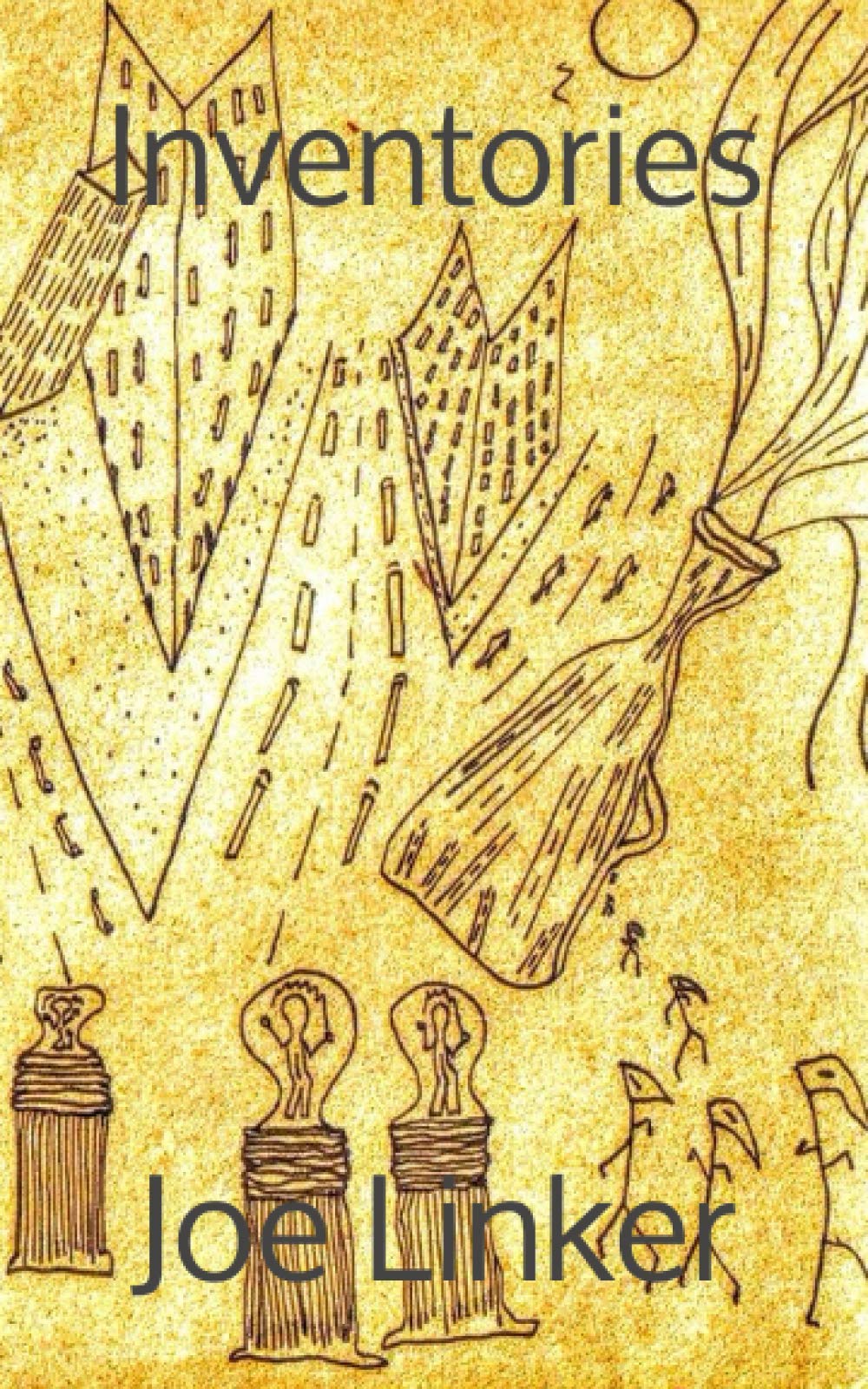
    Book cover for "Inventories" by Joe Linker is a wrap around cartoon drawing of a cityscape with animal like characters on the margins and a row of lightbulbs in the foreground with character shapes for filaments.

    “Inventories”

    “Inventories” is a surreal, genre-bending odyssey through the red dust of business, minor gods, and the ultimate search for simplicity. Glaucus is a mistake of the gods. Part human, part something else, he has the rare ability to change his size at will, though the cost of energy is high and the results are often random. Working as an in-house Risk Manager for an elite brokerage specializing in extreme and unusual risks, Glaucus finds himself gobsmacked when a massive $300 million transaction is hacked and vanishes into cyberspace.

    From the rain slicked streets of Seattle south to the sun drenched vine country of California, “Inventories” follows Glaucus on a picaresque trip to recover the missing file. Along the way, he encounters a cast of eccentric characters. Written in 81 “episodes,” “Inventories” is a philosophical exploration of agency versus accident, the absurdity of modern commerce, and the inventories we take of our own lives when we finally decide to walk away from it all.
    Buy “Inventories” on Amazon


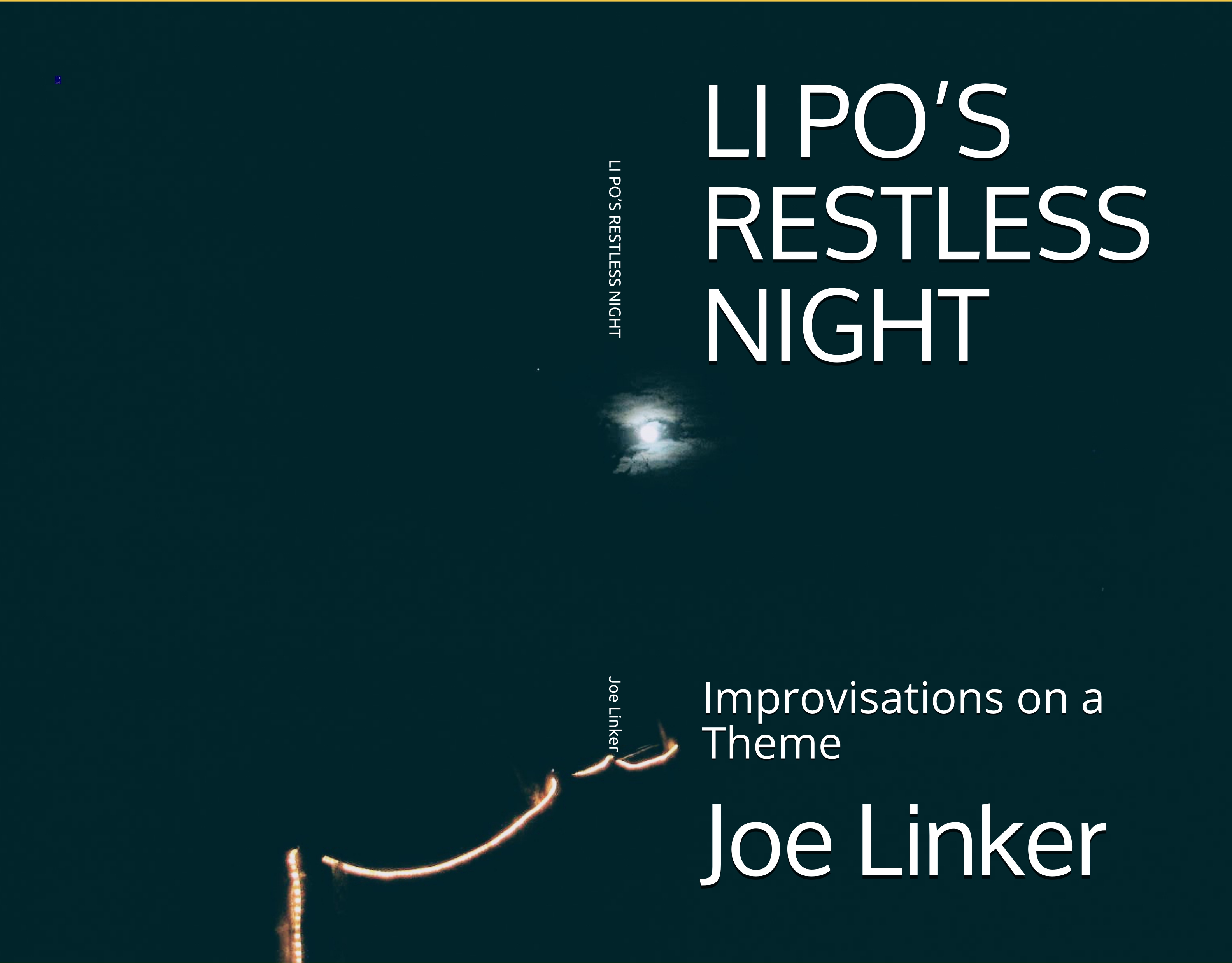
    Book cover for "Li Po's Restless Night" by Joe Linker shows a distant moon through clouds on a dark night, a string of outdoor lights at bottom, a photo used for the wrap-around cover.

    “Li Po’s Restless Night”

    What happens when an ancient Chinese poem becomes a lifelong obsession?

    “Li Po’s Restless Night” includes 101 variations on themes of exile, memory, and moonlight. Inspired by the classical Chinese poet Li Po’s famous work, the variations, or improvisations, explore a life spent between the rigid world of business and the fluid world of memory. From the barracks of Fort Huachuca to the lonely neon glow of modern motels, the poems navigate the space between who we are and where we call home. Includes an explanatory essay, a moving story of Florence, the student and teacher and friend who translates and introduces the Li Po poem, and a history of reading Li Po translations. “Li Po’s Restless Night” may interest students of classical Chinese literature or travelers looking for a companion on a sleepless night.
    Buy “Li Po’s Restless Night” on Amazon


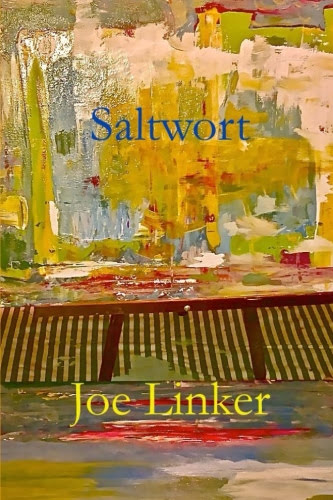
    Book cover for "Saltwort" by Joe Linker shows an abstract painting in the author's basement workshop.

    “Saltwort”

    SALT-SPRITZED AND WEATHERED, there is a seasoned quality to the writing in “Saltwort,” a fifty-year collection (1967–2017). From the surf-washed beaches of 1960s California to the “red dust” of the modern business world, these poems and prose pieces find the extraordinary in the mundane: a plumber’s van with a shelf for books among the tools, the ritual of Army coffee, the “frizzled” harvest of a pumpkin patch, and the quiet vertigo of an urgent care waiting room.

    FROM GRITTY REALISM TO SURREAL JAZZ RIFFS, the language of “Saltwort” is attuned to the music of the sentence. Whether riffing on Kafka or baseball, the voice remains unfiltered and honest. The collection features a delightful blend of humor, satire, and irony—including a sestina featuring Charles Bukowski, a form the “brewed bard” likely never used, which transforms into a lyrical, gutter-full beauty. Guided by a foreword from Salvador Persequi (of “Penina’s Letters”), the reader is invited to take shoes off and paddle out.
    Buy “Saltwort” on Amazon


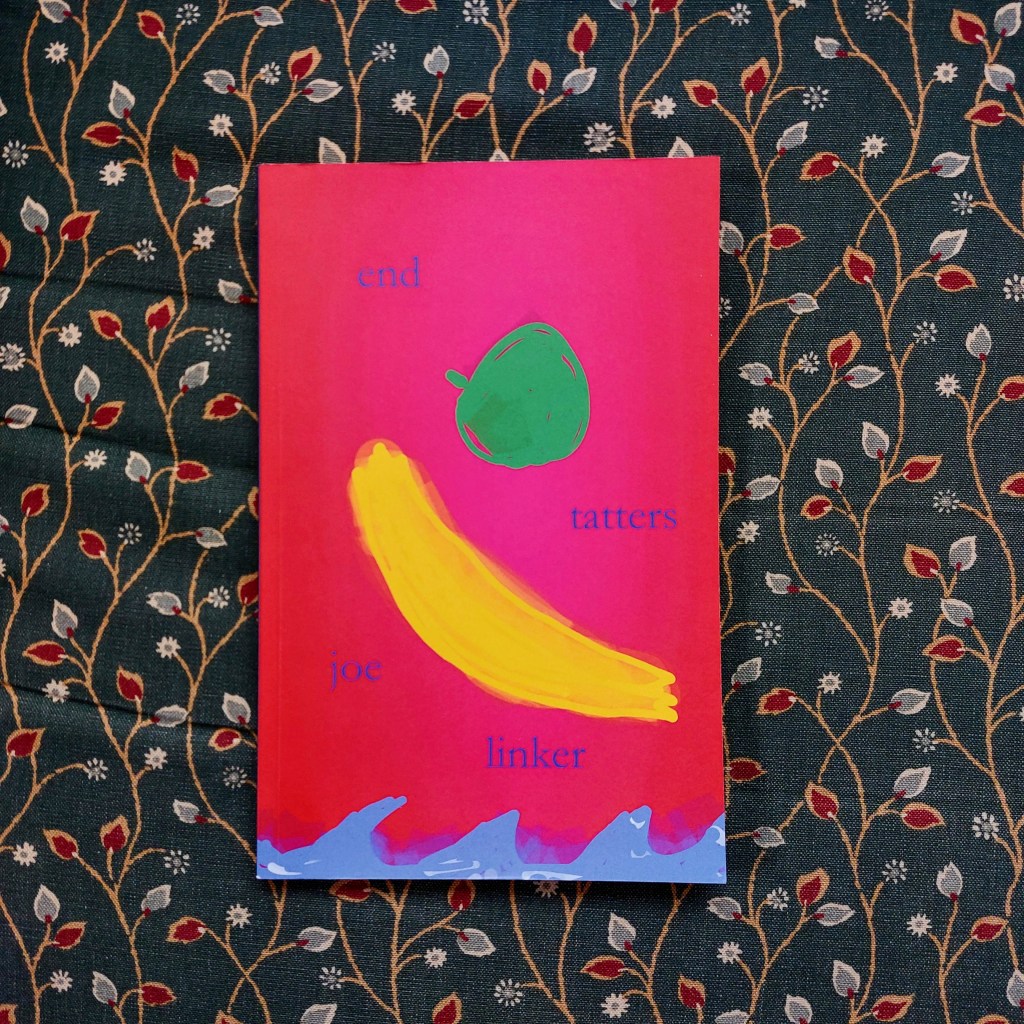
    Cover of "end tatters" by Joe Linker, copy of book on fabric of vines shows a green apple and a yellow banana suspended in a red sky over blue ocean waves.

    “end tatters”

    Short essays, fiction, and poems make up “end tatters.” New and Collected Writing.
    Buy “end tatters” on Amazon


  • Gentlemen Prefer Books

    Like real lives, a book’s life changes over time. And some are longer, others shorter, extreme change, usually passing out of fashion, or none at all. Or we might think of, as Henry Miller did, “The Books in My Life,” a book startling mainly for how bad it is, its list of books so obscure one wonders where to begin, but probably true to one’s own rambling random reading. Miller thought people read too much. Or, as for Ezra Pound, reading the wrong books is worse than reading none at all (as Henry Miller thought hypocrisy worse than bad manners). And of course Pound supplies us with a list of the right books.

    “For two gross of broken statues,
    For a few thousand battered books.”

    Hugh Selwyn Mauberley [Part I], Ezra Pound, 1920

    And having read a few of them, what to do with them, where to put them, bibliophile or purveyor, bookworm or hoarder. Bring the oldest to the front, begin again, but sitting there in that place on the shelf of history, still “botched,” or do you mean begin again with something new, with the old lies dressed in new fashion, under the clothes fresh off the catwalk the same bent cover boards framing a new fame.

    Such was the mental weather, under an atmospheric river, no less, as we made our way to visit one of the newly remodeled Multnomah County Library bibliothecas. Wandering among the few fiction book stacks, wondering how they decide among the thousands of books which ones to put out, a librarian, perhaps sensing we appeared lost in a woods, approached and asked if she could help. We asked her how they decided which books to shelve for physical browsing. Her answer, in short, involved automation and algorithm, referring to neither Henry Miller nor Ezra Pound. Yet we were surprised to find a 1955 first edition of Elizabeth Hardwick’s “The Simple Truth,” noteworthy but not necessarily read worthy. The librarian asked us what kind of book we were looking for. A book like a clean, well-lighted place, but we didn’t put it that way, and we left with, for us anyway, a terrible choice, which we’re now anxious to return.

    We had just finished reading aloud yet another book from the 1920’s, this one exactly 100 years old, and also part of our historical hotel reading project, “Gentlemen Prefer Blonds,” by Anita Loos. Of course we’d heard of it, maybe saw the movie, certainly heard the song famous from the Broadway play (1949), “Diamonds Are a Girl’s Best Friend.” Lorelei says in her entry of April 27th:

    “So I really think that American gentlemen are the best after all, because kissing your hand may make you feel very very good but a diamond and safire bracelet lasts forever.”

    The book, a diary novel, would today make for an interesting blog. Lorelei is an unreliable narrator, but at least she’s consistent. Part of the satire is that she’s a writer, by virtue of her actually writing, without ever having read a book.

    “A gentleman friend and I were dining at the Ritz last evening and he said that if I took a pencil and a paper and put down all of my thoughts it would make a book. This almost made me smile as what it would really make would be a whole row of encyclopediacs.” (Mar 16)

    There are only a couple of books Lorelei actually names; though quite a few are suggested indirectly. One that is mentioned directly follows, and her plan for reading it:

    “April 2nd:
    I seem to be quite depressed this morning as I always am when there is nothing to put my mind to. Because I decided not to read the book by Mr. Cellini. I mean it was quite amuseing in spots because it was really quite riskay but the spots were not so close together and I never seem to like to always be hunting clear through a book for the spots I am looking for, especially when there are really not so many spots that seem to be so amuseing after all. So I did not waste my time on it but this morning I told Lulu to let all of the house work go and spend the day reading a book entitled “Lord Jim” and then tell me all about it, so that I would improve my mind while Gerry is away.”

    The book was a gift from one of Lorelei’s gentlemen friends:

    “Well I forgot to mention that the English gentleman who writes novels seems to have taken quite an interest in me, as soon as he found out that I was literary. I mean he has called up every day and I went to tea twice with him. So he has sent me a whole complete set of books for my birthday by a gentleman called Mr. Conrad. They all seem to be about ocean travel although I have not had time to more than glance through them. I have always liked novels about ocean travel ever since I posed for Mr. Christie for the front cover of a novel about ocean travel by McGrath because I always say that a girl never looks as well as she does on board a steamship, or even a yacht.” (Mar 22)

    Lorelei’s interests in culture seem inexhaustible, and her number one gentleman very very much wants her to get educated.

    “And of course Mr. Eisman has sent me quite a lot of good books as he always does, because he always knows that good books are always welcome. So he has sent me quite a large book of Etiquette as he says there is quite a lot of Etiquette in England and London and it would be a good thing for a girl to learn.” (Apr 11)

    We quickly see that Lorelei talks about books more than she reads them. Her learning is experiential, anecdotal, though none the less purposeful and well learned.

    “I have decided not to read the book of Ettiquette as I glanced through it and it does not seem to have anything in it that I would care to know because it wastes quite a lot of time telling you what to call a Lord and all the Lords I have met have told me what to call them and it is generally some quite cute name like Coocoo whose real name is really Lord Cooksleigh. So I will not waste my time on such a book.” (Apr 12)

    There’s no question that diamonds are more valuable than books, or that reading and writing are both time consuming chores, so of course one should read only the best books.

    “So I told Major Falcon that I told Mr. Bartlett I would like to write the play but I really did not have time as it takes quite a lot of time to write my diary and read good books. So Mr. Bartlett did not know that I read books which is quite a co-instance because he reads them to. So he is going to bring me a book of philosophy this afternoon called “Smile, Smile, Smile” which all the brainy senators in Washington are reading which cheers you up quite a lot.” (Apr 14)

    The “Smile” book might be a reference to Wilfred Owen’s World War I poem of the same title, “Smile, Smile, Smile,” a contemplation in irony on those who died, published posthumously in 1920, Owen himself having died in the war, one week before the Armistice was signed.

    It might come as no surprise to the perspicacious reader that Lorelei is not her given name.

    “So it was Judge Hibbard who really gave me my name because he did not like the name I had because he said a girl ought to have a name that ought to express her personality. So he said my name ought to be Lorelei which is the name of a girl who became famous for sitting on a rock in Germany.” (Apr 13)

    Lorelei, like the rock sitter of German folklore, similarly ruins her gentlemen. But the reader feels no loss. Loos might have had in mind the Heine poem when she named her character after a famous siren:

    “I think the waves drink up
    off the rocks ironman and dory
    for with her song Lorelei
    has done them very wrong.”

    Heinrich Hein, “Die Lorelei,” 1824, Creative translation by yours truly, changing location from the Rhine to Redondo Beach.

    But it’s not on the River Rhine where Lorelei finds her men, but hotels:

    “So we came to the Ritz Hotel and the Ritz Hotel is devine. Because when a girl can sit in a delightful bar and have delicious champagne cocktails and look at all the important French people in Paris, I think it is devine. I mean when a girl can sit there and look at the Dolly sisters and Pearl White and Maybell Gilman Corey, and Mrs. Nash, it is beyond worlds. Because when a girl looks at Mrs. Nash and realizes what Mrs. Nash has got out of gentlemen, it really makes a girl hold her breath.” (Apr 27)

    Loos book in form is a cartoon, the characters exaggerated, satirical types, the writing a string of captions. Our edition (1998 Liveright paperback) contains actual cartoons, with captions taken from the text, the title page describes as “Intimately Illustrated” by Ralph Barton, the 1920’s productive but troubled cartoonist. There’s a 1998 introduction by Candace Bushnell, author of “Sex and the City,” who says, “Now that changing hair color is almost as easy as changing underpants, a more appropriate moniker might be Gentlemen Prefer Breasts” (XVI). And a second introduction, titled “The Biography of a Book,” by Anita Loos herself (for the 1963 reissue), in which she relates a television interview where she was asked what theme today might she write about, and she replied, “Gentlemen Prefer Gentlemen,” which, she adds parenthetically was “(a statement which brought the session abruptly to a close).” Loos had lost none of her sarcasm or satirical bent. Writing about the success of her book, she added, “But I feel that Lorelei’s accomplishments reached a peak when she became one of the few contemporary authors to be represented in the Oxford Book of Quotations” (XXIV).

    The waters deepen quickly – an important book, in terms of success or influence, doesn’t have to be a book of realism, naturalism, literal representation, doesn’t have to be a serious book. “Gentlemen Prefer Blondes” is satire, like Jonathan Swift’s “A Modest Proposal,” which comes to mind as Loos closes her reissue introduction: “But if that fact is true [that gentlemen prefer gentlemen], as it very well seems to be, it, too, is based soundly on economics, the criminally senseless population explosion which a beneficent Nature is trying to curb by more pleasant means than war” (XXIV).

    Maybe the most profound theme of “Gentlemen Prefer Blondes,” if one’s interest is in seriousness (tragedy) in the face of comedy (happy endings), is class, social distinctions, climbing ladders to successful benchmarks where one finds the benches are not as comfortable as one had thought they would be. In that regard, Loos book might indeed warrant the Edith Wharton opinion that it is the Great American Novel. If so, it might be refiled under the title, “Gentlemen Prefer Books,” for it did seem that most of Lorelei’s gentlemen pushed books upon her, wanting to smarten her up, oblivious to her intellect already superior to theirs, and to the fact that reading books rarely if ever smartens us up, or we’d certainly be smart by now, after those two thousand books in our lives, but hardly anyone seems to be, while being smart actually suggests being able to take advantage of another for one’s own advancement, regardless of class.

    Undecided
  • Hotelling

    No, I’ve not been living in a hotel; that would be Nabokov at Montreux Palace, Twain at the Chelsea, Simone de Beauvoir at the Hôtel La Louisiane. I’ve been reading books that take place in hotels. Some hot telling going on there, too.

    I just finished reading aloud to Susan “The Enchanted April,” by Elizabeth Von Arnim, first published in 1922, our copy a Penguin Classics, 2015. The Mesdames Wilkins and Arbuthnot answer an advertisement and arrange to spend a month in Italy:

    “To Those who Appreciate Wistaria and Sunshine. Small mediaeval Italian Castle on the shores of the Mediterranean to be let Furnished for the month of April. Necessary servants remain. Z, Box 1,000, The Times.” (3)

    Who could resist? Not the insistent frumpy Mrs. Wilkins, who talks the reserved Mrs. Arbuthnot into the adventure, and the two abandon their troubled husbands in fog everywhere London, recruit two additional to their party to help defray expenses, the young and extraordinarily lovely socialite Lady Caroline and the lonely aging Mrs. Fisher, and train down to the sunny gardeny clime.

    Not strictly speaking a hotel, the castle originally a Genoese fortress, built to protect Portofino’s harbor, but Castello San Salvatore functions like a hotel in the book’s closed setting and stage-play like structure, where no character is at first what they might seem to be, and class or social structures or strictures are dissolved to reveal the human frailties of psychological skeletons. But if that sounds like a horror, it’s not; the book is profoundly funny, each character misinterpreting another in a comedy of manners, such that we first see each character not for what they are, or might become, but what someone else thinks they are, or where they might have come from, ignorant of their true origins, problems, needs and wants.

    And before “The Enchanted April,” I had recently reread Elizabeth Bowen’s “The Hotel” (1927), her first novel, also set on the Riviera. Bowen’s writing style is different from Arnim’s, though both often feature long convoluted or circuitous sentences, subjects and objects meandering like mallards down steams through a woods, often placed somewhat distantly and not quite directly from predicates. Something like that; I haven’t actually diagrammed any in the old school way. But the common reader may find such writing distracting; it’s not Dashiell Hammett.

    And I also recently read Anita Brookner’s Booker Prize winning “Hotel Du Lac” (1984), though here the setting is Switzerland and it’s coming on fall and winter and cold out, reminding me of home:

    “The beautiful day had within it the seeds of its own fragility: it was the last day of summer. Sun burned out of a cloudless blue sky: asters and dahlias stood immobile in the clear light, a light without glare, without brilliance. Trees had already lost the dark heavy foliage of what had been an exceptional August and early September and were all the more poignant for the dryness of their yellowing leaves which floated noiselessly down from time to time.” (67)

    And time, and now, but it would be inaccurate to say suddenly, still, here we are just a little over a week from winter solstice when the days will begin to, in spite of the cold, last each a little longer and potentially at least warmer. But for now, back to the hotel of books, until the wistaria and sunshine return in bloom and heat and smell and we can open again our own hotel, now closed for the winter.

    Hotel
  • Are We Becoming Non-literate?

    Jay Caspian Kang’s article in the online New Yorker this week reminded me of the early days at the Toads, when the “Reading Crisis” first appeared. The argument, at the time somewhat famously mentioned in the The Atlantic article “Is Google Making Us Stupid,” and in a couple of Caleb Crain articles in The New Yorker, including “Twilight of the Books,” was formally discussed in the Congressional Quarterly Researcher. Kang’s article is titled “If You Quit Social Media, Will You Read More Books?

    Never mind false dichotomies, not to mention the embedded claim that reading books is somehow superior to spending time on social media, it’s a worthwhile, as refreshing as the changing seasons, question. I tried just the other day to quit the blog; would I read more books? That resolve lasted not even a week. The habit of writing almost daily for 18 years (the blog, 8 books, plus stuff for various jobs) was harder to kick than I had anticipated.

    Last year (as usual late to the book club), I read Kang’s book “The Dead Do Not Improve” (2012), which I enjoyed for its San Francisco setting and its surfing theme, but I’m not sure I learned anything from it, other than Kang’s a good writer, by which I mean his book accomplished its objectives. But I did not read it to learn anything, but for pleasure, but I’m still not too pleased with the title, but I get it: there are no tidy endings in a random world.

    That reading anything in any amount suggests being or becoming smarter is already a tired bias held by, well, those purportedly who read the most. But Kang, in the article, admits to trading book time for phone time, and he’s concerned reading skills might be atrophying, and that he’s wasting time on social media even while facing a deadline for a new book that he, well, will want others to put their phones down and read.

    But what we do learn from reading, or should learn, though it’s sometimes intuited, such that we might not even realize we’re getting it, is rhetoric, by which we mean the art of persuasion, and, of course, rhetoric can be misused, and only by reading extensively will we come to recognize rhetorical devices being used and their effects on us. Still, as for reading making us better people, there have been and still are well read people who are arguably not the best examples of humanity, but even that doesn’t mean we should give up reading as a way to improve our minds, our spirits, our conversations: as Becket said, “Ever tried. Ever failed. No matter. Try again. Fail again. Fail better” (Worstward Ho, 1983).

    There are many activities that keep us from reading: playing a musical instrument, watching a movie or listening to a baseball game on the radio, playing cards, attending church, talking – not to mention work: waitressing, plumbing, nursing, gardening. Does it follow that if we abandon any of these activities we’ll read more?

    But if we are reading fewer books, are we becoming more illiterate or non-literate? There’s a difference. It’s impossible to be illiterate in a non-literate culture, as McLuhan showed. And people in non-literate cultures have never been and are not now stupid; on the contrary.

    The Discourse
  • More On A Personal Library

    We were talking about books, not the content of books, but why keep them, as they stack up, one after another, placed then a few on a bedroom window ledge, the book’s fore-edge facing out, the row then expanding, one after another, paperbacks, written in, too, the worse for wear, then the need for a bookcase, and the inevitable question: why all the books, probably won’t read them again, any one, maybe, but not all of them? And, of course, why not just get them from the library?

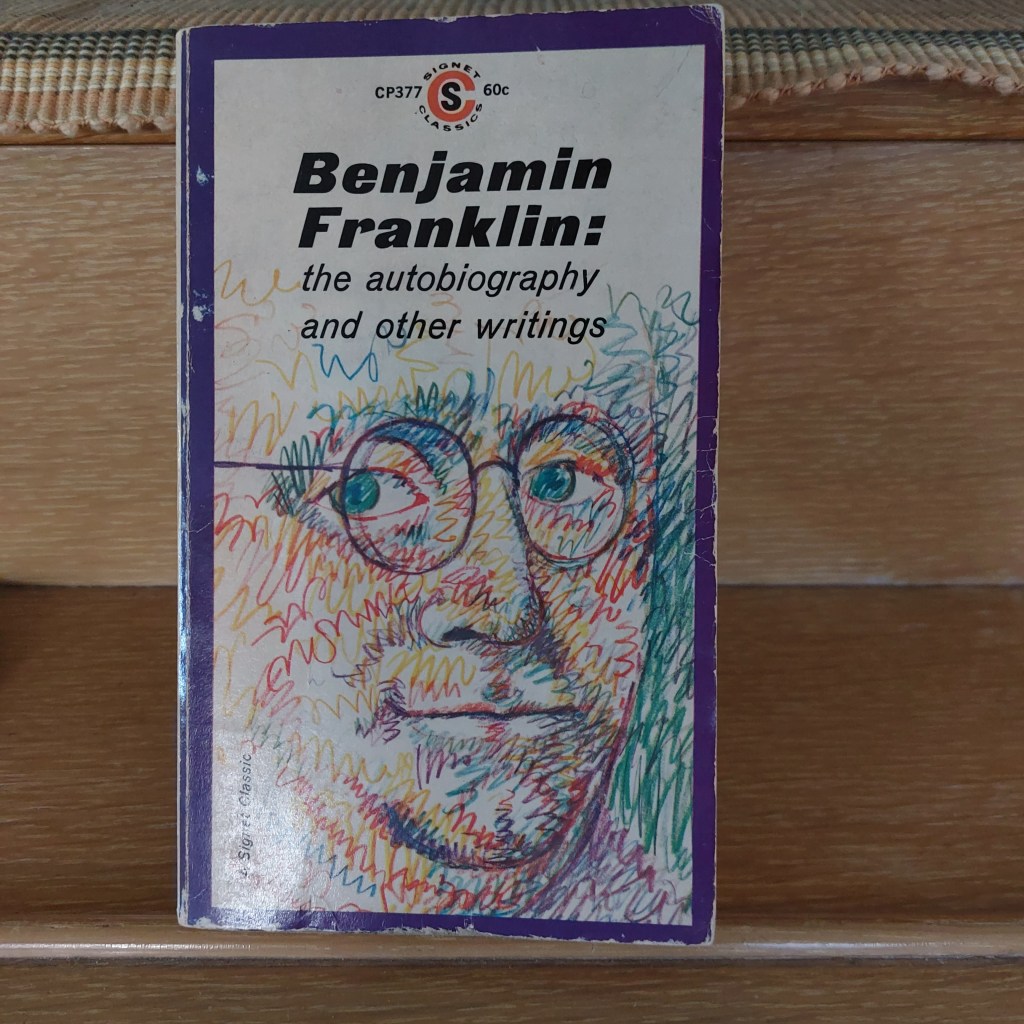
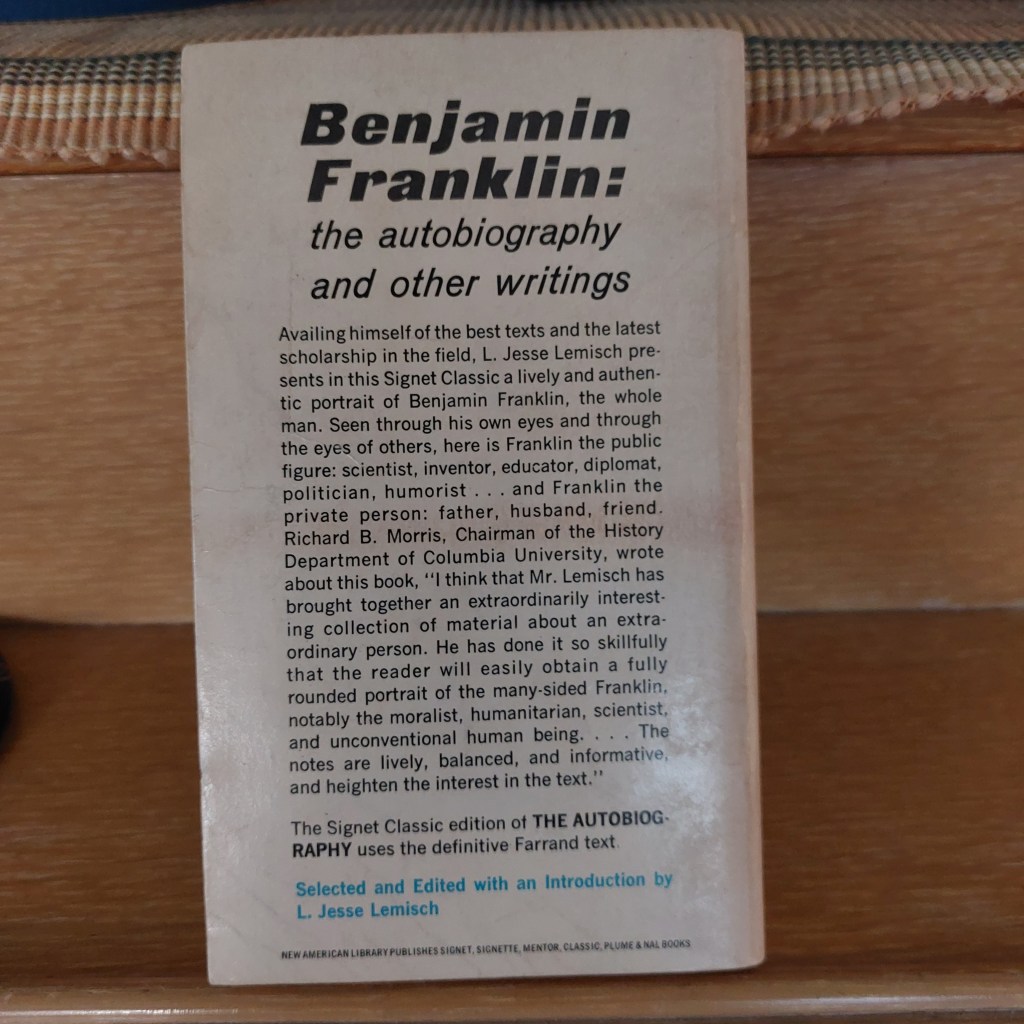
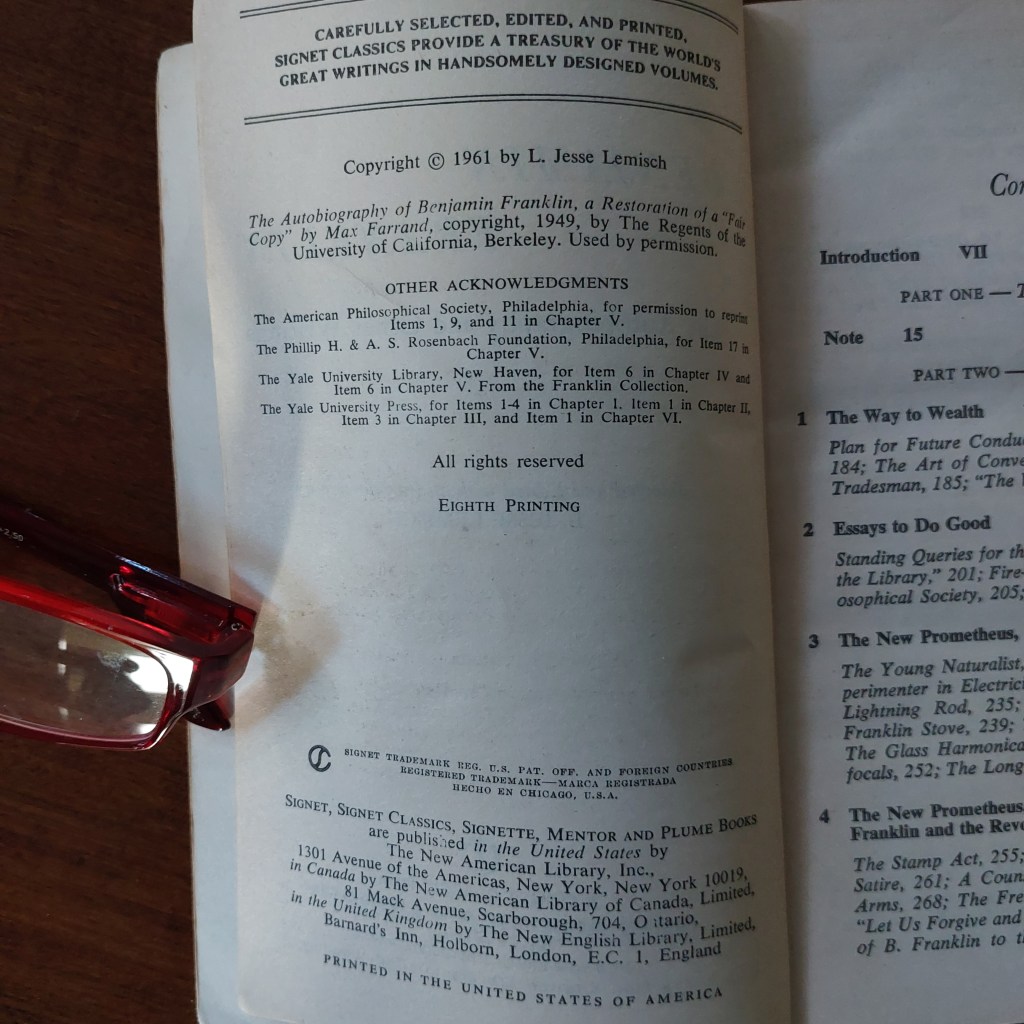
    In his autobiography, Benjamin Franklin talks about individual libraries, and knowing the friends in his reading group all have personal libraries, he suggests pooling them together, and thus the first subscription library is launched. Where did he get his calling to read books? He mentions his early enjoyment of reading and his father’s library:

    From my infancy I was passionately fond of reading, and all the little money that came into my hands was laid out in the purchasing of books. I was very fond of voyages. My first acquisition was Bunyan’s works in separate little volumes. I afterwards sold them to enable me to buy R. Burton’s historical collections; they were small chapmen’s books and cheap, forty or fifty in all. My father’s little library consisted chiefly of books in polemic divinity, most of which I read. I have since often regretted that at a time when I had such a thirst for knowledge, more proper books had not fallen in my way, since it was now resolved I should not be bred to divinity (26).1

    Doubtful I was destined for the divinity, nor did my father own any books. It was my Confirmation sponsor who encouraged me to read. He found me reading a comic book and suggested I read Classics Illustrated. We walked across the street to the Village Liquor Store to browse through their rack and he bought me copies of “Kidnapped” and “Moby-Dick.” Alas, I did not save those. Introduction to Saint Bernard High School in Playa del Rey included summer reading prior to entering the 9th grade – a reading list was sent, and I duly read, collected, and displayed the books on my bedroom window shelf, perfect size for paperbacks.

    Reasons for maintaining a personal library might include nostalgia that grows new rings with each reading year, sentimental journey, collecting books as a hobby or investment, or books close by used for reference and research, and the aesthetics of books and bookcases, or of course simply a hoarding impulse.

    With a personal library comes personal borrowers, many who consider a borrowed book a given. And indeed I have given books away. A couple of years ago, I posted that at around 3,000 books I gave away half. One should have an affinity of some sort for a book to keep it. And I do reread books. And some books are read through again and again, never finished, it seems, the James Joyce books, for example. Barbara Pym’s “Excellent Women” and Penelope Fitzgerald’s “Offshore” I’ve read several times in the last few years, and read them aloud to Susan.

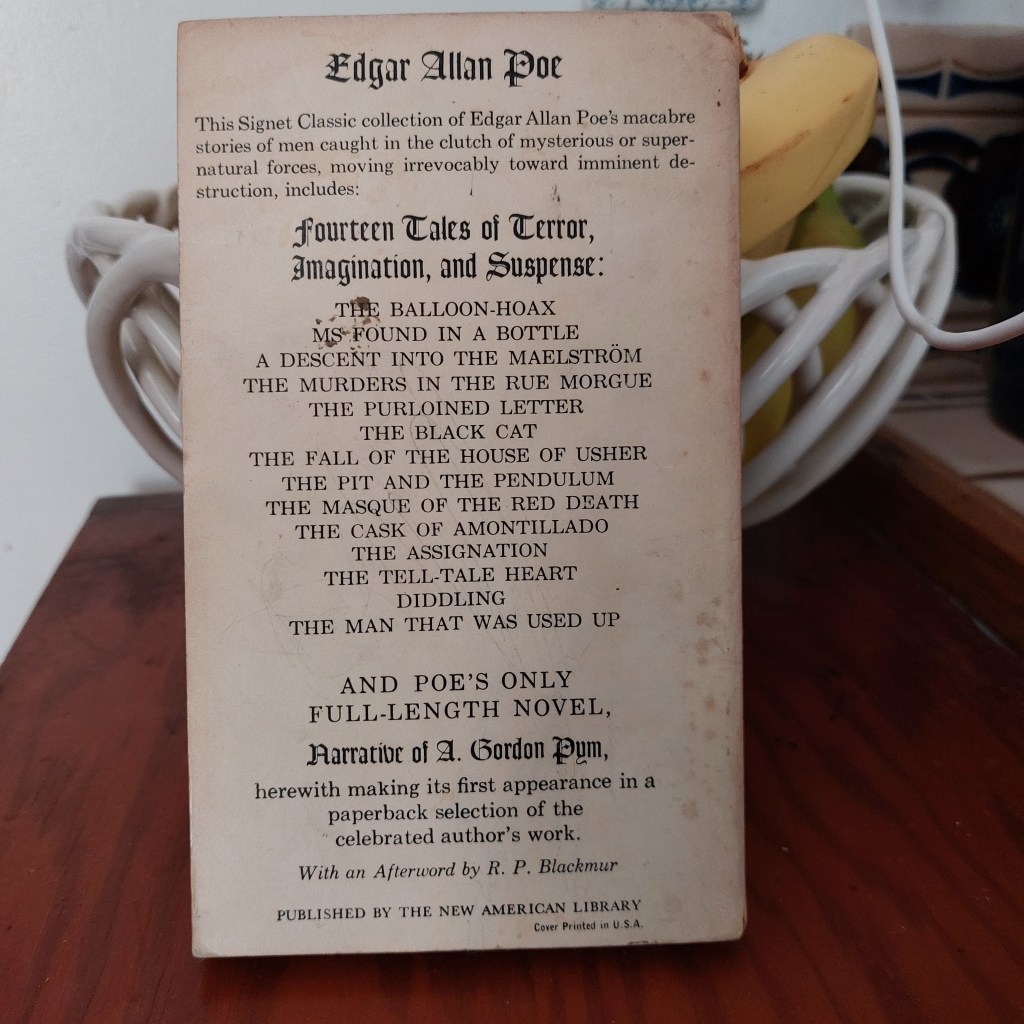
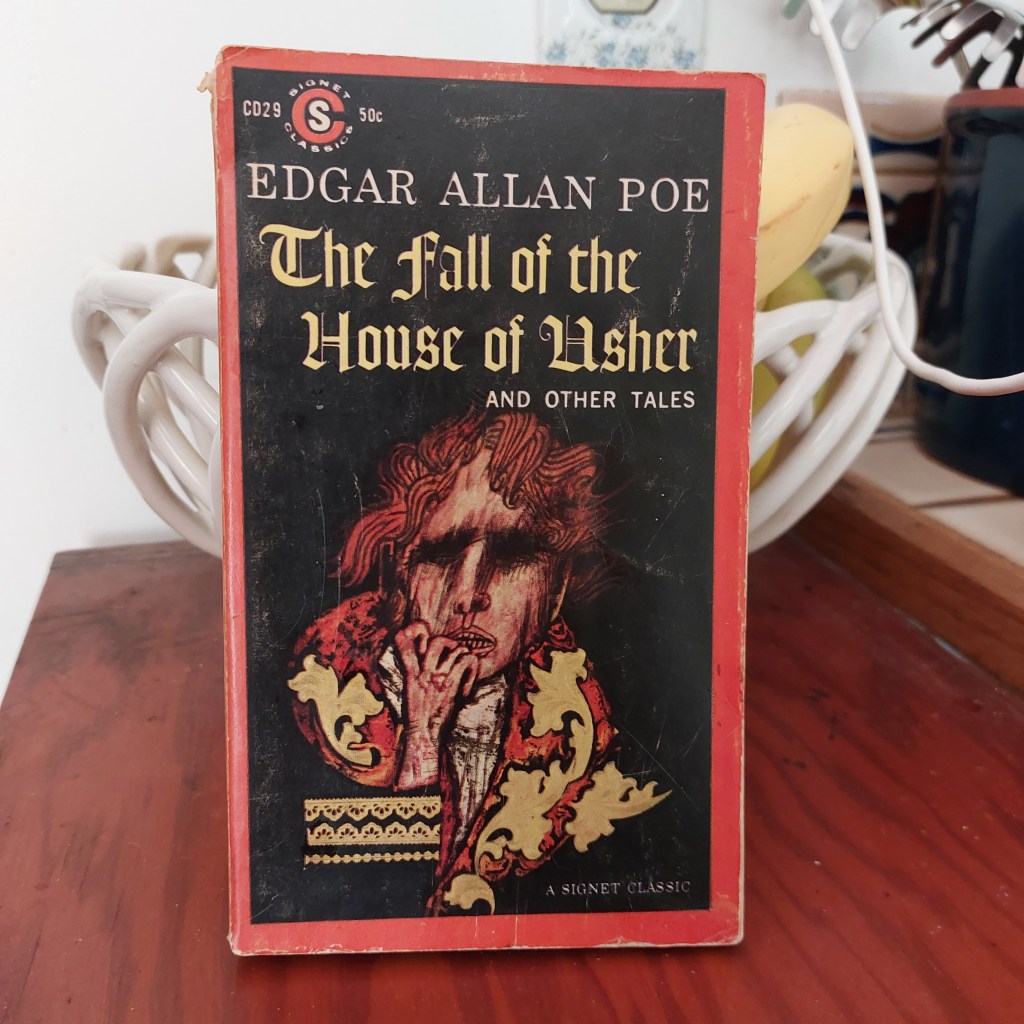
    One of the oldest books in my library is Edgar Allan Poe’s “The Fall of the House of Usher And Other Tales,”2 read in the 9th grade at St Bernard. I forget what we did that so annoyed Mr. Subiando one day, but I remember copying longhand “The Pit and the Pendulum” one long weekend, a class penance.

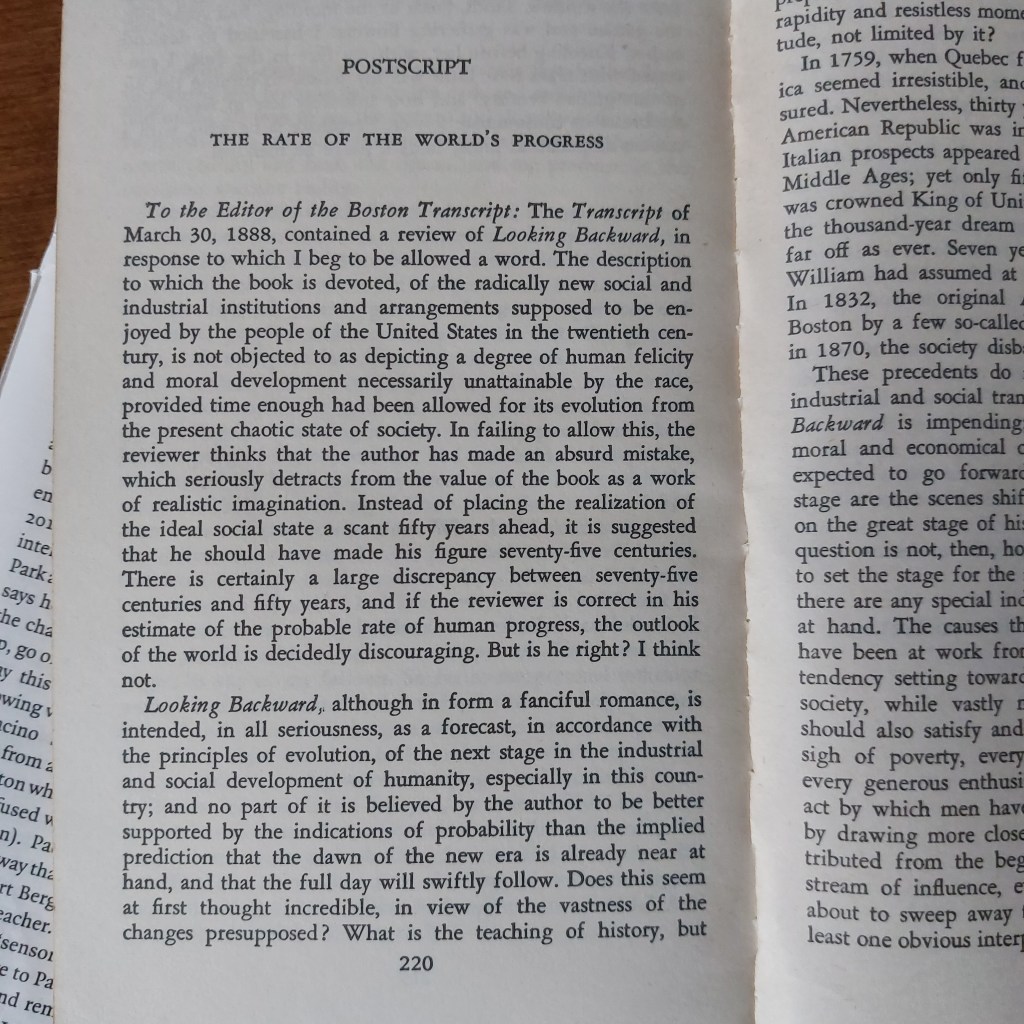
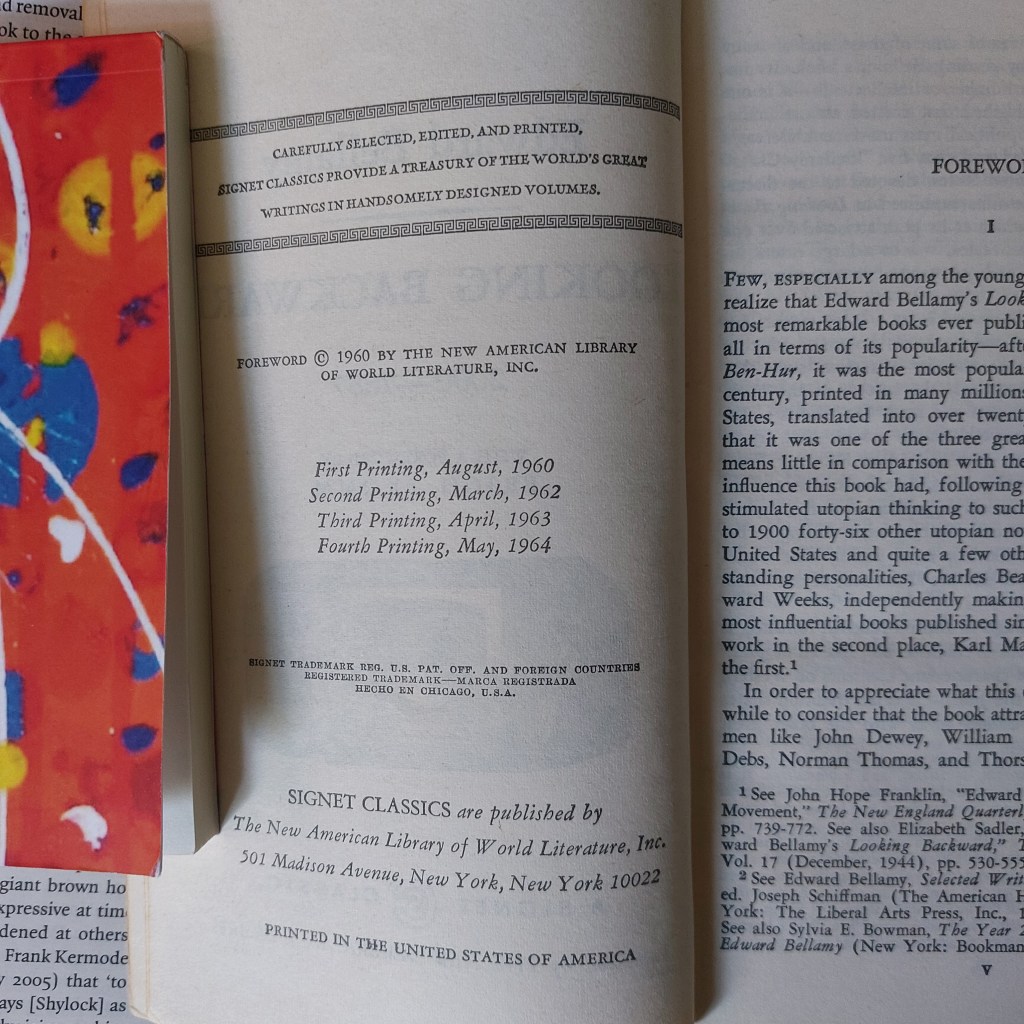
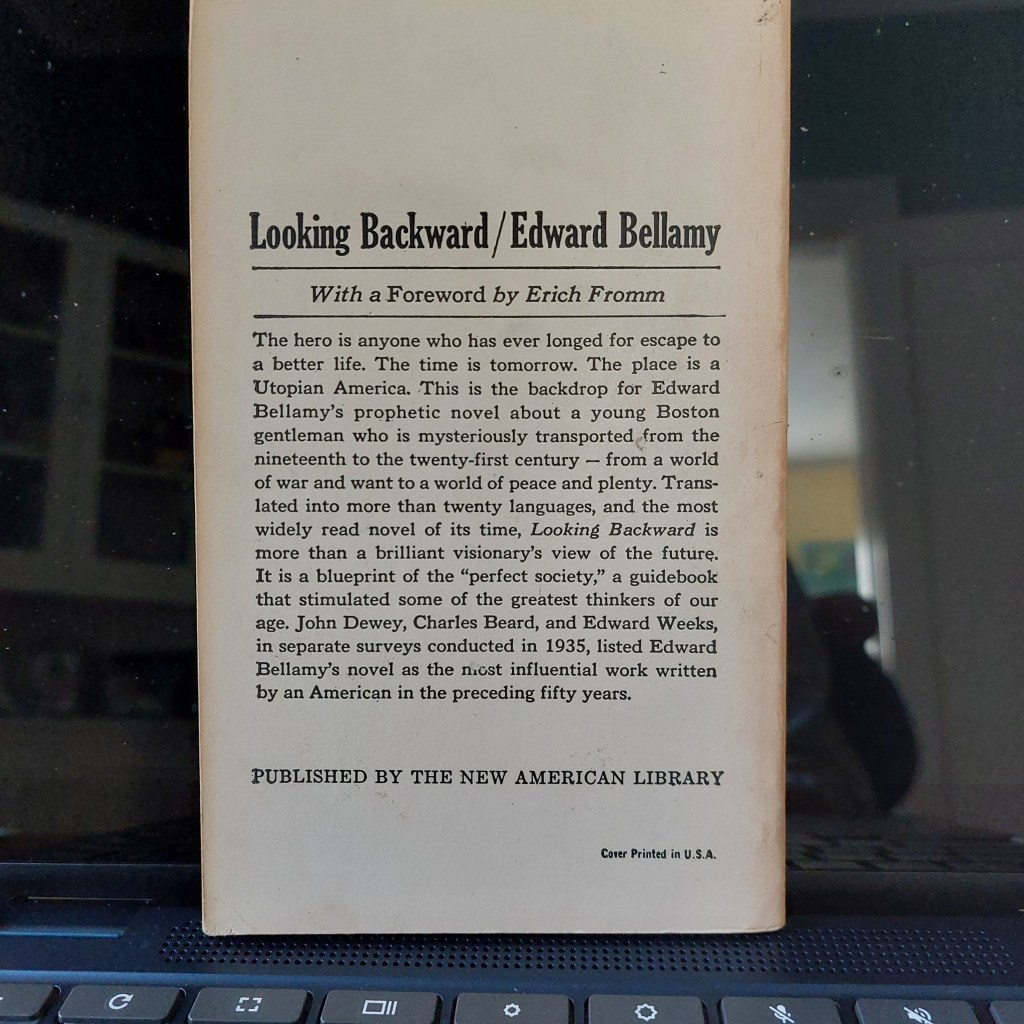
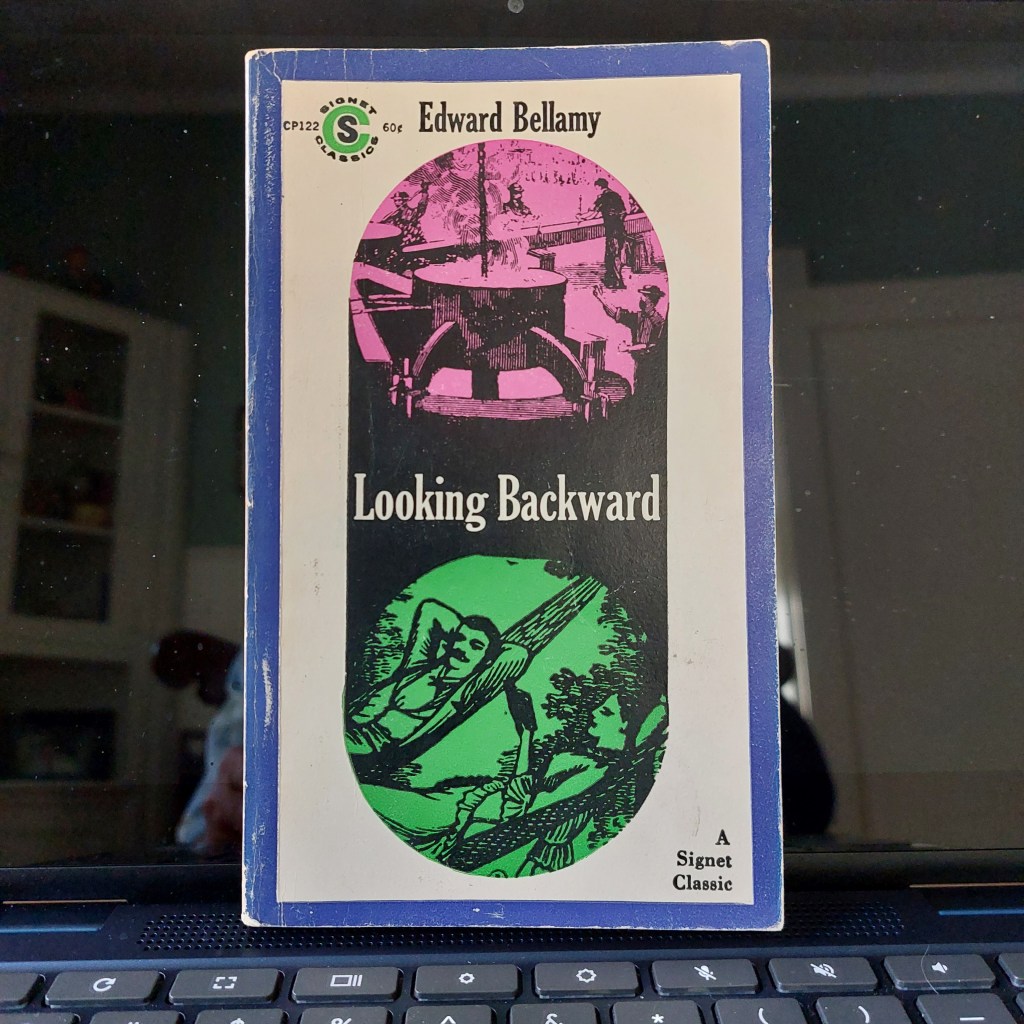
    Another book from that bygone bedroom window shelf, “Looking Backward,” by Edward Bellamy.3 The year is 2000 when Julian West awakes from the year 1887. Things have changed, of course, but for the better, and there is no need for a personal library:

    “Under the present organization of society, accumulations of personal property are merely burdensome the moment they exceed what adds to the real comfort” (89).

    Books in a collection can be burdensome, particularly when having to move abodes or rearrange a room. And old pages grow musty, stiff, spines arthritic. Books of the number I own suggest a sedentary lifestyle as well as a preference for private ownership unnecessary in Bellamy’s year 2000 and certainly obsolete, antiquated, old hat in 2025’s era of e-books:

    “I cannot sufficiently celebrate the glorious liberty that reigns in the public libraries of the twentieth century as compared with the intolerable management of those of the nineteenth century, in which the books were jealously railed away from the people, and obtainable only at an expenditure of time and red tape calculated to discourage any ordinary taste for literature” (115).

    Which brings me to Bluesky. I’ve opened a Bluesky account4 with the intent to use it to build a kind of catalog of my library. As such projects of mine go, cartoons on Substack, for example, now twice defunct, I don’t know how long I’ll keep up adding to and maintaining the catalog. And Bluesky is probably not the best place for such a project. I do prefer a simple life, free from adornment and tackle and stuff. Maybe I should concentrate on getting rid of the books rather than spending time cataloging them. But already the Bluesky project has proved useful in giving me pause to open and enjoy a few old paperbacks I’d not looked at for some time.

    A Bluesky personal library catalog? A personal library at all? What do you think?

    1. Benjamin Franklin, “The Autobiography and Other Writings,” Signet Classics, 1961, CP377, Eighth Printing. From the copyright page: The Autobiography of Benjamin Franklin, a Restoration of a ‘Fair Copy’ by Max Farrand, copyright 1949.” ↩︎
    2. Edgar Allan Poe, “The Fall of the House of Usher and Other Tales,” Signet Classics, 1960, CD29, 50 cents. Afterward by R. P. Blackmur. ↩︎
    3. Edward Bellamy, “Looking Backward,” Signet Classics, First Printing, August, 1960; Fourth Printing, May, 1964. CP122, 60 cents. ↩︎
    4. ‪@joelinker.bsky.social https://bsky.app/profile/joelinker.bsky.social↩︎
  • On the End of the Road with Rimbaud

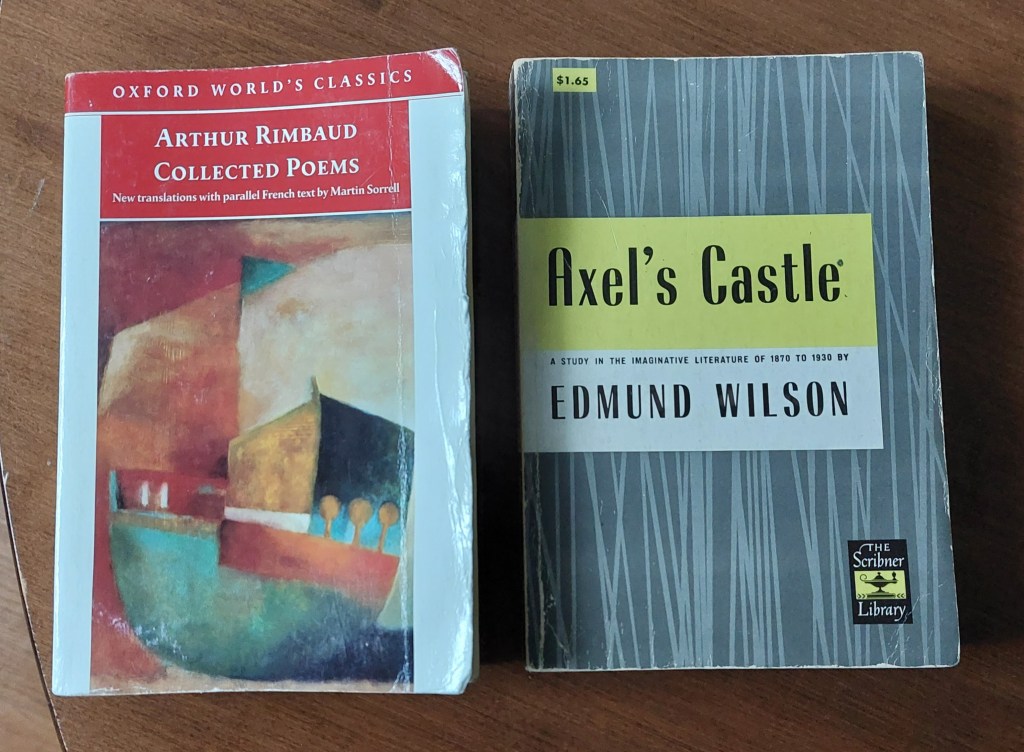
    It wasn’t enough for Rimbaud to disassociate himself from his society, which he found decadent, hypocritical, false – in a word, selfish. He would also derange his language and senses, and when he was finished, or abandoned, that writing life project, but which would survive to influence so many still working on literature, he moved on and rejected his and all other writing:

    “When a friend asks him [Rimbaud] whether he is writing nowadays, he replies with annoyance and scorn: ‘I don’t do anything with that anymore’; and when, on the eve of his departure the next spring, he hears one of his friends congratulate another on having just bought some Lemerre editions – Lemerre had been the publisher of the Parnassians – he bursts out: ‘That’s a lot of money wasted. It’s absolutely idiotic to buy books – and especially books like that. You’ve got a ball between your shoulders that ought to take the place of books. When you put books on your shelves, the only thing they do is cover up the leprosies of the old walls’” (Wilson, 279).

    For Edmund Wilson, the question of lighting out for the territory ahead of the rest meant reading and sitting down to his journal. (What might Wilson have done with a blog?) He quotes Yeats, from his “Vision”:

    “It is possible that the ever increasing separation from the community as a whole of the cultivated classes, their increasing certainty, and that falling in two of the human mind which I have seen in certain works of art is preparation….It will be concrete in expression, establish itself by immediate experience, seek no general agreement, make little of God or any exterior unity, and it will call that good which a man can contemplate himself as doing always and no other doing at all….Men will no longer separate the idea of God from that of human genius, human productivity in all its forms” (291-292).

    The problem then, for Wilson, is indeed what to do:

    “Nor can we keep ourselves up very long at home by any of the current substitutes for Rimbaud’s solution – by occupying ourselves exclusively with prize-fighters or with thugs or by simply remaining drunk or making love all the time….The question begins to press us again as to whether it is possible to make a practical success of human society, and whether, if we continue to fail, a few masterpieces, however profound or noble, will be able to make life worth living even for the few people in a position to enjoy them” (293).

    Quotes from “Axel’s Castle: A Study in the Imaginative Literature of 1870 to 1930,” by Edmund Wilson. Scribner Library, 1931, 1959.

  • Books and Bookshops

    If you want to read a book, unless you plan on reading it all in one sitting, impossible if you’ve picked a big old obsolete kicker, you’ll need a bookmark to avoid dogeared pages, and a place to store your book while you go about your other business: rucksack, briefcase, purse, table, shelf – an empty pocket, maybe. Books are not nomadic. Reading is a sedentary exercise. As for the argument for obsoleting print books in favor of ebooks, they require a hot reading device with batteries or electricity hookup nearby. A paper book might be simpler, and nothing worse than on the bus ride home and coming to the denouement of your thriller a pop-up appears telling you to plug in your device, you’ve only got 5% battery left, and your screen suddenly turns to an overcast sky, and you don’t know who done it.

    Read enough books and you might even think about writing one yourself. But how do you turn that thought into a book? And what kind of book? In Louis Menand’s most recent piece for The New Yorker (August 26, 2024), he says, “Not only is there no settled definition of what counts as a bookstore; there is no settled definition of what counts as a book” (68). But that’s not to say books are not counted. They are, ad infinitum. Suffice to say, however you define or count it, your chances of your book selling off the shelves are worse than finding life on Mars. You’d have a better chance going viral with a reel of your recent garage sale. In any case, again no matter how you define and count them, you’ll always be confronted with the existential theorem that says the number of books sold will never be the same as the number of books read: it will always be more or less – most probably more sold than read. But if you persist in writing your book, try a romance. According to Menand, “The big winner in the pandemic was the romance novel. Eighteen million print copies were sold in 2020; in 2023, more than thirty-nine million copies were sold. Romance is among Amazon’s most popular genres” (72).

    But Menand’s piece isn’t so much about books as about bookstores. A “Critic at Large” feature, it’s titled on-line at The New Yorker site, “Are Bookstores Just a Waste of Space? In the online era, brick-and-mortar book retailers have been forced to redefine themselves, but the print issue title is “Remainders: Why do bookstores still exist?” A remainder, in the book industry, is an unsold book, a writer’s doom word. Much to our disappointment, but not really diminishing his article, Menand doesn’t mention Penelope Fitzgerald’s “The Bookshop” (1978, movie version 2017). There you’ll find not the augmented hopes of the would be writer but the diminished hopes of the would be independent bookshop owner. We must read carefully for the antagonist though – there are several, for the odds of a bookstore succeeding may not be much better than the odds of a book being read.

    Maybe bookstores still exist, and persist, like public libraries, because they appeal to the painting of a desired cultural landscape that includes a peaceful Main Street lined with shade trees and with ample sidewalk space for browsing the boutique window displays, though without much advertising fanfare but word of mouth. But an industrial setting also works as the cultural landscape: railroad tracks down a block of warehouses, light manufacturing shops of brick walls and metal roofs, building supply stores, a bakery, and a brewery, a National Guard armory – and a poetry reading tonight at the Vacant Lot Bookstore. The most successful bookstore, like the cafe or tavern, will likely be local and, to use Menand’s word, curated, by which he means specialized in a particular genre, the bookseller a trusted critic, the books on hand discussed neither as commodity nor snob fodder but cultural artifact of one’s own time and place.

    At the same time, maybe books have nothing to do with bookstores, and the trends are simply part of the overall decrease in interest in offline retail shopping. Bookshops can be of course special places in that they merge the urge to purchase something, anything, with the cultural value, real or perceived, of reading. And many bookstores offer more than a retail outlet. They sponsor readings, art shows, writing classes, lectures, book launches and meet the author opportunities. Some have even added coffee and doughnuts. But as a place to simply go in and buy a book in the window, like going into a phone booth to make a call – well, first you have to find a phone booth. It’s possible that the current decline in retail interest reflects the general current decline in post World War II commercializations, commodifications, standardizations, much of which has moved virtually online, where it’s realized the physical necessity of the thing was never a reality. Why will a person buy something they don’t need?

  • On Goodreads

    Books. Shelved books. Backs to the world. Musty, dusty, pages that crackle when opened. Do I want to live in a library, surrounded by a labyrinth of shelves of my own making, impossible to find my way out, the books aging and shrinking as things alive, spine colors fading, hairlines receding, skins foxing, books sleeping in their den?

    On-line, books do not sleep. And why not clear the house of the fossilizing, dusty creatures? In 1996, the San Francisco Library started a grand plan to replace its paper books with the new fandangled electronic stuff:

    “In an apparent attempt at secrecy, Dowlin arranged for 200,000 more books to be completely discarded: Over nine months and despite protests and even outright sabotage by the library staff, San Francisco Department of Public Works dump trucks carted away these books to landfills.”

    From Baker, Nicholson. ‘The Author vs. The Librarian,’ The New Yorker 72 (Oct. 14, 1996): 50-62 and Basbanes, Nicholas, Patience and Fortitude. New York: Random House, 2001.

    Organizing, shelving, cataloging books, building cradles, bookcases, shelves to hold them, often an enjoyable if obsessive evening’s occupation. Borges, from “The Library of Babel”:

    “The universe (which others call the Library) is composed of an indefinite and perhaps infinite number of hexagonal galleries, with vast air shafts between, surrounded by very low railings….Twenty shelves, five long shelves per side, cover all the sides except two; their height, which is the distance from floor to ceiling, scarcely exceeds that of a normal bookcase. One of the free sides leads to a narrow hallway which opens onto another gallery, identical to the first and to all the rest.

    “The Library of Babel,” from Labyrinths, Selected Stories & Other Writings, by Jorge Louis Borges, A New Directions Paperbook – NDP186, 1964, p. 51.

    I recently joined Goodreads. No, that isn’t stop the press headline news. I wanted to catalog my library. I tried Libib, but always wondering what I was missing without the “Upgrade,” left for Library Thing, maybe too frantic for a library, but I’m still working with Thing. Finding books on Goodreads is both easy and difficult. Easy to find any book, or any version of the book you might be looking for, difficult, at times, to find an exact match (of the many versions often shown) to the book you have in hand. Still, not a big deal, unless you obsessively want or need to ensure every brick in the wall of your collection is designed in color coded Flemish brickwork, in which case you want your books on course.

    Perusing the various versions though can be a pleasure. Discovering, for example, the bright yellow banana on the cover of an e-book version of Beckett’s “Krapp’s Last Tape.” And pulling books I’ve not looked at for some time from the home shelves, I’ve a chance to reconsider what a particular book has meant to my reading life. Not that I’m a constant reader, one who is going to post hundreds of reviews weekly to Goodreads. Egads! I’m still gobsmacked to see readers doing that. And I think I’m a slow reader, though I’ve never ran a reading marathon – would probably finish somewhere in the middle of the pack.

    Not too long ago, at around 4,000 books in my library, I decided to winnow the bunch down to those books I feel a special affinity for, usually gained from my predicament when first acquired and read. I now have about 1,500 books, and I thought I might use Goodreads to catalog some of those with brief notes and comments, beginning with collections of my favorite authors. Not that any book is not important. To have read even a single book in one’s life is noteworthy. To have discovered a writer and read all their books is to become a fan of literature – without which a writer’s books fade away. And when you pull an old book away from its crusty place, you might find it crystallized like an old bottle of honey lost high on a pantry shelf. But you can warm it up and it’ll come back to flowing.

    On second thought, maybe I’ll just go for a walk.

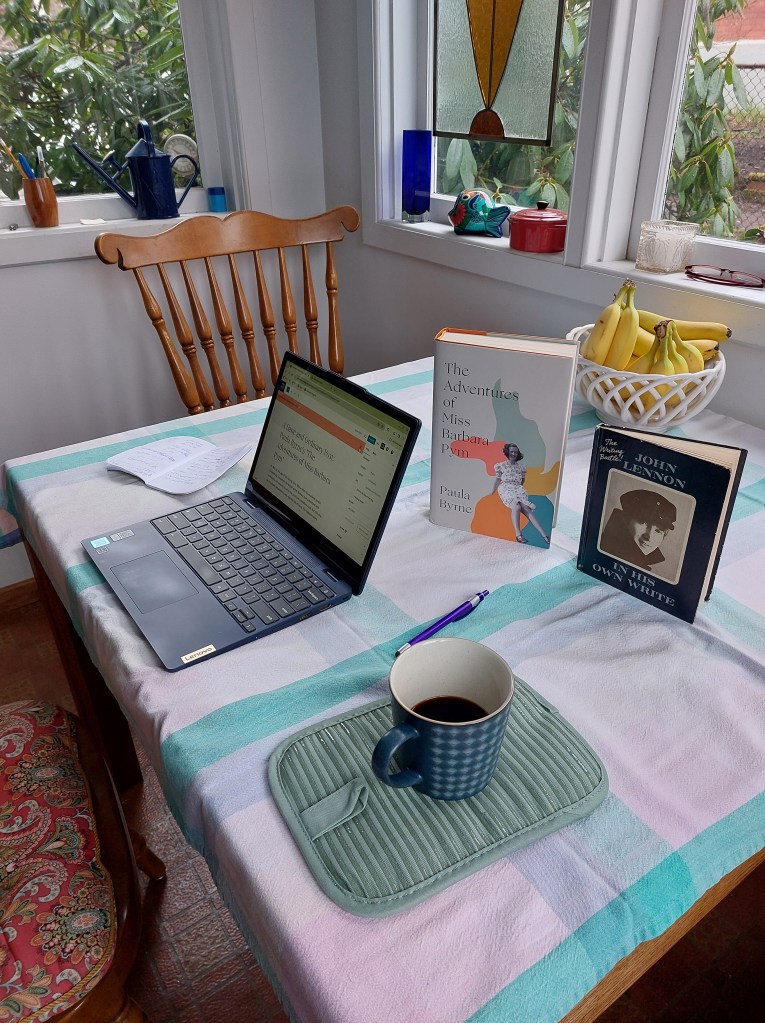
  • A Sane and Ordinary Blog Post: Paula Byrne’s “The Adventures of Miss Barbara Pym”

    In 1963, at the age of 50, having since 1950 written six excellent novels successfully published, the British writer Barbara Pym submitted with confidence her seventh novel to her publisher, Jonathan Cape. But this one, An Unsuitable Attachment, was rejected out of hand. The rejection story comes as a plot twist in Paula Byrne’s biography, The Adventures of Miss Barbara Pym (2021, William Collins).

    Then, as now, publishers were trying to respond to changes in their operating environment. After being rejected by her publisher Cape, Pym sent her new novel off, on a long successive round of submissions, to publisher after publisher, where it met with the same rejection fate, as if she were a writing newbie lost in the slush pile.

    Publishers are expected to make a profit. New books have always been expensive. Books are, after all, not a necessary. Yet few novelists, and even fewer, if any, poets, can survive financially off the royalties from their book sales. The occasional blockbuster book followed by a movie is the rare exception that has often helped support a publisher’s efforts to produce less popular works with literary merit. Detailed numbers of what might have been necessary to recoup publishing costs and turn a profit in 1963 are a small but important part of Byrne’s Pym biography, and because Pym continued to write without publishing, then over a decade later did publish anew and with even greater positive critical reception (including a Booker Prize nomination in 1977 for Quartet in Autumn), an interesting theme is suggested where we might find some insight into what gets published (and unpublished) and when and why.

    How many prospective sales were necessary in 1963 to get a publisher’s attention? Pym’s good friend British poet Philip Larkin suggested 4,000 as a break-even point: “I’m told that the economic figure for novels is 4,000 – and has risen a lot recently. The circulating libraries are diminishing, too – Smith’s gone, Boots going” (Byrne, 533). Larkin’s own book, The Whitsun Weddings (a collection of 32 poems published in February 1964), sold 4,000 copies in the first two months, an unusual poetry bestseller (504). Pym mentions to Larkin that “she heard Cape were about to publish a book by one of the Beatles: John Lennon? I think?” (497). The book in question was Lennon’s In His Own Write, which sold, according to Wikipedia, 300,000 copies in Britain, and was also a best seller in the US market. Wiki shows, citing Hazel Holt, that Barbara Pym’s book Excellent Women, published by Cape in 1952, had sold 6,577 copies by 1960. Writers decide what will be written, publishers decide what might be read, critics decide what’s good, and readers decide what to purchase. And then there’s the remaindered, not remembered.

    How do books get into the hands of readers? Public libraries, generally assumed to be in the public interest and of great cultural benefit, arrived at a cost to publishing. In England, since the mid 1700s, prior to public libraries, books were made available to the reading public through the use of “Circulating Libraries.” These were not free public libraries. They rented books for a fee. Nor were they housed in buildings. They traveled, by rail and wagon. Still, the rental fees were affordable only down to a middle class clientele. Later, stores carried books for rent, but usually as part of a store’s variable lines of business. Renting or selling books wasn’t enough to keep a stand-alone book business afloat. But the effect of renting books on publishing was simply this: readers could rent far more books than they could afford to purchase. It was therefore in the interest of the circulating library business for publishers to keep prices of new books high. If readers could not afford to buy new books, they would have to rent them.1

    All of that of course before the Internet, ebook, etc. Still, paper books persist. Past changes like the mass market, cheaply produced paperback brought book prices down, but still the book market is supply and demand driven, and it’s not easy determining what drives demand. Dime novels in the US and the Penny Dreadful in England were relatively cheap and brought literature to working class readers. I was a working class reader, started with comic books, graduated to Classics Illustrated at the suggestion of my Confirmation sponsor, who also encouraged me to read novels and to start my own library, six paperback books sitting on a window ledge of my bedroom. I still have a few of them. That books are a commodity, no more no less, may seem like a paradox to some readers:

    “One could make an argument that the book’s own history mitigates against seeing it as a commodity. For centuries, after all, the book’s primary place was at the center of religious practice. It is historically associated, as a result, with the evanescent, spiritual, not-for-profit world. But printed books, as Elizabeth Eisenstein and Raymond Williams have shown, have always had as much of a secular as a spiritual existence. Their history in the modern west is synonymous with the development of industrial production and the rise of consumer culture that went with it. If the book has maintained some sort of transcendent identity, it has done so despite its position at the center of the world of goods, not because of some privileged position outside it.” 2

    After the Cape rejection, Pym kept writing, kept submitting, and kept getting rejected. She reached a point where she told a friend, “All I want now is peace to write my unpublishable novels” (Byrne, 530). And, Byrne says, “Her friend Hazel Holt even suggested that she should think about publishing her novels privately for her loyal following of readers” (524). Today, of course, Pym could easily self-publish her novels. But would she? In any case, all of her books are today still in print, with many used copies of Pym books available for sale via sites like Alibris. And a quick check at Multnomah County Library shows ten Pym books available, but only one copy each, and six copies of the Byrne biography in stock.

    As critic, Larkin described what he liked to read, and he did not find fault with work devoted to a narrow alley of life, provided ample detail was given to bring that life into profound focus:

    “‘I like to read about people who have done nothing spectacular, who aren’t beautiful or lucky.’ He wanted to read about people who can see ‘in little autumnal moments of vision, that the so called big experiences of life are going to miss them.’ That such things are ‘presented not with self-pity or despair or romanticism, but with realistic firmness & even humour’” (521).

    Larkin, with connections in publishing, and as England’s popular poet, gave Pym emotional support and advocated on her behalf. Still, it took time to convince the publishers to reconsider. In a letter to Charles Monteith, editor at Faber, Larkin wrote:

    “Turn it down if you think it’s a bad book of its kind, but please don’t turn it down because it’s the kind of book it is…I feel it is a great shame if ordinary sane novels about ordinary sane people doing ordinary sane things can’t find a publisher these days. This is in the traditions of Jane Austen & Trollope and I refuse to believe that no one wants its successors today” (521).

    What kind of books were being published in 1963? John le Carre’s The Spy Who Came in from the Cold (which a couple of years later would be assigned reading in one of my high school English classes); Thomas Pynchon’s V.; John Rechy’s City of Night; Kurt Vonnegut’s Cat’s Cradle. And when the publisher Little, Brown republished in book form The New Yorker stories of 1955 and 1959, Raise High the Roof Beam, Carpenters and Seymour: An Introduction, by J. D. Salinger, it was the third best-selling novel in the US in 1963 (Wiki). (I remember seeing Mr. Abney, my 9th grade Language Arts teacher, reading it at his desk at the front corner of the room, stage right, next to our ground floor windows, which looked into the Breezeway, where the girls were at lunch recess.) While there were of course many other kinds of books published in 1963, those just mentioned probably would not qualify as the kind of book favored by Philip Larkin.

    There’s no critical advantage gained in trying to put down the 1963 books mentioned above, that’s not the point, they’re already classics, or of pooh-poohing John Lennon’s book as silly. The point is, what’s good is what achieves its purpose, even if that purpose might be considered bad, or if it’s not the purpose you want. Lennon’s book is successful on its own terms. It’s good because it achieves what Lennon wanted. It’s also good because it’s entertaining and clever and also gives a nod to James Joyce and his technique in Finnegans Wake. Few would have thought Lennon at the time might have been a Joycean. No amount of marketing could have achieved for a Pym book the kind of sales Lennon’s In His Own Write racked up. But Pym’s books also are good because they achieve what she wanted, are entertaining and clever, and her style, while original, gives a nod to Jane Austen, master novelist of them all.

    There is much more to Paula Byrne’s biography “The Adventures of Miss Barbara Pym” than the discussion above regarding what gets published. Byrne’s biography of Pym is 20th Century history as viewed from a specific writer who lived according to detail. Pym kept copious notebooks, always writing. She rethought, reconsidered, reconnoitered her every conversation, meal or tea, dress and dance, kiss or hug, relationship, experience. No detail was too small, the smallest maybe the most important. Bryne’s Pym biography might inspire any would-be writer, for we see Pym at work and play, see the ups and downs, the approvals and dismissals, the potential loneliness of life sitting at a typewriter, the rewards of completion and the hopes for a bite of recognition. We see where ideas for fiction come from and how life experience might be formed into fiction. In the end, the ordinary life, realistically rendered, given due attention, is exceptional and impressive and universally shared.

    1. Circulating Libraries,” Oxford Reference, The Oxford Encyclopedia of British Literature. ↩︎
    2. Ideas and Commodities: The Image of the Book.” Trish Davis. MIT Communications Forum. Undated. ↩︎
  • Loomings & Readings

    “High time to get to sea,” Melville’s Ishmael says, feeling weary and wornout, petulant and putout. I’m with Ishy these days, but like Camus, find myself far from the sea – too, too far, not close by at all.

    So it came to me, unable to put in with my surfboard at 42nd in El Porto as I might have were it somehow still 1969, to start a bookclub. Talk about absurd! Where’s Camus when you need him?

    In any case, I find myself these days growing closer to music, away with words, music without words, instrumentals I guess their called in popular lingo. So I’m already ditching the idea for a bookclub, and thinking of a garage band. We’d do train songs (with a few words), maybe in homage to my grandfather who was an engineer on the Louisville Nashville Line, though I never met him.

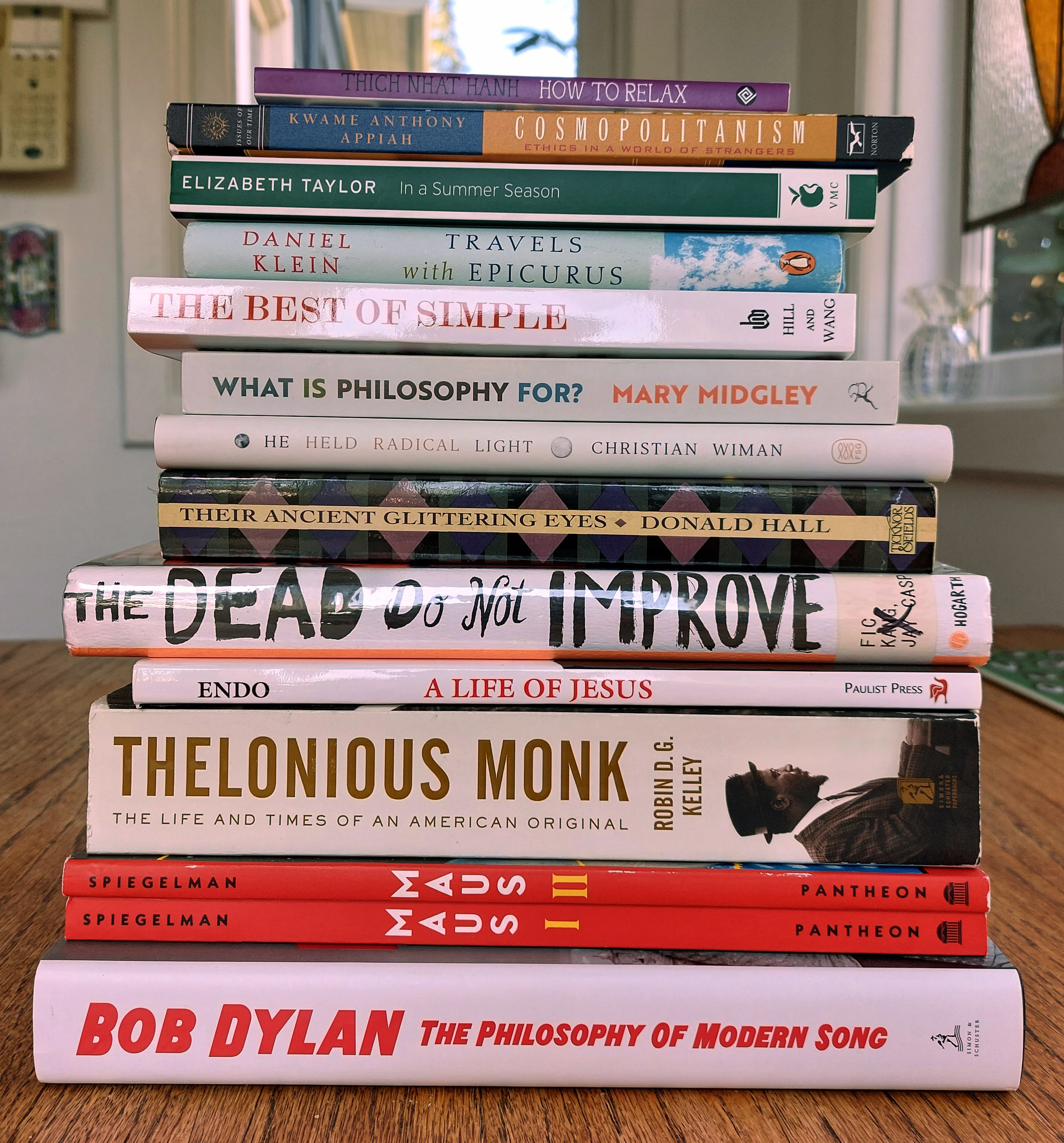
    Where did the idea for a bookclub come from? My stack of recently read books is about to topple over. This set began with Art Spiegelman’s “Maus: A Survivor’s Tale,” which he worked on through the 1980’s and won a Pulitzer in 1992. It’s a graphic novel in two parts about his father’s life in Germany during World War II and later living postwar in New York. Its ghostly and maniacal scenes are not quiet surreal, but leave a similar feeling – for it is, after all, predicated on the cartoon. It’s a comic book. The irony of that is so penetrating. It’s told in first person that shifts between his father’s recounting and Art’s narrative coming of age the son of survivors. It’s a masterpiece. And I don’t know how anyone could read it without wanting to share it. But who wants to relive it? The secret sharer puts it in a blog few read. Never mind the book club.

    But speaking of music, I also recently read Robin G. Kelley’s biography “Thelonious Monk, The Life and Times of an American Original” (Free Press, 2010). Monk’s mistreatments (self-inflicted or at the hands of others) are legendary; for example, the noted jazz critic Leonard Feather did more than criticize Monk – he attacked him for not being what Feather wanted him to be: “He has written a few attractive tunes, but his lack of technique and continuity prevented him from accomplishing much as a pianist,” Feather said (150). To be an original (in technique, continuity, or otherwise) is not necessarily to be accepted; on the contrary. Kelley’s book includes a good amount of history, Monk’s 20th Century environments: the causes and outcomes of the race riots of New York neighborhoods; the difficulties of surviving in the music industry; the difficulties for families of musicians who must travel to make a living; the prevalence of drugs in American cities, and the changes over time of police response; war, economic collapse, building and rebuilding, travel. Kelley gives us 600 pages, any one of which we might turn down a different street for readings to learn more about those subjects – again, the idea of a bookclub. But repeatedly we find Monk’s music dismissed by many of his contemporaries for its difficulties – difficulties which entertain rather than perplex today’s ears. Interestingly, the Beats and their poets found partnership in clubs that helped Monk finally flourish.

    Bob Dylan’s “The Philosophy of Modern Song” (2022) would make a good bookclub paring with Kelley’s Monk book. Dylan is another American Original, and his writing might strike many ears with difficulties similar to Monk’s piano. I’m almost never disappointed with Dylan, and this latest warrants reading and re-reading and listening. I put together a YouTube playlist of the 66 songs Dylan explicates in his book. Many of them have been recorded by more than one artist, so the trick is to get the version that most coveys the feeling of its mystery – that being how something so simple as a popular song can both create and evoke an entire era or single day in the life of an American coming of age in the age of “modern song.” And for those readers turned off by philosophy, not to worry, there’s not much philosophy to sing about here – the philosophy, like music theory, remains in the background.

    Speaking of philosophy, somewhere recently I noticed a new Mary Midgley book out, and quickly got a copy and read it. And, as it turns out, it’s her last one (Bloomsbury, 2018). Imagine living to 99 and the title of your last book? “What is Philosophy For?” Indefatigable, indomitable, Mary (look her up on YouTube and tune in to one of her conversations) defeats Dawkins and his ilk with real philosophy – that is to say, thought without propaganda.

    Shusaku Endo’s “A Life of Jesus” (Paulist Press, 1973) is a strange book. I like strange books. It’s about the Gospels, how they came to be first talked then written. The environments and people described are different from what we might come away with from the Bible versions. Here, for example, we get a fuller picture of John the Baptist, where he came from and what he wore, what he ate, what he said and did. Life can be strange in the desert. Essentially, we get closer to Jesus in the sense that the time itself comes alive. There is no question but that Jesus was a real person; he lived, in a real place, in a real time. The question of his divinity and why it has to remain such a mystery, almost a game, Endo does not quite answer, though it’s clear that he is a believer. It’s strange even to try to put this into words. I really like Endo’s book, and will read it again. It reminded me in some ways of Pasolini’s “The Gospel According to Saint Matthew” (film, 1964).

    A couple of books recently read did produce some disappointment: Christian Wiman’s “He Held Radical Light” (FSG, 2018) and Donald Hall’s “Their Ancient Glittering Eyes” (Ticknor and Fields, 1992). Don’t get me wrong; I liked both books. I even sent the Wiman to one of my sisters, thinking it would be to her liking also. These are both books about poetry, about poets, about poems and how and when they might be read and their purpose and import, their meanings, and the poetry and surrounding discussion I did enjoy. What I found disappointing was the emergence of an ego, a manic wanting on the part of both Wiman and Hall to write the poem to end all poems. Silly, that. It’s easy to see why and how poetry fails to live up to any kind of popular status in the marketplace – except for what we might find in popular song, in the philosophy of popular song, a philosophy that is lived but rarely talked about.

    I also read and enjoyed Jay Caspian Kang’s “The Dead Do Not Improve” (Hogarth, 2012). I had read that it was about surfers in San Francisco, so of course was interested. It’s not too much about surfing though. It’s a mystery, and accomplishes what it sets out to do. It’s entertaining, provoking, somewhat in the classic noir tradition, its characters representative of types of a kind, also of that noir setup. The dialog is fresh and accurate, the scenes clearly drawn, you get the smell and the feel of the place. The plot is convoluted, a bit like a shuffled deck of cards, and then reshuffled.

    That pretty much concludes my daytime recent book readings. To bed (to read) I’ve been taking Elizabeth Taylor lately (not the movie star). Reading now her “In A Summer Season.”

    In the end, writing about writing is rarely as interesting as the writing one is writing about, but there are exceptions, and those exceptions I’m always on the lookout for. Meantime, I’m still working on the guitar. I’ve been playing guitar almost as long as I’ve been reading. Have no intention of giving up either, but talking about reading, like talking about music, is a different pastime than writing or playing original pieces.