We were talking about books, not the content of books, but why keep them, as they stack up, one after another, placed then a few on a bedroom window ledge, the book’s fore-edge facing out, the row then expanding, one after another, paperbacks, written in, too, the worse for wear, then the need for a bookcase, and the inevitable question: why all the books, probably won’t read them again, any one, maybe, but not all of them? And, of course, why not just get them from the library?
In his autobiography, Benjamin Franklin talks about individual libraries, and knowing the friends in his reading group all have personal libraries, he suggests pooling them together, and thus the first subscription library is launched. Where did he get his calling to read books? He mentions his early enjoyment of reading and his father’s library:
From my infancy I was passionately fond of reading, and all the little money that came into my hands was laid out in the purchasing of books. I was very fond of voyages. My first acquisition was Bunyan’s works in separate little volumes. I afterwards sold them to enable me to buy R. Burton’s historical collections; they were small chapmen’s books and cheap, forty or fifty in all. My father’s little library consisted chiefly of books in polemic divinity, most of which I read. I have since often regretted that at a time when I had such a thirst for knowledge, more proper books had not fallen in my way, since it was now resolved I should not be bred to divinity (26).1
Doubtful I was destined for the divinity, nor did my father own any books. It was my Confirmation sponsor who encouraged me to read. He found me reading a comic book and suggested I read Classics Illustrated. We walked across the street to the Village Liquor Store to browse through their rack and he bought me copies of “Kidnapped” and “Moby-Dick.” Alas, I did not save those. Introduction to Saint Bernard High School in Playa del Rey included summer reading prior to entering the 9th grade – a reading list was sent, and I duly read, collected, and displayed the books on my bedroom window shelf, perfect size for paperbacks.
Reasons for maintaining a personal library might include nostalgia that grows new rings with each reading year, sentimental journey, collecting books as a hobby or investment, or books close by used for reference and research, and the aesthetics of books and bookcases, or of course simply a hoarding impulse.
With a personal library comes personal borrowers, many who consider a borrowed book a given. And indeed I have given books away. A couple of years ago, I posted that at around 3,000 books I gave away half. One should have an affinity of some sort for a book to keep it. And I do reread books. And some books are read through again and again, never finished, it seems, the James Joyce books, for example. Barbara Pym’s “Excellent Women” and Penelope Fitzgerald’s “Offshore” I’ve read several times in the last few years, and read them aloud to Susan.
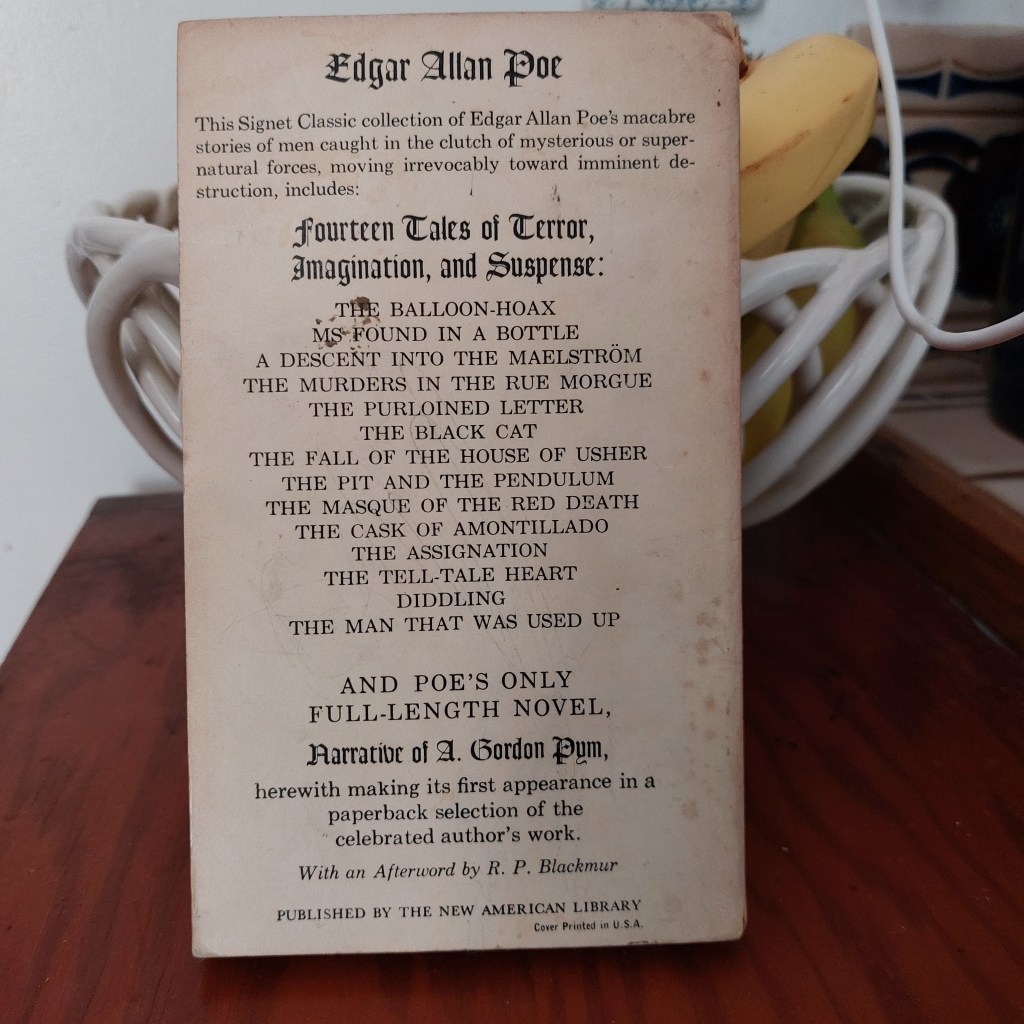
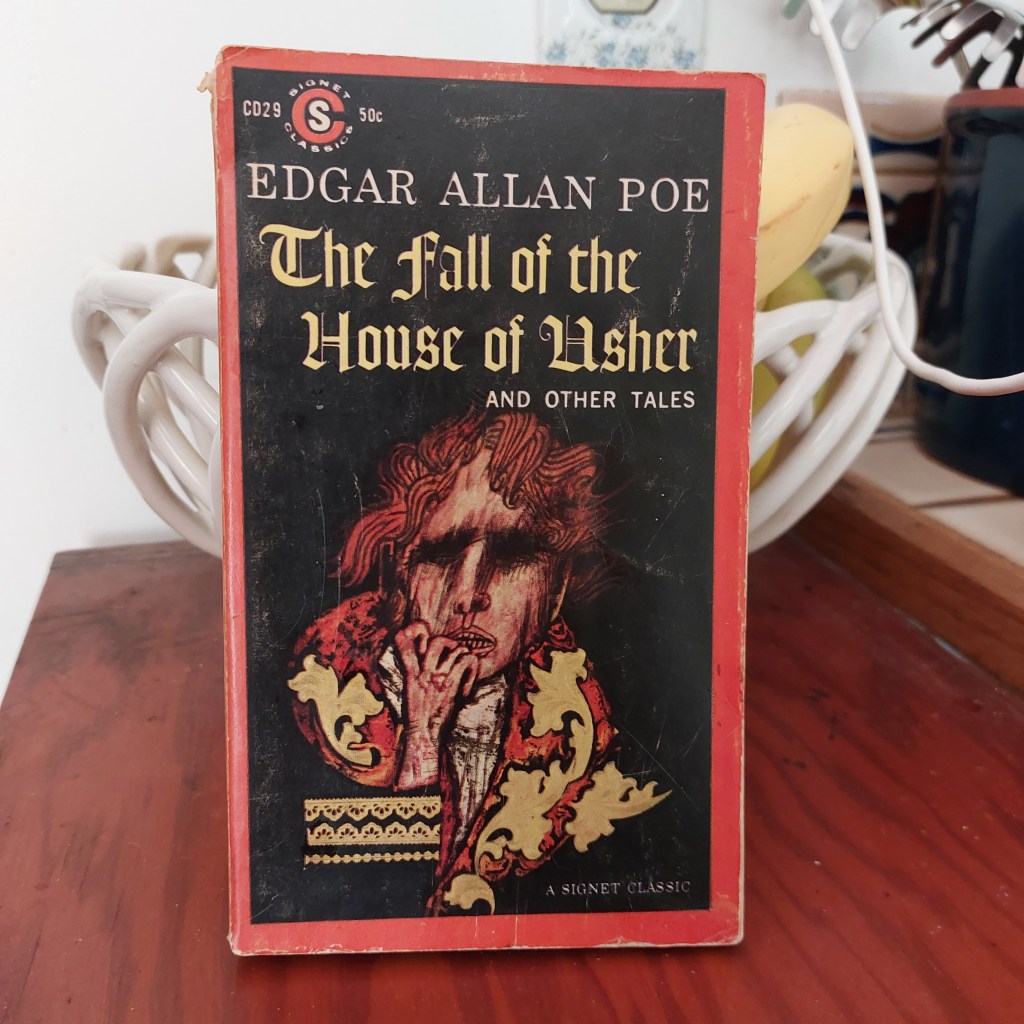
One of the oldest books in my library is Edgar Allan Poe’s “The Fall of the House of Usher And Other Tales,”2 read in the 9th grade at St Bernard. I forget what we did that so annoyed Mr. Subiando one day, but I remember copying longhand “The Pit and the Pendulum” one long weekend, a class penance.
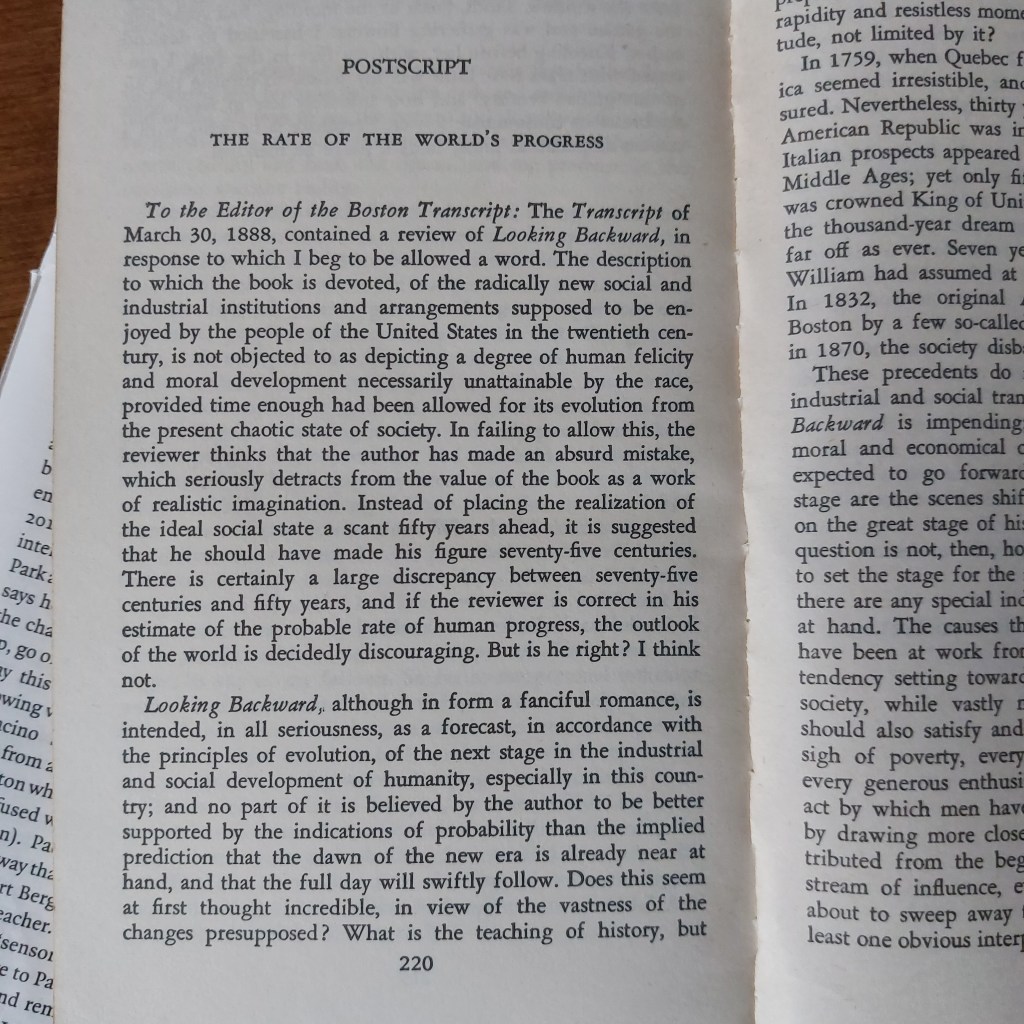
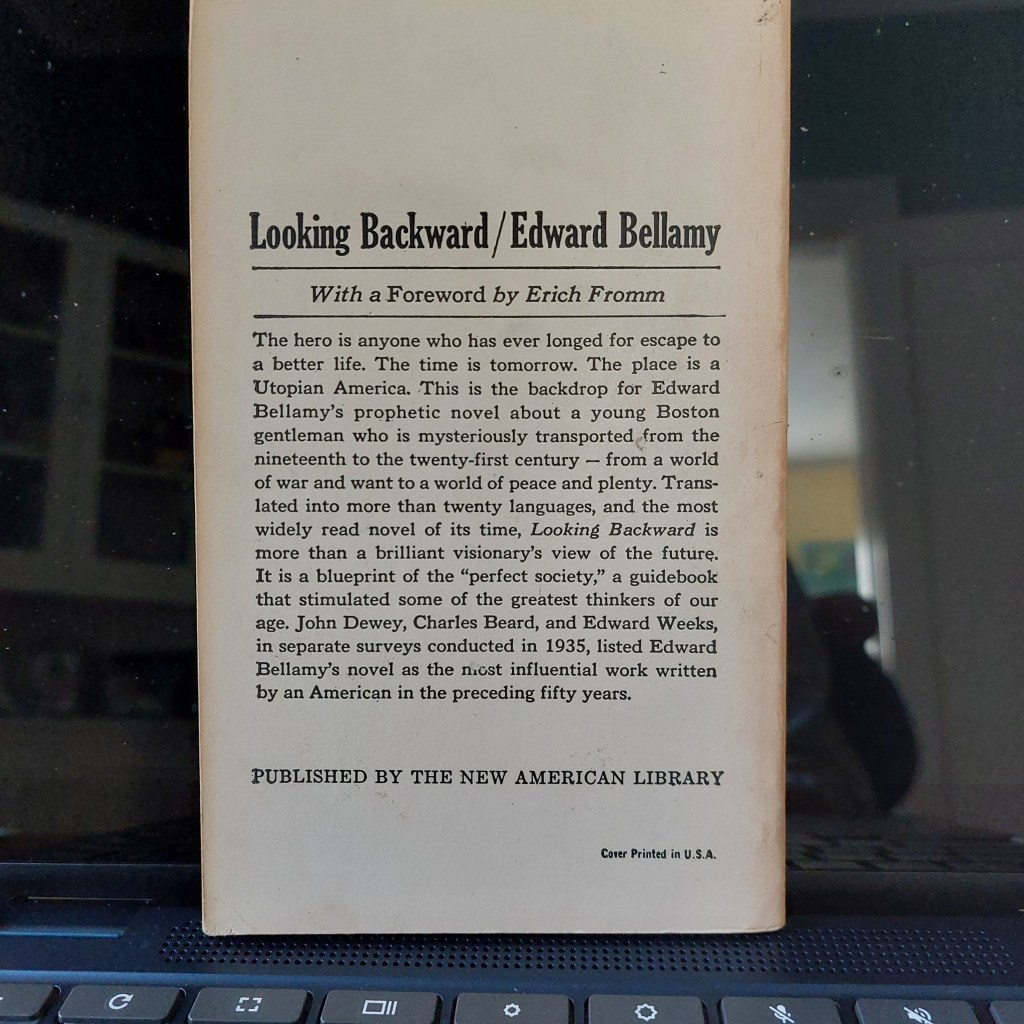
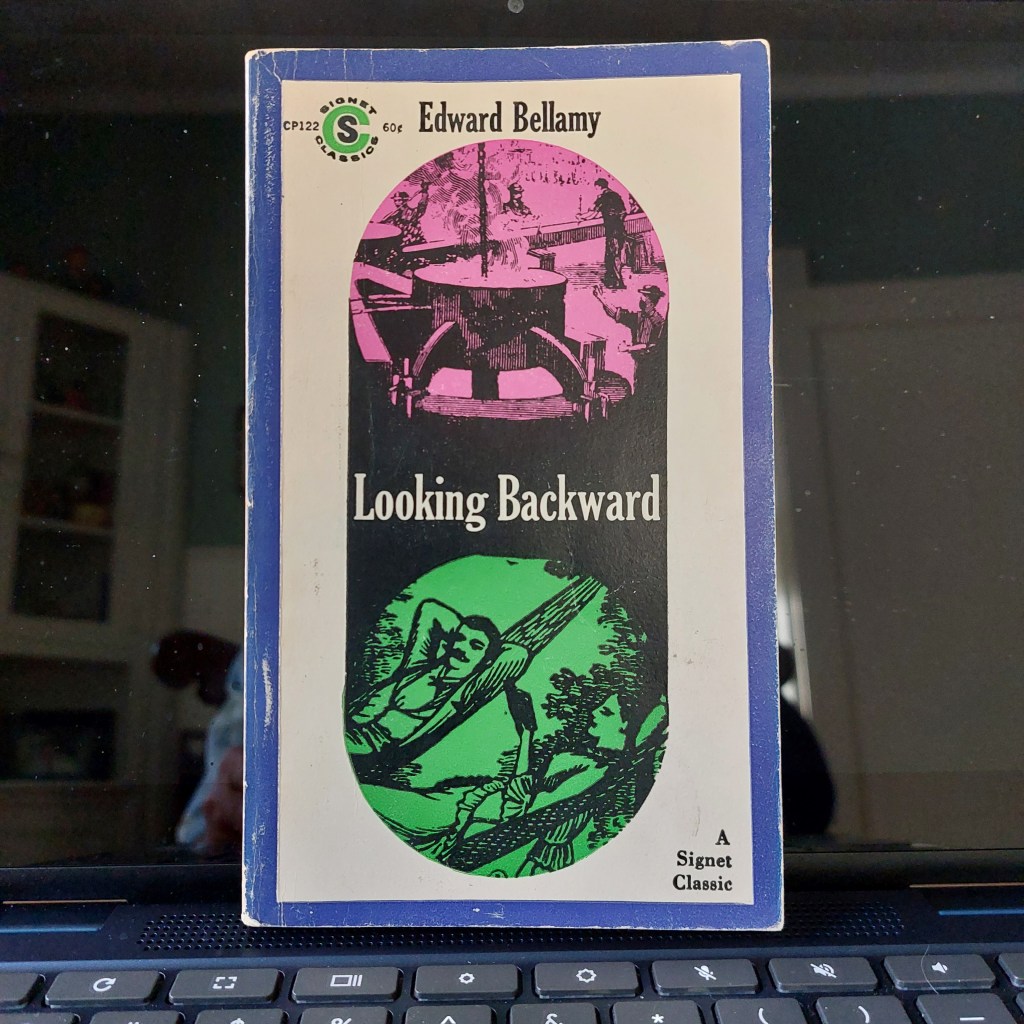
Another book from that bygone bedroom window shelf, “Looking Backward,” by Edward Bellamy.3 The year is 2000 when Julian West awakes from the year 1887. Things have changed, of course, but for the better, and there is no need for a personal library:
“Under the present organization of society, accumulations of personal property are merely burdensome the moment they exceed what adds to the real comfort” (89).
Books in a collection can be burdensome, particularly when having to move abodes or rearrange a room. And old pages grow musty, stiff, spines arthritic. Books of the number I own suggest a sedentary lifestyle as well as a preference for private ownership unnecessary in Bellamy’s year 2000 and certainly obsolete, antiquated, old hat in 2025’s era of e-books:
“I cannot sufficiently celebrate the glorious liberty that reigns in the public libraries of the twentieth century as compared with the intolerable management of those of the nineteenth century, in which the books were jealously railed away from the people, and obtainable only at an expenditure of time and red tape calculated to discourage any ordinary taste for literature” (115).
Which brings me to Bluesky. I’ve opened a Bluesky account4 with the intent to use it to build a kind of catalog of my library. As such projects of mine go, cartoons on Substack, for example, now twice defunct, I don’t know how long I’ll keep up adding to and maintaining the catalog. And Bluesky is probably not the best place for such a project. I do prefer a simple life, free from adornment and tackle and stuff. Maybe I should concentrate on getting rid of the books rather than spending time cataloging them. But already the Bluesky project has proved useful in giving me pause to open and enjoy a few old paperbacks I’d not looked at for some time.
A Bluesky personal library catalog? A personal library at all? What do you think?
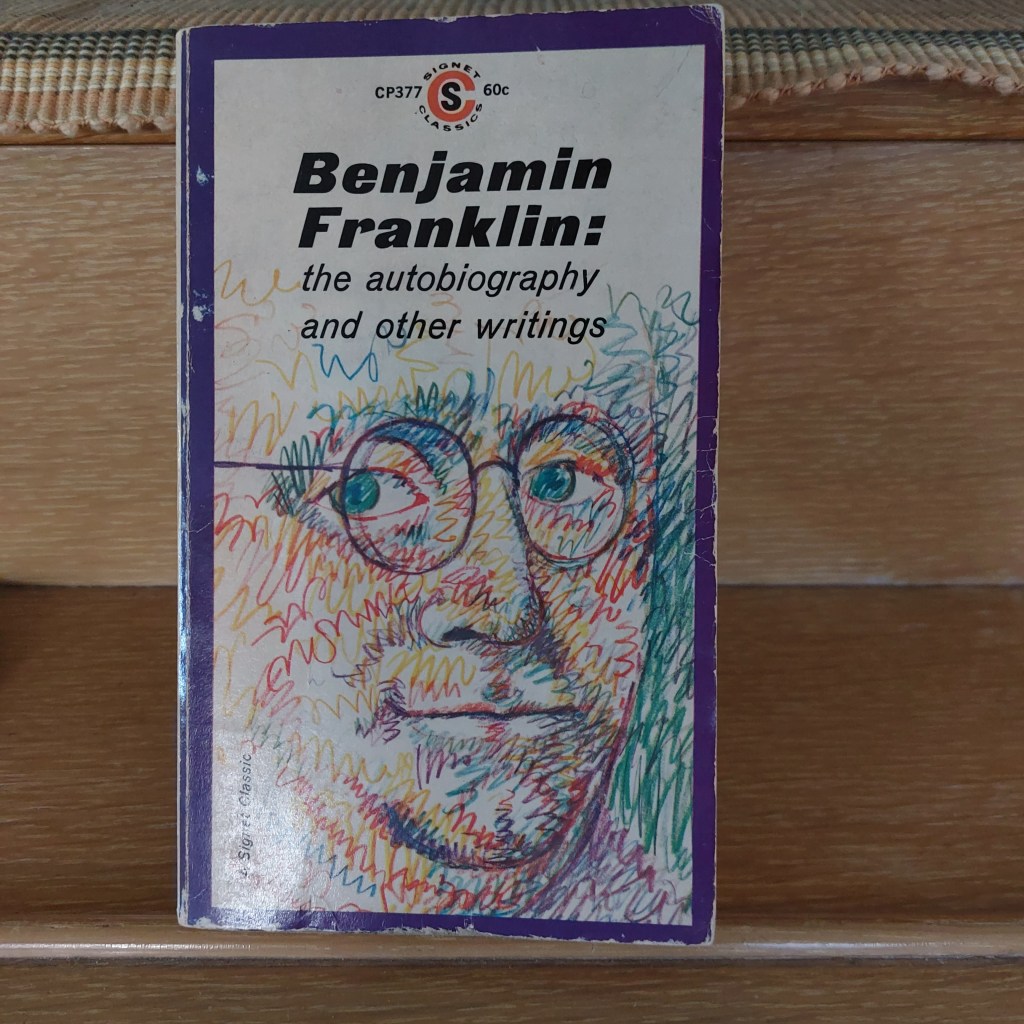
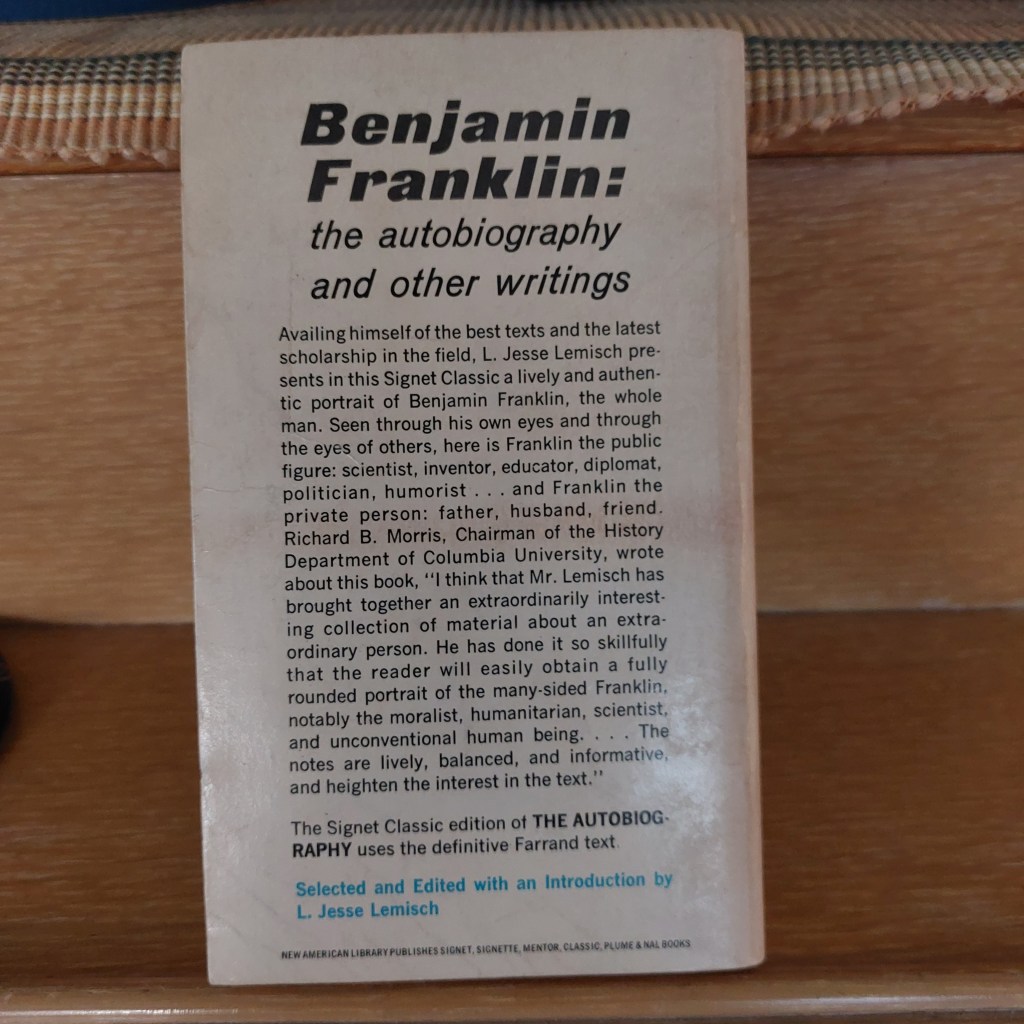
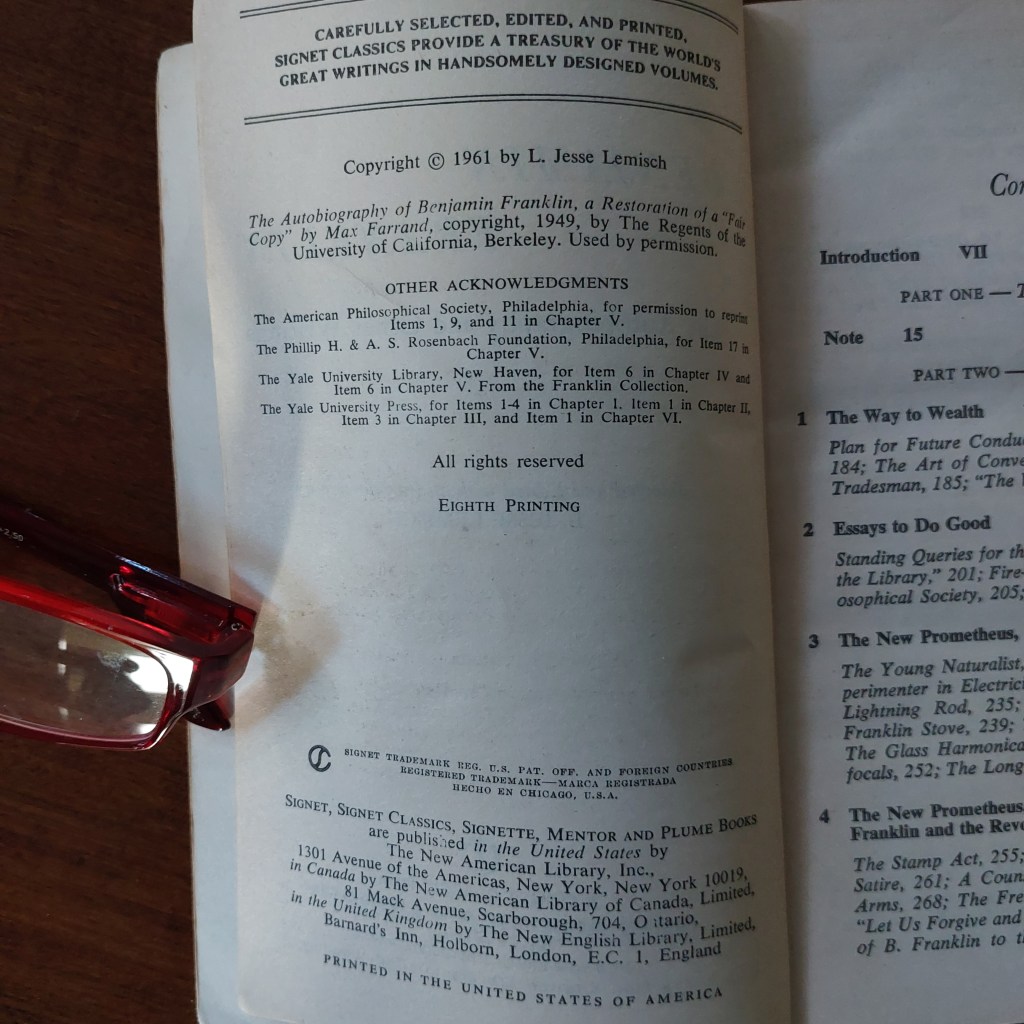
- Benjamin Franklin, “The Autobiography and Other Writings,” Signet Classics, 1961, CP377, Eighth Printing. From the copyright page: The Autobiography of Benjamin Franklin, a Restoration of a ‘Fair Copy’ by Max Farrand, copyright 1949.” ↩︎
- Edgar Allan Poe, “The Fall of the House of Usher and Other Tales,” Signet Classics, 1960, CD29, 50 cents. Afterward by R. P. Blackmur. ↩︎
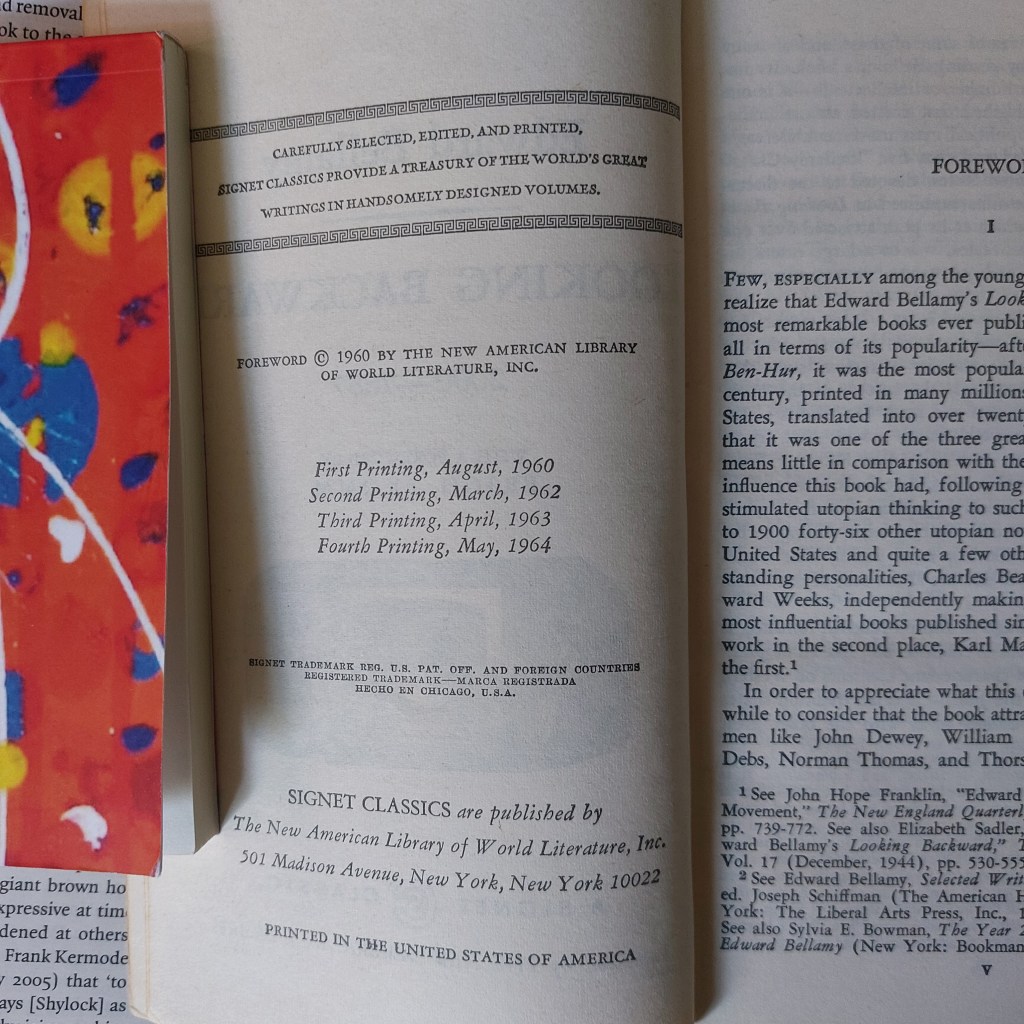
- Edward Bellamy, “Looking Backward,” Signet Classics, First Printing, August, 1960; Fourth Printing, May, 1964. CP122, 60 cents. ↩︎
- @joelinker.bsky.social https://bsky.app/profile/joelinker.bsky.social ↩︎
 The Coming of the Toads