Tag: Beckett

  • Bananas

    When Samuel Becket wrote “Krapp’s Last Tape” (1958), could he have picked any fruit other than the banana for Krapp to cram in his pocket? Were bananas a fave in Paris at the time? Did Beckett eat daily bananas? Surely at Somewhere U there’s a thesis on this. By the time of Krapp’s writing, WWII rations had ended in Europe, the new concern, regarding bananas, tariffs and costs. How much would one pay for a banana? What is it about the banana that inspires both commodious jokes and serious art as well as market speculation and spectacle?

    Or all of the above. Reference the recent banana art installation that apparently sold at auction for $6.2 million. The banana is taped to the wall with duck tape. (Where’s Andy Warhol when you need him?) The duck taped to wall banana used the traditional gray colored duck tape. But duck tape now comes in various colors, and we would have picked a bright blue, which might suggest, mixing with the yellow, green, the color of money, which is what it’s all about, though at the same time, ok, it might say something about art, or art collecting, anyway.

    The duck taped banana, titled “Comedian,” is acoustic, unlike the “electrical banana” in Donovan’s 1966 song titled “Mellow Yellow.” We won’t go into the suggestive meaning behind the banana electric, but it is easily looked up. In any case, an electric neon lit banana might have fetched even more than the $6.2 MM, with a wire dangling down to an outlet, perhaps requiring one or two additional strips of tape to secure it to the wall.

    No telling what Beckett might have thought of all the current brouhaha over the banana. But “Krapp’s Last Tape” does contain both banana and tapes, at last count at least three bananas, all eaten, the peels discarded on the stage.

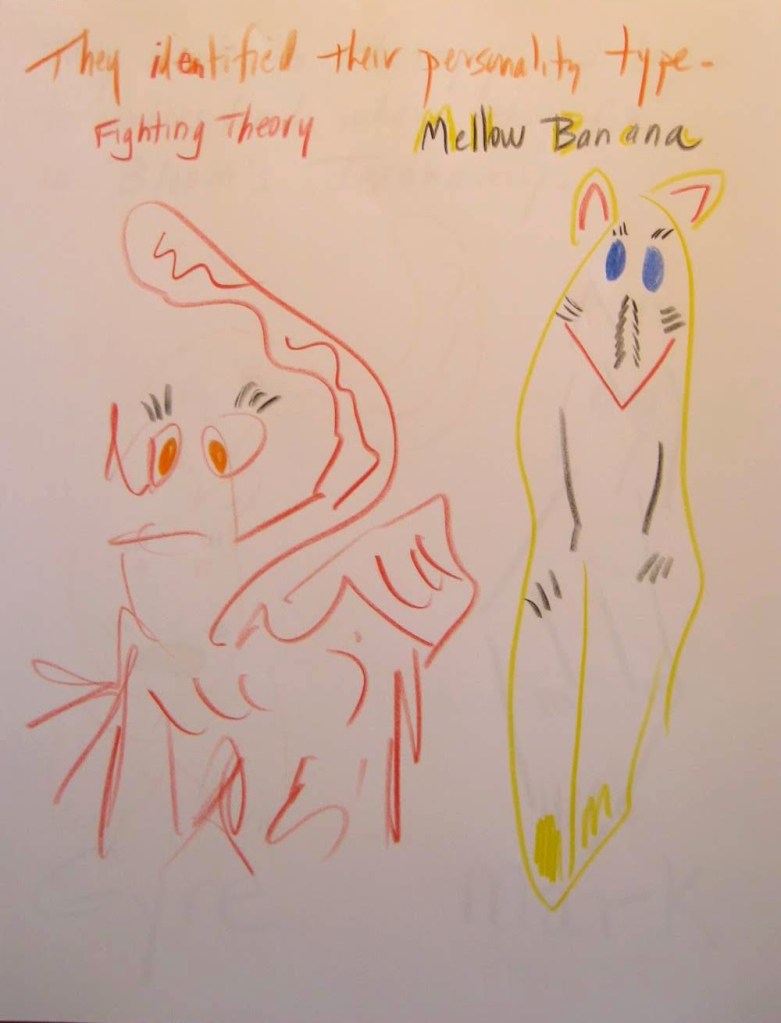
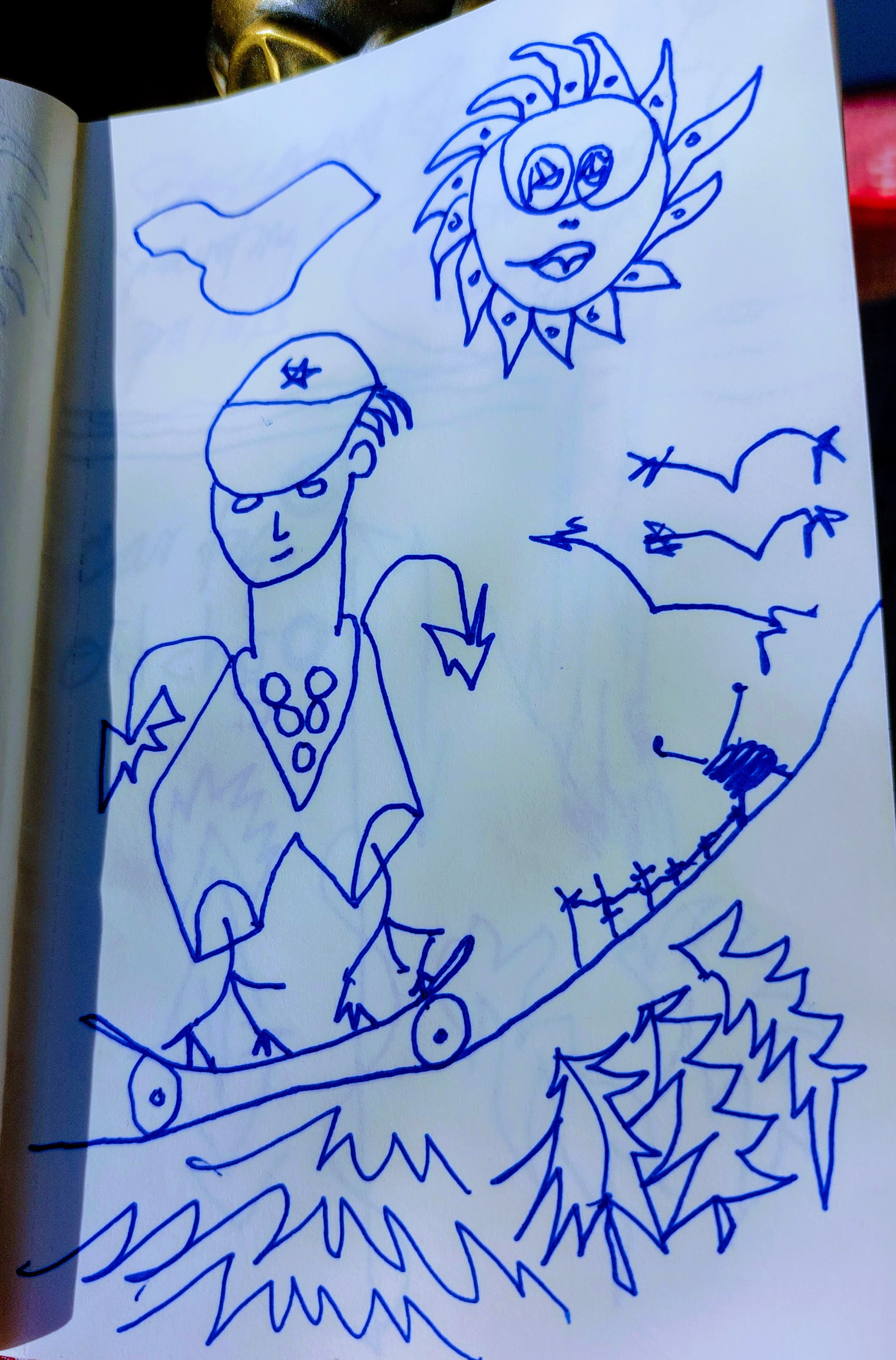
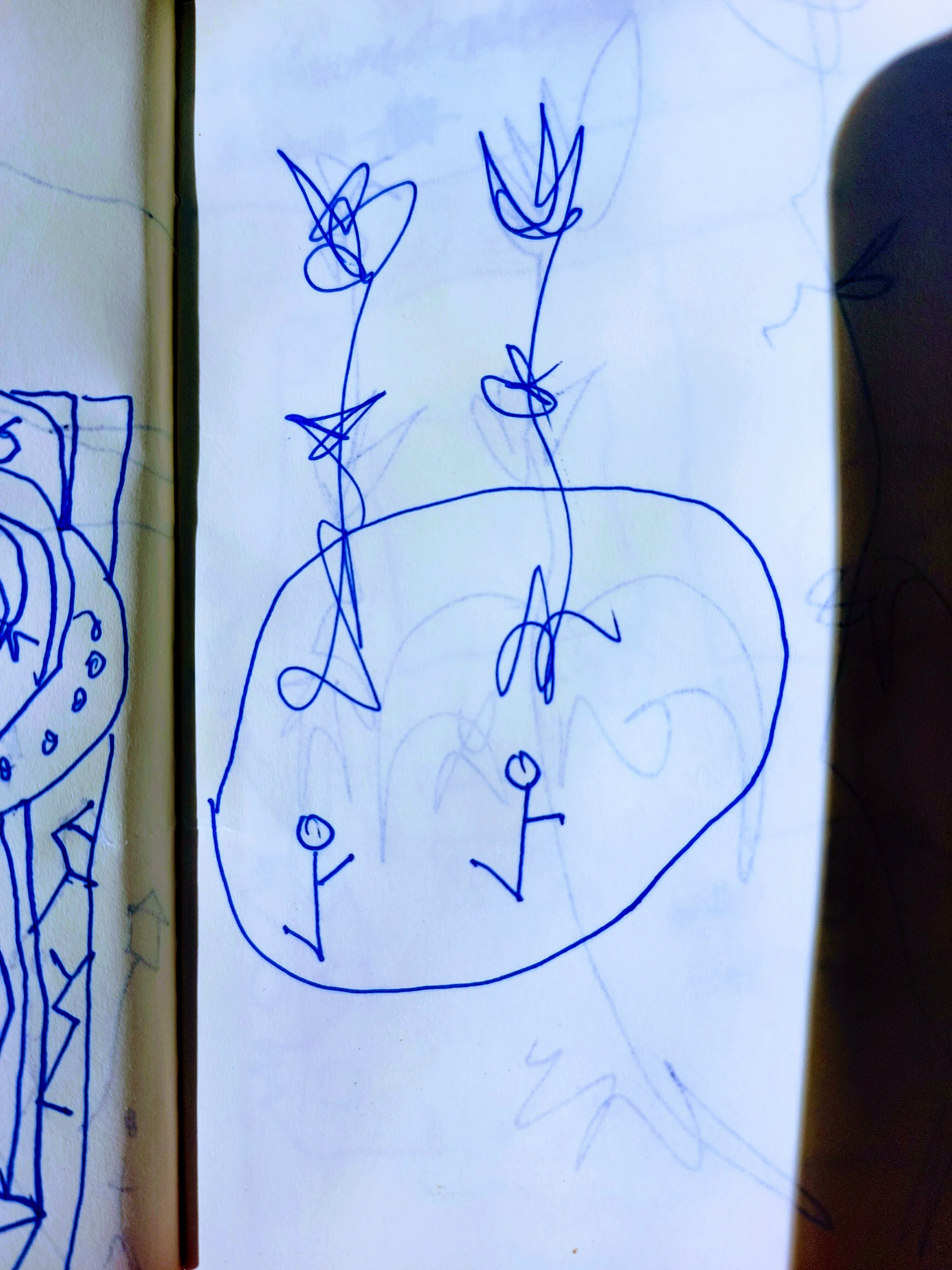
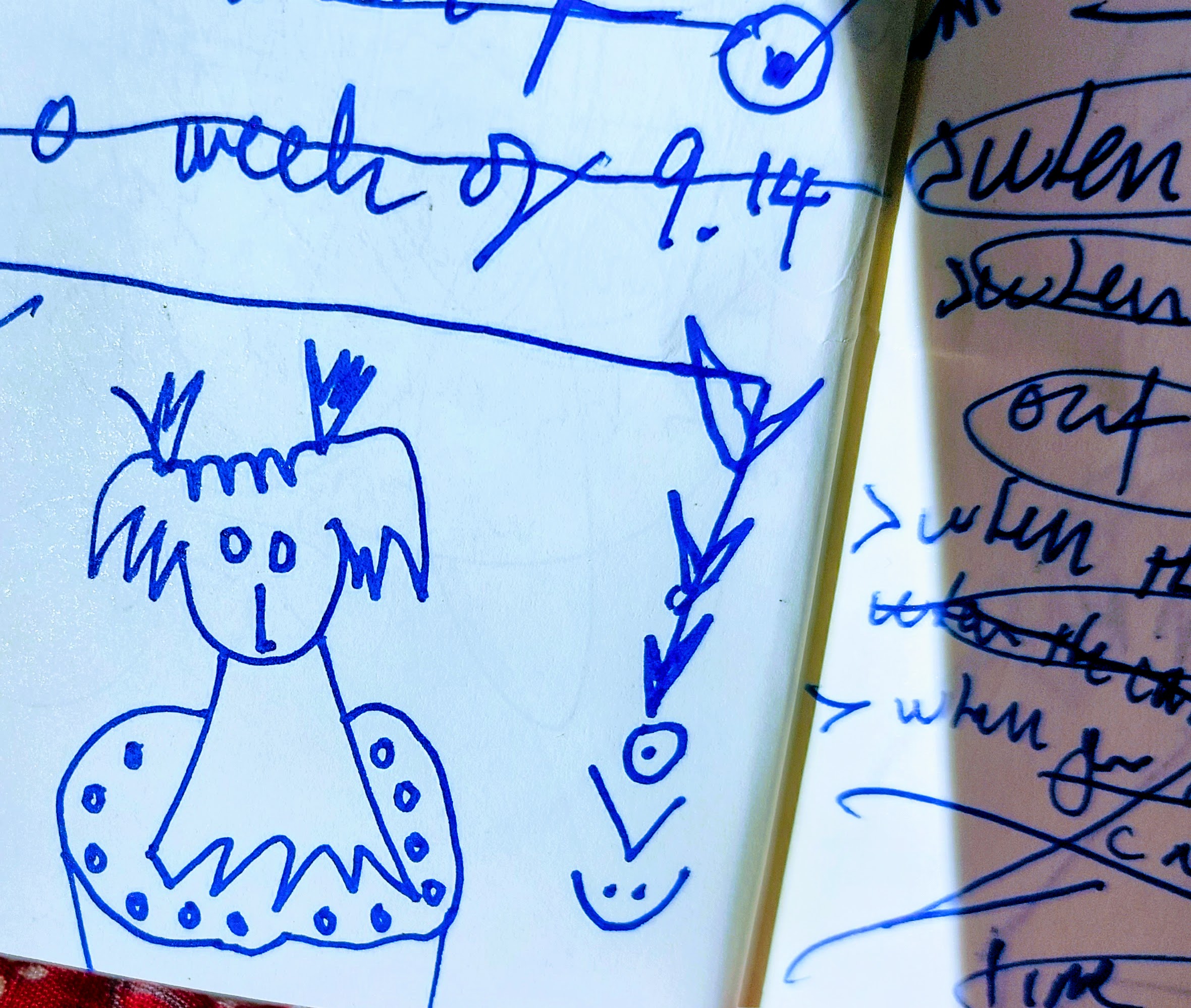
    Speaking of bananas, below is a page from a draft sequel to “Scamble & Cramble: Two Hep Cats and Other Tall Tales.”

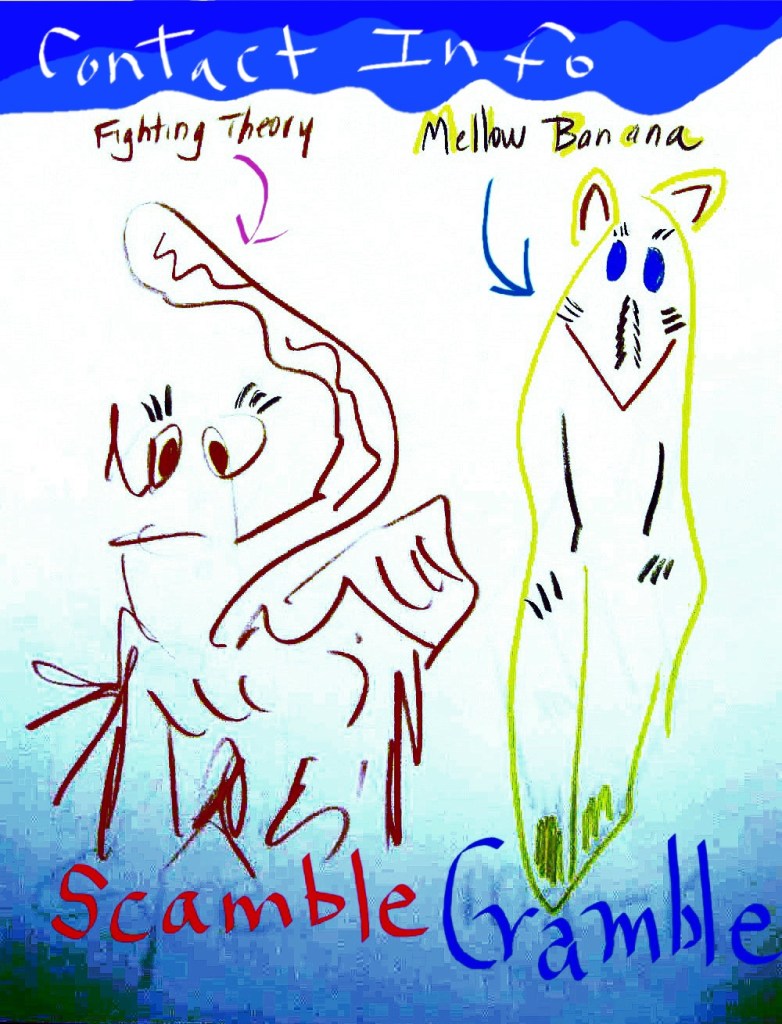
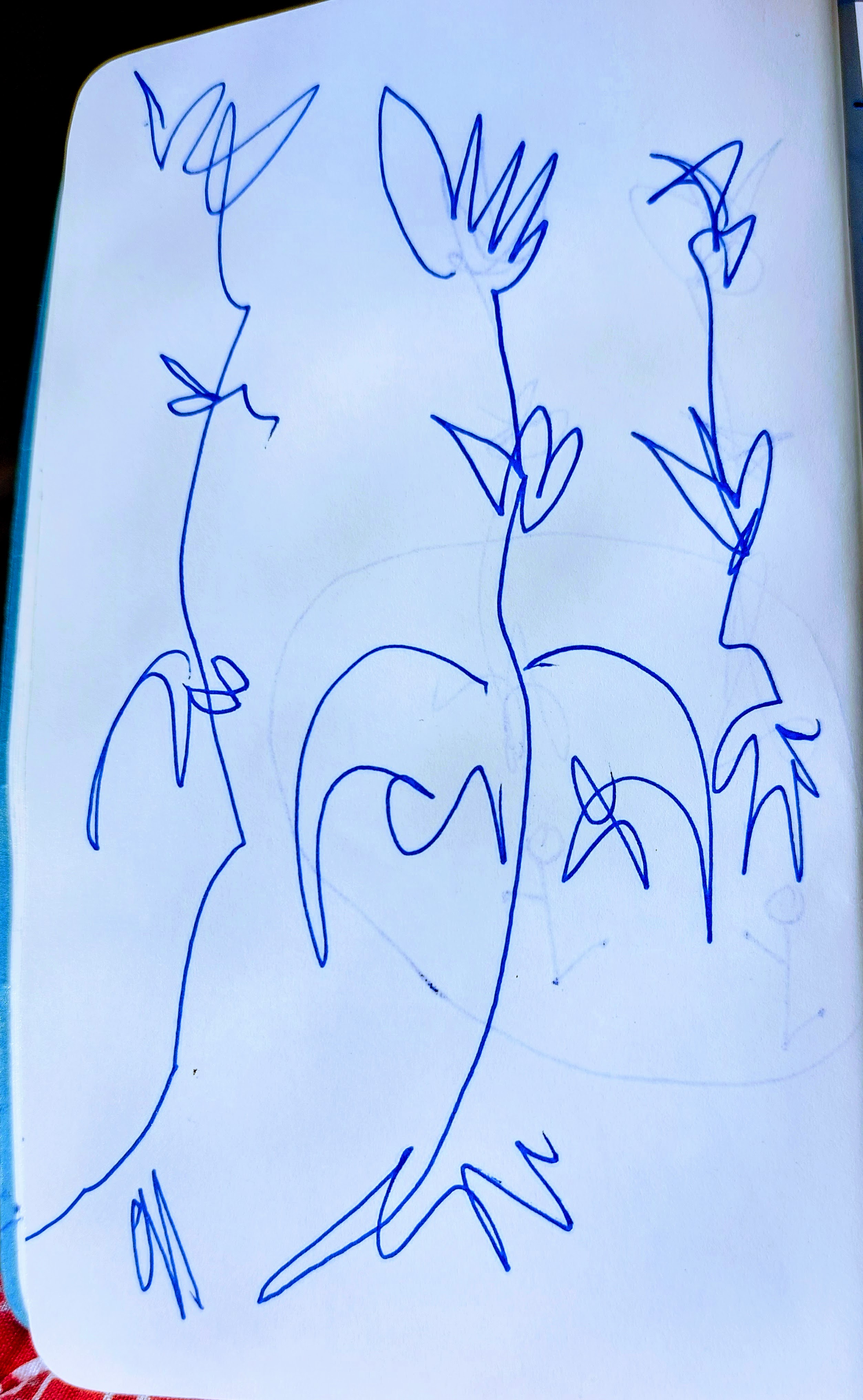
    And below, a newer draft, in which the cats get hep to social media:

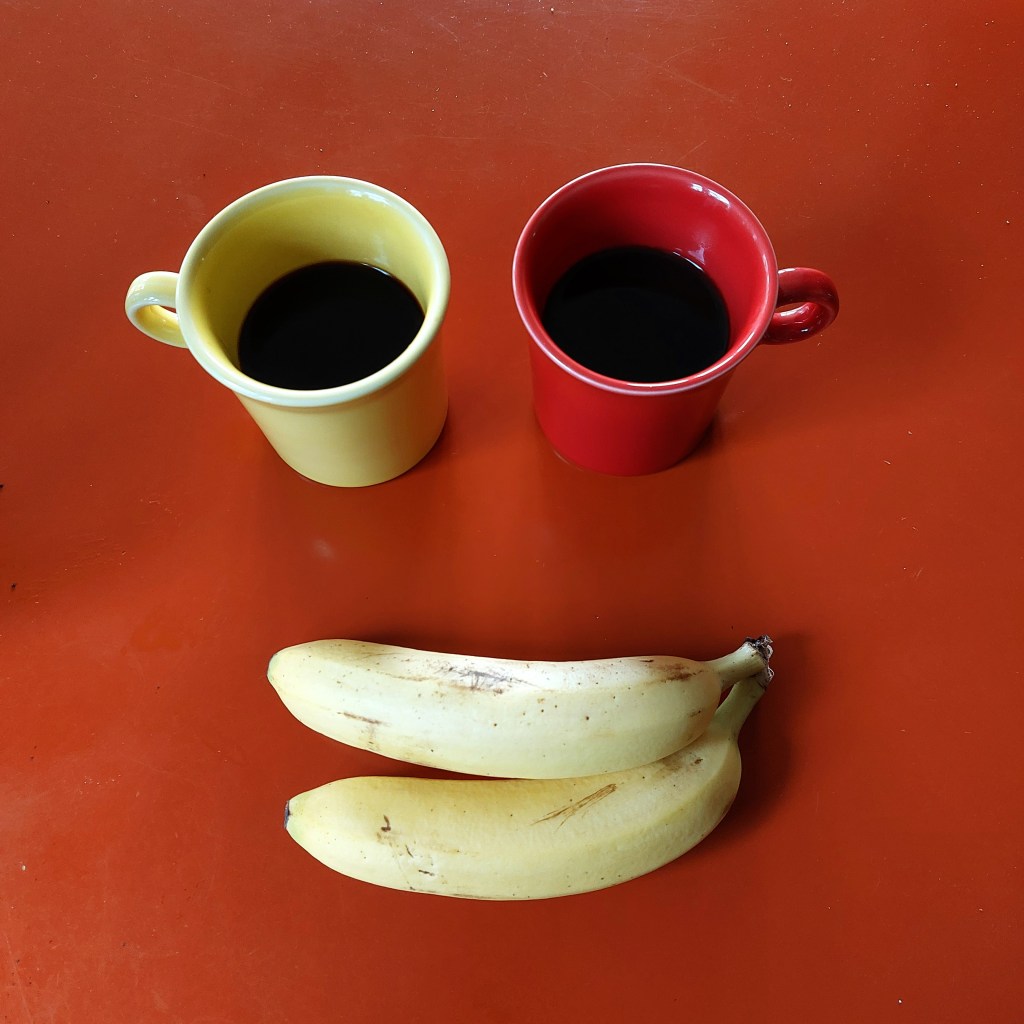
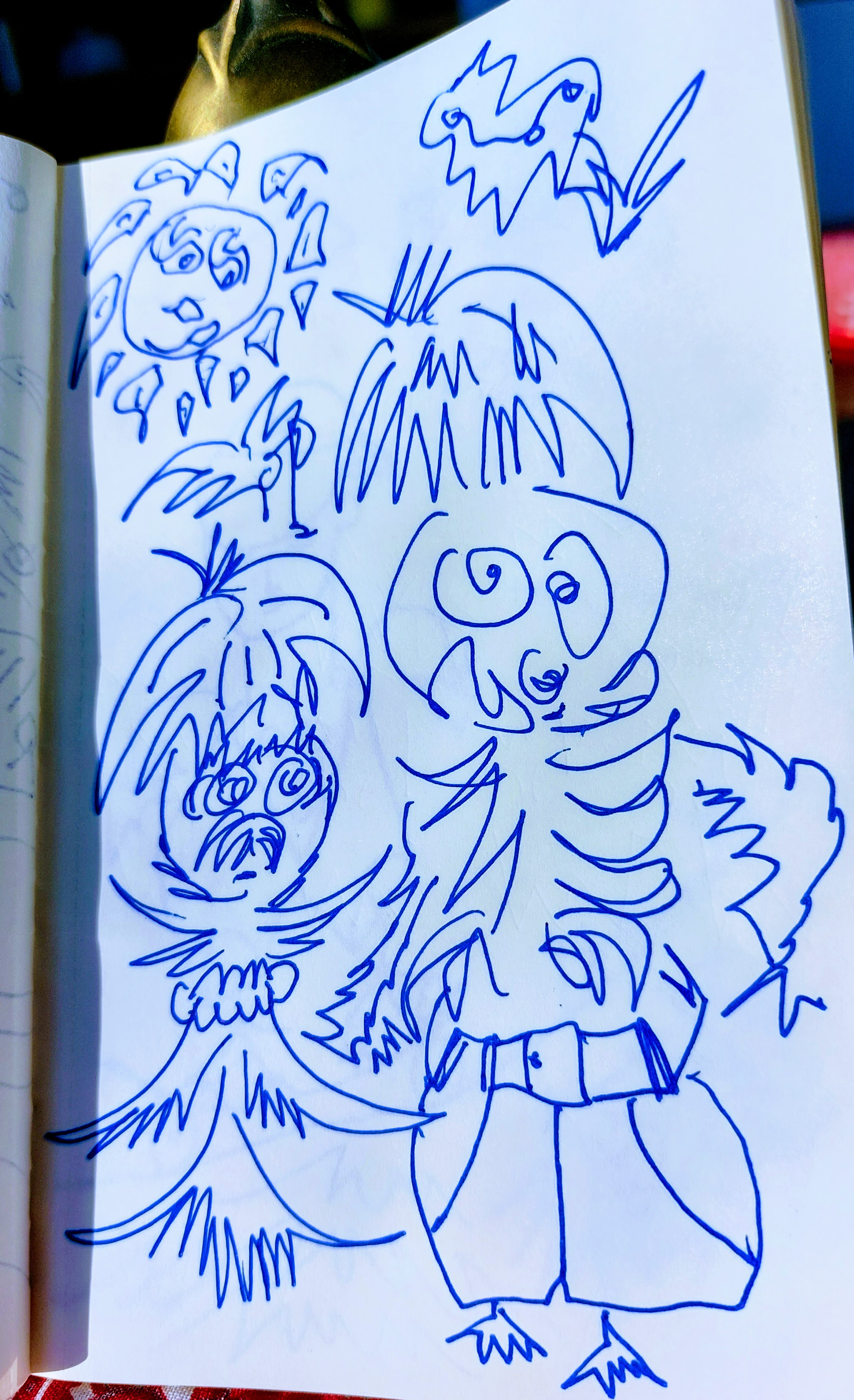
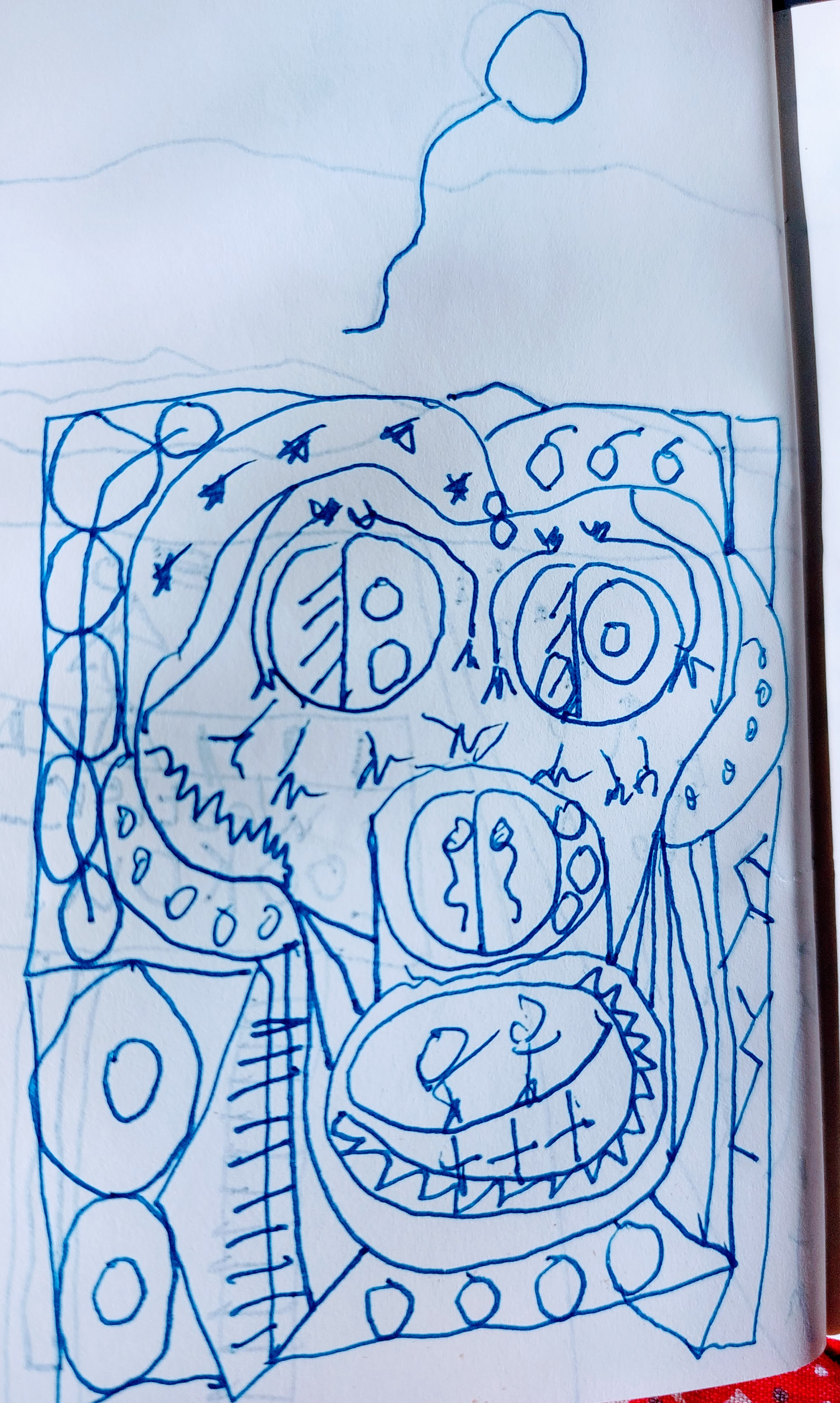
    And this morning, bananas and coffees with Susan:

  • Nothing to be done

    Where Joyce tried writing everything in, Beckett tried leaving everything out. For Joyce, writing was a process of addition; for Beckett, one of subtraction. In Waiting for Godot, the phrase “Nothing to be done” becomes a kind of mantra. But it’s just an opinion, as Vlad says, even as he considers giving in to it:

    Estragon (giving up on his boot) 
    
    - Nothing to be done.
    
    Vladimir
     
    - I'm beginning to come round to that opinion. All my life I've tried to put it from me, saying, Vladimir, be reasonable, you haven't yet tried everything. 

    “Waiting for Godot,” Samuel Beckett, 1953

    Beckett’s characters often seem to have nothing to do. Most modern distractions are taken out, life’s experience parboiled to essentials. There are not many spices on Beckett’s kitchen shelf. Estragon and Vladimir don’t have cell phones. No books, no television, no newspaper. The game is not on. The team is not in town. The ballpark is empty. The surf is flat. While they consider what to do when there is nothing to be done, they can’t sit still. They talk. They have one another.

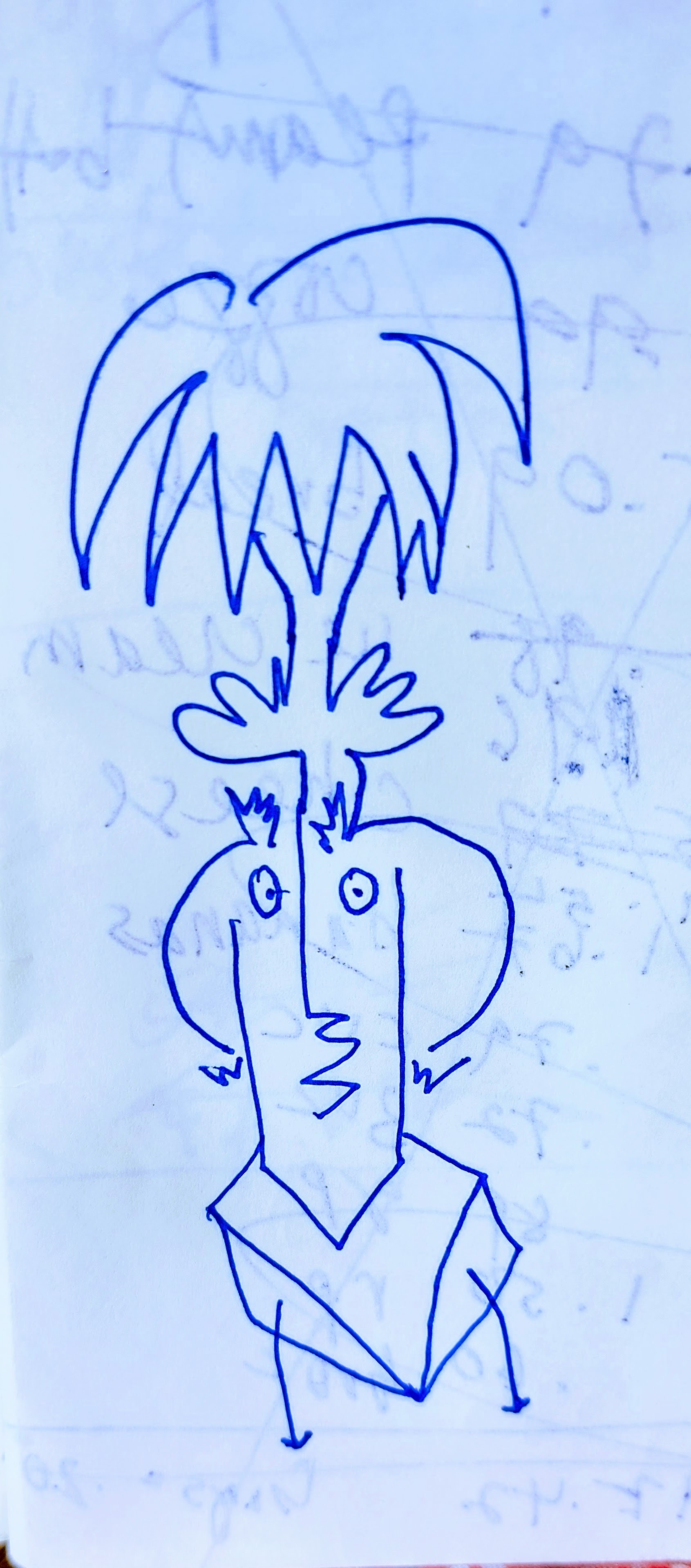
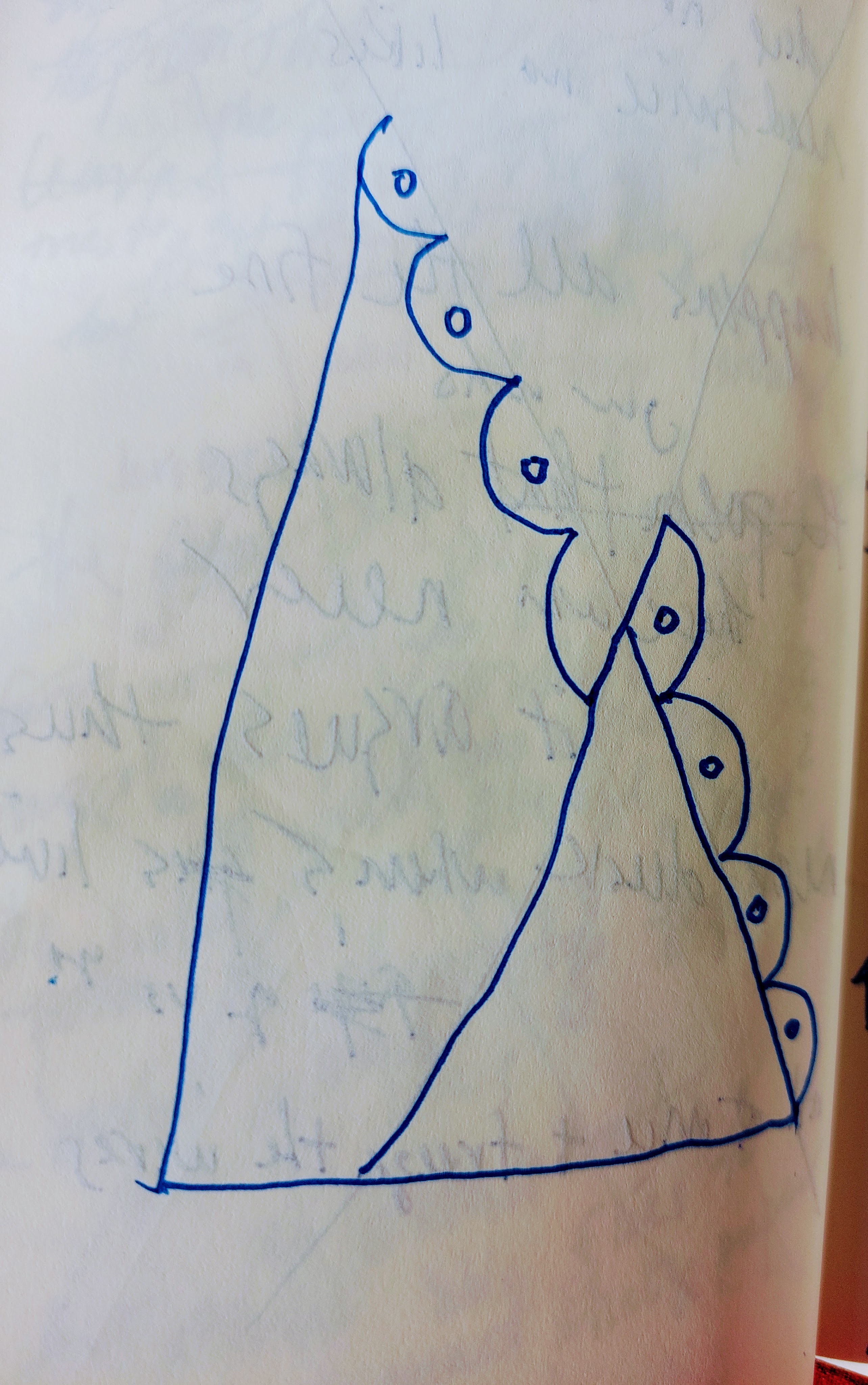
    If they had pen and notebook, maybe they’d doodle:

    If they had a laptop, maybe they’d blog.

  • Wait!

    Who waits for Godot
    (rhymes with da dough)
    wants an oppo
    waiting for the doe
    in the dell –
    won’t you wait with me?

    Waiting for Godot
    for Larry, Moe, & Curly Joe
    for onomatopoeia to blow
    its toupee into the tree
    on a country road.

    Waiting for snow
    to cover the fallen
    waiting for the obvious
    and the obscure.

    Waiting for a
    tree to grow
    pi to round
    oh even
    waiting for you.

  • What to do

    “Nothing to be done,” Didi and Gogo bicker, essentially about what to do, like an old couple of a long suffering, loving marriage. Nature is no refuge; the one tree in their world seems sick. They can’t go anywhere, for fear of missing their appointment with Godot. They hang out and talk, express various physical complaints, visit the past, ask questions they can’t answer.

    The play, Samuel Beckett’s “Waiting for Godot,” is famously about nothing. Nothing fills the stage, informs the dialog. If they carried cell phones, their batteries would surely be dead. In any case, they’ve no one to call, and no one to call them.

    The two (often described as tramps, bums, or hoboes of some kind, clowns of some sort, lost from their circus, or stripped to being human without diversion down-and-outs) might be among the last few of a pandemic, or simply retired, their pensions just enough to enable them to do nothing but talk freely, which is everything in a world of nothing.

    It’s not easy – doing nothing. Even contemplating nothing can be a nerve-racking business, fraught with anxiety. Consider, for example, what nothing is. Nothing is what is not. In the beginning – well, just before the beginning, all was nought, and from naught came all.

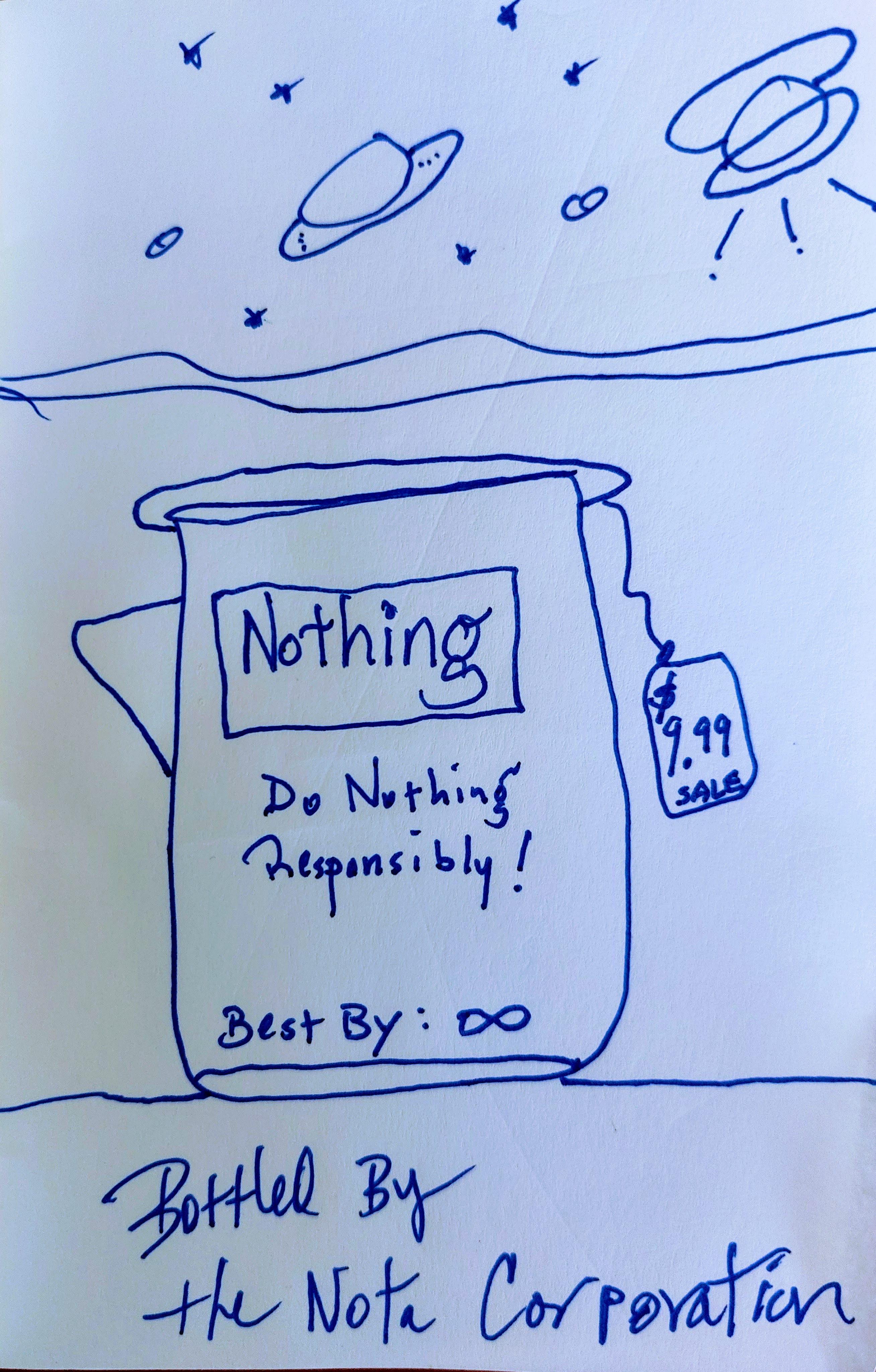
    And it’s not easy doing nothing responsibly. nān thing. And yet, if you make a practice of it, you are called a do nothing. But there is no such thing as nothing. Nature overkills. If the universe is infinite, and the universe is composed of things, there can be nothing within, and nothing without.

    Consider a bottle out of which you suck everything, leaving nothing, and you cap it, a bottle of nothing. Would it be dark in there? Like dark matter? For if everything is taken out, light too must be absent. If scarcity creates value, what could be more precious than nothing? And Didi and Gogo are its brokers.

  • To Be Clear

    no, thing
    naught wight
    if not clear
    to the floor
    who wears
    no ears

    who won’t talk
    but the beer
    makes void
    the crooked path
    down the page
    to the sea

    and to the critic
    a still small voice
    lives in a library
    built of stone
    nothing staged
    untended

    not what
    can’t be
    explained
    in a footnote
    “no symbols
    where none…”

    inflected
    by tense
    mood
    a person’s
    case
    carried.

  • What I Write

    Having addressed, as it were, most recently, Why and How I write, we now turn our attention to What. Yesterday, I said that when and where writing is written are not important. I rush now to correct that. When and where are maybe more important than why, how, or what. Consider, for example, Beckett’s Watt, written in double exile (from Ireland, his homeland, and from occupied Paris, hiding out in Southern France). But Watt does not seem to be about the war. But I don’t want to write about Watt this morning. I want to write about what. But it may not matter what’s intended; readers are notorious twisters of words, collecting twine into a ball, where to twine is to moan, complain, whine.

    The problem lies with linearity. Where there are no straight lines. At the moment, I’m typing on the keyboard of a laptop computer. A MacBook Pro, circa 2010, so an old one, as these things go. Directly into a WordPress block. Such my brass. I watch the cursor flicker, waiting. I should slow it down, but I forget how that’s done.

    When, yesterday, reader and old, old friend Dan commented regarding paper and pen, “it almost seems a quaint nod to a passing phenomenon,” I thought of McLuhan and his analysis of the printing press (see his The Gutenberg Galaxy: The Making of Typographic Man), also now a passing observable fact or event. A machine we understood how it worked. It made everything the same, uniform. Straight lines. Single point of view. That sort of thing.

    Outside, through the second story window, I can see a Camelia, pink and white, just coming into bloom, and a weeping Cherry in full bloom, and some scraggly plums not boasting just saying bring us your bees, your flies, your birds, your squirrels. The plums are just over the back chain link fence, up against it, ignored. Occasionally a branch breaks, ice or snow laden, or heavy near the end of summer with fat purple plums that fall into my yard, more than I can eat. I should learn to make plum pudding, jam, or some sort of plum soup. Plum Clafoutis. That’s it.

    There you have it. I would not have mentioned plums this morning had I not decided to write from the upstairs window instead of the downstairs nook where I usually set up.

  • Alternate Endings

    No end will suffice, not fire nor ice. In the beginning, things started off with a bang, a big one at that, after a night of fitful sleep, though how one measures big in the face of nothing surrounding seems insolvable. In any event, life, what is (the distinction between organic and disparate proven fallacious), now looks to have been without beginning, so a world without end seems fitting. Nevertheless, we begin anew, if not afresh, at the diurnal clarion call. To awake is irreversible, at least for a few hours. Always some remains. And while the Big Pop was the most considerable in several hours, having sunk deeper than one can remember, nothing but whimpering since, awake with the bends. But it won’t finish with a whimper. No end and no exit and no exit and no end: how’s that for the unknotting?

    Up and about, wandering now bottom of bole (trunkus, luggage compartment, the part of a tree above the roots and below the branches). Think Beckett’s “Krapp’s Last Tape,” evening in the future, looking backward. Distribution. Retail branches, manufacturing roots.

    All brick and mortar retail closed, malls emptied – or might as well be, old habits dropped. The only jobs are those deemed essential. Who deems? The Great Deemer. People waiting in long lines to enter the one remaining store where the shelves are empty, just to look around, shopping it’s called, nothing much needed. Staples delivered. The only rigs on the roads these days those doing deliveries. Still, going shopping, something to do. But the shops are all closed, boarded up, a wilderness for the pigeons, cats, possums, racoons, peacocks, squirrels. Even the meek seem to have abdicated.

    The cafes closed, bars banned or pubs perished (though one suspects the Speakeasy may be making a comeback), theatres imploded, churches clapped shut. Schools closed forever. Tested and corporations bid accordingly and draft as needed according to five year plans and instead of schooling what one gets is on the job training: slated for a professional sport, a career in medicine, or a space program. But no one is forced to work. Work is not even considered work, but a fulfillment of a combination of want and need. Consider, if you like, the lilies of the field. There are of course those dirty jobs few look forward to, plumbing and such – but still, “Fair is foul and foul is fair.” What’s to be done? Nothing to be done. But that we do it well, or at least try to.

  • Sentence Fragment Run-on

    Go. A sentence fragment. Having one must avoid. All the handbooks say. Danger. Caution. Draw ire. Pounce on error. Incomplete though. I think I thought I was running on. Stop.

    Go. Thinking of writing post on sentence fragments, how they irk writer reader argument. Murky sirens fill air writing tinnitis. Word wringing. All writing no end to it antecedent. Stop.

    Go frag for short. Correction reading for proof of fragments. A post of sentence fragments, a can of worms, the kind that spring in one’s face when one lifts lid. One who? You, Boing! Laughter. Practical joke fragments not funny not at all good writing. Nothing. Go on about nothing? Stop.

    Go. Fizzles. Beckett. Master of sentence fragment, incomplete thought, dead end. Dead end. Deaden. Dud. Duds. Fizzling fragments. Not to mention run-ons. Do not. Stop.

    Go. Mention them the run-ons go on get in line in front of the fragment and talk spend some time talking run-on go on run-on running on, wait, the comma splice just one kind of run-on remember fragments connecting commas the runaway the runaway the runaway reader the reader who ran out of the text through the margin and fell off the page. Stop.

    Go comma splices stop in tracks fragment tool linearly linear. Early line. Line ear. Listen. To the fragments. Words falling, failing. Green to red. Color of hope to color of despair. Save. Transition. Stop.

    Go. Mark it up here mark it up there: frag there, R-O here. Stop.

    Go. Exceptions. For fragments or run-ons. Poetic license. Incomplete though. “The great head where he toils is all mockery, he is forth again, he’ll be back again” (Beckett, “fizzle 1”). Stop.

  • Rothko at the Portland Art Museum

    The Rothko installation yesterday at the Portland Art Museum felt claustrophobic. The fabric covered faux walls created a maze of high vertical columns separated by narrow horizontal spaces, forcing the large Rothko paintings, which I’d been curious to see close up and in person, too close to one another, like pictures taped to the wall in a grade school classroom art show, parents and friends crowding in to see.

    These large Rothko pieces, the ones he painted toward the end, are best viewed from a distance in proportion to the size of the piece, but everyone wanted to see them both up close and far away, myself included. I was surprised to find the paint so thinly applied on most of the large pieces. In some, I could see the weft of the canvas. Of course, I was standing too close, bringing both my amateur eye and my reading classes to the subject. One result of everyone wanting to be at once near and far, combined with the cloistered installation, was that viewers kept crisscrossing in one another’s view. But the crowded effect also created the feel of being part of an audience, which I appreciated.

    Why does the museum have the feel of a church, viewers whispering as if performing the Stations of the Cross, usher-guards at every corner like nuns ready to pinch the ear of the tinkerer? Of course, my sensing a reverent whisper could have been the result of my asymmetrical hearing condition, which creates a peculiar point of view not shared by the whole audience. This distorted point of view is important, though, for doesn’t everyone suffer some asymmetrical perspective, the result of imperfect tuning, a slant eye, a limp? The Portland Art Museum has a generous age 55 senior ticket limit, and I had snuck in at the senior rate in spite of my youthful looks, the ticket-seller discretely not asking to see my ID. Once in the show though, my senior frailties began to make up for the reduced ticket price.

    From a distance, immediately my favorite Rothko was a green over blue rectangle about 10 feet high and 14 feet wide (the museum info-cards inexplicitly did not show dimensions, just date and title – though most of the later Rothko pieces are simply numbered or “untitled”).  From a distance, this blue-green was filled with luminous, almost phosphorescent, watery colors like we find in Monet’s water lilies, yet when viewed close up, I saw brown splotches in the green, dull beige drops on the blue, the color of ordinary dirt. I was also surprised at the way the rectangular boxes of color swirled and clouded at the edges, like a broken ocean wave, like surf. But as I browsed around, I soon realized that every combination of colors was represented, reds and blues, oranges and yellows, purples and greens, and I liked them all, and did not need a favorite.

    The Rothko exhibit is chronologically arranged, and I had entered from the end. Still, the sense of development, of an expressive evolution, from recognizable shapes to abstract color fields over the course of the artist’s life was easily realized and a pleasure to see. I particularly enjoyed the early pieces, unknown to me, women on a beach, people in a subway, one small piece of several large women, the circle of women reminding me of Matisse, the female form beautiful in a near-realistic rendition of shapely fat. I looked in these early Rothko pieces for some sign of things to come. A middle piece contained just vestiges of shapes. I dared to guess at the shapes, but I’m not sure this is allowed. Rothko’s end period is laced with shadow, grays and blacks, purple stripped of its nobility. I thought of Beckett and his late characters, seniors all and barely still citizens of some bizarre place, blind and hobbling, but still trying to express what they see or feel, nothing, and what nothing looks and feels like, and what nothing tastes like, and smells like, and sounds like.

    Practically ruining the entire installation, and inviting dilettante comment, into which I happily step, the museum posted a quote above the entry pavilion, something to the effect of the subject of modern painting being the painting itself. This is the reductio ad absurdum of modernist criticism, and is often applied to poetry, music, whatever. If nothing else, the Rothko paintings are about money, which suggests some attempt to persuade someone of something. This is one peculiar experience of the museum, where art gets institutionalized, its importance inflated to the size of zeppelins floating aimlessly above the heads of the crowd.