“The Coming of the Toads” is the title of a short poem by E. L. Mayo:
“‘The very rich are not like you and me,’
E. L. Mayo. Summer Unbound and Other Poems, the University of Minnesota Press, 1958 (58-7929). Also, E. L. Mayo. Collected Poems. New Letters, University of Missouri – Kansas City. Volume 47, Nos. 2 & 3, Winter-Spring, 1980-81.
Sad Fitzgerald said, who could not guess
The coming of the vast and gleaming toads
With precious heads which, at a button’s press,
The flick of a switch, hop only to convey
To you and me and even the very rich
The perfect jewel of equality.”
The young toads were ugly televisions, but those eerily glowing tubes contained a lovely irony. The toads invaded indiscriminately. The bluish-green light emitted from the eyes of the toads emerged from every class of home, all experiencing the same medium for their evening massage. Mayo’s poem is a figurative evaluation of the effects of media on class and culture.
In Fitzgerald’s short story “The Rich Boy” (1926), the narrator says, “Let me tell you about the very rich. They are different from you and me.” But Mayo doesn’t seem to be quoting from Fitzgerald’s story. He seems to be referencing the famous, rumored exchange by the two rich-obsessed, repartee aficionados Hemingway and Fitzgerald. Hemingway wrote, in his short story “The Snows of Kilimanjaro” (1936):
“He remembered poor Julian and his romantic awe of them and how he had started a story once that began, ‘The very rich are different from you and me.’ And how some one had said to Julian, Yes, they have more money. But that was not humorous to Julian. He thought they were a special glamourous race and when he found they weren’t it wrecked him just as much as any other thing that wrecked him.”
Did TV have a democratizing effect, or are its effects numbing? In Act 2, Scene 1, of Shakespeare’s “As You Like It,” Duke Senior, just sent to the woods without TV, mentions the toad’s jewel:
“Now, my co-mates and brothers in exile, hath not old custom made this life more sweet than that of painted pomp? Are not these woods more free from peril than the envious court? Here feel we but the penalty of Adam, the seasons’ difference, as the icy fang and churlish chiding of the winter’s wind, which, when it bites and blows upon my body, even till I shrink with cold, I smile and say ‘This is no flattery: these are counselors that feelingly persuade me what I am.’ Sweet are the uses of adversity, which, like the toad, ugly and venomous, wears yet a precious jewel in his head; and this our life exempt from public haunt finds tongues in trees, books in the running brooks, sermons in stones and good in every thing. I would not change it.”
Fitzgerald didn’t embrace television, but today he might cradle a metamorph tadpole in his lap. What would it convey? The toad’s jewel is more than a metaphor; the churlish shows of television are today the Duke’s counselors. We enter the space of the light box, and the toad’s jewel poisons us to the paradox of staying put, to electronic exile, but does it contain its own antidote, the toadstone?
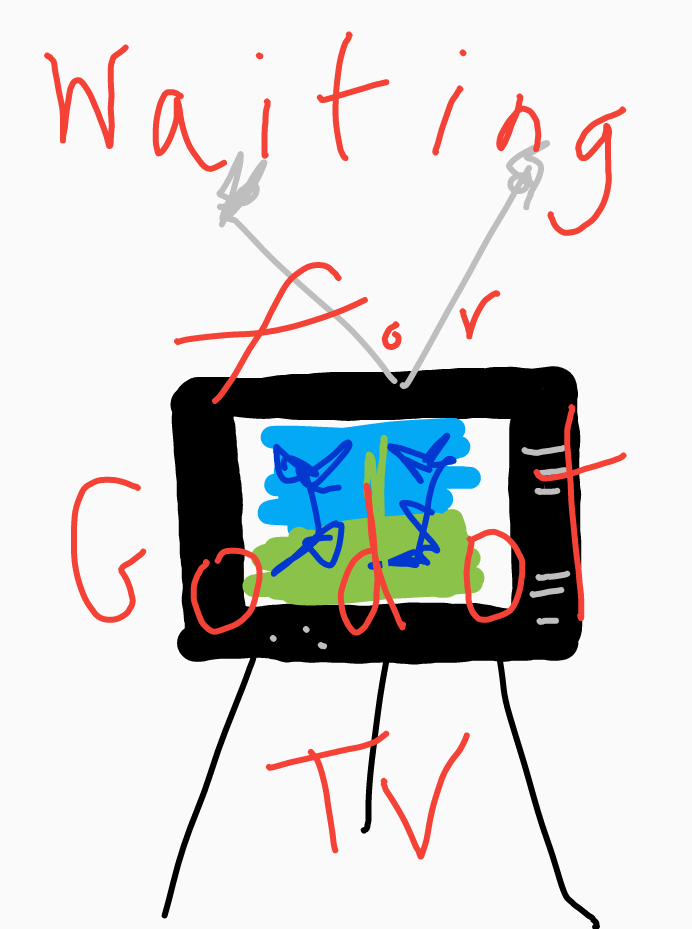
 The Coming of the Toads