Tag: Art

  • The Long Sea

    Not hunter nor hunted be
    but swimmer in this long sea
    the fishes your community
    though of course fish eat 
    each to each but rarely
    one’s own the point
    eat what’s available
    then go a fish out of the sea
    not the long or short of it
    but lost in the long run of the sea
    pages uncut
    written while working
    in a customs house
    dabbler dabbled in dawns of coffee
    and commutes and cubbied desks
    no time for more than doodles
    while the prof makes a living
    off an ever changing starting line
    the long market
    to market to market
    with a self-published book
    now out of print on demand
    there being no press
    and came to fancy Penelope
    the late bloomer
    and Barbara an excellent one
    and the two Elizabeths
    and Henry
    and Patty and Ray
    but of any poems composed
    in an alcove suffice to say
    what a waste
    yet this, and this is why
    one longs for the long sea:

    “No, she thought, putting together some of the pictures he had cut out – a refrigerator, a mowing machine, a gentleman in evening dress – children never forget. For this reason, it was so important what one said, and what one did, and it was a relief when they went to bed. For now she need not think about anybody. She could be herself, by herself. And that was why now she often felt the need of – to think; well not even to think. To be silent; to be alone. All the being and the doing, expansive, glittering, vocal, evaporated; and one shrunk, with a sense of solemnity, to being oneself, a wedge-shaped core of darkness, something invisible to others. Although she continued to knit, and sat upright, it was thus that she felt herself; and this self having shed its attachments was free for the strangest adventures. When life sank down for a moment, the range of experiences seemed limitless. And to everybody there was always this sense of unlimited resources, she supposed; one after another, she, Lily, Augustus Carmichael, must feel, our apparitions, the things you know us by, are simply childish. Beneath it is all dark, it is all spreading, it is unfathomably deep; but now and again we rise to the surface and that is what you see us by. Her horizon seemed to her limitless….There was freedom, there was peace, there was, most welcome of all, a summoning together, a resting platform of stability” (54).

    From “To the Lighthouse” (1927) by Virginia Woolf, Penguin Books edition 2023.
  • Bananas

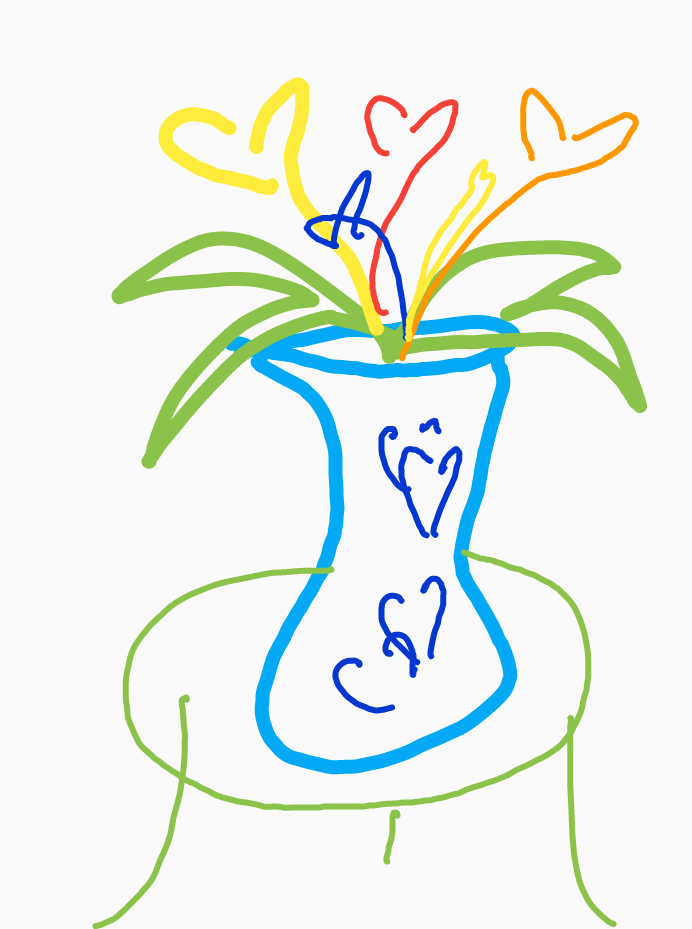
    When Samuel Becket wrote “Krapp’s Last Tape” (1958), could he have picked any fruit other than the banana for Krapp to cram in his pocket? Were bananas a fave in Paris at the time? Did Beckett eat daily bananas? Surely at Somewhere U there’s a thesis on this. By the time of Krapp’s writing, WWII rations had ended in Europe, the new concern, regarding bananas, tariffs and costs. How much would one pay for a banana? What is it about the banana that inspires both commodious jokes and serious art as well as market speculation and spectacle?

    Or all of the above. Reference the recent banana art installation that apparently sold at auction for $6.2 million. The banana is taped to the wall with duck tape. (Where’s Andy Warhol when you need him?) The duck taped to wall banana used the traditional gray colored duck tape. But duck tape now comes in various colors, and we would have picked a bright blue, which might suggest, mixing with the yellow, green, the color of money, which is what it’s all about, though at the same time, ok, it might say something about art, or art collecting, anyway.

    The duck taped banana, titled “Comedian,” is acoustic, unlike the “electrical banana” in Donovan’s 1966 song titled “Mellow Yellow.” We won’t go into the suggestive meaning behind the banana electric, but it is easily looked up. In any case, an electric neon lit banana might have fetched even more than the $6.2 MM, with a wire dangling down to an outlet, perhaps requiring one or two additional strips of tape to secure it to the wall.

    No telling what Beckett might have thought of all the current brouhaha over the banana. But “Krapp’s Last Tape” does contain both banana and tapes, at last count at least three bananas, all eaten, the peels discarded on the stage.

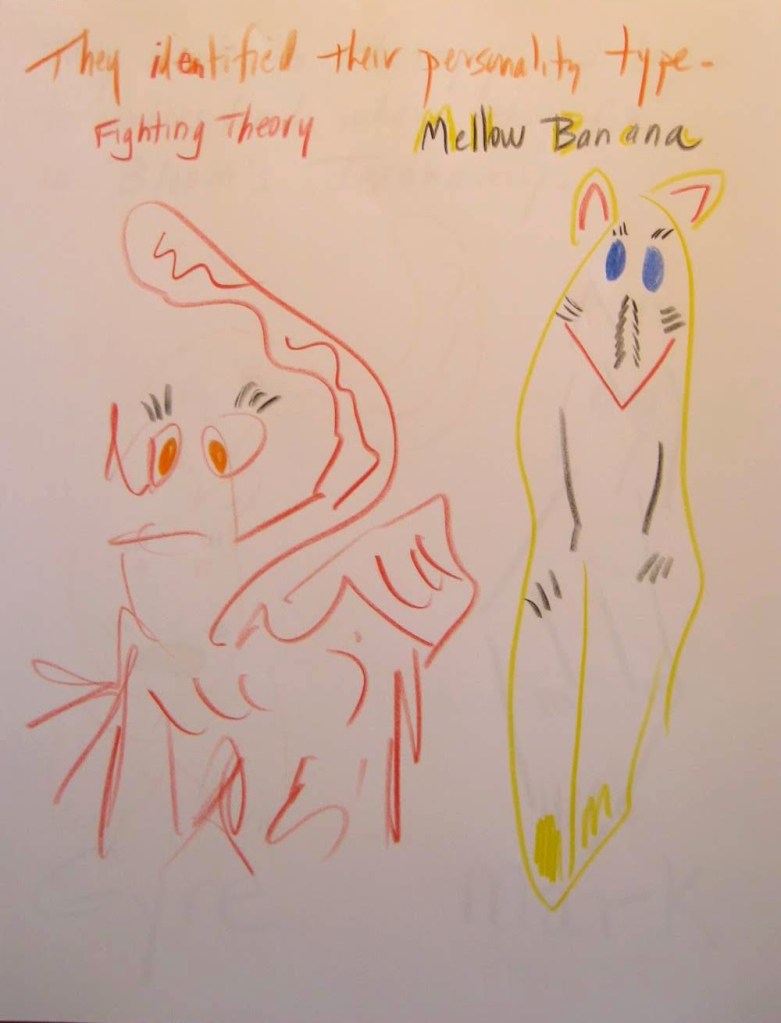
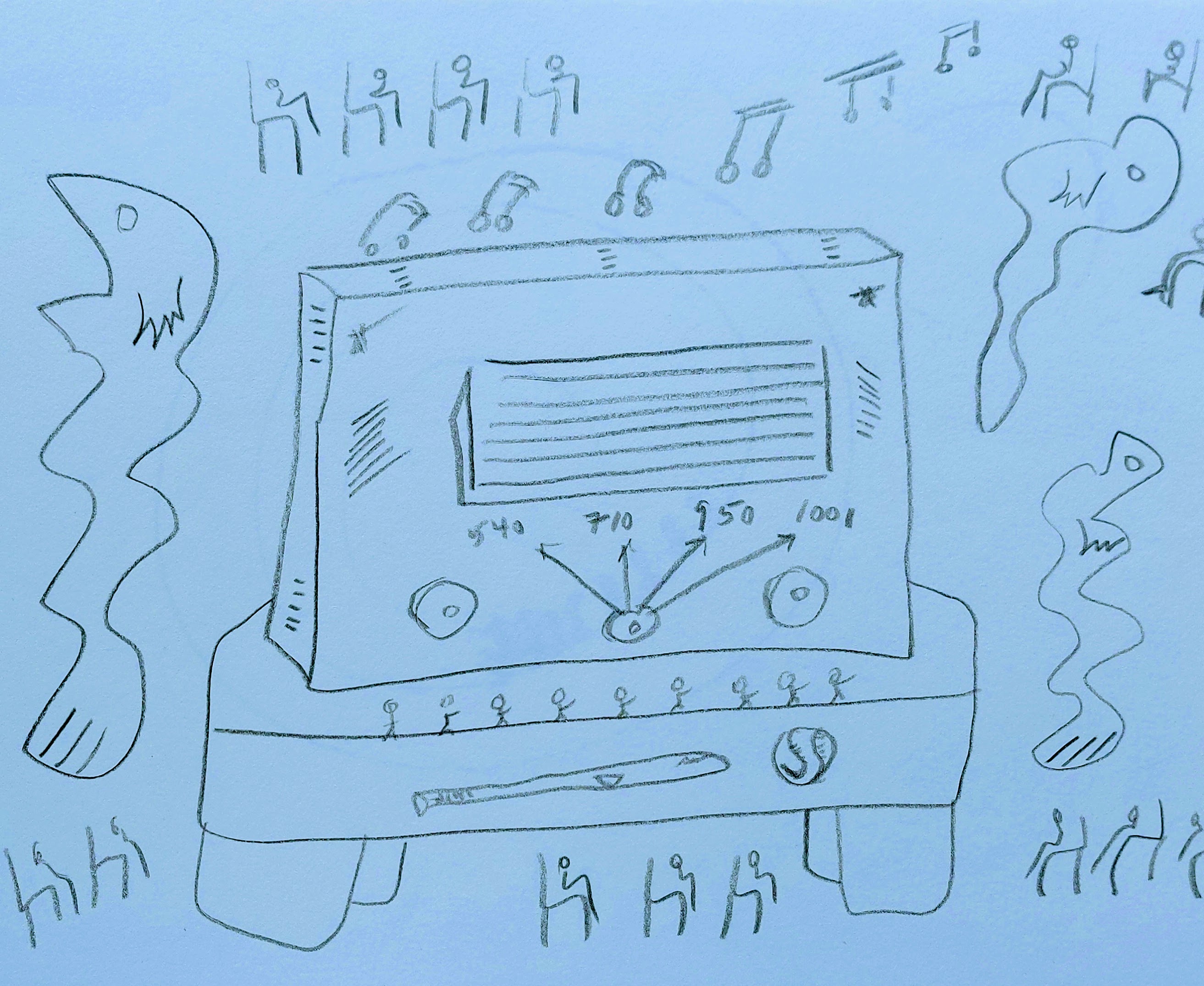
    Speaking of bananas, below is a page from a draft sequel to “Scamble & Cramble: Two Hep Cats and Other Tall Tales.”

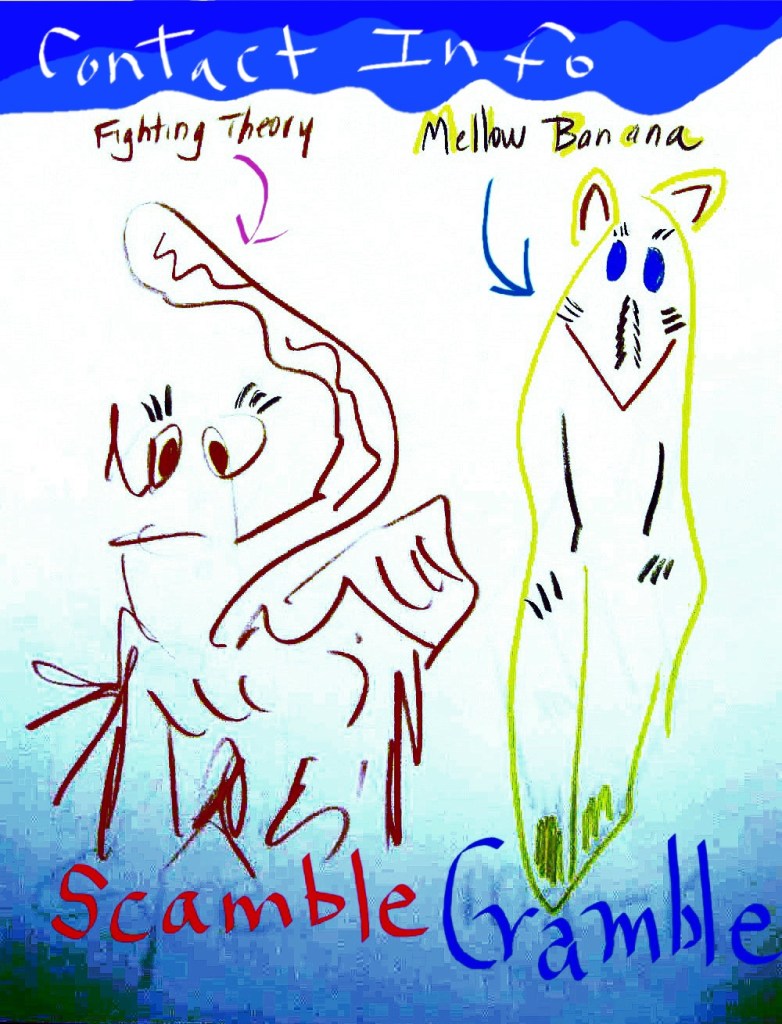
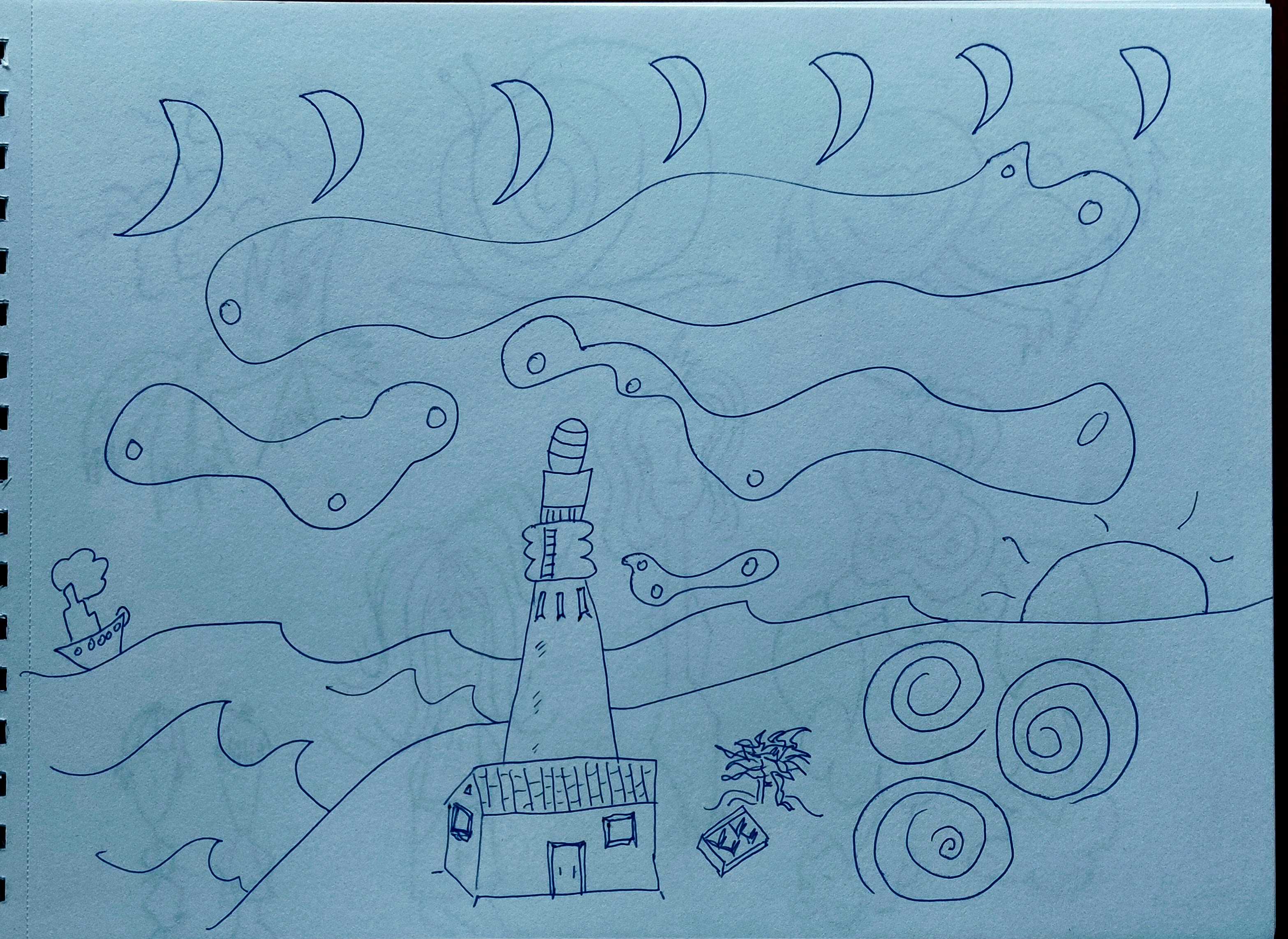
    And below, a newer draft, in which the cats get hep to social media:

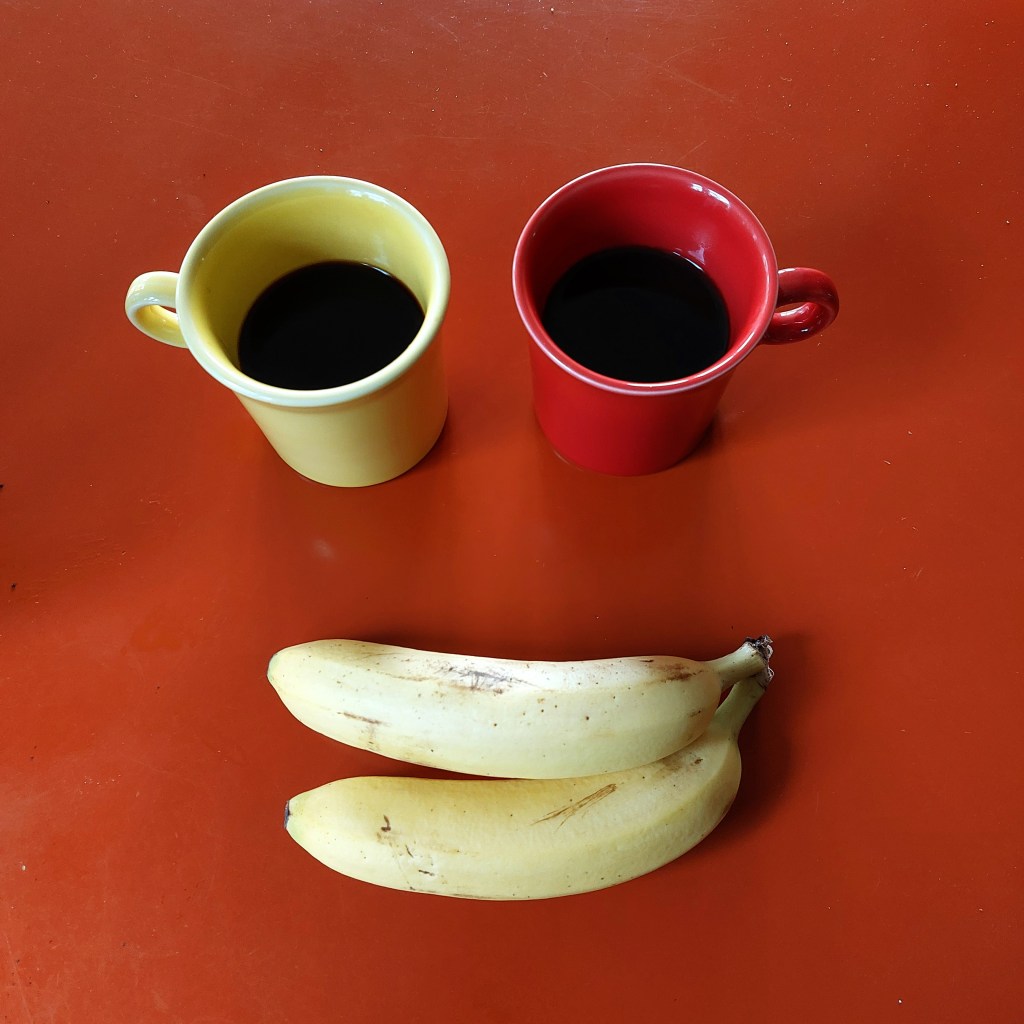
    And this morning, bananas and coffees with Susan:

  • Old Haunts

    Old Haunts, all with current links, focused on core subjects: art, technology, music, science, and literature, but first, a brief explanation:

    Moving continuously toward more minimalist formats (which if not stopped could result in disappearance altogether), blogs may risk losing some appeal, particularly to readers who enjoy liking, commenting, and linking or sharing – in short, conversing – as well as indulging in pingbacks and reblogging, and who enjoy perusing sidebars, widgets, clicks and plays, slide shows, and sharing up and down the crowded street of social media sites and apps. An example of such minimalist drift, here at the The Coming of the Toads, might be the removal, some time ago now, of listings and links of followed blogs and favorite sites, what I called in the sidebar heading over the list of links: “Back Roads to Far Places,” the title from Ferlinghetti’s book.

    I use the WordPress Reader to subscribe to sites, and currently I’m subscribed to 146 – but not many of which post frequently or are still active at all, which sparks the idea behind this post, which might have been subtitled: and Other Broken Links. While I don’t currently post a widget of followed blogs or sites, I do manage my subscribed sites in the WordPress Reader, and I also maintain the “Links” feature in the WordPress Dashboard for my own use. There are currently 33 links. But links don’t always stay current or active, while others click to surprise, a site grown or morphed into other projects or disappeared (Page Not Found), and still others remain useful resources or pleasant places to visit, like old friends. Or the link simply breaks and you get sent who knows where and who knows what’s happened. Sites often change over time, and it can be hard and takes time keeping up with the changes.

    Anyway, I thought I’d share an update of just a few of the sites that do continue to work well and that I try to follow and that offer pleasant visits and are creative and resourceful:

    Marginalia and Gracia and Louise I first discovered in “High Up in the Trees,” a blog by the Australian artist Gracia Haby. It’s now called “Marginalia.” I like everything about it – font work, photography, text content, collage and other art work, the work Gracia and Louise do with animals. And there’s another site they maintain, called Gracia and Louise, full of things to see and wonder at. The sites probably work best on desktop, but the creativity in doing more with the drop-down necessities of on-line viewing is unparalleled (of that, here is a specific example, called Reel).

    McLuhan Galaxy always produces a profoundly puzzling experience in that there seems no end to his ideas and the ramifications of effects of media on society and culture – and yet here we go, linking and following, but where? The Blogroll will keep you occupied for hours of intellectual fun.

    I don’t have John Cage ears, but I’ve always enjoyed his writing, and much of his music I do enjoy. Kuhn’s Blog is not often updated, but the site resources remain available and loads of fun, with several interactive features (try Indeterminacy, for example). The John Cage Personal Library is itself a phenomenal work.

    The Buckminster Fuller Institute shares hope for the world from a worldwide perspective. The site may provide a new awareness for what’s going on worldwide to improve conditions, predicaments, problems – near and far. If your not familiar with Bucky, here’s a good place to start: Big Ideas.

    Words Without Borders features world wide writing in a variety of formats. Browse by country, theme, or genre.

    Old Haunts, all with current links, focused on core subjects: art, technology, music, science, and literature.

  • Slide Show: How They Spent Their Summer Vacations

  • Commencement

  • Waiting for Spring

    We spend a fair time waiting, waiting for this, for that, for them and those to come and go, to start and end, to rise and fall, full and eclipse. And for Spring to spring, our world coiled like hair in plastic curlers held in place with bobby pins (see F. Scott Fitzgerald’s, “Bernice Bobs Her Hair”).

    We don’t wait in Winter, when we freeze in place and live in the cold moment (waiting is Samuel Beckett’s dry theme), but as the great slow thaws finally come we start to wait for a stronger sun and almost believe again in Spring and Spring does come slowly over the horizon and up the sky climbing a ladder of weathered trellises where last year’s climbing vines still cling frozen in place.

    We anticipate Spring with its cartoon-like colors unfolding:

  • Think Again

    I thought once again
    and again and again
    and still the nagging
    thing rang an alarm
    clock in an assembly
    line repetitive factory
    too much time on my
    hands think again our
    Supervisor said again

    I thought twice thrice
    four to the bar again
    with my factory wife
    any number of numb
    clock ticking times X
    and after time was up
    the world no more in
    need of time clocks
    we laid off thought

    thought again and again
    of my time on the line
    spent thinking not off
    the pieces clicking by
    but on some other
    think I can’t now seem
    to remember again
    lost as I am to thoughts
    again and again and again

  • Laconic Cartoons

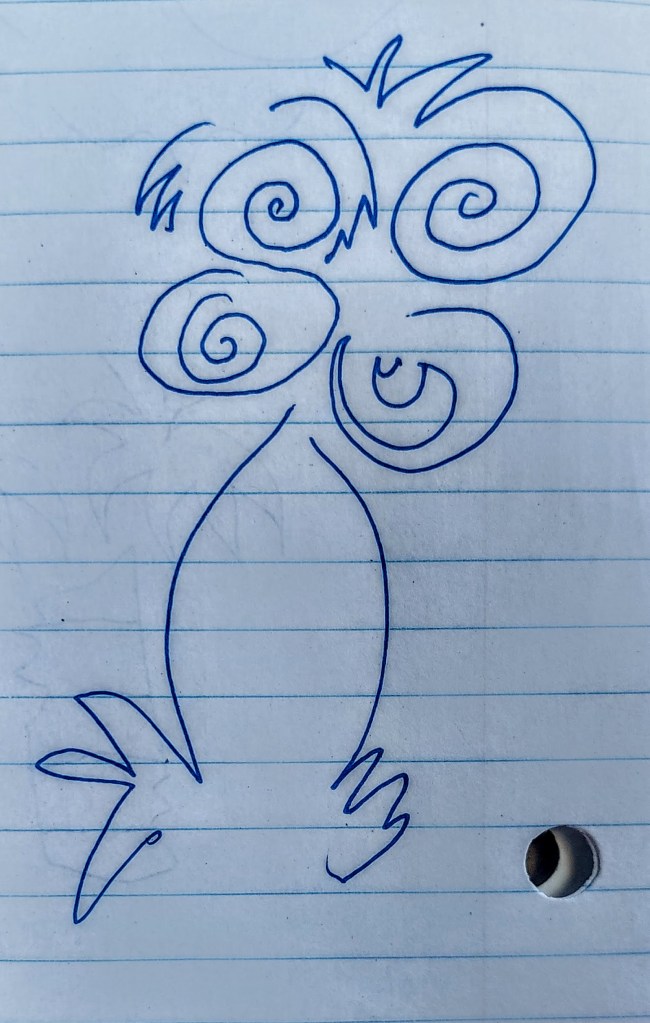
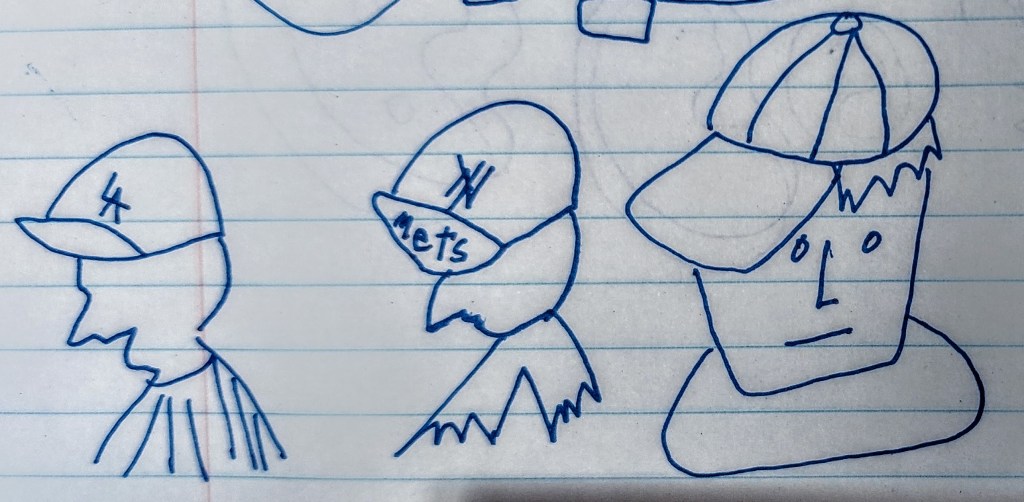
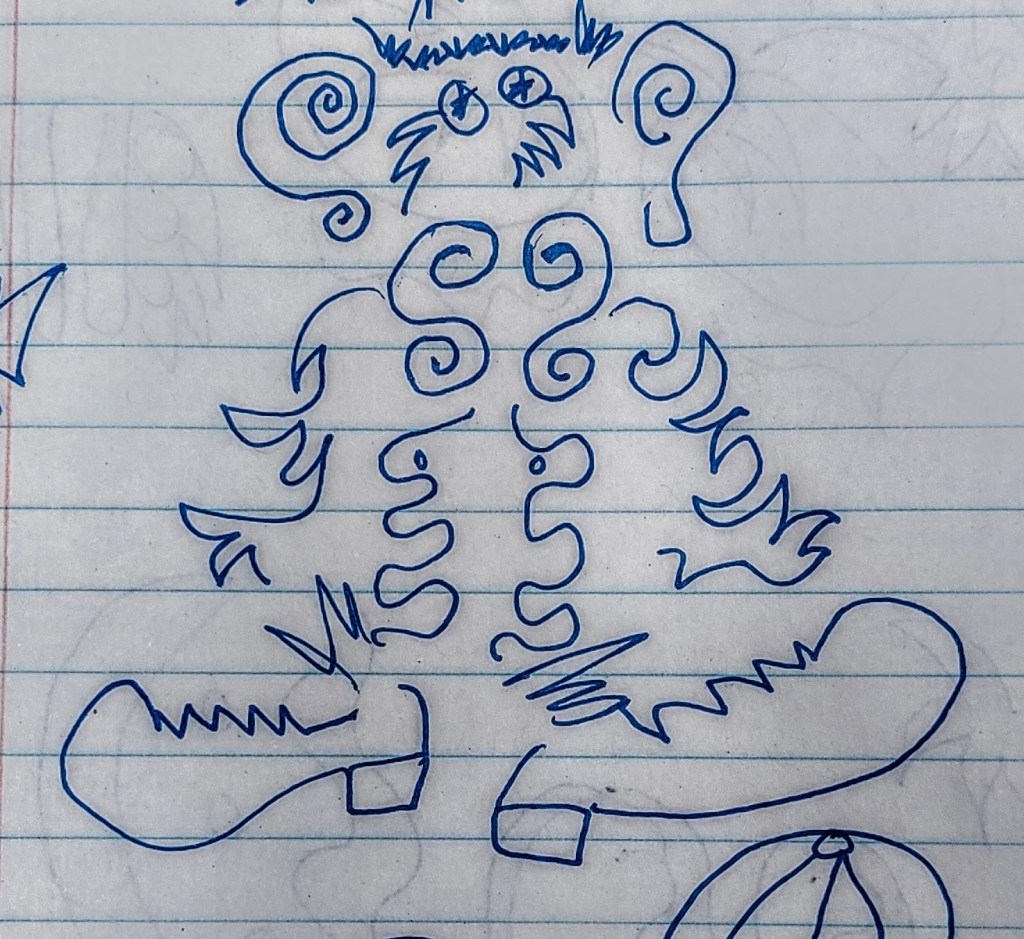
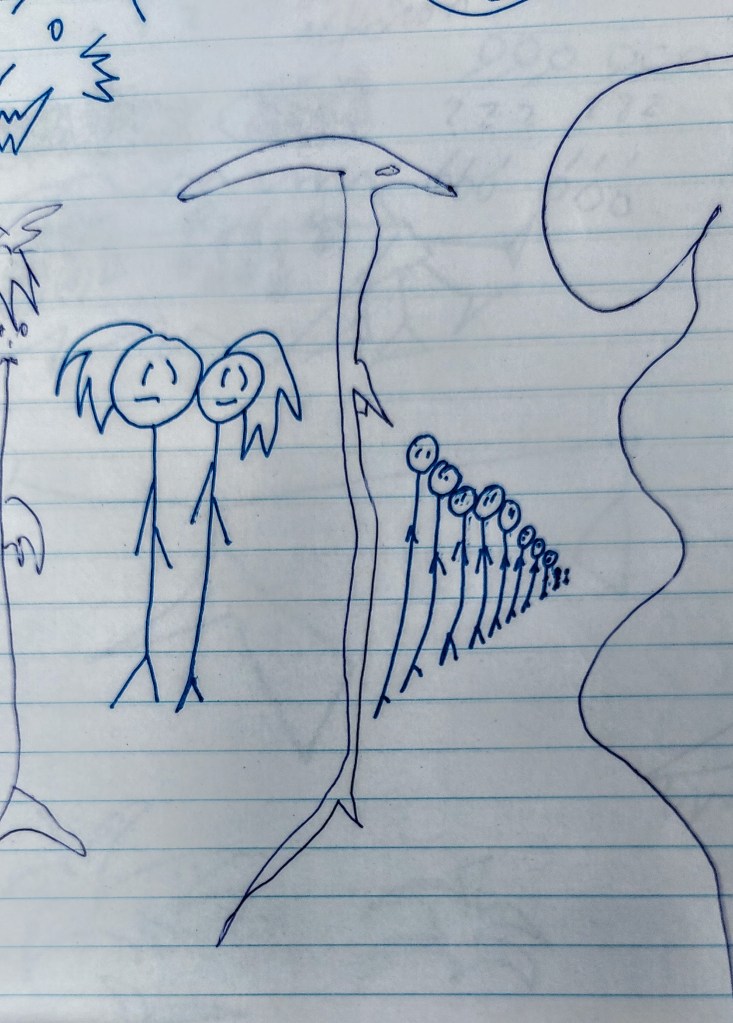
    Simple doodles with few words

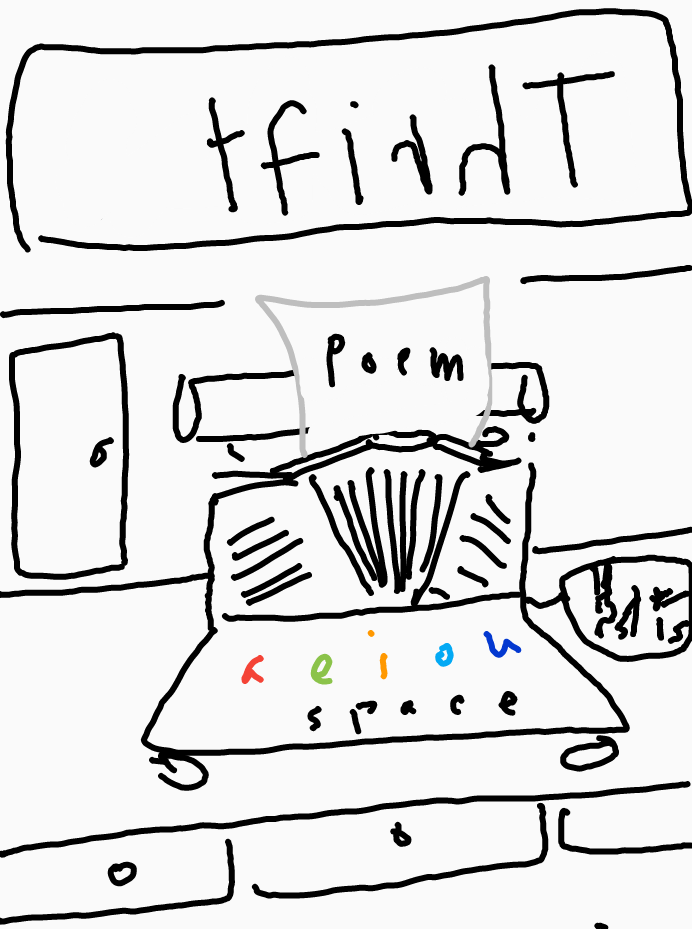
    You can subscribe to “Laconic Cartoons,” which promises to be fun, free, with no ads, and no AI! If you do subscribe, you’ll get an email with each new cartoon I post. So a subscription keeps up-to-date. The cartoons will go directly to your inbox, where you can view them, delete them, or print one and tape it to your icebox! Or you can visit Laconic Cartoons at the Substack website anytime you’re looking for a smile.

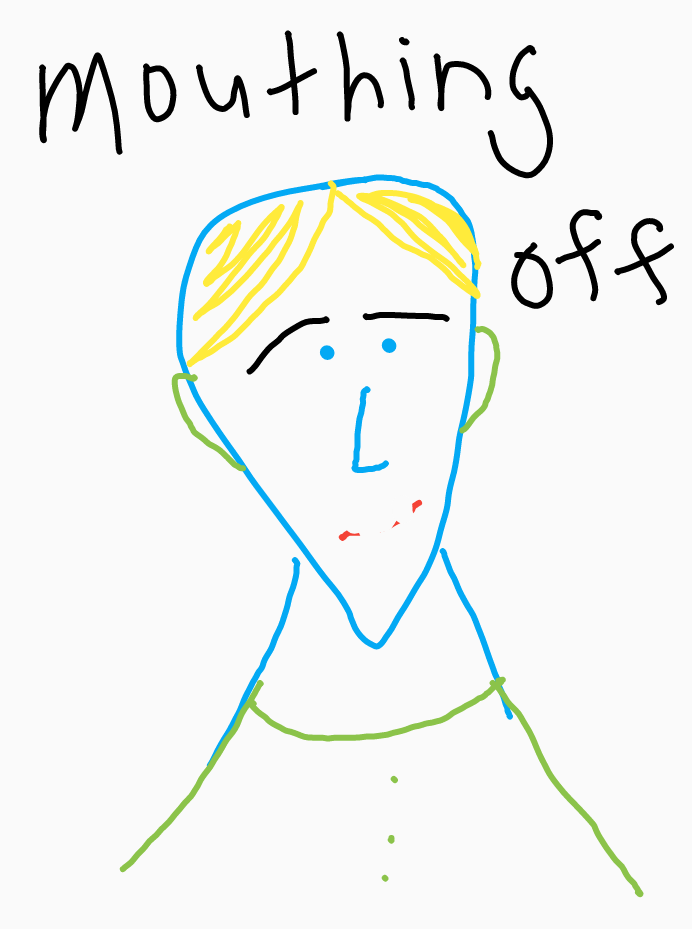
    There won’t be much to read – explains the “Laconic” in the title. Of course, cartoons are noted, even with captions, for using few words – short, economical, crisp. So maybe the title, “Laconic Cartoons” with subtitle “simple doodles with few words,” is superfluous, but that’s what doodles are, and gratuitous. And doodles are spontaneous, improvisational, which is something you can’t quite aim for. A good cartoon is thrifty. Like this one:

    Laconic Cartoons! Subscribe for free!

  • Field Notes: 9.18.23

    Substacking: Messing around with Substack again. Tried out songs with video (which I ended up using here in post previous to this one), deleted the songs (“More Modern Songs”) substack, started a poetry substack, deleted that one too, settled on cartoons. “Laconic Cartoons: simple doodles with few words.”

    Substack format seems busier than when I previously gave it a trial go. More social media characteristics. “Notes” page, for example, that seems to work like the old bluebird site (see cartoon, “This Bird has flown”).

    Listened to a short podcast this morning on a cartoonist’s substack I’m following. Two and a half minutes in which she reads all the captions from the cartoons in this week’s New Yorker. It’s Liza Donnelly, who is herself a New Yorker cartoonist. Clever idea, captions without the drawings. Sounded like a John Ashbery poem as the captions ran together randomly as if they were connected by some logical narrative thread. Flight of the bumblebee. I was going to leave Liza a comment, only to find I couldn’t – only paying subscribers can comment on Liza’s substack. Clever idea that, too. And there were two captionless cartoons in the issue, which of course she could not read, but I was reminded of John Cage’s 4’33.

    “Laconic Cartoons” has no paying option, and no plans of such. All free, and feel free to comment, such as, “Dude, seriously? You can’t give these away!” Something like that.
    Decluttering: Have now filled a dozen grocery bags with books, eliminating the need for several bookcases. Vietnam Veterans will pick them up, along with some cool items recently discovered in the basement. What books did I keep? Might want to save that for a future post.

    Guitar: Working on more original songs. “More Modern Songs”: that title, btw, suggested from Dylan’s latest book. Planning more videos. Had not tried to post a video on WordPress before. Easy. Songs are different from poems. Though you can usually read a song a lot quicker than you can listen to it, but you can listen to music while doing other things, though vacuuming the living room presents challenges, while poems should be read aloud to achieve their full flavor.

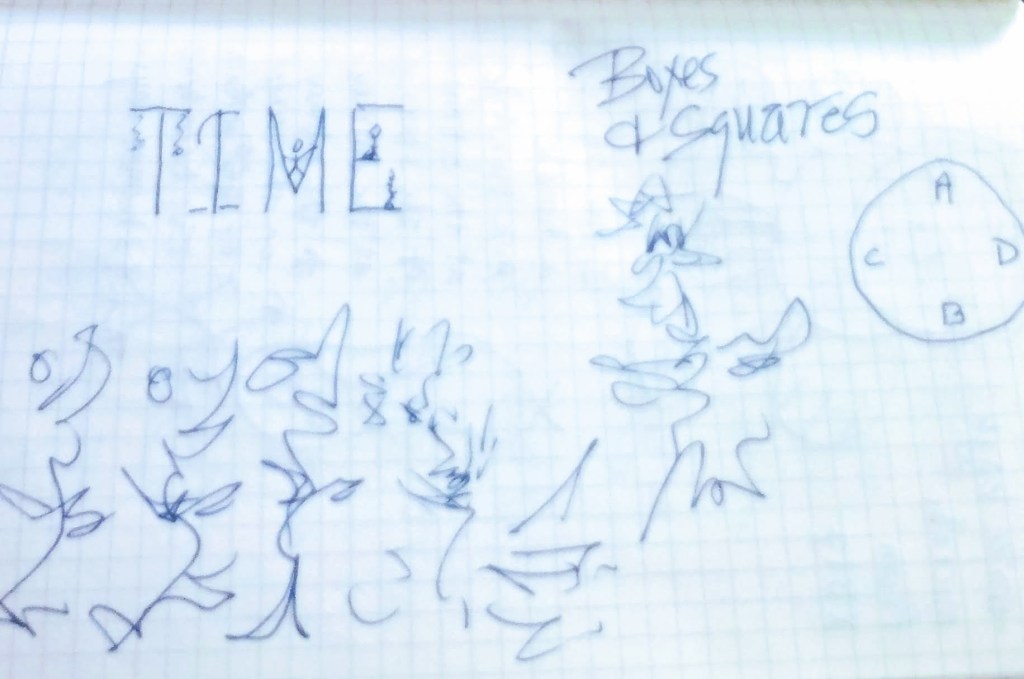
    Cartooning: Here’s a cartoon (captionless) for readers unwanting or unable to visit the Laconic Cartoons substack:

  • Get Real

    To make art, to make things
    out of other things, to engage
    in artifice, a confidence game:
    “Get real,” your critics say.
    The earth is a rug
    constantly being pulled
    out from under you.

    The artificial is real: the bread
    and wine camouflage the need
    to sacrifice the poor lost lamb,
    not to mention the virgin,
    created by man made
    design critics to avoid
    her real predicament:

    “Poor and rich belonged to the same world and placed themselves on a common, even sliding scale, but beggars could not. The ptochos was someone who had lost many or all of his family and social ties. He was a wanderer, therefore a foreigner for others, unable to tax for any length of time the resources of a group to which he could contribute very little or nothing at all…a ptochos was a shocking reality for the Greco-Roman world” (272). 1

    “The beatitude of Jesus declared blessed, then, not the poor but the destitute, not poverty but beggary…Jesus spoke of a Kingdom not of the Peasant or Artisan classes but of the Unclean, Degraded, and Expendable classes” (273). 2

    1. Gildas Hamas quoted in John Dominic Crossan’s “The Historical Jesus: The Life of a Mediterranean Jewish Peasant” (272). 2. Crossan gloss of Gerhard Lenski (273).

    Who then or now could write
    a poem who is not at least poor
    real poor or in spirit or metaphor?
    Yet the beggars make their signs
    and hold up their poems
    along the roadsides,
    the least of publications,
    the yeast of city life.

    “What is needed, then, is not insight into the Kingdom as future but a recognition of the Kingdom as present. For Jesus, a Kingdom of beggars and weeds is a Kingdom of here and now” (Crossan, 283).

    What is real
    will not be
    found staring
    at the universe
    through artificial eyes
    to catch a glimpse
    of dawn’s first light,
    nor descending
    to the bottom
    of the sea
    in rich pods
    to study ancient
    shipwrecks,
    nor in any travel
    nor in any poem.

    But surely we must
    avoid the real
    at all cost
    and become more
    artificial.

  • Old Pic of the Day: Venice Beach Around 1970

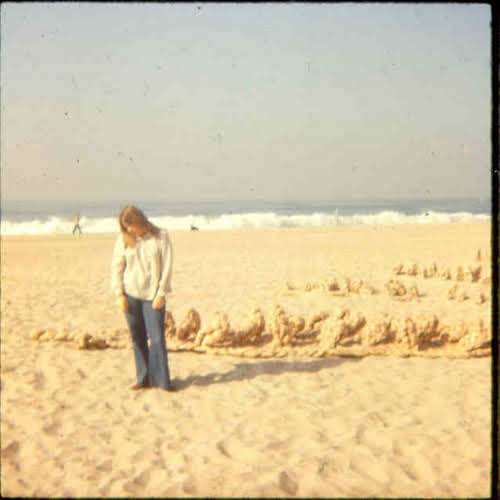
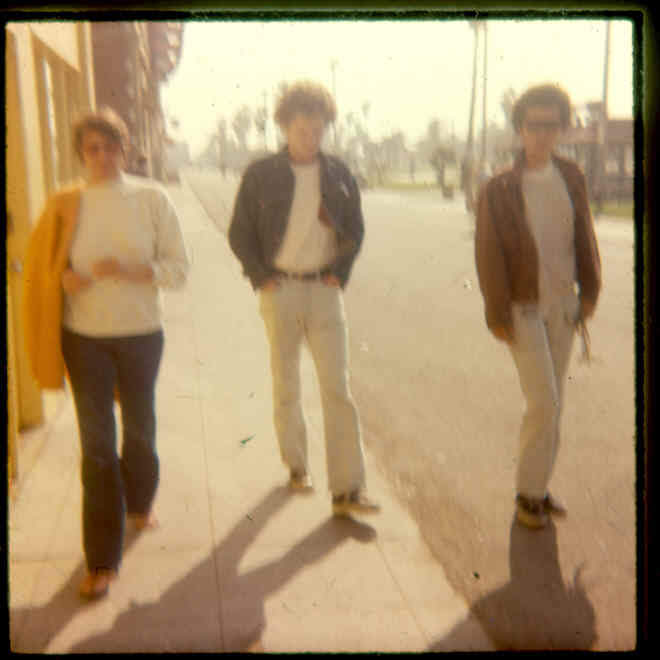
    We walked out one morning to find an art installation up from the water, large paper wraps spread across the beach. They looked like sea creatures, dinosaurs, giant lizards of some kind. I asked Susan to stand in front of one to put an idea of their size into the picture. Susan has never liked having her picture taken, and she’s showing that in her pose here. We walked down the Strand for some breakfast, and Susan snapped a picture of Joan and Terri and me. I think we were using slide film in an Instamatic of some kind.