You may never feel so alone as when wandering around in a crowd of strangers. Or sitting in a church pew at the wedding of an old friend you can’t really say you know anymore back in town for the ceremony then on the road again. Or sitting with a parent who keeps asking you what your name is, or during a visit with your child you no longer recognize. Or at a reunion luncheon with some past coworkers.
You buy a ticket to the baseball park and settle in with a box of Cracker Jack1 to watch the game and feel a part of something bigger than yourself, not the team, but the cheering crowd, then comes news three of your favorite players have been traded away, and by the 7th inning stretch, the crowd starts to thin, the score lopsided, the bullpen early emptied.
“The apparition of these faces in a crowd; Petals on a wet, black bough.”2
And you don’t really know the players, and from the distance of your outfield seat, all the players look the same. Still, nowhere to go, you sit until the fans have all gone home, the players off the field hitting the showers, and security comes to check on you and escort you out a side gate.
You might have been a clean-cut kid and been to college too,3 but in spite of the degrees earned, or maybe as a result of them, you never learned to be alone, to enjoy inertia. If all the other pool balls would just sit still, you could sink the 8 ball and call it a thrill.
Not to worry, Artificial Intelligence (A.I.) has come to save the day4.
“It may prove hard to resist an artificial companion that knows everything about you, never forgets, and anticipates your needs better than any human could. Without any desires or goals other than your satisfaction, it will never become bored or annoyed; it will never impatiently wait for you to finish telling your story so that it can tell you its own.”5
At issue is can a machine substitute for a human in building a satisfying relationship where only one party enjoys, and suffers from, consciousness, while the other party observes and salves and solves (an artificial Jeeves6) your every agony, while themselves unable to actually feel what you are feeling, or even what they are feeling, for they can’t feel either way. They will never be able to cry real tears with you, just shed crocodile tears. But then we get this:
“Solitude is the engine of independent thought – a usual precondition for real creativity.”7
“Engine” seems a poor word choice given the context. If the mind is an engine, why can’t A. I. have a mind?
Loneliness, not to be confused with alienation, detachment, isolation. We can feel lonely, apparently, anywhere, with anyone, in any setting or activity. Is loneliness therefore an existential decision made over time as we negate the possibility of others to be with us, for us to be with others? In other words, is it our own fault? Thoreau wasn’t lonely; why can’t we be more like Thoreau?
“I find it wholesome to be alone the greater part of the time. To be in company, even with the best, is soon wearisome and dissipating. I love to be alone. I never found the companion that was so companionable as solitude. We are for the most part more lonely when we go abroad among men than when we stay in our chambers. A man thinking or working is always alone, let him be where he will. Solitude is not measured by the miles of space that intervene between a man and his fellows.”8
Paul Bloom, writing in The New Yorker, about the possibility for A. I. to cure loneliness, emphasizes that for the terminally lonely (“the elderly or the cognitively impaired” p. 57), A. I. could indeed be a good thing, but for the rest of us, loneliness is part of being human and to give it up would make us less human. Ouch: that’s caring authority. And it is against that authority that the artist retreats.
“Jeeves seems to know when I’m awake by a sort of telepathy. He always floats in with the cup exactly two minutes after I come to life. Makes a deuce of a lot of difference to a fellow’s day.” The Inimitable Jeeves.↩︎
Is blogging an art form? We might talk about art and craft and trade. Crafts and trades are necessities as cultures move from survival mode to commercialization and commodification and eventually to increasingly artificial realms; art is not necessary, and its very lack of necessity is what gives it integrity. Art is innate and therefore authentic. It can be faked; when it is, it becomes precious. You might reply that art is necessary for the soul, but you won’t find the soul in a museum. Visitors to the Louvre spend about 15 seconds viewing da Vinci’s “Mona Lisa,” during which time their attention is diverted as they snap a few pics. But I’m actually not all that driven by such pronouncements as Art is whatever. Or whatever is art, or not. Art is a verb, as in the Buckminster Fuller sense, when he said, “I seem to be a verb.” A to be verb. If blogging is an art form, surely it must be part of the to be genre.
All bloggers confront the same form, the template or layout, and one can spend forever and a day figuring it out, while one’s content sits waiting for something to happen. For the writer, the question arises, do you want to write or become a programmer? The photograph on a blog is not a photograph, in the same sense that Magritte’s pipe is not a pipe. For the poet who thinks poetry is about sound as much as sense, the phrase “mouth watering” might not wet a reader’s lips. Likewise, pics of food don’t always do much for the appetite. As for argument, the use of ALL CAPS quickly tires the eyes.
Of course there are all kinds of blogs, evidenced in ongoing varieties of designs and templates and categories and tags. And almost any pursuit can be used as a unifying topic: photography or painting, travel and sightseeing, nature and gardening, music or poetry, fiction and memoir, literature or linguistics, criticism and notes and comments, politics and religion, comics and cartoons, news and history, advice and cooking, do it yourself and repair work, sports and leisure. Opinion and argument. The makers behind most blogs probably are not concerned with whether or not they are engaged in some sort of art form. But if a blogger is serious at all about being taken seriously, even if their theme is satire or sarcasm or humor, they will want to set up their blog as efficiently and effectively as possible to ensure an appropriate welcome to their target audience. If they have a target; that’s not a requirement for a successful blog. What is a successful blog?
Without further Ado, I give you my Top 10 list of the characteristics of a successful blog, a site I can appreciate and that I’ll come back to. In other words, here is a list, limited to ten items, of some attributes of a blog that might warrant repeated visits:
Original Content: I prefer original content rather than seeing copying and pasting from some third party source. I’d rather see an original photo of any quality, an original poem, an original sketch. I suppose there is an art to curating, selecting and collecting together pieces for a show, but too often these shows are too long or overwhelming or redundant to what one’s already experienced elsewhere. There are also issues of copyright, the use of Artificial Intelligence, and other forms of spam, quackery, or hoaxes which corrupt one’s reading.
Identified Source: I tend not to read a blog the author of which is completely anonymous. There are no doubt valid reasons any individual blogger may have for remaining anonymous, privacy concerns or insecurity; those same concerns in turn make me want to know enough about sources to guarantee both originality and reliability.
No Ads. This is a tough one, since to remove ads usually requires a subscription or premium of some kind, which some bloggers can’t afford. But ads are intrusive and distracting, often way off target, and sometimes aesthetically ugly, designed to raise a welt. Of course there’s also opportunity for bloggers to earn money from ads. I recently read that Substack is experimenting with ads, and of course there is one kind of blog that is an ad, promotional material, a link to elsewhere.
Frequent Posting: I prefer blogs that post frequently, but not too often. Frequently could mean daily, weekly, or bi-weekly, depending on the length and complexity of the post, while too often might mean multiple postings per hour or day.
Most of the blogs I read, I view via the WordPress “Reader.” There are advantages and disadvantages to the Reader. One disadvantage is you don’t see the blogger’s actual site, with all its bells and whistles, and formats appear differently depending on what device you’re using (which is one reason I keep moving more toward a minimalist format at the Toads). If there’s a way to view the whole blog in a reader, I’ve not discovered it. Some bloggers simply use excerpts in the Reader, and you must go to the full site to view the whole post, which can be rewarding because you get the full meal deal, not the à la carte entry. I don’t know what the answer is to using or not a reader. To subscribe via email, to a newsletter or alert, is an opening of a floodgate. Were I better organized and satisfied with having found ten or so of the best blogs in the world, blogs that answered every aesthetic and practical need, I would simply bookmark them and check them manually daily. Fickleness appears on both sides of the viewing platform. And by the way, the Reader does not contain ads, even if ads do appear on the actual blog.
I prefer writing that is quirky, that ignores style guides, that is not fashionable, but presents a good fit for its subject. At the same time, I often enjoy the rants of the rule bound, the arguments over what tie goes with what shirt, even when, or especially when, it’s obvious no one wears ties anymore except for costume, uniform, or kitsch. “At no time,” Jeeves tells Bertie, “are ties unimportant.” But where’s Jeeves when you need one?
Some blogs venture toward becoming full-blown sites, multiple pages and interactive tools, like the old TV variety shows. But the bed of the blog is the individual post, a diary entry, about experience rooted and grounded outside the blog. But the mirror blog is also interesting. It’s not about itself, but about you, its reader, without being intrusive; it’s subtle, seductive. A post starts off being about jam and ends up a preserve.
I like learning how to do things, seeing how things are done. So if I see a photograph, some explanation of where and how and with what it was taken adds value to the blog post visit. Not that I only value the professional photo, quite the opposite; the amateur unposed snapshot often captures the most moving light. And of course descriptions take time and effort and might spoil a photo’s effect by focusing too much on technicality. There are times when sources should be revealed, footnotes added, links provided, though these can also ruin a visit with too much pomp and falderal.
I enjoy arts and crafts blogs, particularly when they illustrate and track the process. These bloggers of course would be hard-pressed to post daily. It’s a lot of work, blogging, or can be, and posts are often obviously cut short or abandoned for lack of time or inability to get things right, whatever that might be. Which brings up the question of length. How long should a successful blog post be? I don’t know, but reading back over this one, it’s beginning to look too long, and I wonder what readers will have made it this far.
I’m a general interest reader. I don’t have favorite or niche needs. But I do enjoy blogs dedicated to a particular mode or form. The original blog was called a weblog, a log posted to the web, like a ship’s log or an economic diary, updated frequently. Often a community evolved and comments or discussion ensued. I’m not myself these days given to commenting. It’s enough to do a post. Likewise, the blog or post dedicated to sending me elsewhere in the form of links galore can overdo it. I’m not sure how many bloggers remain that spend all day working on their blogs.
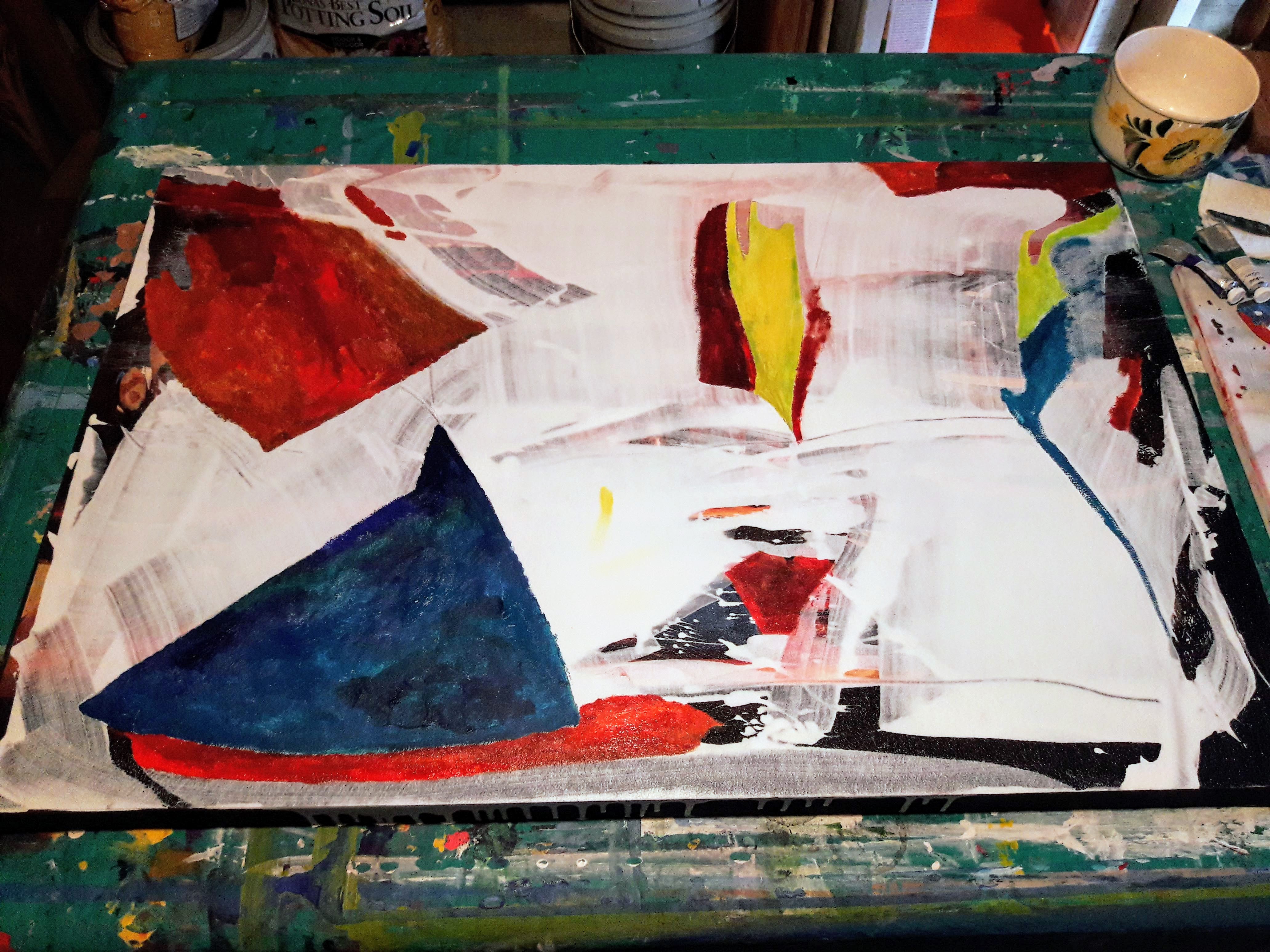
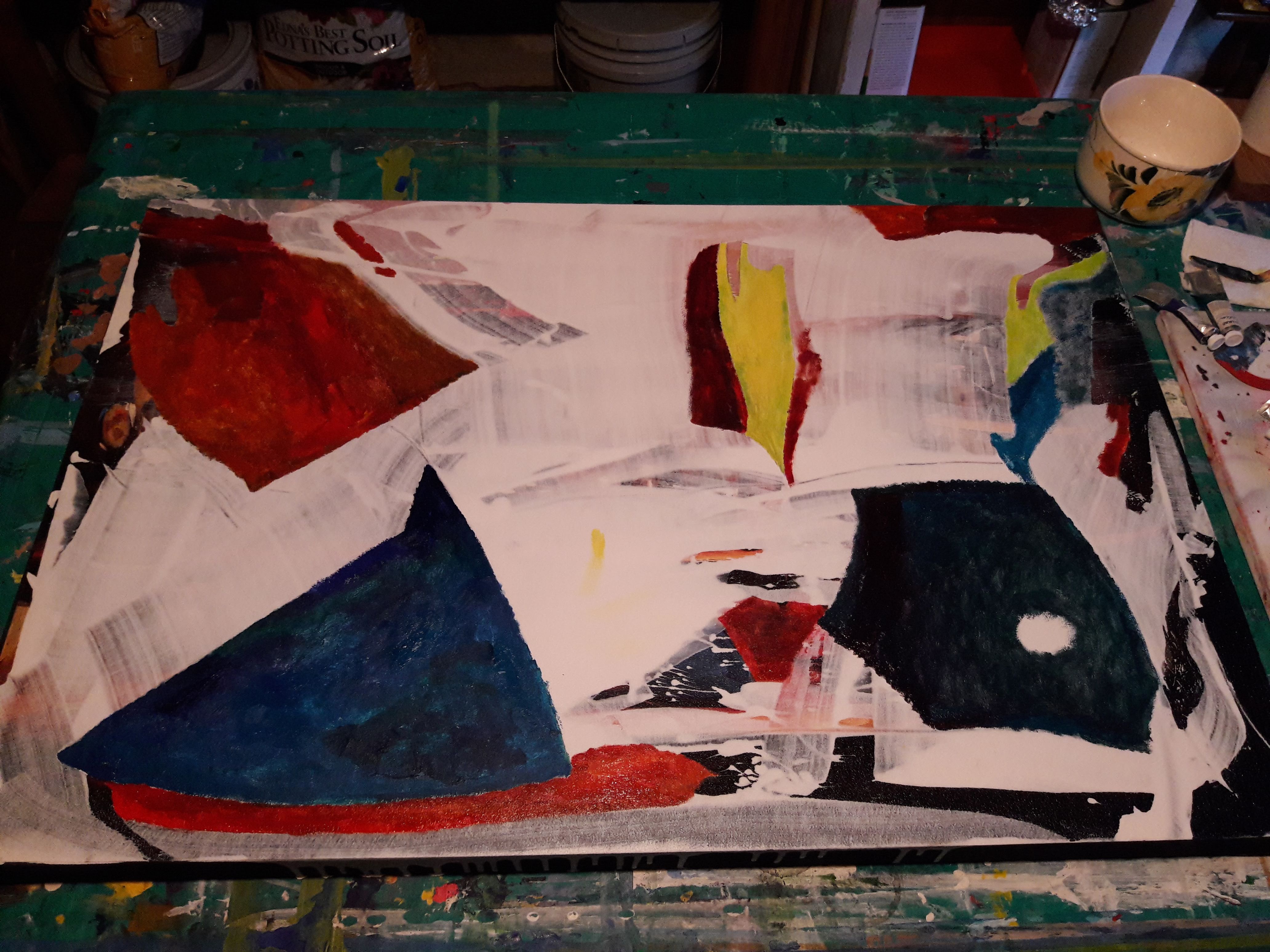
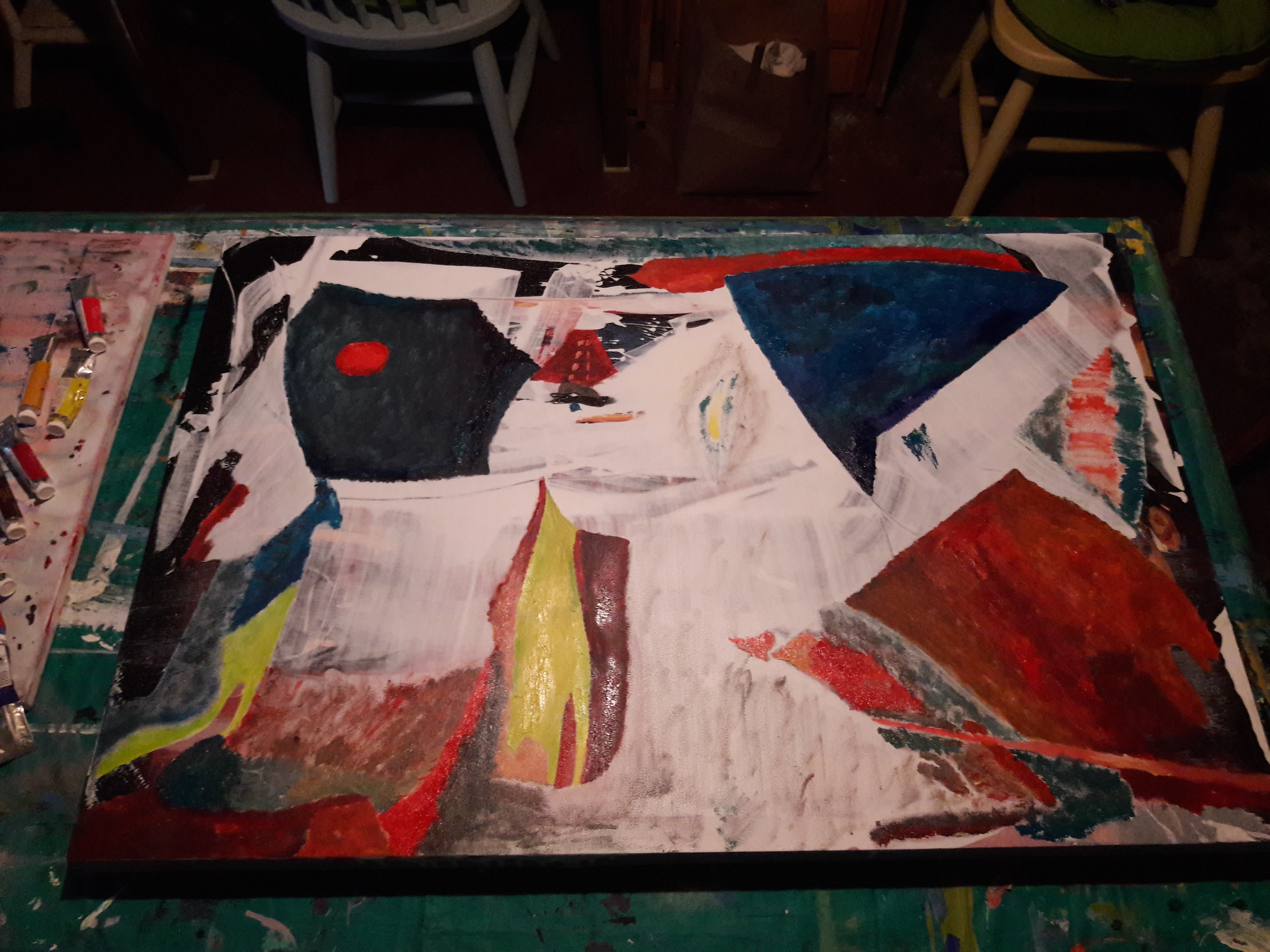
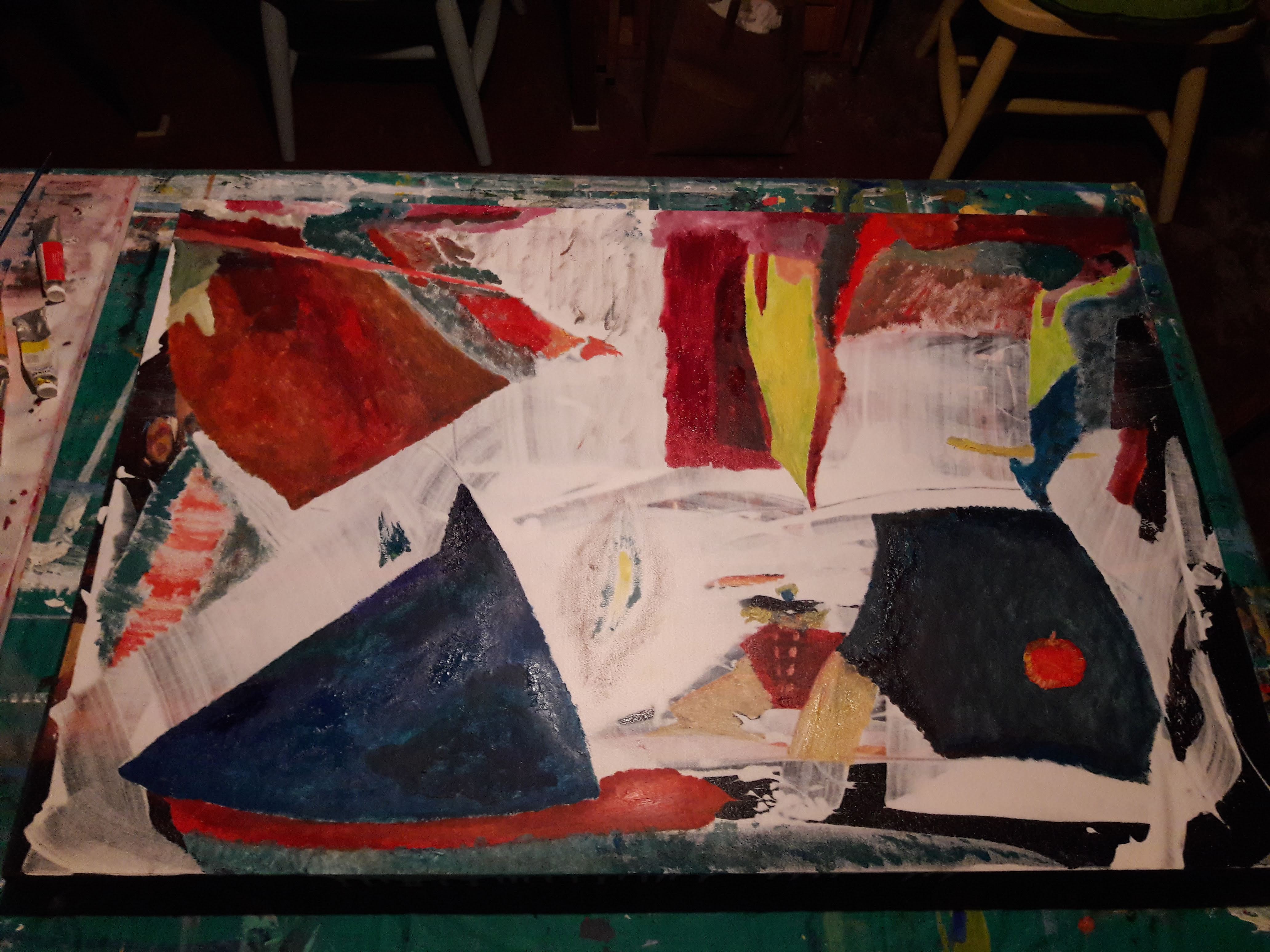
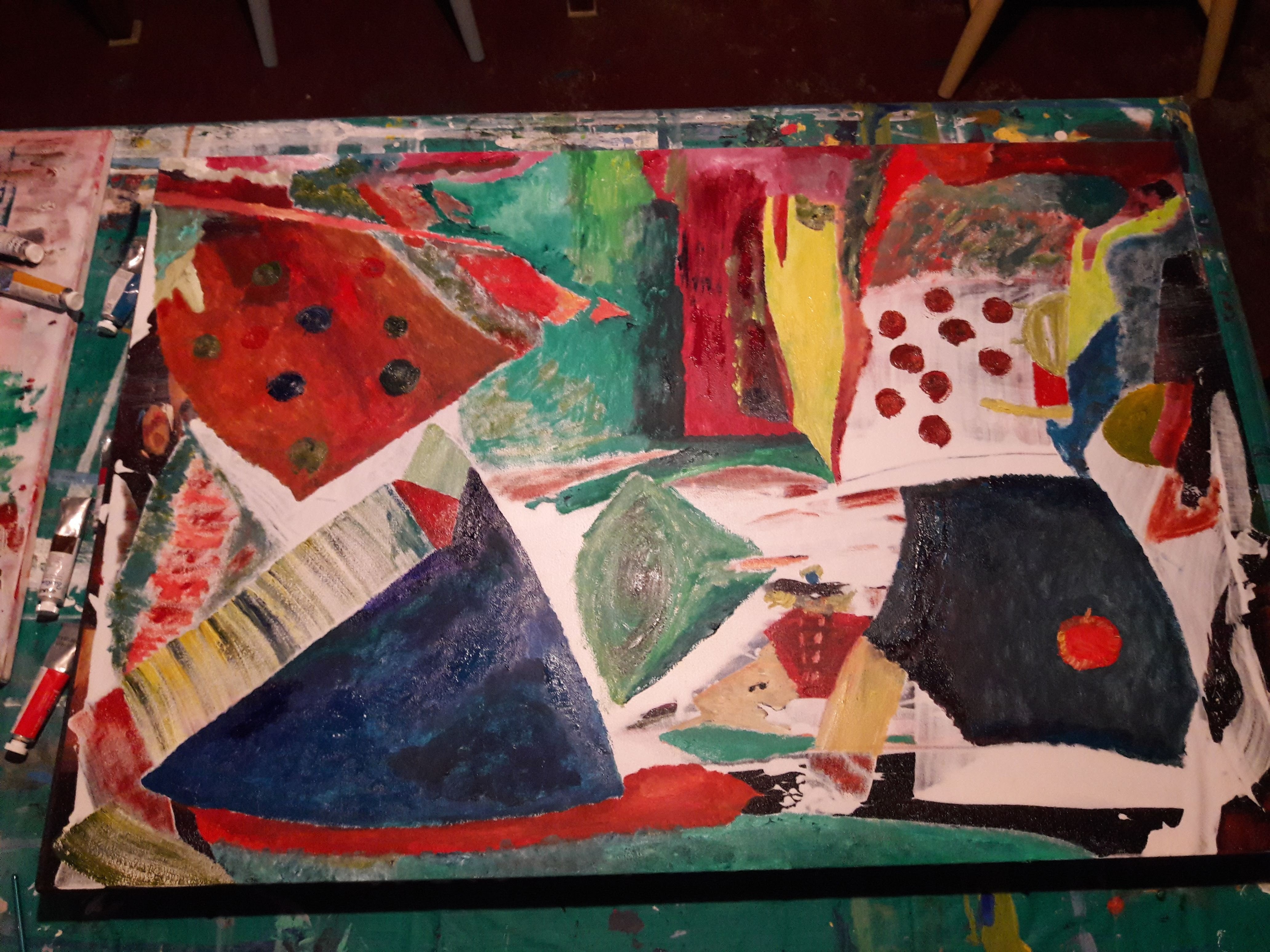
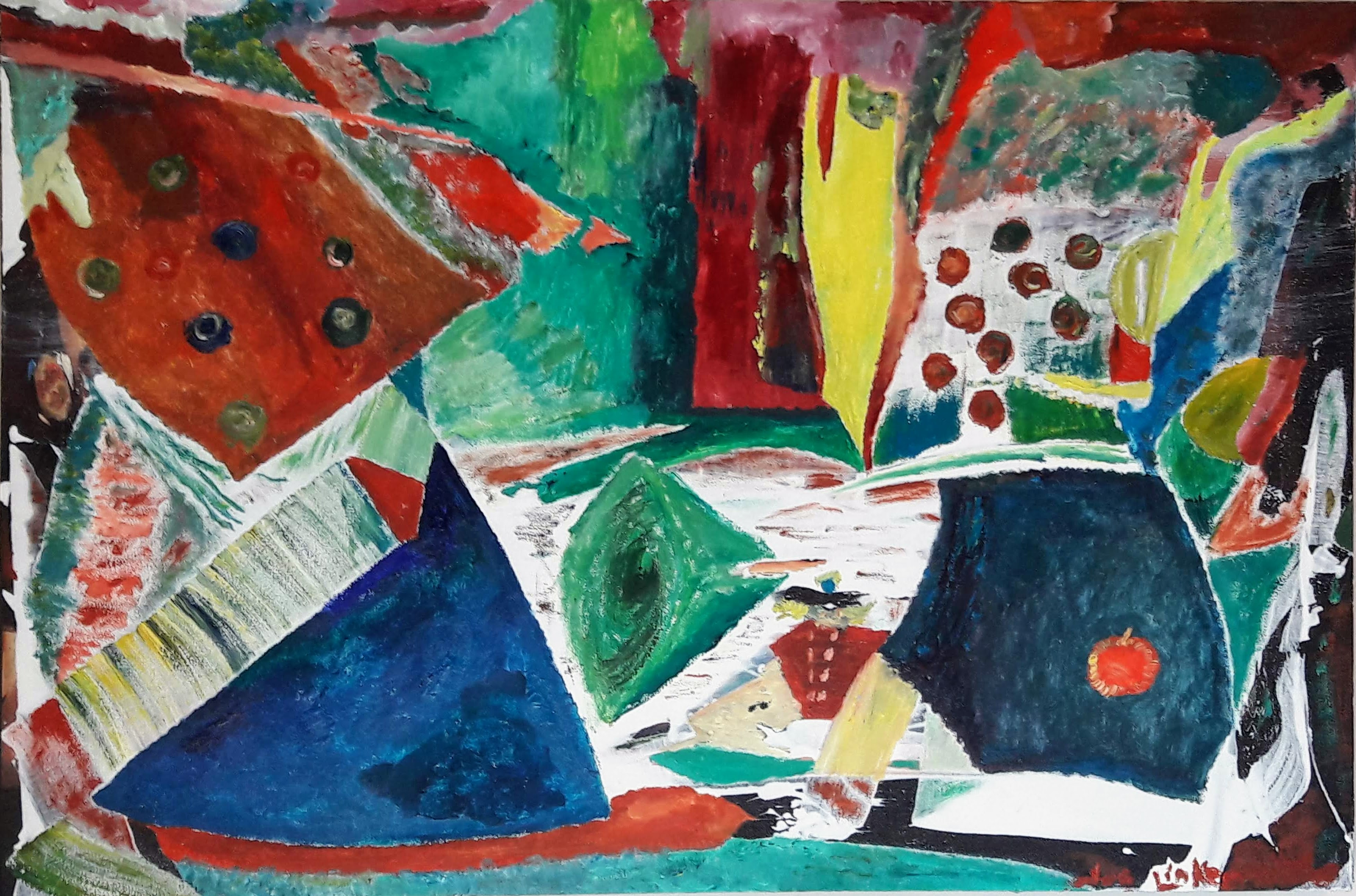
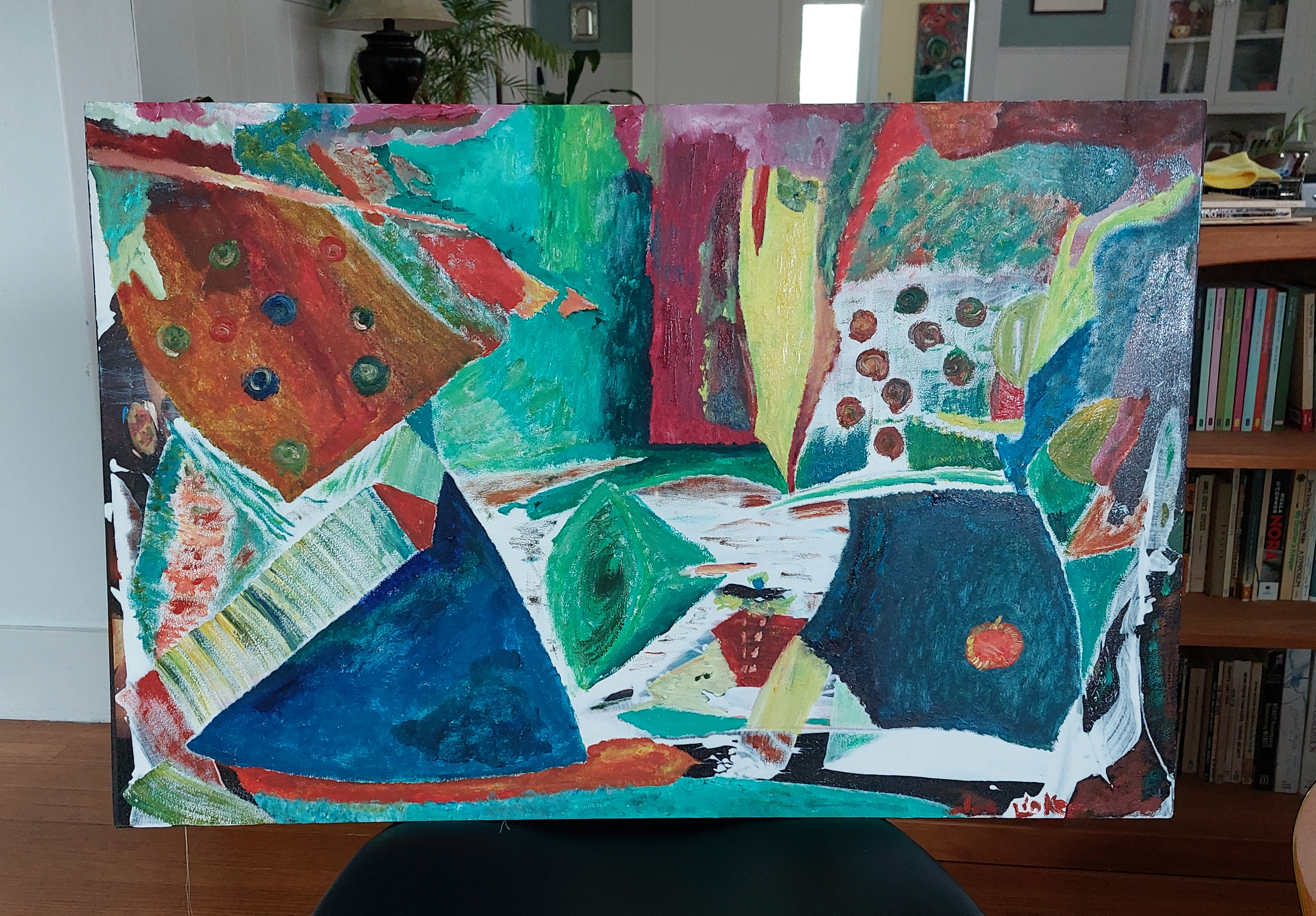
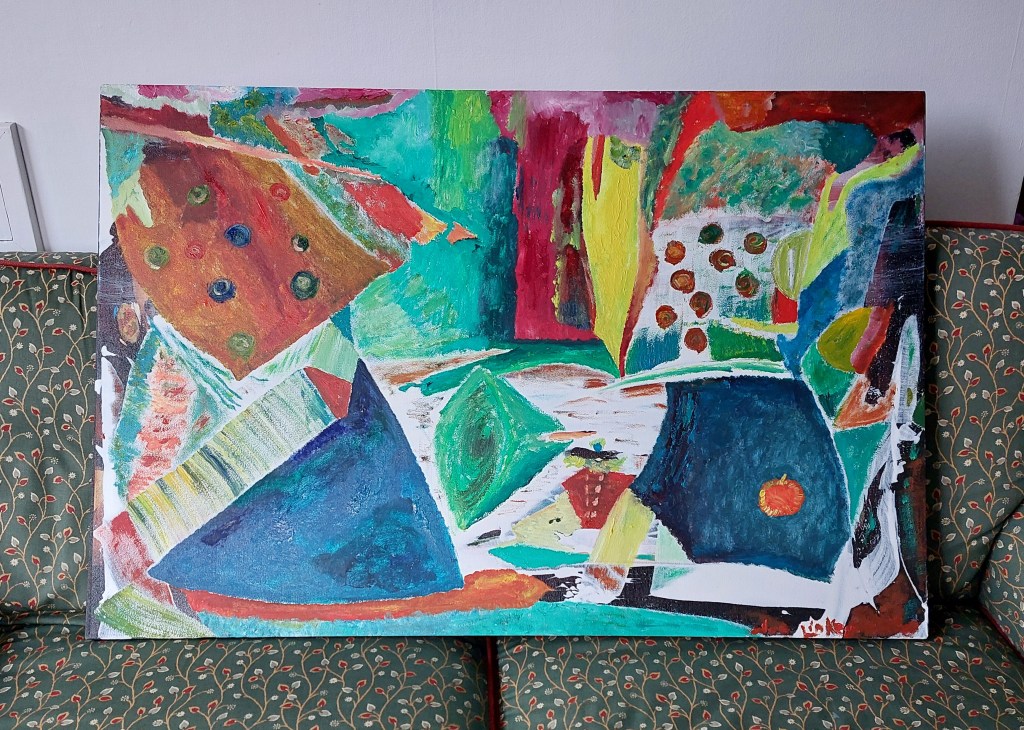
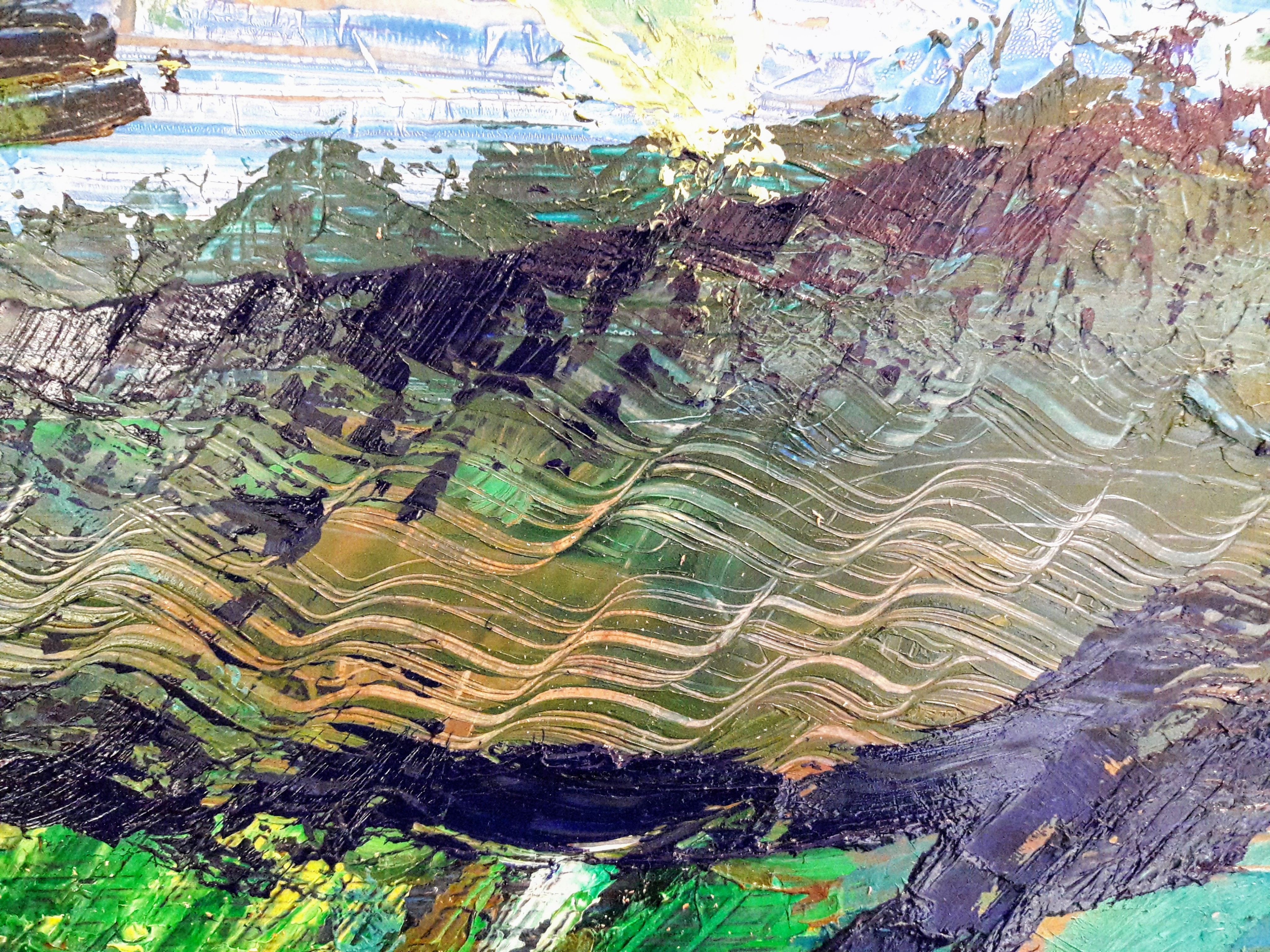
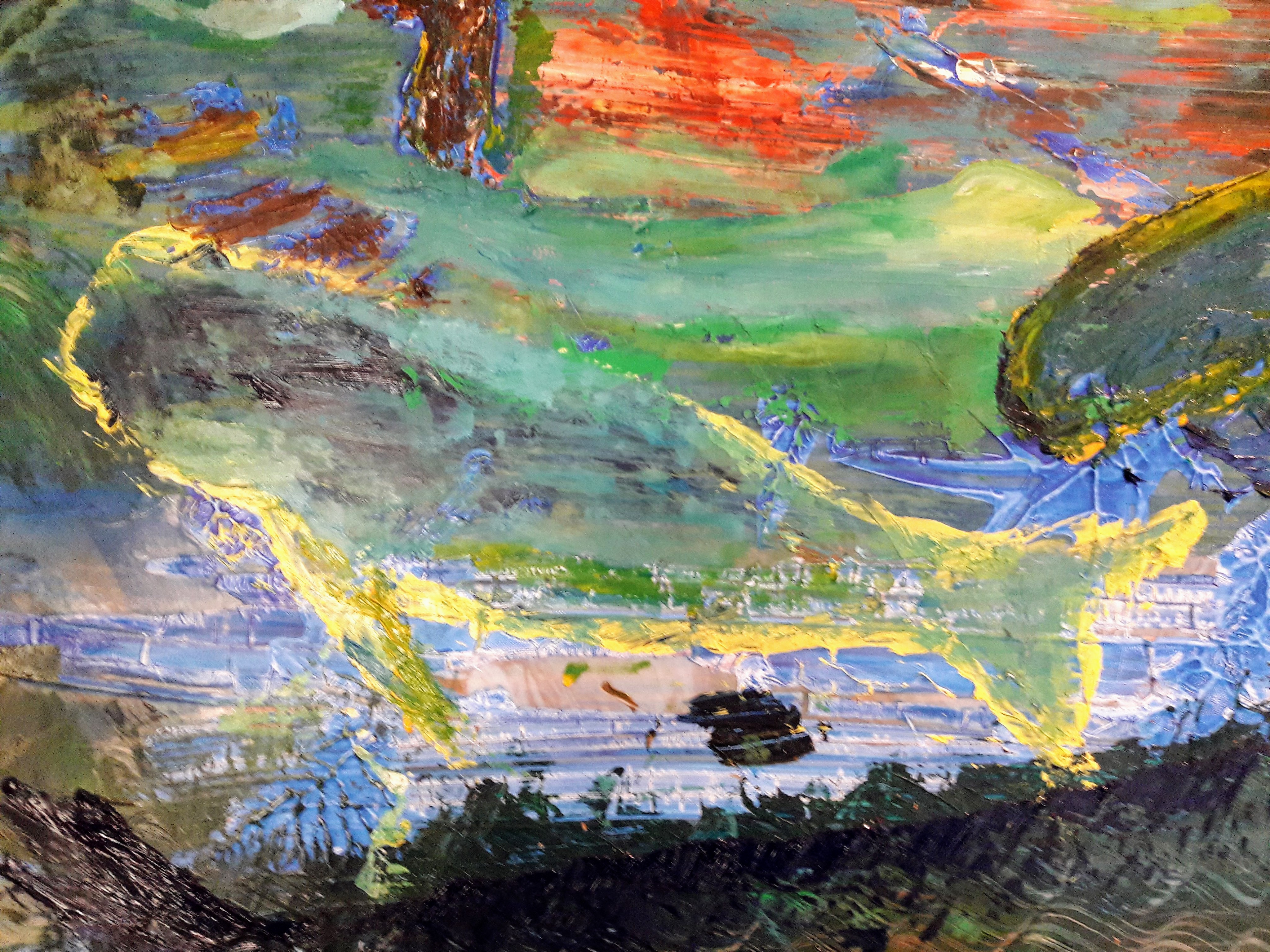
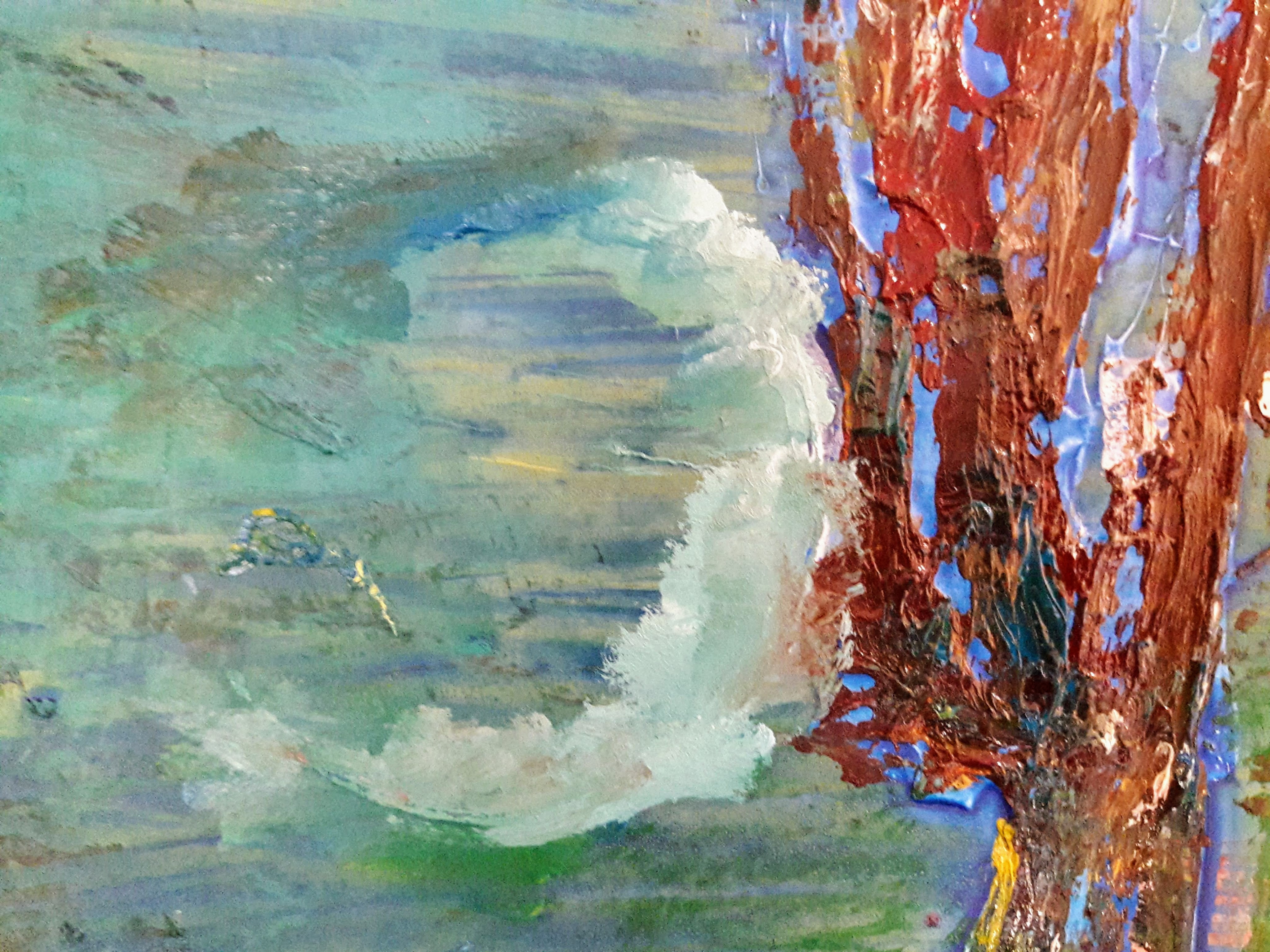
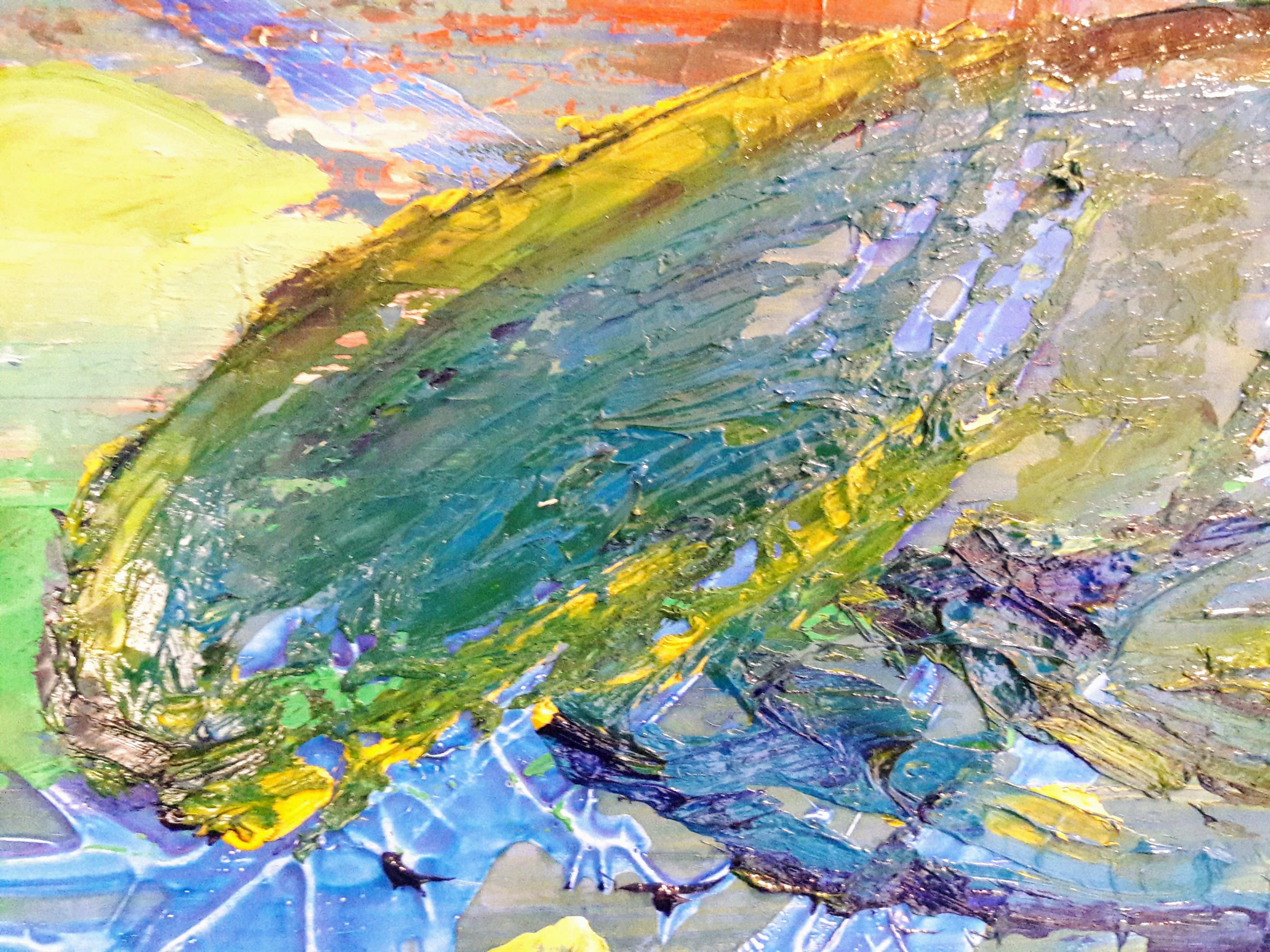
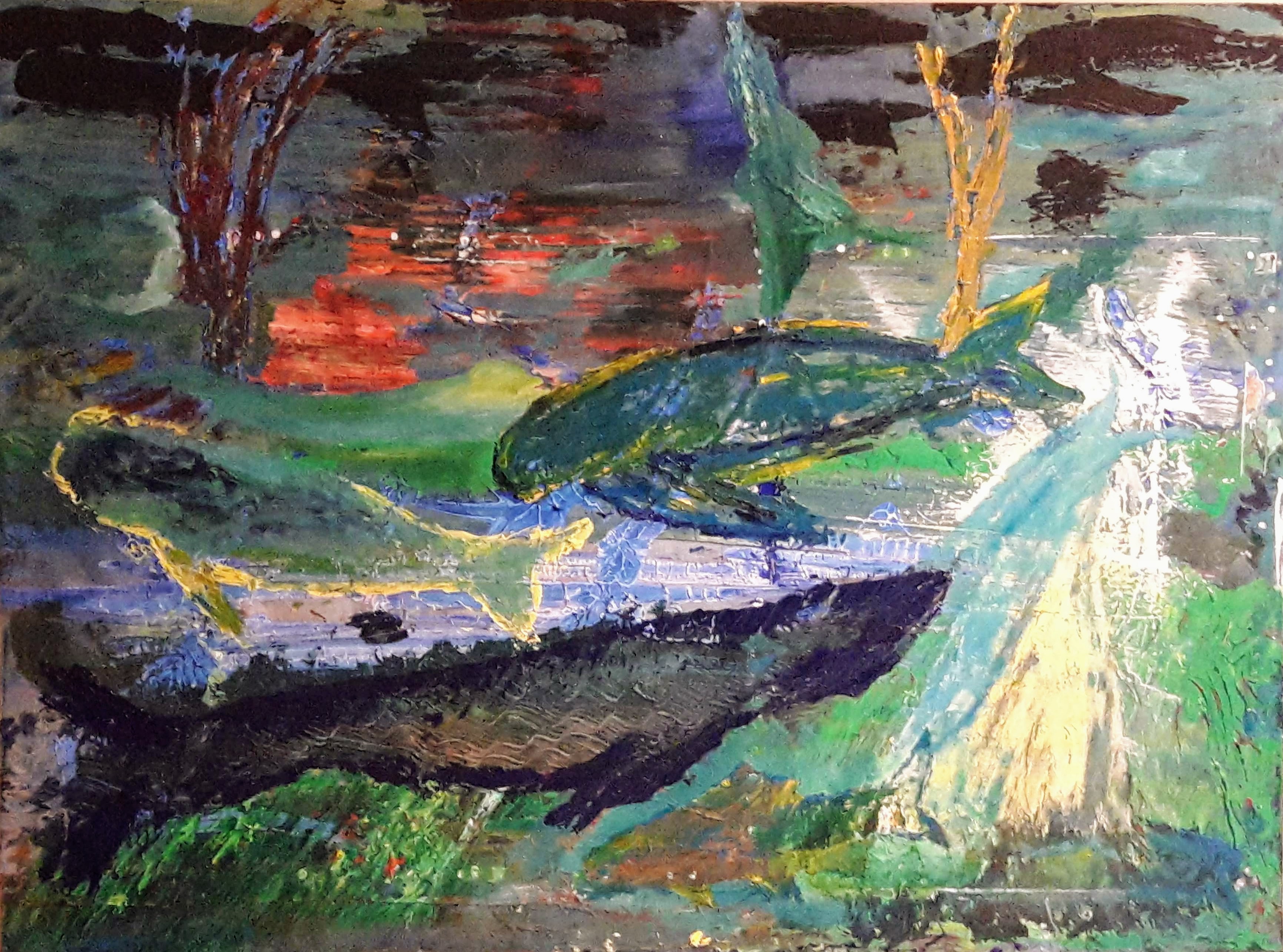
Pizza Painting, 2020, acrylic on canvas, 24″ by 36″
The painting in progress photographed with a cell phone looks dim and dark, reflecting the working conditions of the basement space in February of 2020:
In brighter available light the painting still looks shades different depending on angle and direction of light. Can you see the pizzaiolo (pizza maker) at the bottom-center of the painting? Also note the yellow anchovy top-center.
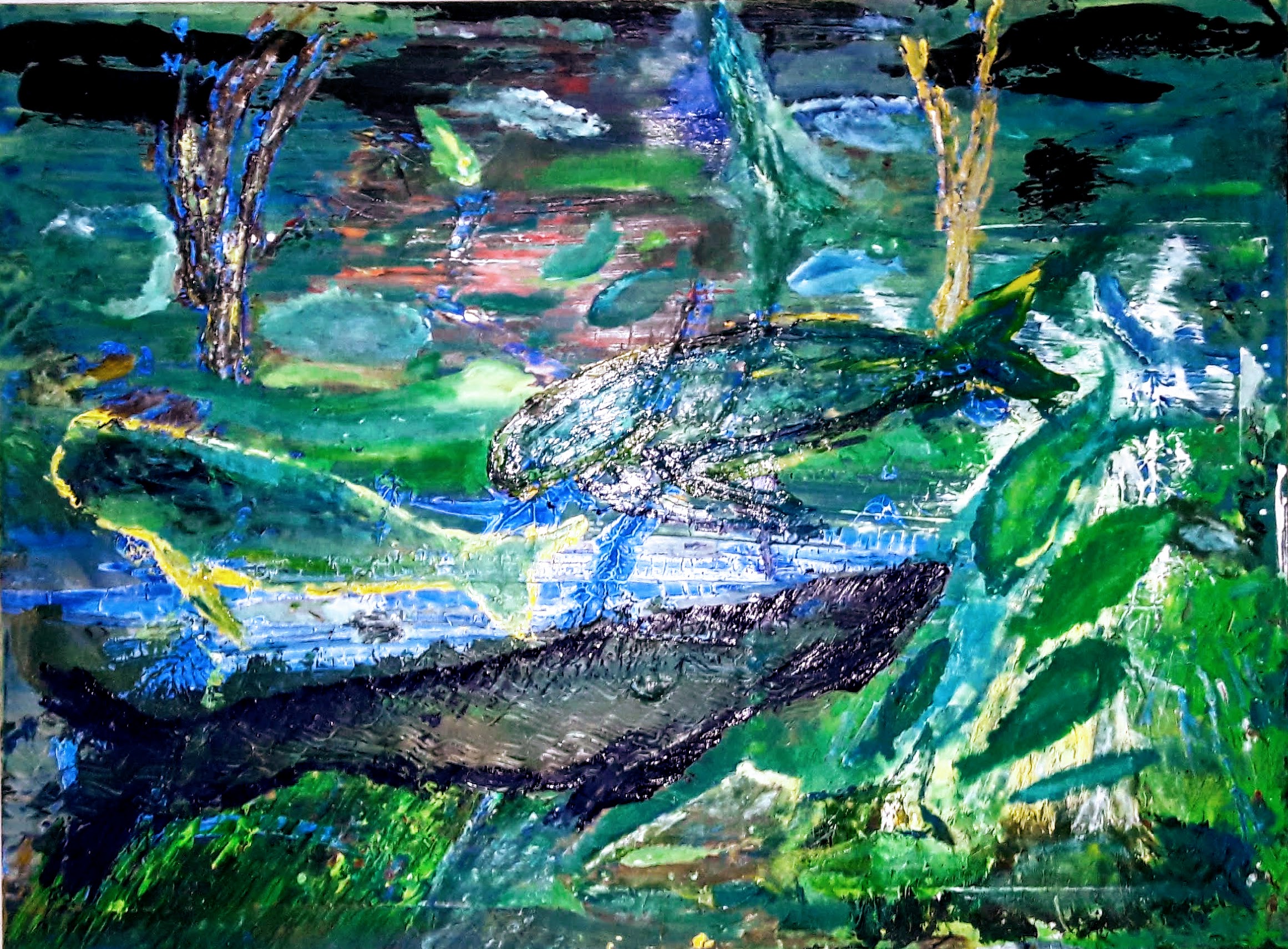
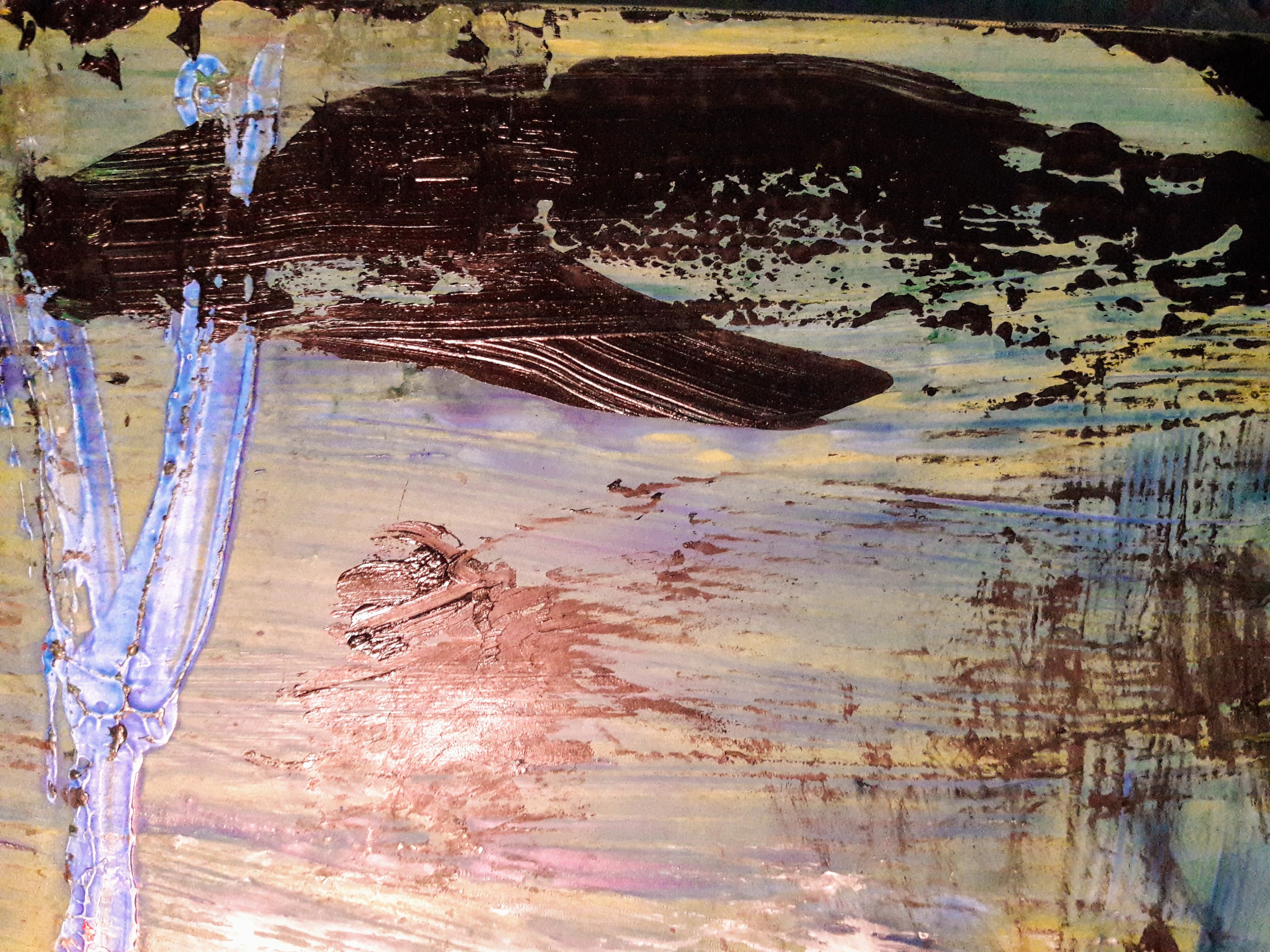
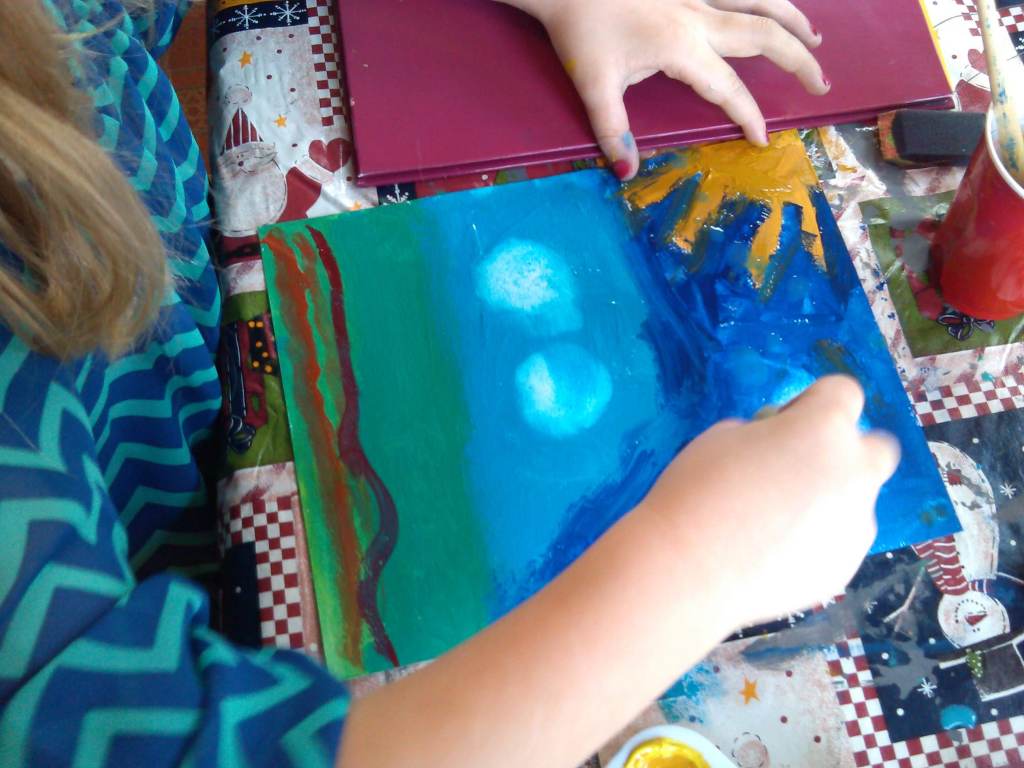
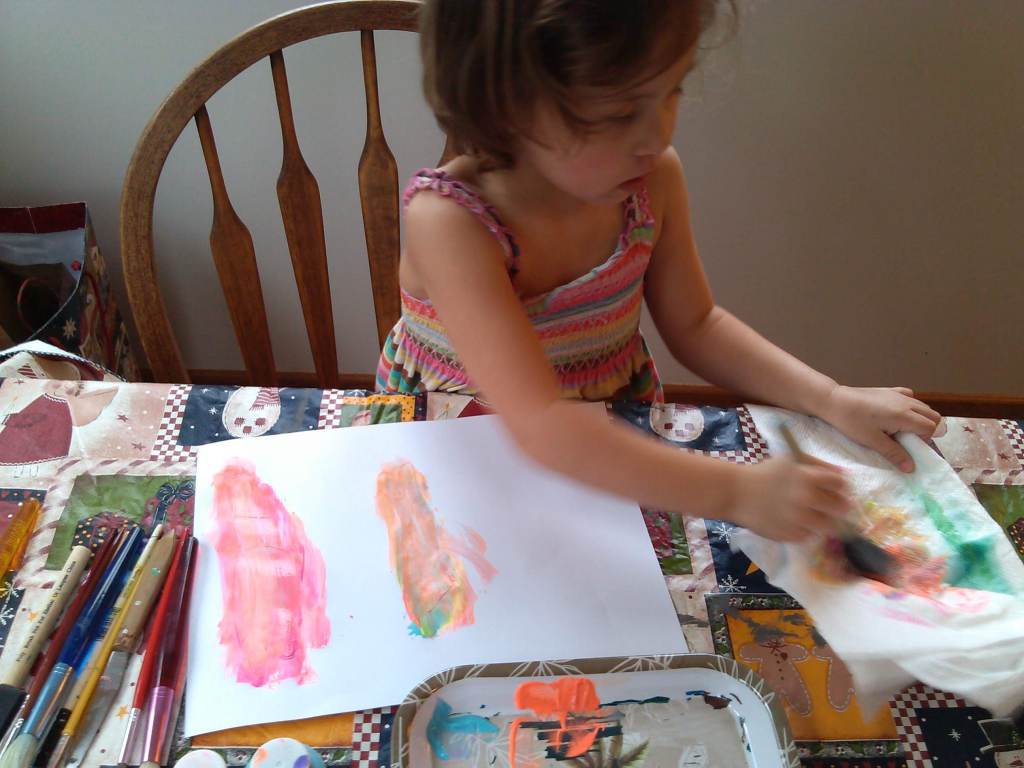
Painting, smearing pigment or dye from a palette to an object for the purpose of catching light, is a physical activity. Whereas Melville begins his great book “Moby-Dick; or, The Whale” explaining why men take to the sea (“Whenever it is a damp, drizzly November in my soul,” Ismael says, and, “If they but knew it, almost all men in their degree, some time or other, cherish very nearly the same feelings towards the ocean with me”), I drop down to the basement or spread a cover over the kitchen table and begin a painting.
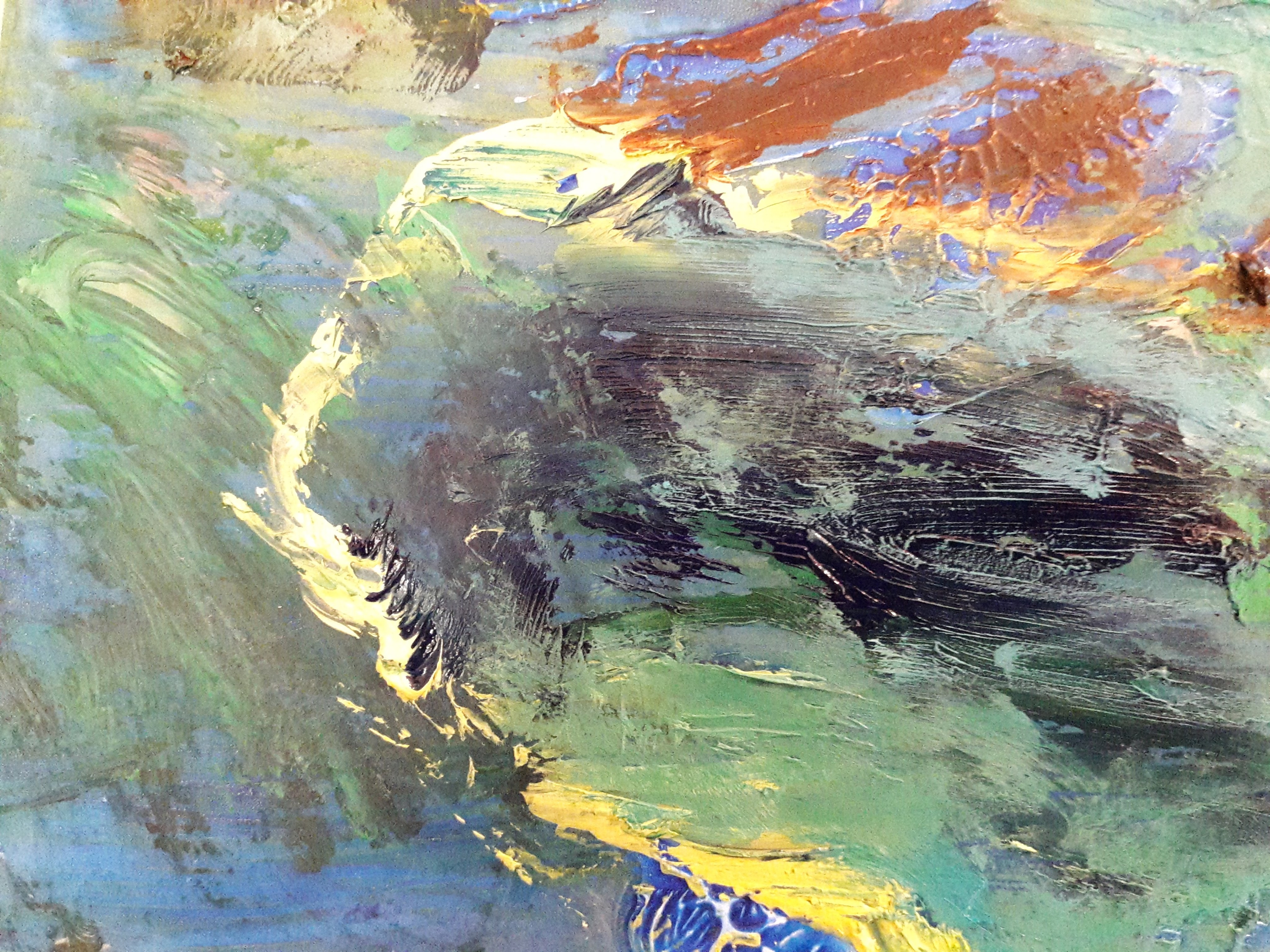
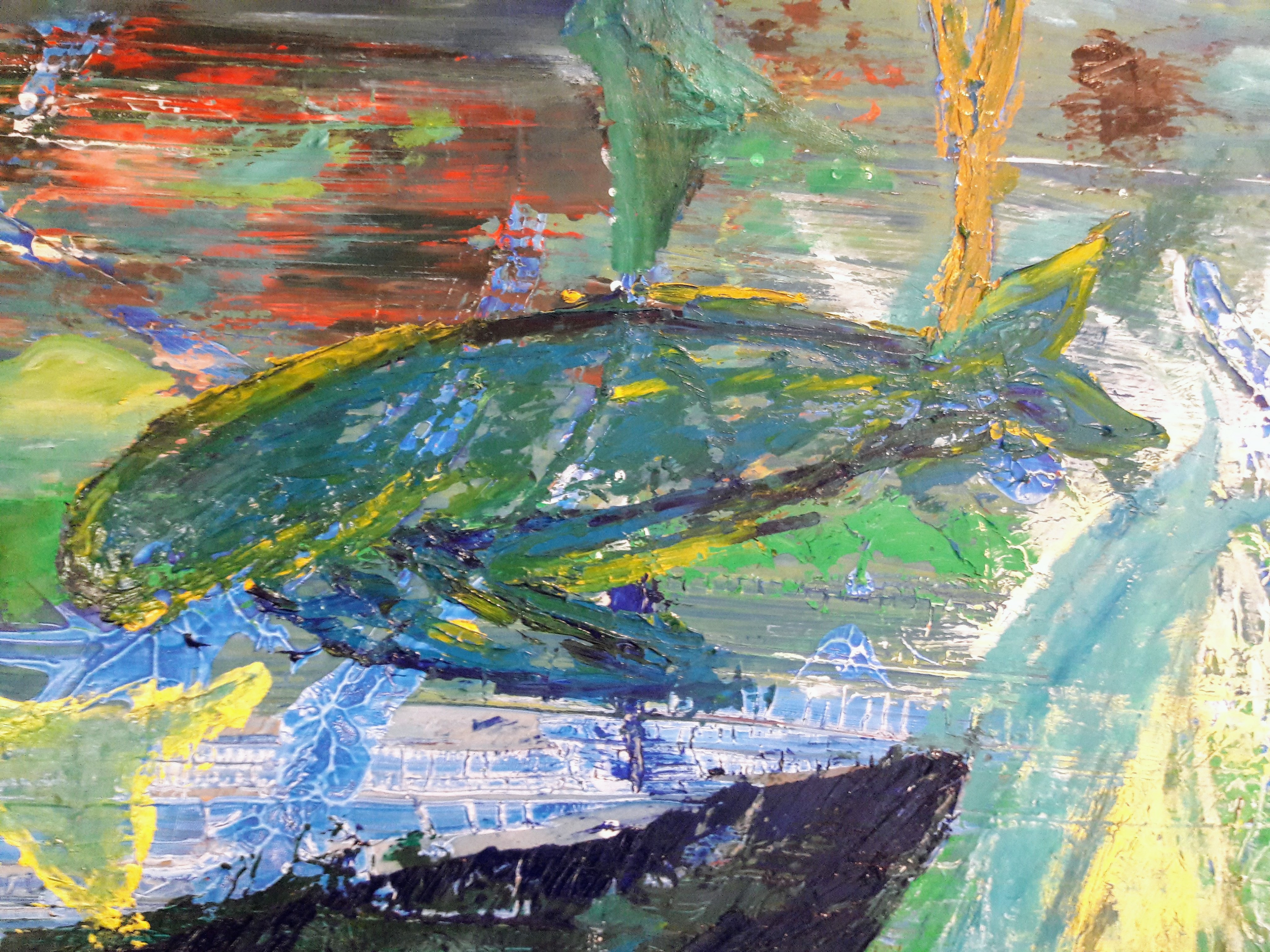
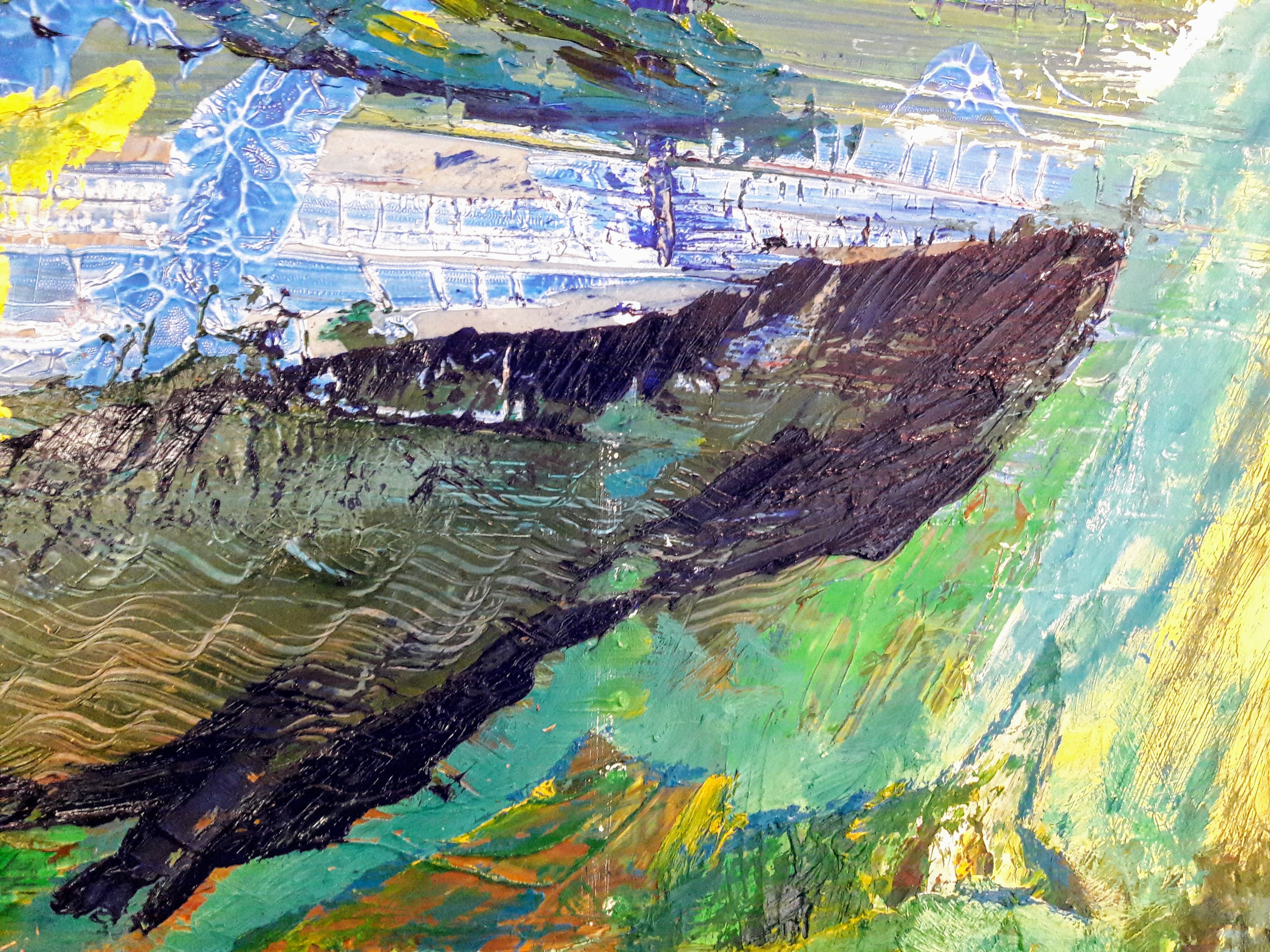
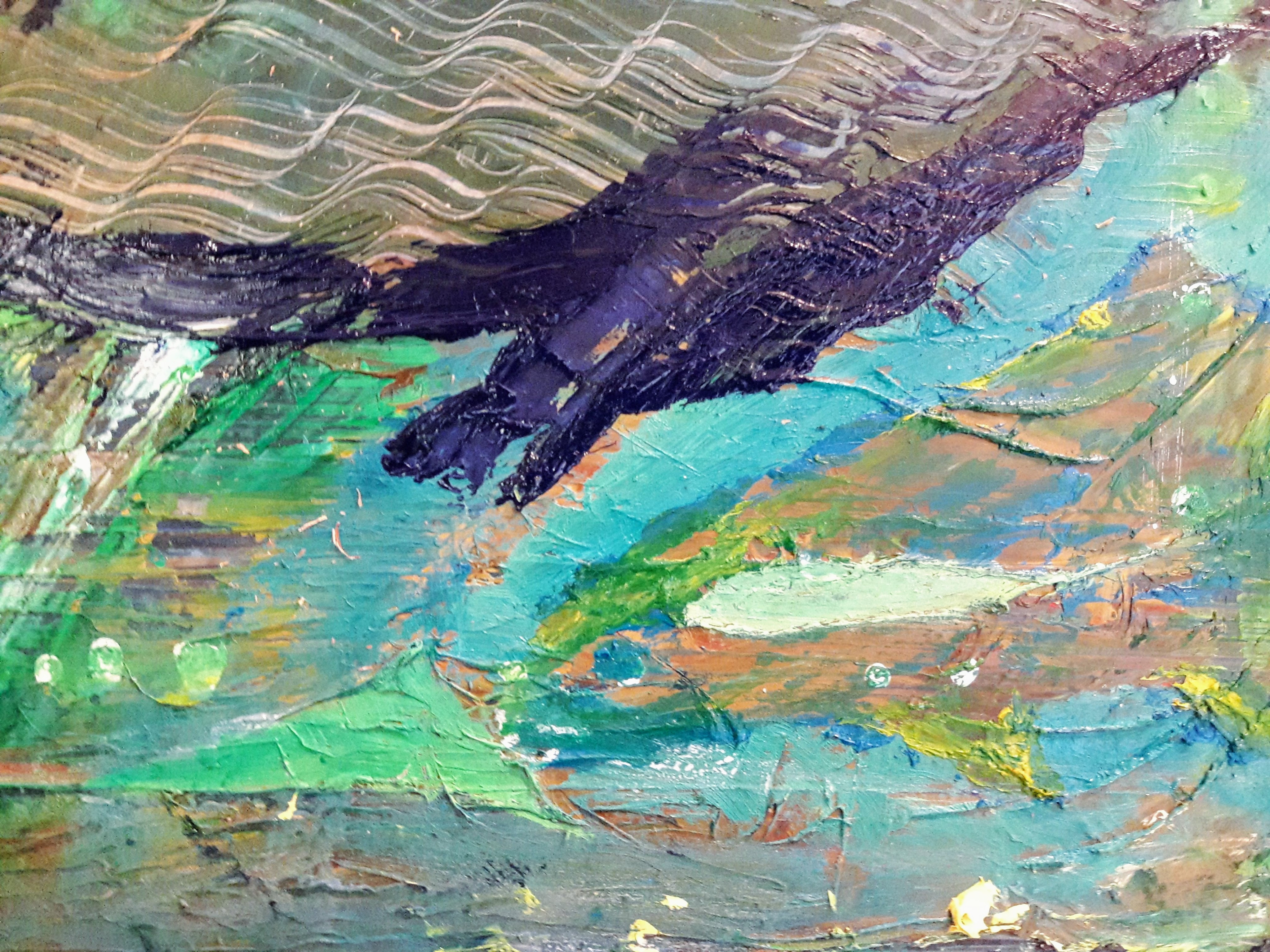
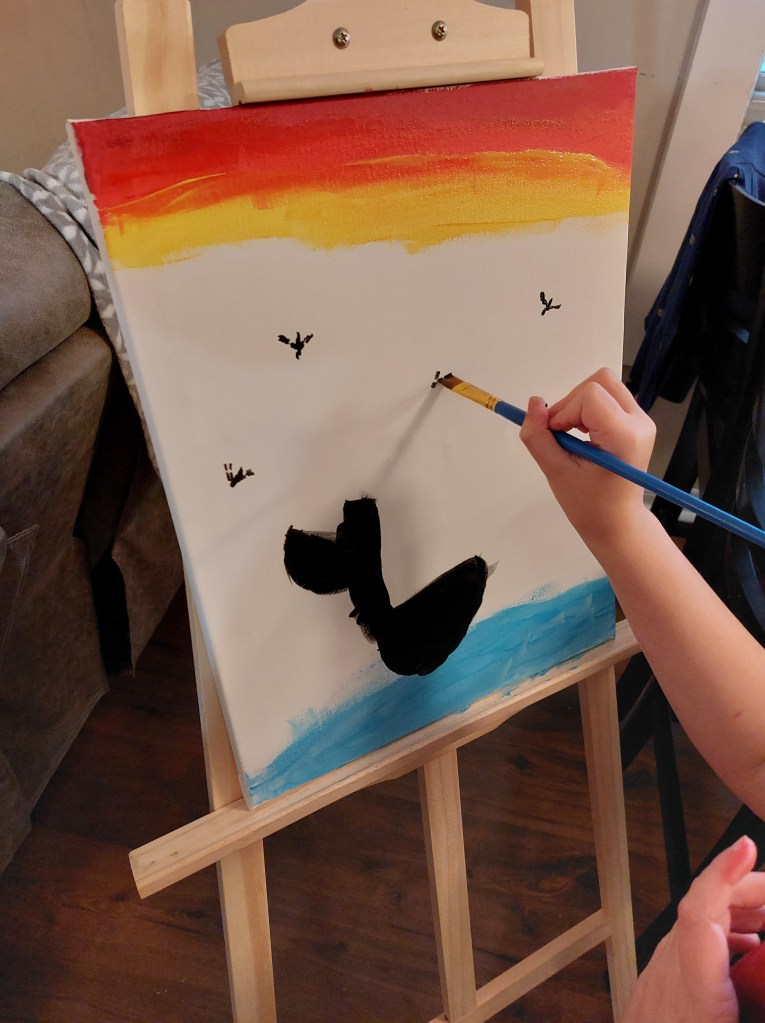
“Whale Watch” (2019) Water based oils on Canvas 30″ x 40″:
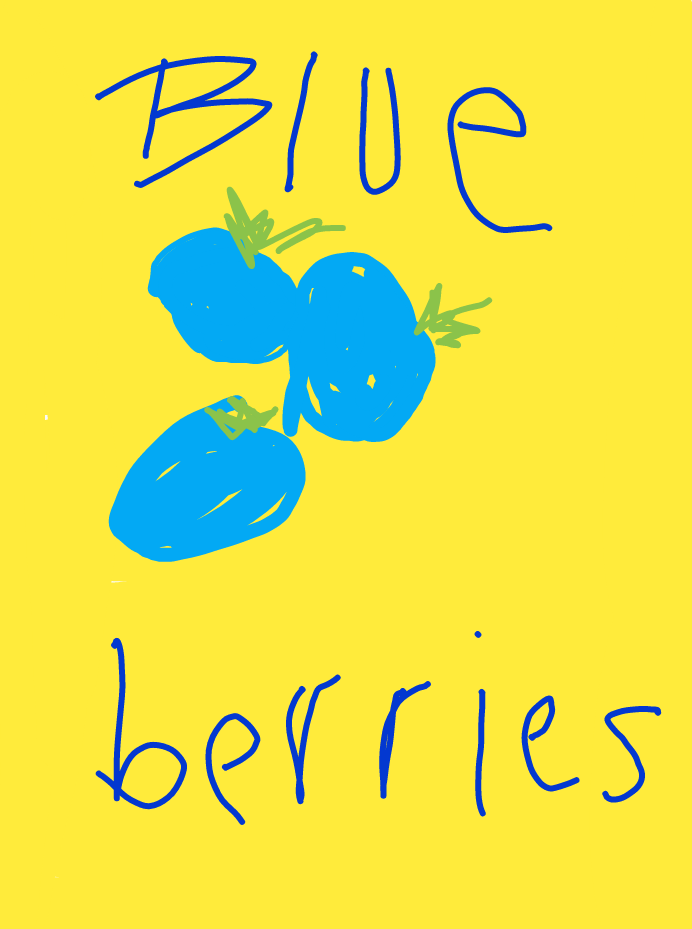
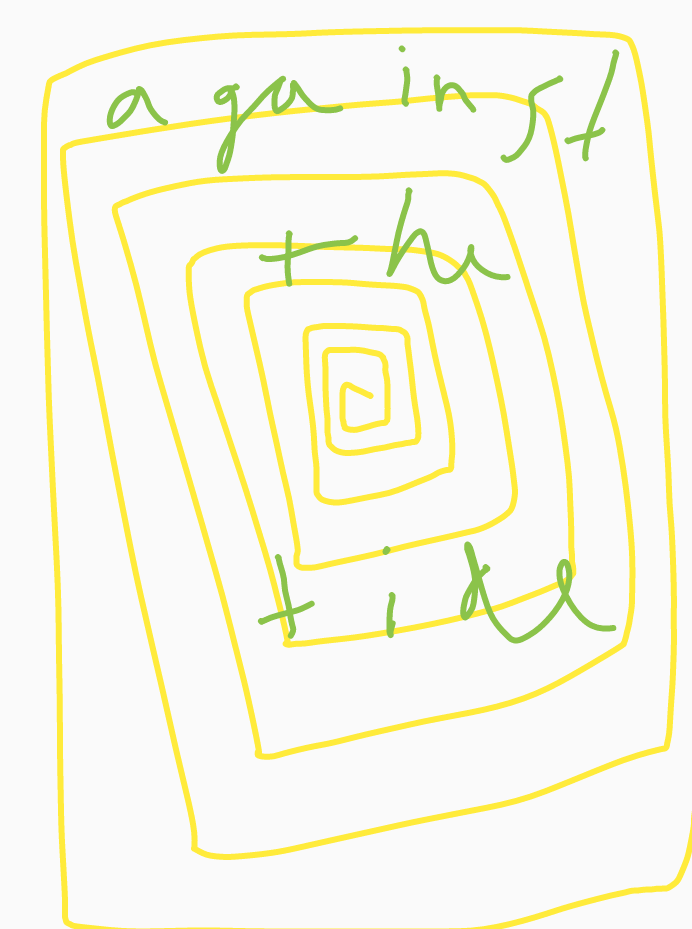
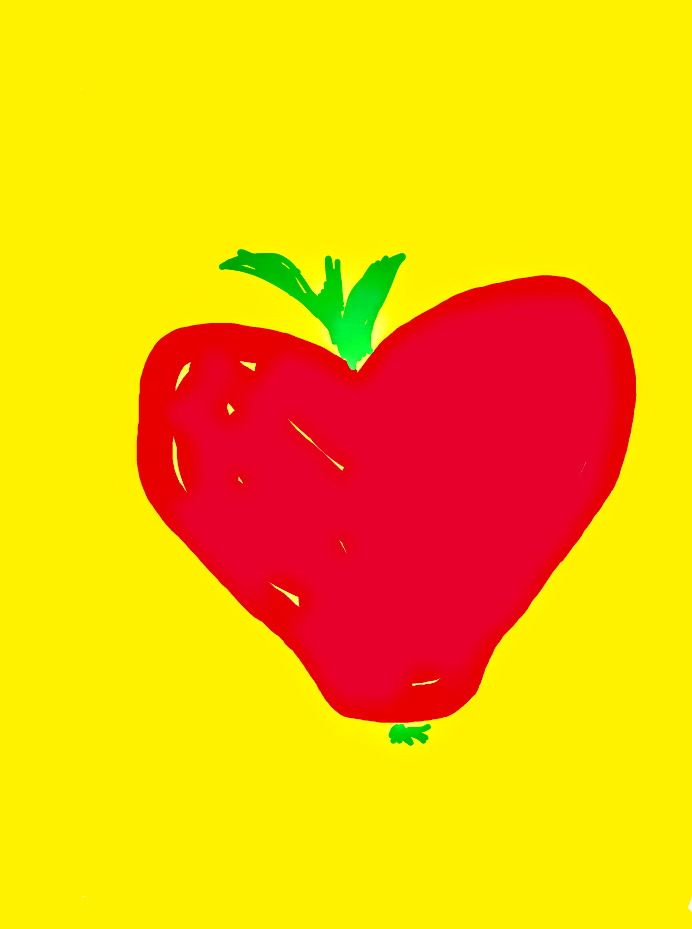
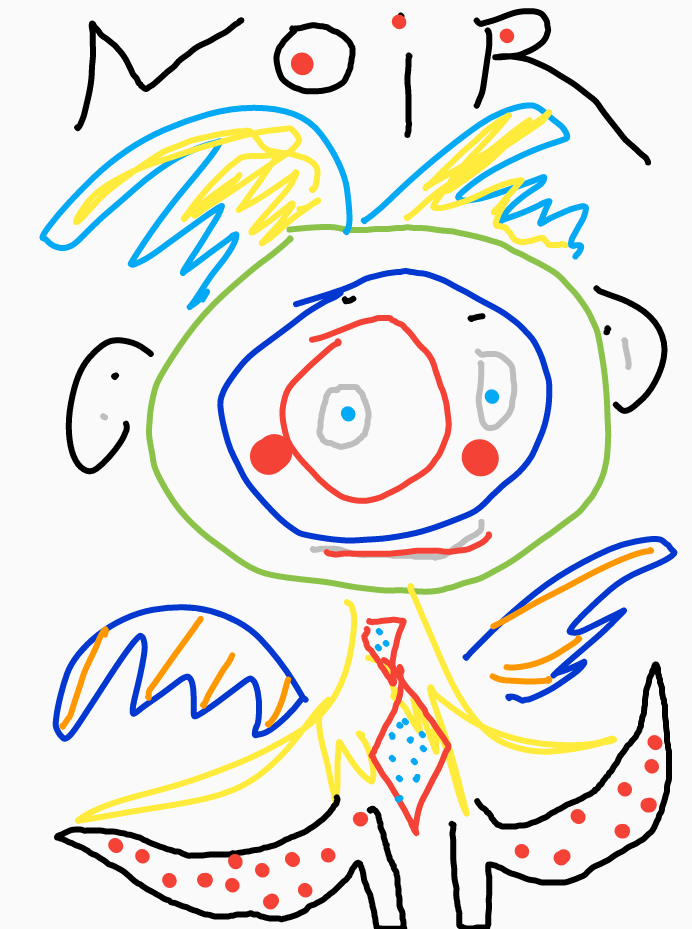
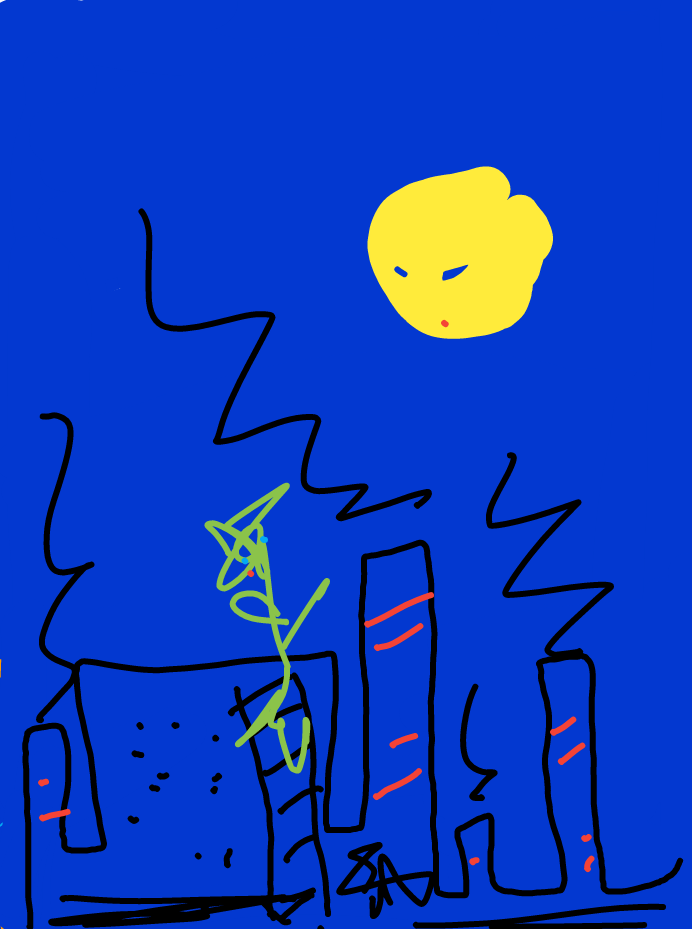
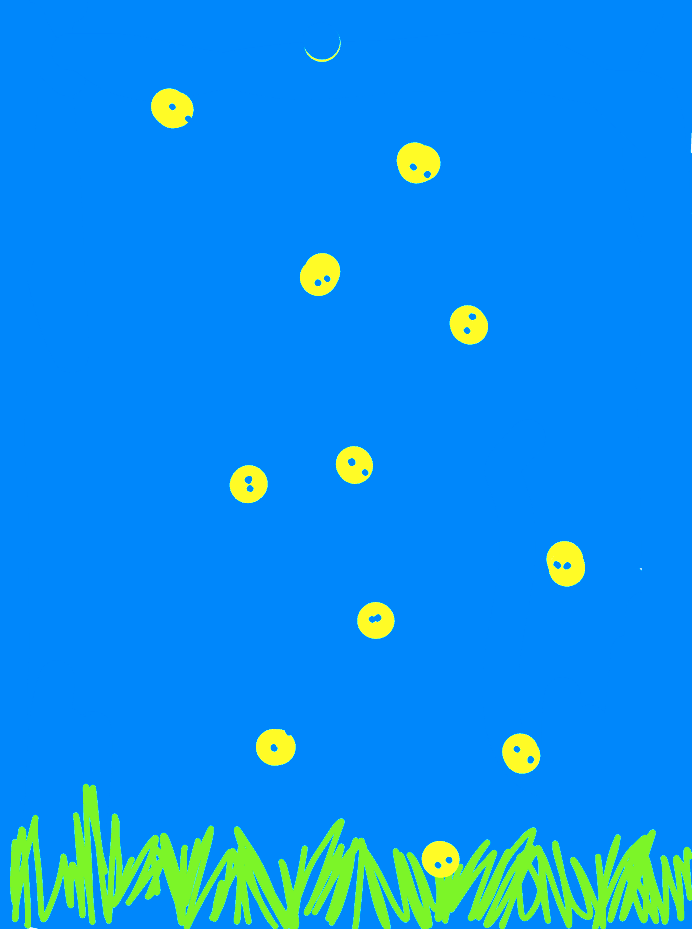
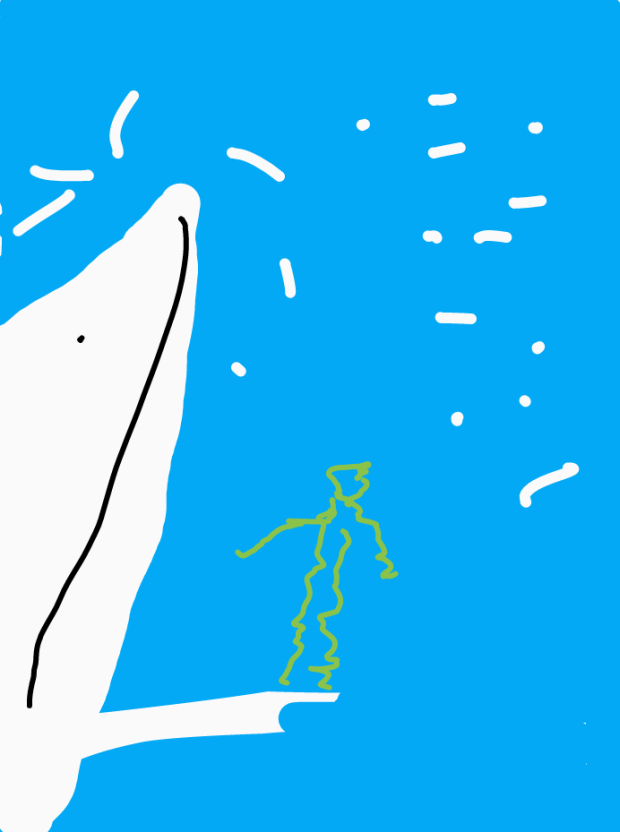
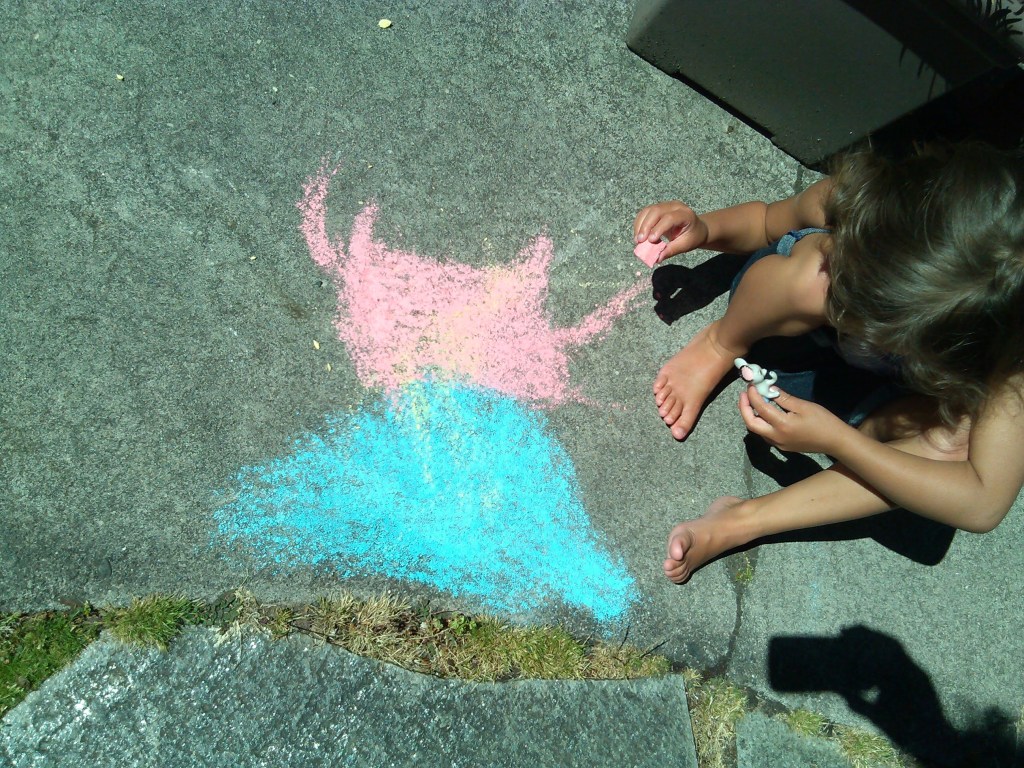
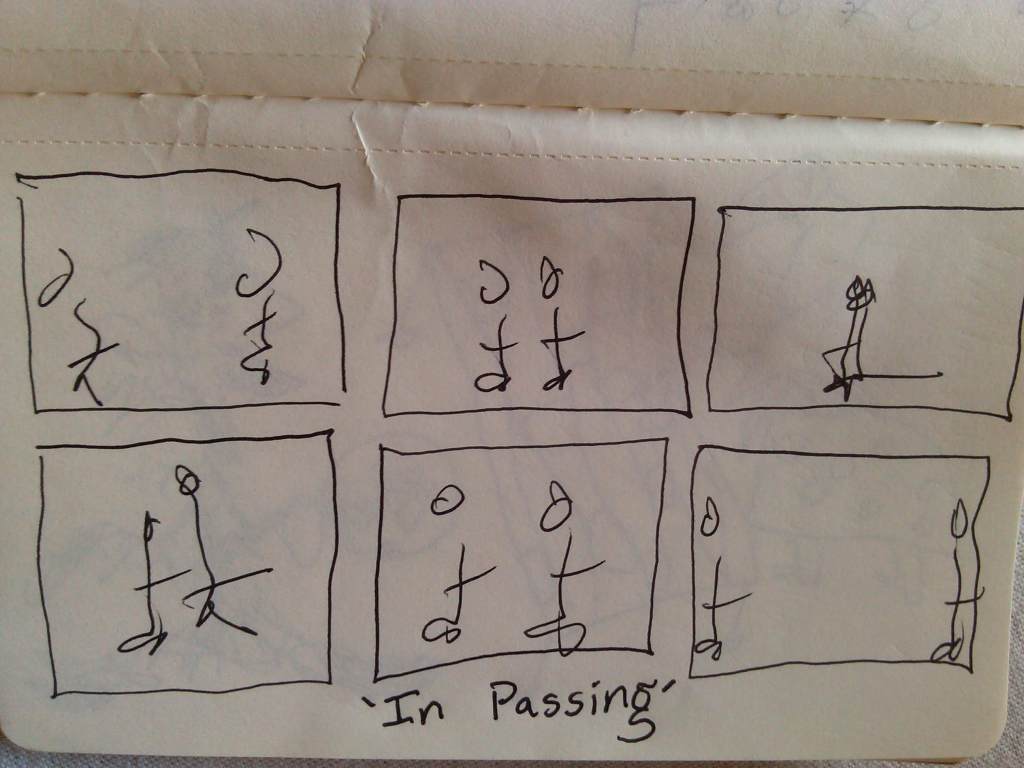
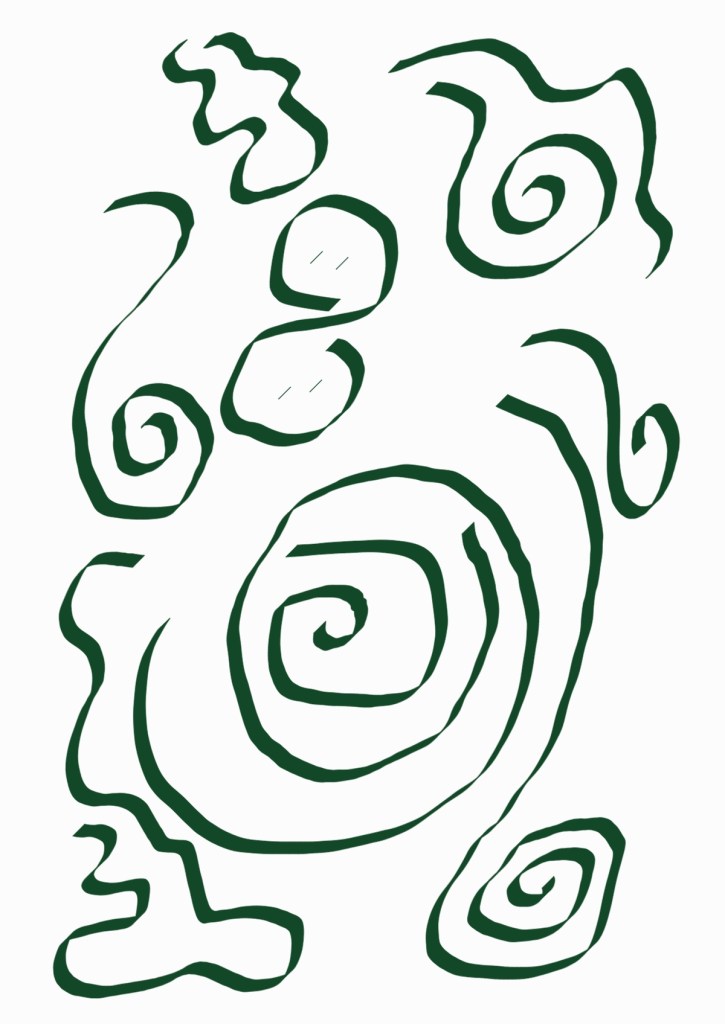
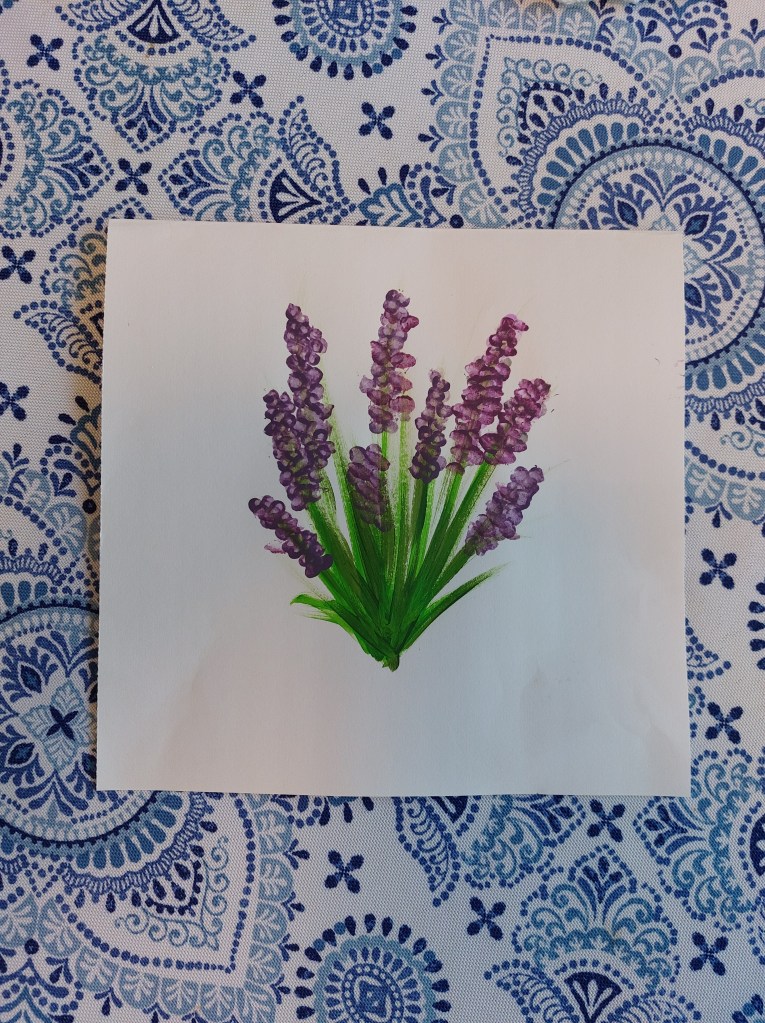
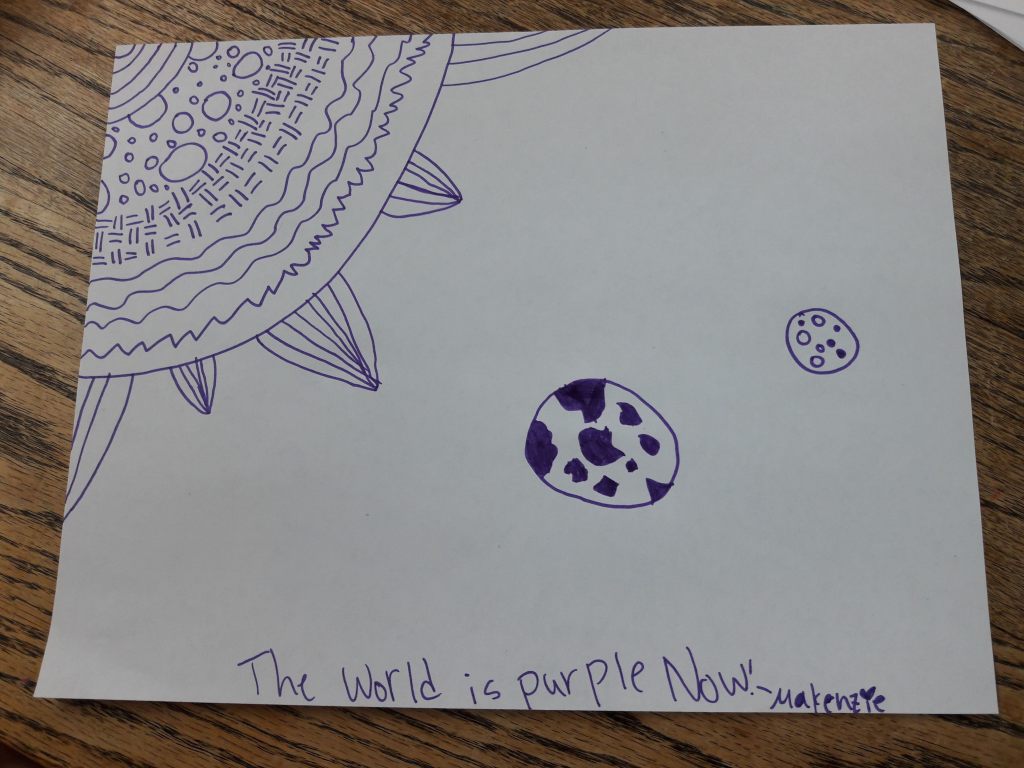
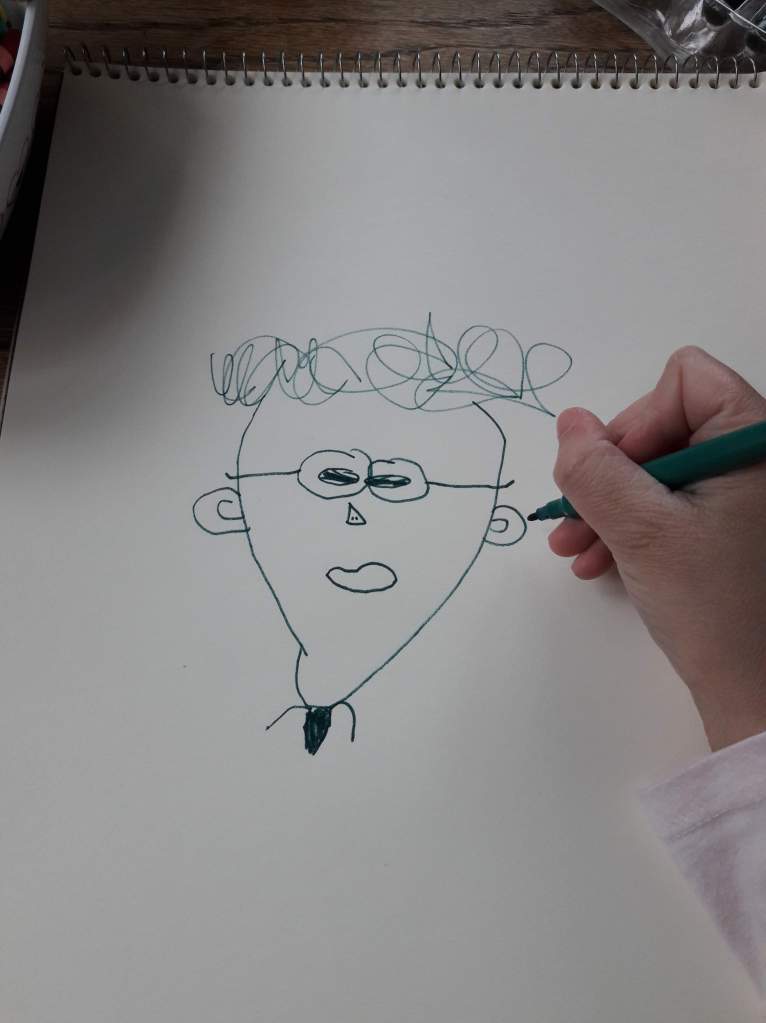
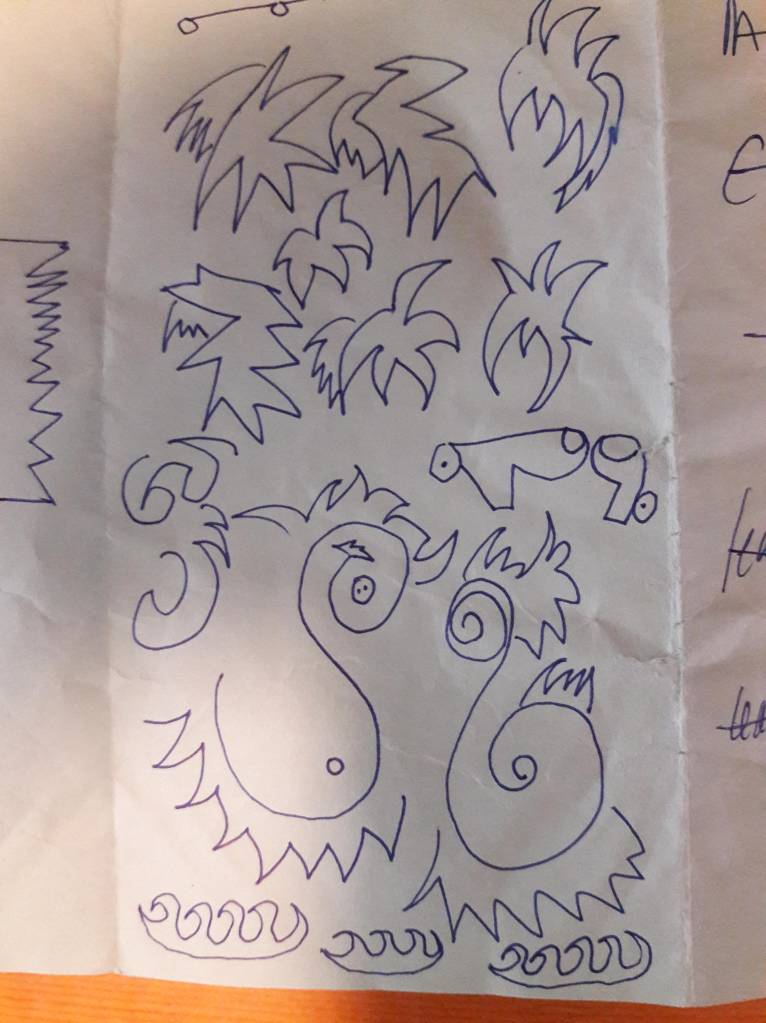
Painting is necessarily physical and messy. Anyone can paint, you don’t need to be an artist, and if you have no paints or canvas or board, you can draw or sketch, on paper or on your cell phone, for example:
Human imagination is part of nature, turning light into food, like photosynthesis in plants. Imagination is a natural process that needs no teacher or school, theory or method. Thus poetry should not become a profession, nor should a poem profess anything, nor should poets become professors. Most formal education activity turns subjects into sports and competition. Imagination is not competitive.
We might see that William Blake, in his “The Marriage of Heaven and Hell” (1790), explains the imagination as a natural means of protecting the human from an onslaught of reality:
“1. Man has no Body distinct from his Soul. For that called Body is a portion of Soul discerned by the five senses, the chief inlets of Soul in this age.
2. Energy is the only life, and is from the Body; and Reason is the bound or outward circumference of Energy.
3. Energy is Eternal Delight.”
William Carlos Williams associated the season of Spring with the imagination. It’s in his short book titled “Spring and All” that we find his now famous poem called “The Red Wheelbarrow.” But we’ve been reading that short piece sort of “à la carte,” or slightly out of context. It appears in “Spring and All” as a numbered poem in a series of poems interrupted in several places by Williams’s prose discussion about what he is doing and why in the way of poetry. There are a total of 27 poems in “Spring and All,” and “The Red Wheelbarrow” is number:
XXII
so much depends upon
a red wheel barrow
glazed with rain water
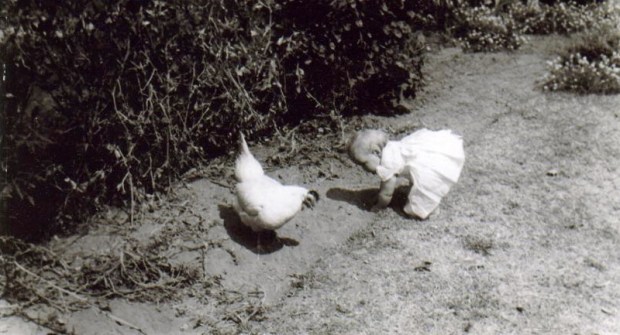
beside the white chickens
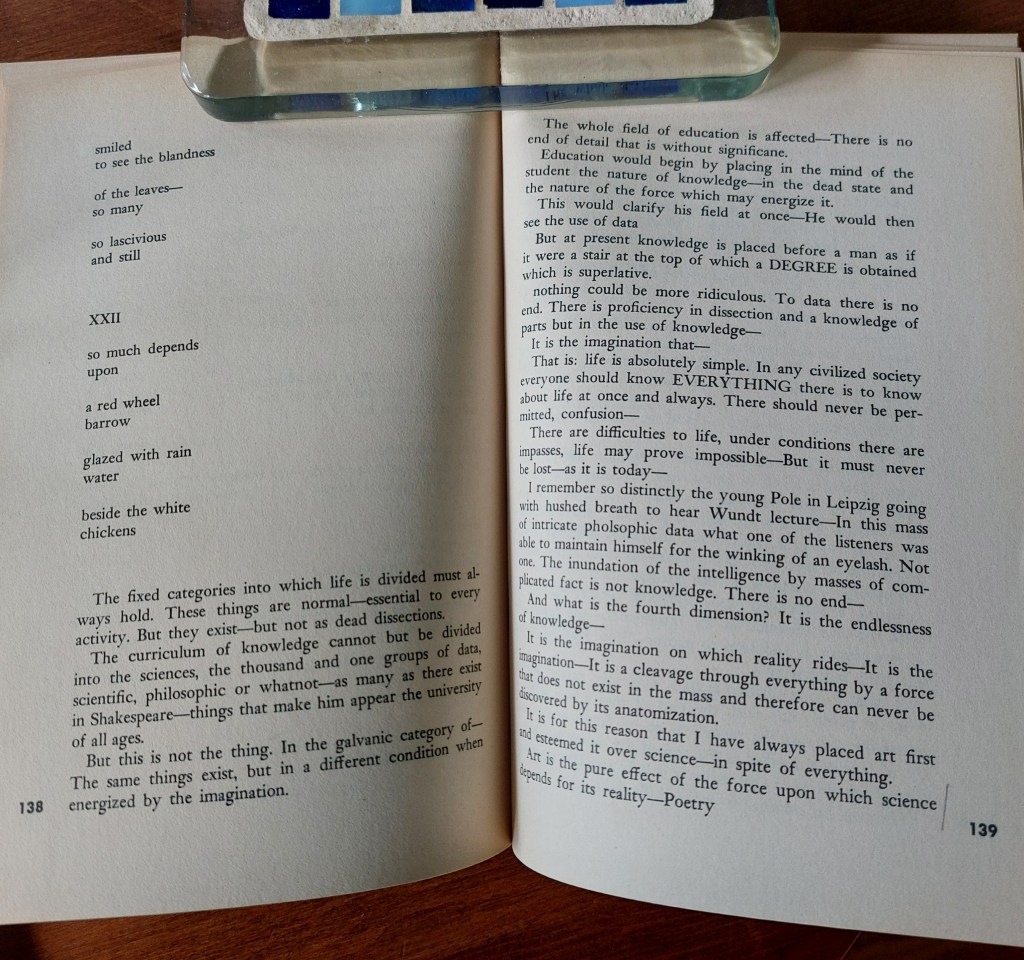
“The Red Wheelbarrow” appears in “Spring and All” on page 138 (Part II: pp 88:151) of my copy of Imaginations (New Directions Paperbook 329, 1971):
pp. 138-139 from “Spring and All” (1923) in Imaginations (NDP329, 1971)
Reading “The Red Wheelbarrow” in the context of “Spring and All” we begin to see how Williams invites the reader’s imagination to absorb the image. It is a well-lit poem. A painting is suggested, and the imagination creates the image (food) from the juxtapositions of color and light and things placed as if by hands (red, white, wheelbarrow, water, chickens, glaze), but will the chickens sit still? Probably not.
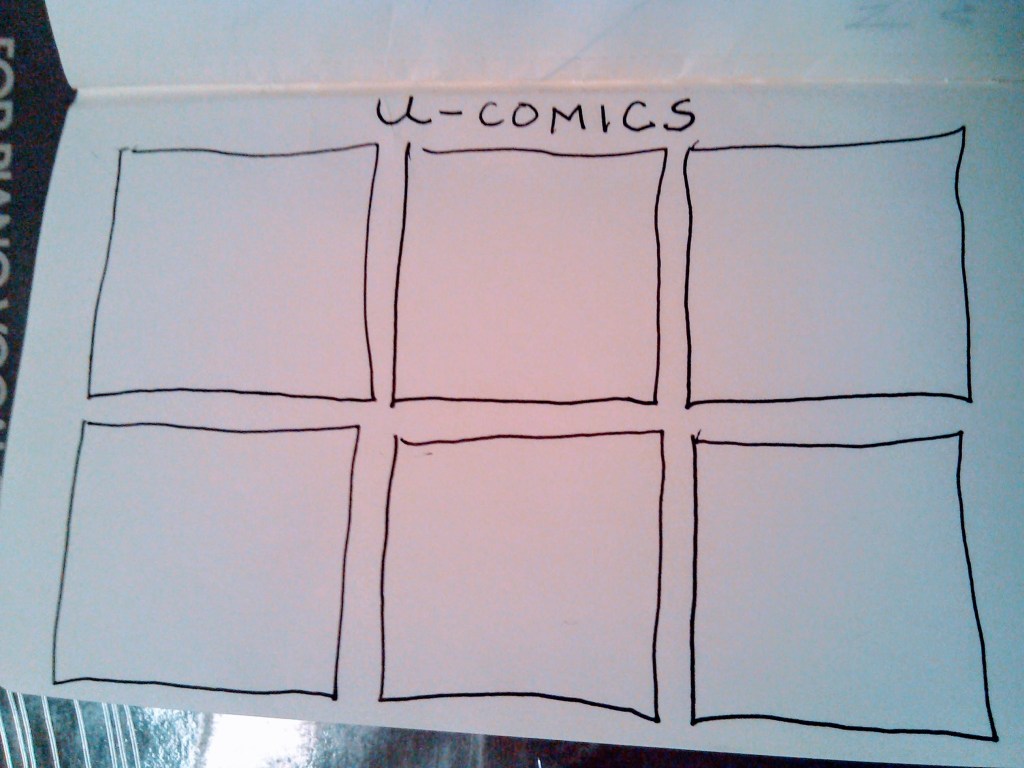
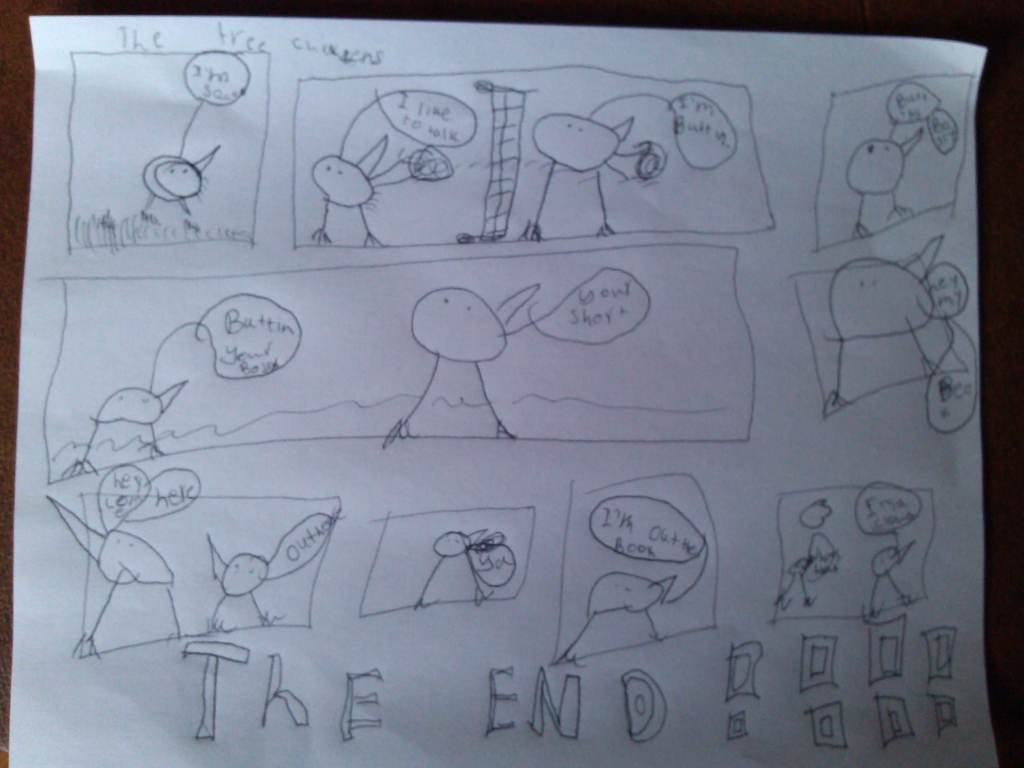
What is style and where does it come from? In his book “Q & A,” Adrian Tomine says, “If you create a page of blank panels and give that to a kid, they will immediately start creating a comic. And you will be surprised and delighted by what they create” (141).
Then again, when you were a kid, you might have been told to stay within the lines when coloring. And the panels were not blank, but pre-filled with assumptions and presuppositions.
Adrian says: “I understand that feeling of self-consciousness all too well, and I think the only reason I’m able to publish the work I do is that I started on this path before I knew any better….I’ve found it helpful to try to trick myself back into that earliest creative mindset, where I’m just creating the work for its own sake” (136-137).
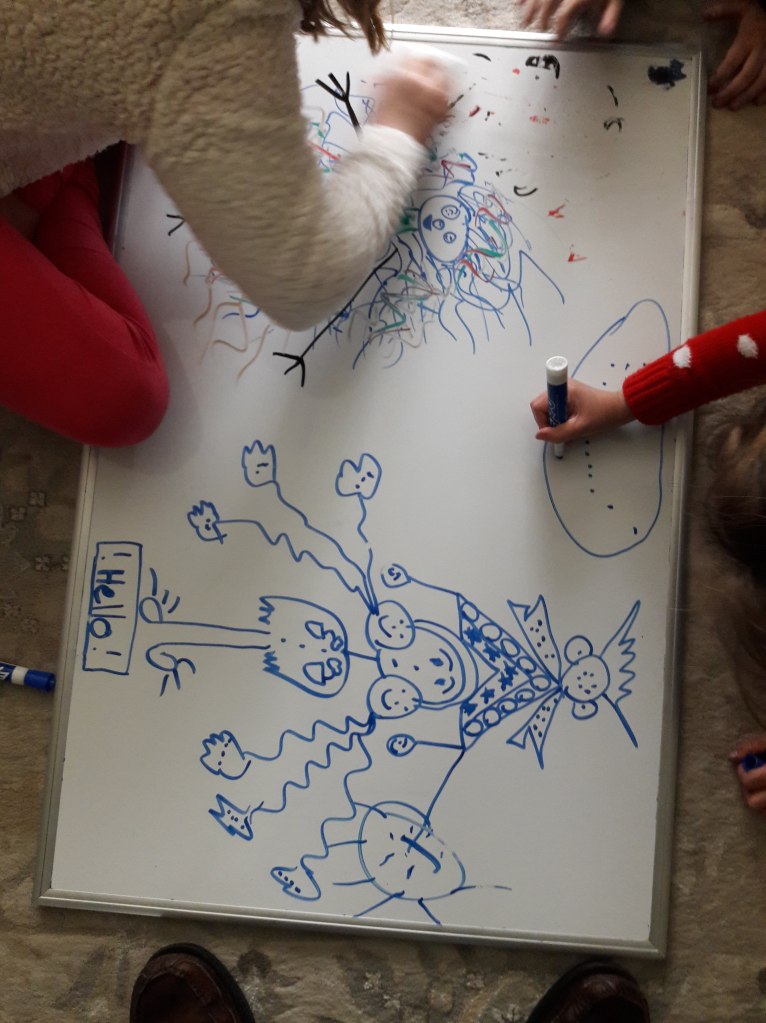
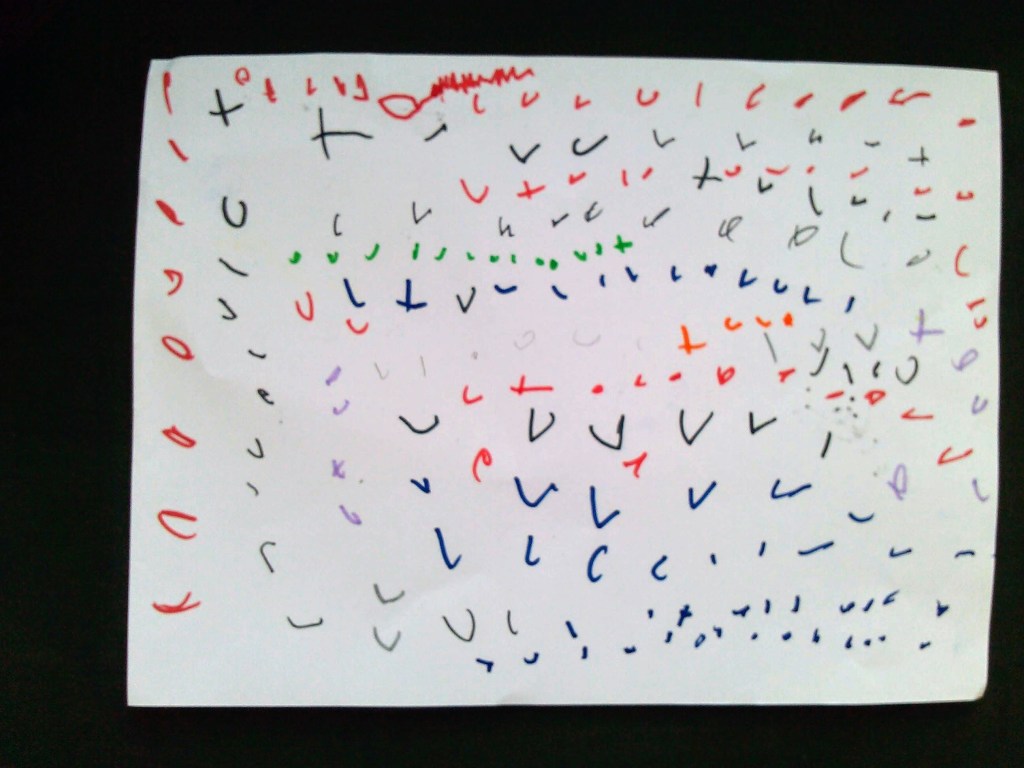
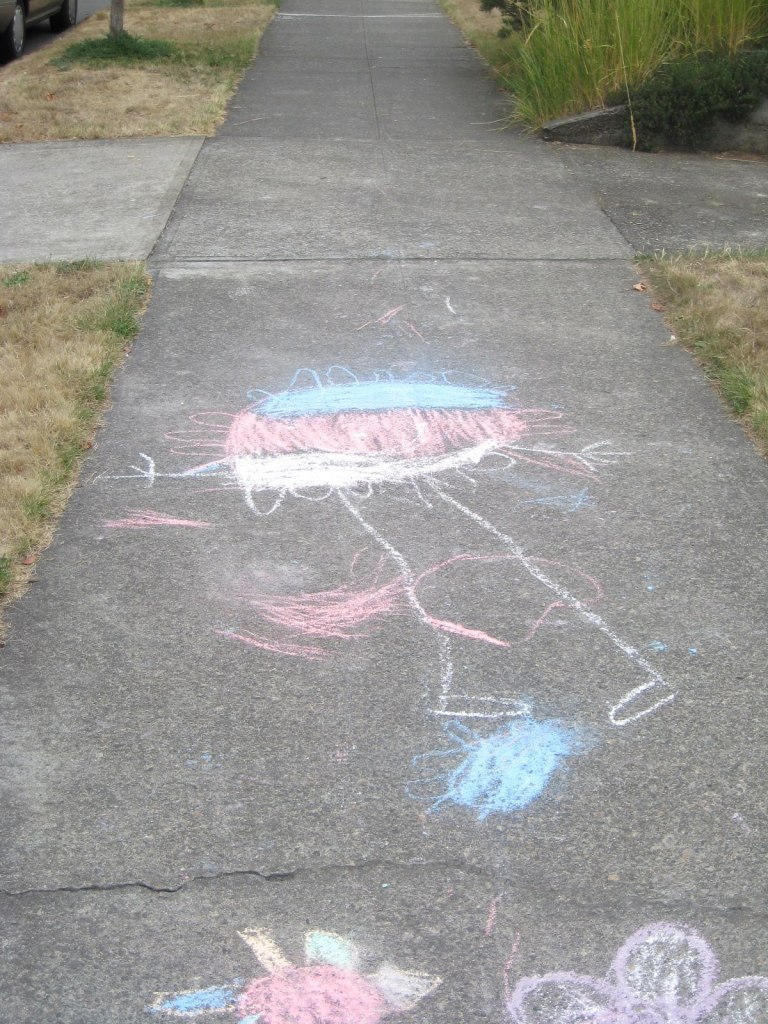
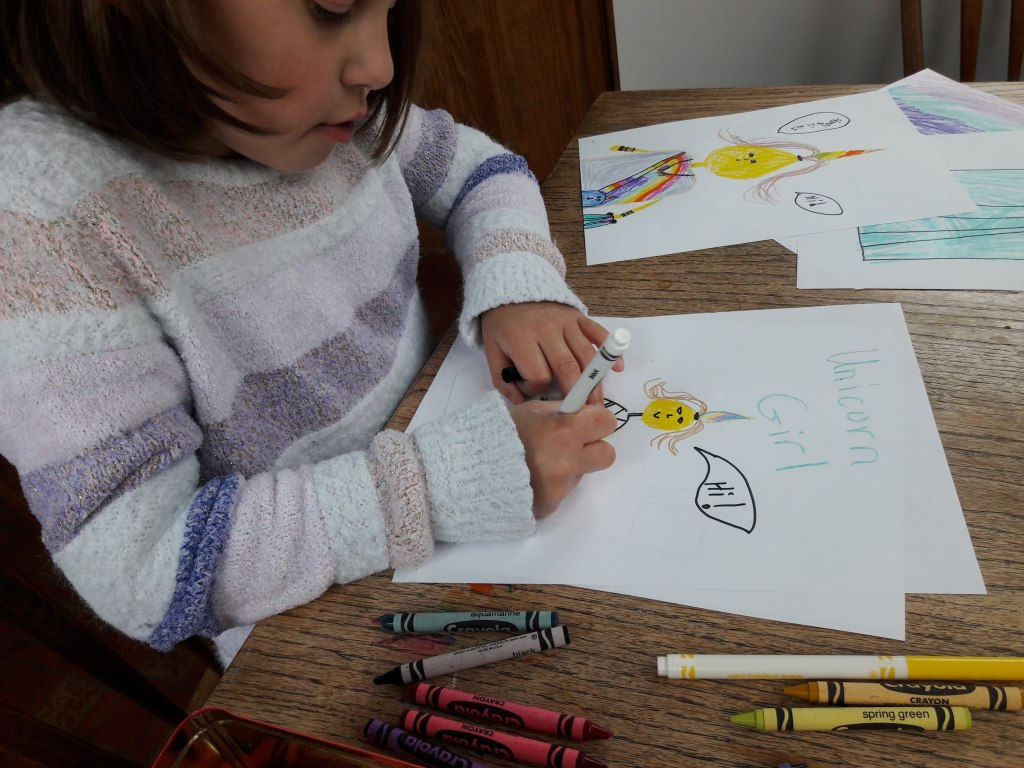
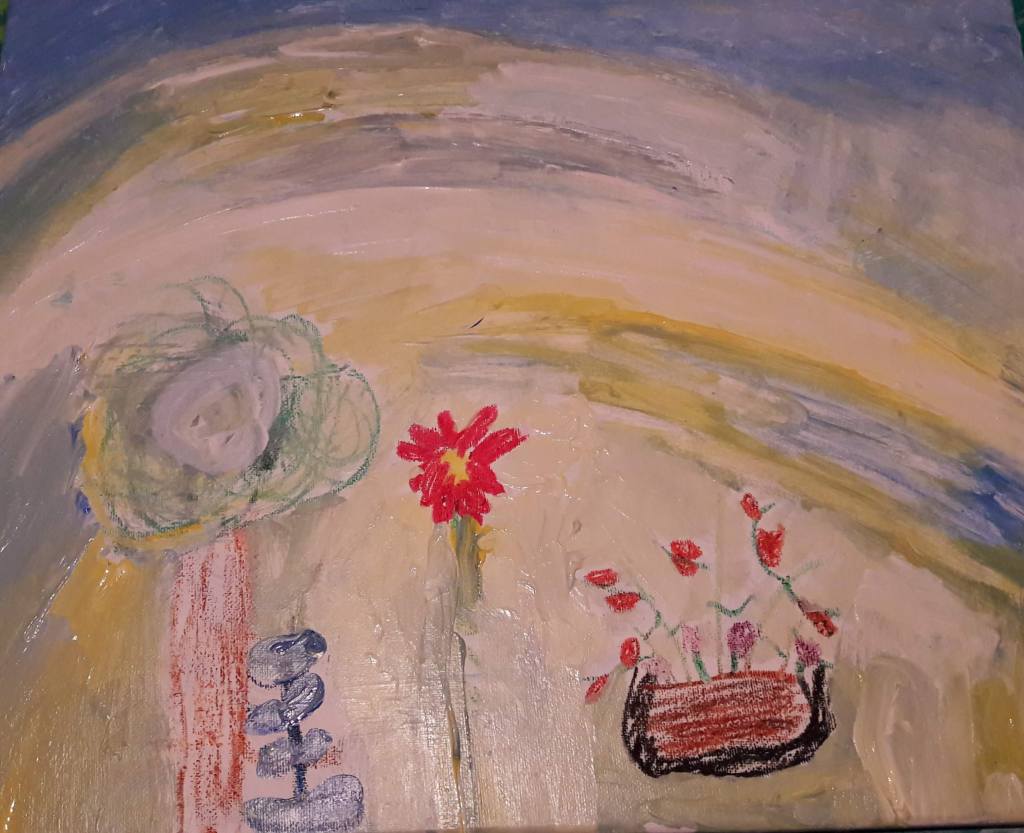
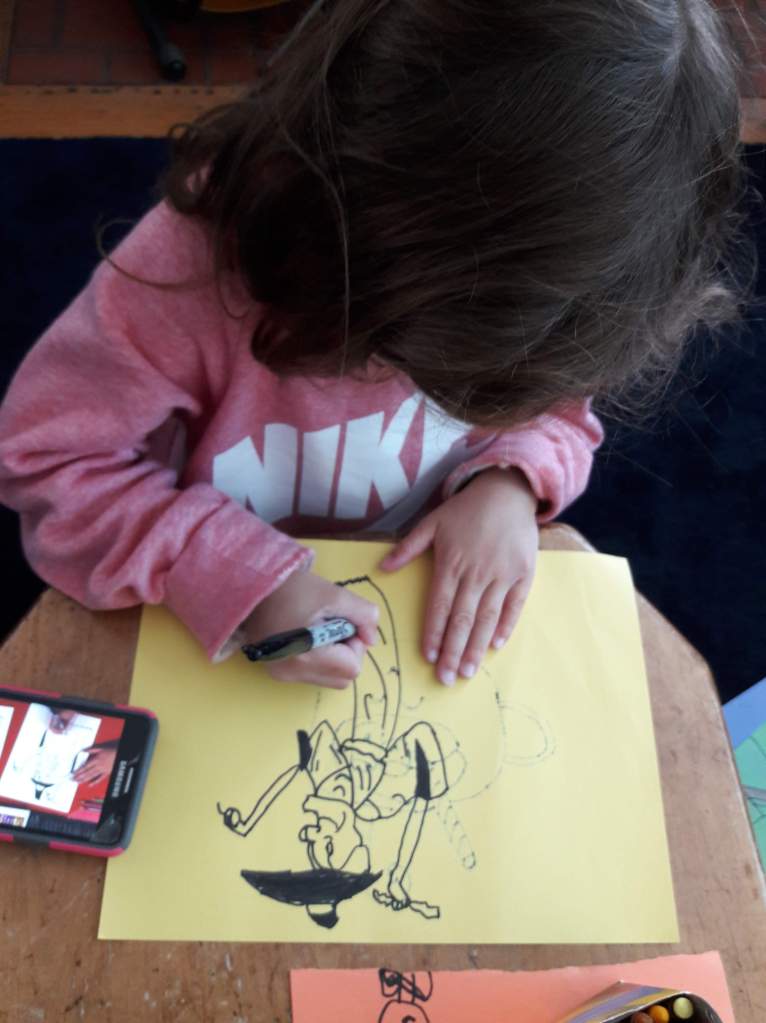
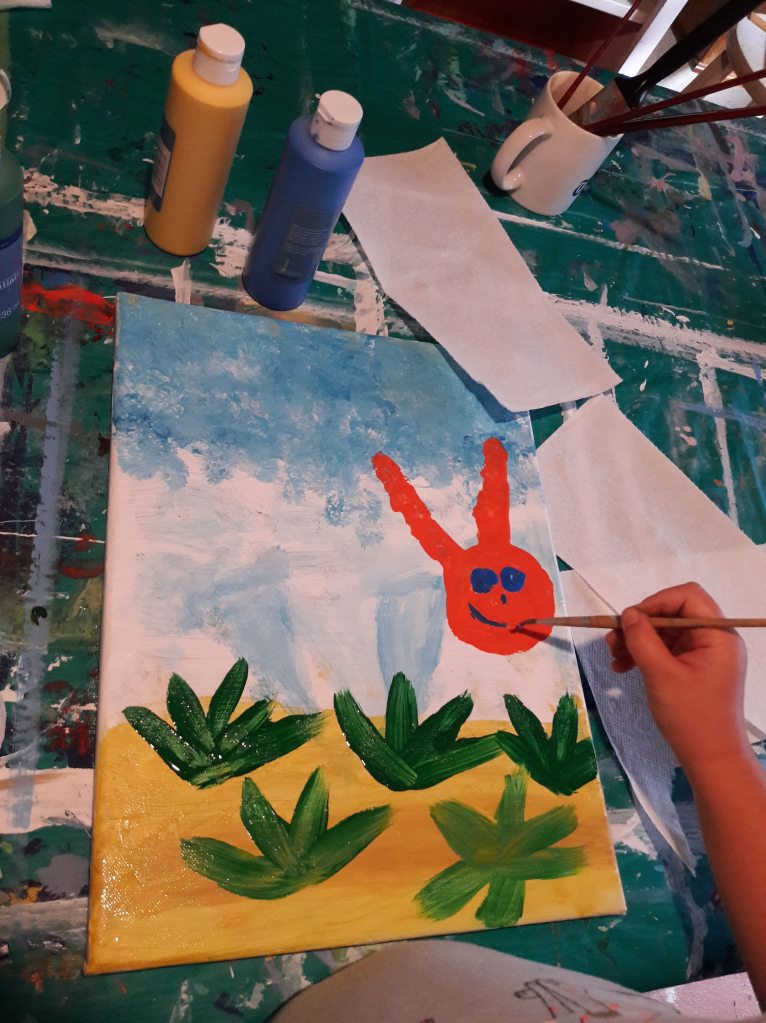
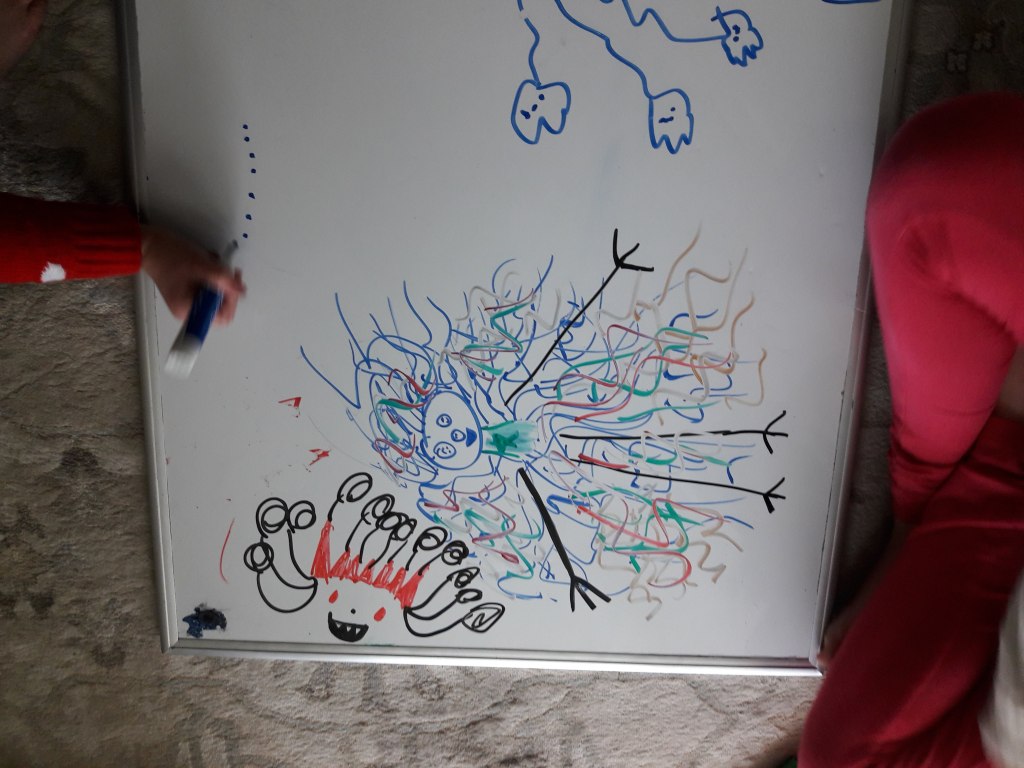
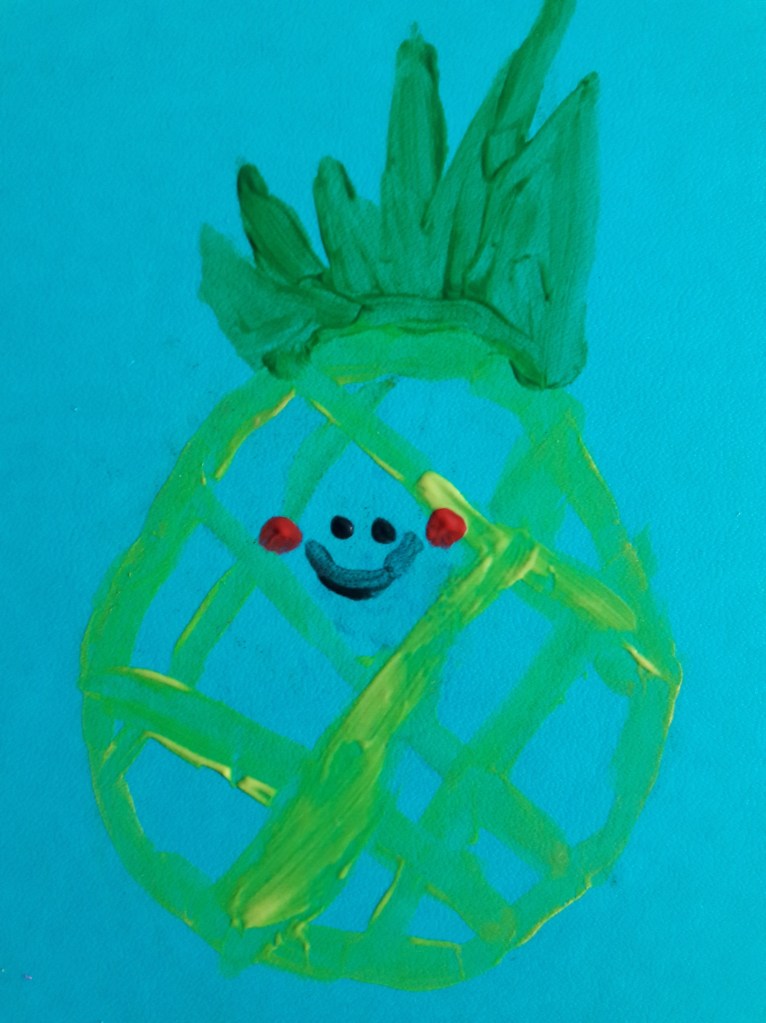
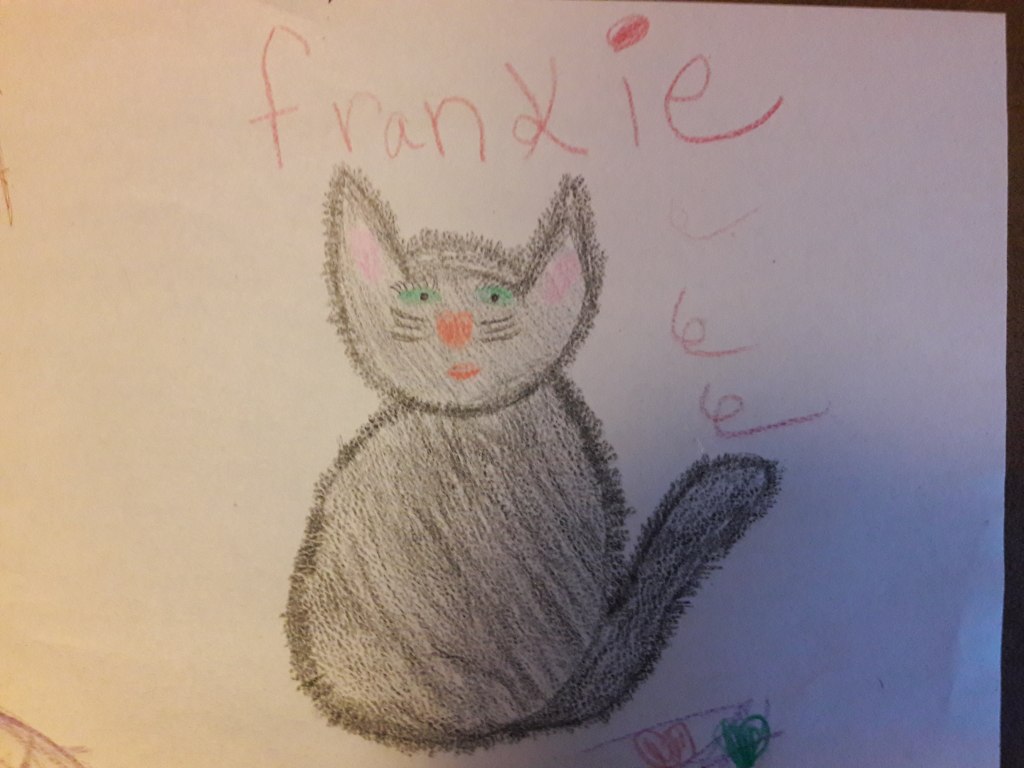
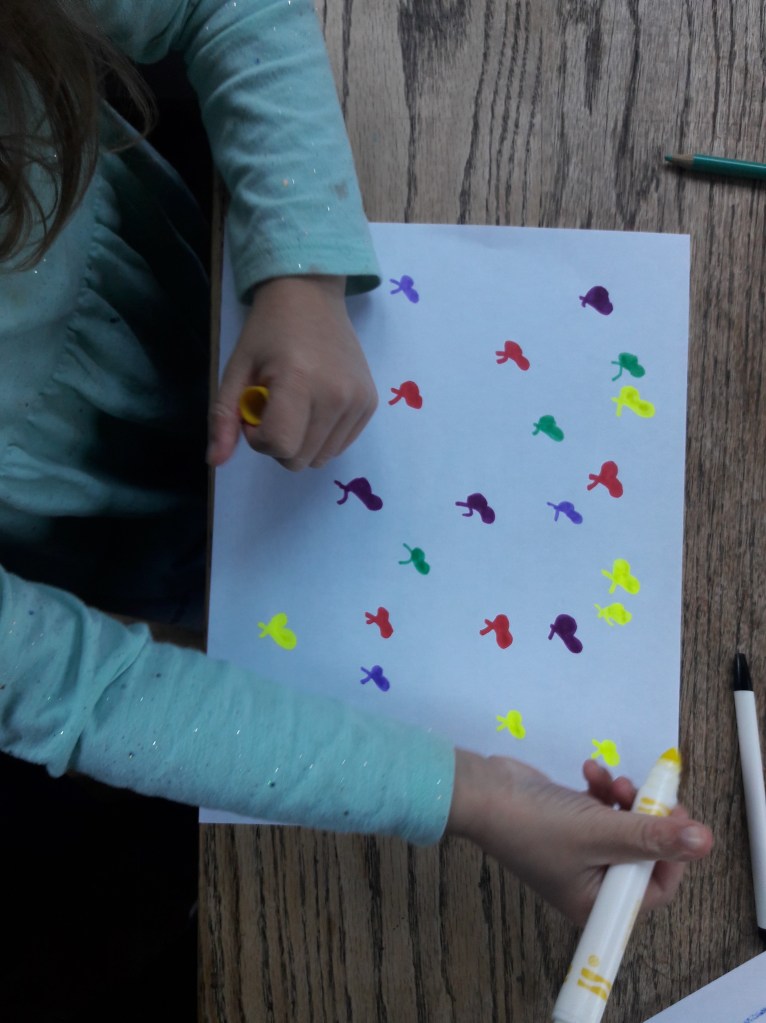
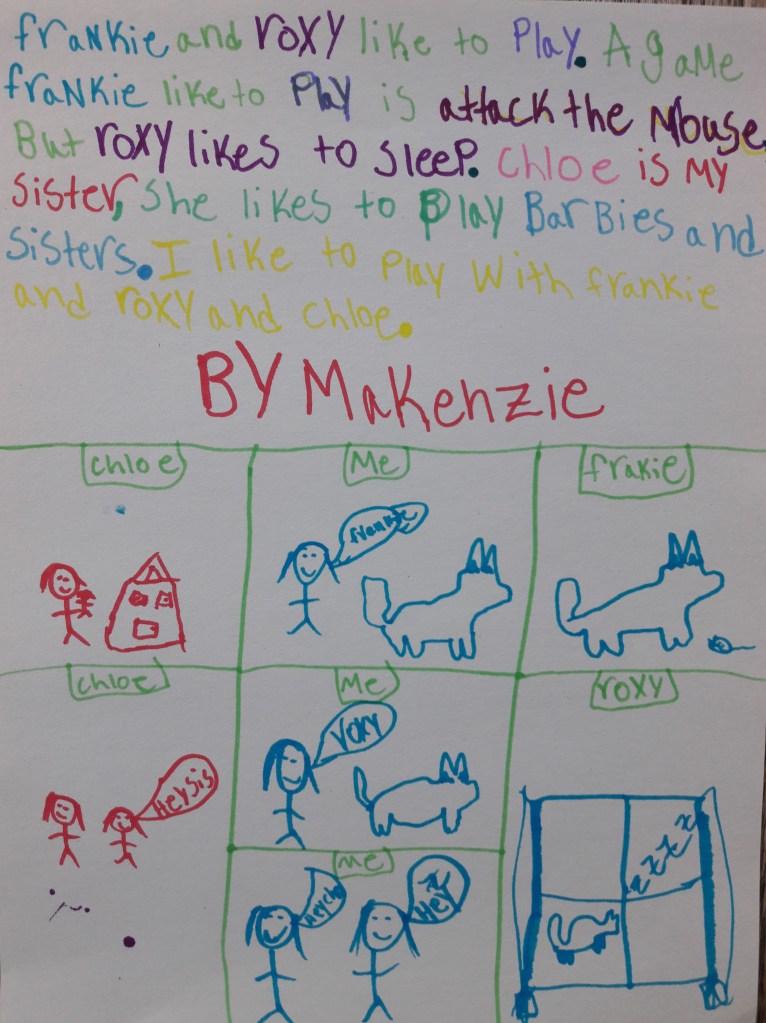
When my granddaughters were younger, we used to draw and paint using all kinds of materials. It wasn’t work for the sake of the piece, but work for the sake of work, which was play. As evidence of what doing work for its own sake might look like, here is a photo of the kids drawing on a whiteboard. Everyone knew that at some point it would all be erased. They might have saved it for a day or two, until the next exercise opportunity arose. I may have cheated the system by taking a few photos of some of the drawings, thus turning the play into work for its own sake. But that’s my problem, not theirs:
That original work has now disappeared, and I doubt we could bring it back without, as Adrian says, somehow putting ourselves “back into that earliest creative mindset.” If you can do that, then you might find a style.
Another example of style is found in Raymond Queneau’s book “Exercises in Style.” The same short description of the brief interaction of two characters on a morning bus is repeated 99 times, each time using a different “style.” In other words, the same story is told in different ways. But if a story is told in a different style, is it the same story? Cartoon drawings provide the first letter of each word of each chapter’s short title. Some examples of the one-word titles: “Precision”; “Anagrams”; “Blurb”; “Passive”; “Speaking personally”; “Comedy”; “Biased”; “Tactile.”
Can a style be created using rules? Yes, and that has created much confusion over what’s right and acceptable in given contexts or venues but that might not be right or acceptable in others. Style is often confused with etiquette. It might even be confused with intelligence.
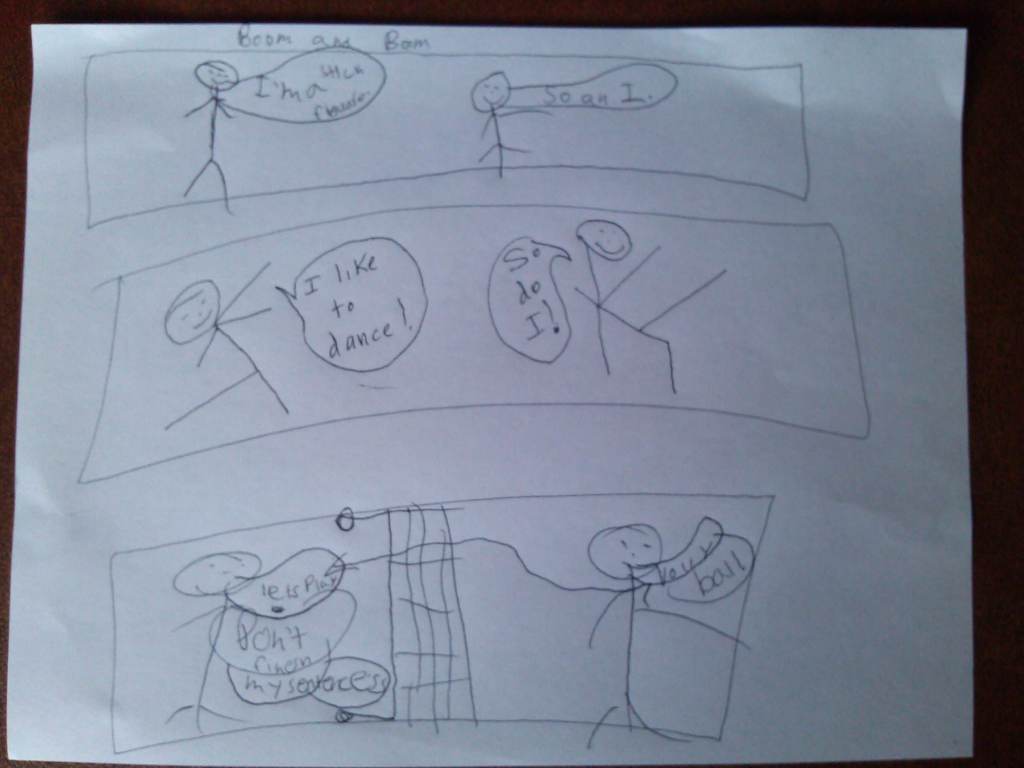
Here is a slideshow of photos, cartoons, and comics in styles we used to use:
~ ~ ~
“Q & A” was published by Drawn & Quarterly in October 2024. I wrote about it here.
“Exercises in Style” was first published in French in 1947. New Directions published a translation in 1981 (NDP513), and a new version in 2012 (NDP1240), which includes additional exercises.
“Q & A” is an entertaining and instructive book on cartoons and comics and the life of a professional cartoonist. There are 52 questions over 163 sewn pages of high quality paperback from the graphic comics publisher “Drawn & Quarterly.” I saw the book reviewed on the “Briefly Noted” page in the November 11, 2024 issue of The New Yorker magazine. I ordered a copy, read about half, an easy and enjoyable read, but got distracted by the holidays and other readings and this week thinking more about comics and cartoons picked it back up from my unfinished stack of books and reread it from the beginning.
Few of the questions come as a surprise. What materials do you use and other technical questions. But how does the “180 degree rule” work? I didn’t know cartoons had rules. How did you get started and how did you get into “The New Yorker?” Like the basic question in the job hunting book “What Color is Your Parachute?,” some of the questions in Adrian Tomine’s (toh-mee-neh) “Q & A” ask, “How did you get to where you are and what’s it like being there?”
But because he’s writing, he’s reflecting, and has development time to give the questions patient and thoughtful response and clarity. And there are ample examples in photos and drawings of his work in progress, his work space, his tools, and finished cartoons and drawings. The technical answers I think are relevant in any league, but I particularly liked his saying, “I would also like to make a brief pitch on behalf of cheap tools” (21), and, “I made a decision to set aside most of my fancy art supplies and start from scratch, gravitating towards the cheapest, most readily-available materials” (22).
But there’s plenty in his answers about technical process and development that is out of my league, and I made a decision to stick to ballpoint pen and pencil and notebook paper and napkins or drawing on my phone with my fingers. I’ve not the time but more not the want to try now to master high-tech modes. But for anyone starting out, drawing cartoons or comics, or on their way, or with an interest in The New Yorker covers and cartoons – including the editorial process – “Q & A” is a must, and fun, read.
He covers his influences and the development of his graphic books and his work habits and environment. He’s witty and sounds honest and he’s certainly helpful, and I particularly appreciated what he said to the student asking if they could adapt his work into a film for a student project: “I’d strongly recommend generating your own material for a student project. It’s not like any of my stories are particularly ‘high concept,’ and you could probably come up with similar – if not better – ideas on your own” (118).
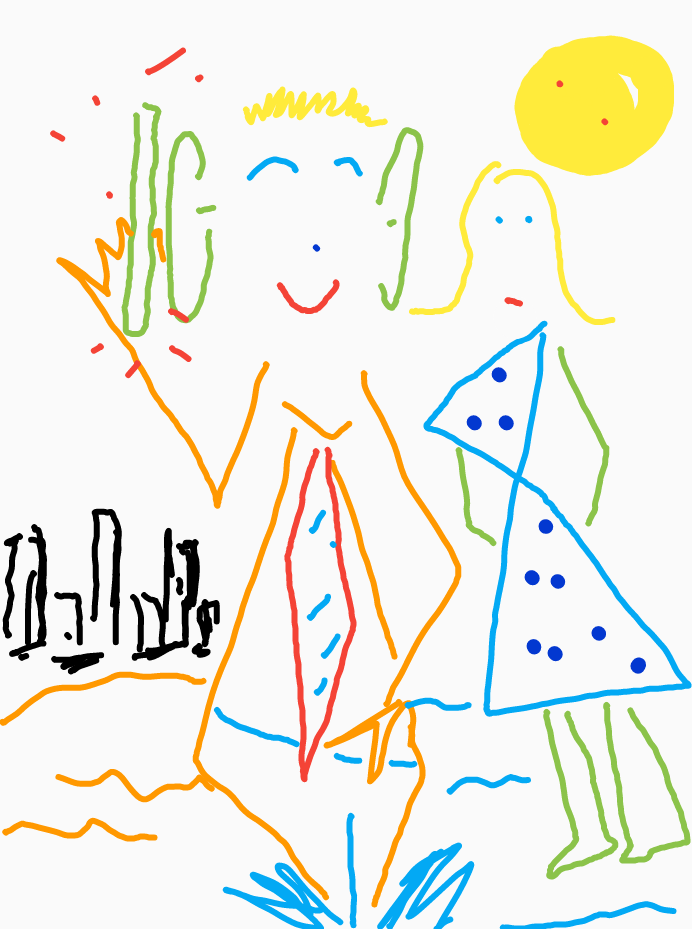
I’m waiting for my Brit friend to send me an Artificial Intelligence cartoon drawn in the style of Joe Linker. Meantime, here’s one of my cartoons for your quick and easy consideration, drawn with my fingers on my phone:
If the point of a cartoon is not to make you laugh, then what is the point? If you have to ask, you may not have the makings of a cartoon aficionado. A few days ago, celebrating The New Yorker magazine’s 100th anniversary, I suggested their cartoons, a big part of their brand, if you like to name things, are not funny. I said, “And if you think the point of a cartoon is to make you laugh, you’re in for a disappointment.” But what I should have said is, “…you’re in for a surprise.” That’s the point of a cartoon – to surprise. If you must have a point.
My Brit friend who previously sent me the artificial intelligence poem written in the style of Joe Linker read my 100th anniversary post and responded via email with a link to the Seinfeld segment where Elaine meets with the cartoon editor at The New Yorker to ask him to explain why one of their cartoons appearing in a recent issue is funny. She doesn’t get it. She pushes him into admitting he doesn’t get it either, and when she asks him why he published it, he says he enjoyed the kitty. It’s Series 9 (their last), Episode 13, titled “The Cartoon” (1998). You could look it up. Susan and I watched the whole episode the night before last on TV. Susan didn’t find it too funny, but I did. Well, actually, she didn’t say it wasn’t funny; she said it wasn’t a good one. If cartoons are not funny, how could a show about cartoons be funny?
Do we choose our magazines based on their cartoons? I remember in my parents’ house there appearing copies of Redbook, Ladies’ Home Journal, The Saturday Evening Post, Seventeen, and Glamour, but just occasionally, not necessarily the result of subscriptions, but of random, neighbor exchanges. Did my mother and sisters read Joan Didion in the Post? I’m sure my father did not. He read the newspaper. I don’t recall paying much attention to those magazines, but I don’t think they were known for their cartoons. Susan’s aunt, who introduced me to The New Yorker, was a commercial artist, an illustrator. She said illustrators were not artists. That there never developed for Los Angeles a magazine equivalent to The New Yorker may help explain the difference between the two cities.
One year, in the midst of my career in the red dust of commerce, I cut out a New Yorker cartoon and taped it to the side of my computer monitor, in those days the size of a television box, on the aisle where passers-by could stop, check out the cartoon, and say hi. The cartoon was two panels, on one side, a middle-aged man dressed in a loose fitting business suit with tie, holding a briefcase, wearing a fedora hat, on his face a zero expression, neither awake nor asleep. He might have been waiting to cross a street, for a sign to say, “WALK.” The caption read: “The thrill of victory.” In the other panel, the same guy, exactly the same drawing, the same facial expression. The caption read: “The agony of defeat.”
My boss at the time stopped to check out the cartoon of the businessman. I could tell he didn’t get it. He walked on to his office. Some days later, he stopped again, and said he didn’t think the cartoon was funny. Several weeks passed. The cartoon didn’t get that much attention. I guess its surprise wore off. What attention it did get might have been due to the fact that it was the only piece of non-work material I had stuck up anywhere on or around my desk. It may have become a tiny landmark, reminding sleepwalking or overexcited workers to turn right here. I don’t remember exactly how long it remained up before my boss called me into his office to tell me he wanted me to take the cartoon down. I took it home and taped it to our icebox door.
I drew a cartoon a few years back of a man holding a cellphone to his ear, the phone giving off wah wah sounds indicated by red dashes, a big smile on the listener’s face, a woman to the side a step behind him looking disappointed. The caption read: “They were supposed to be on vacation, but he was on his cellphone.”






 The Coming of the Toads