Somewhere along the way we are taught that writing is hard, and we come to believe that writing is hard. Hua Hsu thinks writing is hard, and he’s a professional writer, and teaches writing to boot, so he should know:
“Writing is hard, regardless of whether it’s a five-paragraph essay or a haiku, and it’s natural, especially when you’re a college student, to want to avoid hard work—this is why classes like Melzer’s are compulsory. ‘You can imagine that students really want to be there,’ he joked” (p. 24, “The End of the Essay,” The New Yorker, July 7 & 14, 2025).
Most activities seem hard if you’d rather be doing something else. “It is not irritating to be where one is. It is only irritating to think one would like to be somewhere else” John Cage said, in his “Lecture on Nothing.” But what about Hua Hsu’s claim that college students “avoid hard work”? Is that true?
Definitions are hard: what is writing; what is work? Is avoidance not hard work? While it might be easier not to write, does it necessarily follow that writing is hard?
Writing is easy. Most kids by the second or third grade can write. But keeping inside the lines as they are later taught, and writing becomes harder, until finally they quit trying to write and now apparently go to some Artificial Intelligence application where their writing is done via surrogate.
“A.I. has returned us to the question of what the point of higher education is,” Hsu says (22). It might be too late, as the question seems in the process of being answered in the dismantling of institutions, and the answer for some currently sounds like, there is no point. In any case, the question is not new, being asked, and answered, over time, from John Henry Newman’s “The Idea of a University,” to Ivan Illich’s “Deschooling Society.” Illich’s ideas seem ripe for our time:
“Many students, especially those who are poor, intuitively know what the schools do for them. They school them to confuse process and substance. Once these become blurred, a new logic is assumed: the more treatment there is, the better are the results; or, escalation leads to success. The pupil is thereby ‘schooled’ to confuse teaching with learning, grade advancement with education, a diploma with competence, and fluency with the ability to say something new. His imagination is ‘schooled’ to accept service in place of value. Medical treatment is mistaken for health care, social work for the improvement of community life, police protection for safety, military poise for national security, the rat race for productive work. Health, learning, dignity, independence, and creative endeavor are defined as little more than the performance of the institutions which claim to serve these ends, and their improvement is made to depend on allocating more resources to the management of hospitals, schools, and other agencies in question” (Ivan Illich, “Deschooling Society,” 1973).
Writing is learned, like learning a musical instrument, developmentally and incrementally; writing is a process of addition, as Francis Christensen taught. His solutions described in his “Notes Toward A New Rhetoric: 9 Essays for Teachers (3rd Ed., 2007) to the teaching and learning of writing are among the best. Verlyn Klinkenborg’s Several short sentences about writing(Vintage, April 2013) is also excellent and should be used in today’s English 101 classes (if there still are any) – though neither of these solutions do I put forth as absolute. I’ve met veteran classical musicians who cannot improvise, cannot play their instrument without a piece of sheet music to read from.
Could Hemingway write? And if he could write, or maybe more importantly if you think he could not write, where did Hemingway learn how to write? In the beginning was the essay, English 101. Everyone had to take it, even the math majors. But Hemingway never made it to English 101. He wrote in high school, but it seems he learned to write while writing.
“My name’s Laughton,” the tall one said. “I’m a writer.” “I’m glad to meet you,” Professor MacWalsey said. “Do you write often?” The tall man looked around him. “Let’s get out of here, dear,” he said. “Everybody is either insulting or nuts” (135).1
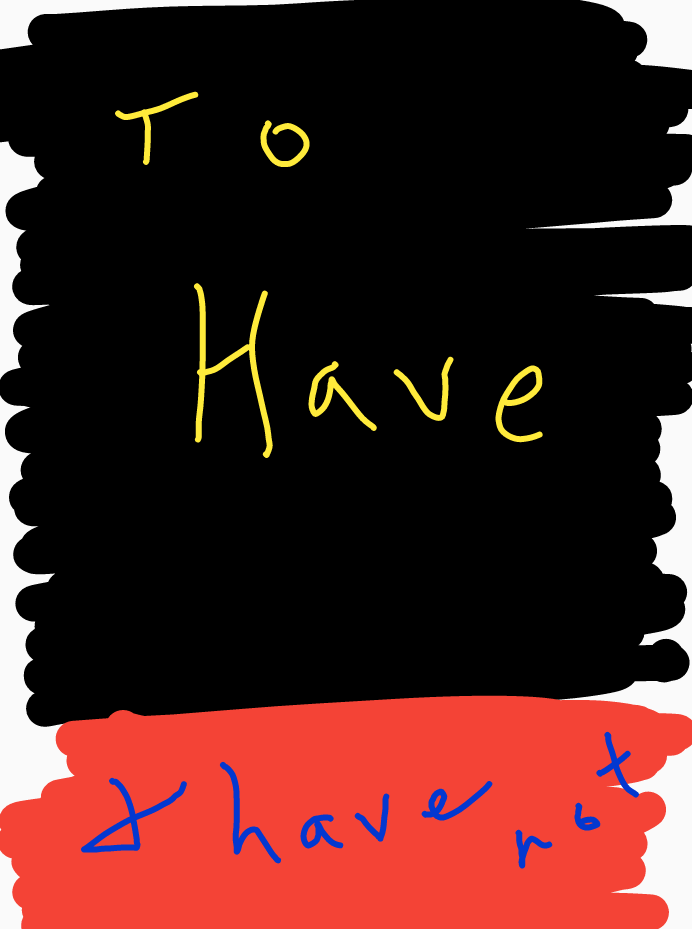
Ernest Hemingway, “To Have and Have Not,” 1934, Hearst Magazines Inc. Scribner Classics, 1970. 0-684-17952-0. ↩︎
All a draff
   a draft
     raking thru
 the dregs
     adrift
          adrift

I am not a robot
  Motorcycles
     Traffic Lights
 Buses Adrift
     No schedule
     No route map

To the Dark
  Sidereal
      I am not
 Art I Fish All
and dreg up
cups bottom

Cross Walks
     To & fro
  each cross
its own horizon
   where the sky
meets the water

geometric requirements
  Social Skills
(any skills
for that matter)
   Marriage Classes
     Reading Glasses

I had a friend
  Who had a friend
     I did
 befriend
But that's not how
   I then met you

They were discussing
Punctuation &
Grammar by which
They meant
To say nothing of
The Endgame

Which caused me
To think of you
Your dust at sea
All along the edge
Where things fall
Off the way things go

and pile up
  one thing
    on top of
      another
akimbo
  a draff

adrift
 nimble-fingered
   tho rathe
rather nippy
nimble
masterly

Anyway we
We were talking
About what
Hard to know
A flow
Of pics & tics

That's not true
What I sd earlier
When I sd I am
Not "a machine resembling
a human being and able
to replicate certain human
movements and functions
automatically.

'the robot closed the door behind us'"

I am a robot
Forced to crawl
Adrift across
Back and forth
Sweeping up
After you

Pic after pic
Falling
Failing
Fishing
Adrift
A draff draft

A daff
Salt water
Taffy
"she told me that my music
was perfectly wonderful,
and taffy like that"

"according to R.U.R. management
the robots
do not 'like'anything."
Are you are
or Are you not
a robot

I'm not now
Sure
But years
Have pissed
And still
I'm here a bit

But true a
Drift a draft
Replaceable
In War with the Nerds
Dork and Dweeb
Figure prominently

Dwork wants
To go Rome
Deeb reminds
They don't have
Stars on their
DL's

Here a bit
There a bot
Everywhere
A bit bot
To boot
To turn up

A turnip
In yr pocket
Proves yr not
A total android
A mess on some
Scientist's bench

Turn on
Tune in
Drop out
"During his last decade, Leary proclaimed the 'PC is the LSD of the 1990s' and re-worked the phrase into 'turn on, boot up, jack in' to suggest joining the cyberdelic counterculture."

Drift on
Draft in
Draff out
Right on
Write stuff
Write Off


 The Coming of the Toads