• Notes on Youssef Rakha’s “The Dissenters”

    I’m not long into Youssef Rakha’s “The Dissenters” before being reminded of Joyce’s cracked looking glass:

    – It is a symbol of Irish art. The cracked looking-glass of a servant.

    But Stephen is able to think and express so as a result of his Jesuit training, a “wellfed” education, even while his family fortunes have ebbed:

    Across the threadbare cuffedge he saw the sea hailed as a great sweet mother by the wellfed voice beside him.

    And the question, as Humpty Dumpty put it, is which is to be master: the fed or the unfed.

    – After all, I should think you are able to free yourself. You are your own master, it seems to me.

    Stephen is in conversation with one of his roommates, Haines, an Englishman.

    – I am a servant of two masters, Stephen said, an English and an Italian.

    Still, surely we can think for ourselves, even with our poor or uneven educations? And where, after all, do we learn to think? And having mastered it, or enfolded it in fine arts, what do we think, and what do we think about what we think?

    – You behold in me, Stephen said with grim displeasure, a horrible example of free thought.

    – I can quite understand that, he [Haines] said calmly. An Irishman must think like that, I dare say. We feel in England that we have treated you rather unfairly. It seems history is to blame.

    History. I recently read the “Fortunes of War” trilogies, “The Balkan Trilogy” and “The Levant Trilogy,” Olivia Manning’s collected novels set in World War II from the perspective of a British couple living in Bucharest then forced to move farther south in advance of the Nazi approach until they finally barely escape from Greece into Egypt and life in Cairo for the duration, and “Roman Year,” the Andre Aciman memoir of his family’s exile from Egypt to Italy, as a result of Nasser’s unfolding policies, where they attempt to settle in and live before relocating again to the US, and those readings now proved useful introductions to Rakha’s “The Dissenters.” But the first I read of Manning was her “School for Love,” which takes place in Jerusalem during the war, also an introduction now to the book at hand, “The Dissenters,” which in turn serves to see the Manning and Aciman books in different light.

    In the Aciman book, for example, we find Aunt Flora, who had moved to Rome two years earlier, “expelled from Alexandria” (27), correcting the writing style of the young Andre:

    “I didn’t tell her that I was typing letters to various American colleges. Aunt Flora had read my earlier drafts that week and said I was too poetic, too ethereal. I needed to have both feet on the ground. “There’s no room for your complicated, byzantine mannerisms in such letters – ‘I miss my homeland, what is my homeland, home is a metaphor,’” she mimicked, “none of that – I know your type” (215).

    I’m not sure if Flora is punning on type there. A typed letter hides all the clues a handwritten one might contain about the writer, and we rely on the typed letter’s style to reveal the sources of the writer’s mannerisms. And an epistolary novel allows for a freedom from both handwriting and typewriting, from thought bound by circumstantial rules of usage; the letter frees the author from expectations and whatever presupposed rules the reader might bring to impose on style.

    That letter to the world that never wrote to her, Emily Dickinson said – the letter is her world. A writer’s world of letters, a lighthouse.

    “May the house be mercy and light” (275, “The Dissenters”).

    What else can a mother hope for? At the end of a long day, decade…spouse, children…life. In which the mother is the country, the daughter those who left, emigrated and estranged, the son who turns to tell the tale in order to escape its meaning, “…past the time when I can build my personhood from scratch,” yet now free of “history and desire” (276).

    I’m not sure if it’s part of the novel or not, I think probably not, but “The Dissenters” book includes a “Timeline” (279) that begins with 1948 and ends with 2014. A good reading exercise might be to take that timeline and amend it with a like-brief description of what Mouna – well, to match Mouna’s situation, circumstances, at each stage of the timeline, for that’s essentially how the plot of “The Dissenters” works. For example, on page 82, Mubarak is stepping down, so we are in 2011, January 25-February 11, according to the Timeline. What’s Mouna doing? At first, I thought she was caught on television, but it’s one of Nour’s so-called “visions,” not something he sees on TV.

    “I whistle as I look up, ecstatic at her lack of headscarf. My mother is a movie star” (82).

    Then again, maybe the Timeline and the non-linear dates that serve as section titles are not all that necessary for the reader reading the book without a craving for – to know the real from the imagined. The “Jumpers,” for example. It took me awhile to realize this was the “Myth” referred to in the subtitle to the book, “Three Letters & a Myth.” At first I thought the jumpers were real, but I couldn’t remember anything from the news about them.

    “The Dissenters” blends political, family, religious, friendship, marriage circumstances for individuals with whatever everyday life they are bound up in or might for a host of reasons become unbound with something new always appearing just around the corner, and then the walk back, where one can neither don nor shed a hat without being accused of meaning something:

    “In the seventies the headscarf wasn’t as ubiquitous as it was to become, nor were we as attuned to immodesty” (28).

    The book might be somewhat confusing if one tries to read it solely as a history, particularly if looking for a linear timeline. And the book can make for somewhat daunting reading, like an overdose of nightly bad news. I was reminded in parts of Burroughs and “Naked Lunch,” of Poe’s stories, anecdotal dreamlike visions that reek of fantasy inspired by stress. You see or hear people laughing, but you either don’t get the humor or really it’s threadbare.

    At the same time, the writing is clear and concise, casual, the individual chapters often short, propelling, lots of white space, until you get to “A Vision of Lena” (107), two and a half pages of solid prose – and is it a letter too? No. And what of the chapters titled “White,” “Green,” “Red,” and their subtitles of individual names? More on the Jumpers, the “Myth,” where a few of the chapters are brief paragraphs. The reading is both easy and difficult.

    Nour is a journalist. Words are his trade:

    “None of this would be happening if words didn’t take up with her again. I can tell. Her life’s nomenclature changing anew” (86).

    Nour’s letters are to his sister, Shimo, expatted to California (but we never hear back from her), and are about their mother, Mouna, as Nour describes a history of her body and its changes, her attempts at control over herself, which parallel or compliment a history of the country. Mouna has tried antidepressants, or that was Amin, or both? (220). They have undone so many. No help.

    “Mouna had had plenty of opportunity to think about sanity and happiness, especially the connection between the two” (219).

    She loses weight, gains strength, and joins the marches. Nour is objective, a reporter, an observer:

    “Mubarak was bad and the revolution brought down Mubarak, but does it follow that the revolution is good?…

    Mass protest has restored Mouna to a fuller, feistier self and that’s a major achievement right there. But if things end up being the same or worse, soon or later Mouna too will feel bamboozled – her preeminent project predoomed – then who knows where she’ll go” (99).

    I was a bit confused by the Nour/Nimo partnership, relationship. (Shem and Shaun?) They are both journalists. But Mouna is also called Nimo. Maybe some of the letters might be read as reporter filed dispatches, field reports. We even get a sample of a story (101): “On July 28, 1963….” That chapter, by the way, contains a particularly satiric, ironic sex scene (105), if it can even be called that, in which we find another example of the picture one character has of another character is never the same picture that character has of themselves.

    Standing as one does, say waiting for a bus or sitting in a cafe, does the memory work sequentially? No, never. It jumps around, one thought to another, with no regard for links, yet something causes one thought to lead to another. Or no, just random. But it’s a novel, so one assumes some cause or reason for the back and forth. To be literary? To distinguish itself, the novel, from the history book? Then you get something like this:

    “It is midnight in Mohandessin by the time I settle into a kind of berth fashioned of the curvature at one end of the space. Frank Sinatra is warbling in the background…” (32).

    Alas, that’s it for Frank. And I wonder, yes, Sinatra, but what was he “warbling?” Were this a movie, we would know. Live at the Pyramids, 1979? “Someone to Watch Over Me.” And that curved booth – red naugahyde? The waitress in uniform? Shimo in California? This sounds like California:

    “Amin has invested the few hundred guineas’ inheritance his elder brother forked over in a house off Road 9 in Maadi – a whitewashed cube with a crescent-shaped veranda that looks like a beach chalet except taller. Like a signpost on the road to Helwan, it is the only residence within several kilometers’ radius. Who would’ve thought, looking at the spottily paved desert all around, that within ten years it will be first among equals and, within twenty, one of a handful remaining David’s resisting the goliath of apartment blocks replacing the villas and bungalows of Maadi’s original treed avenues?” (55).

    What we think about something when it happens changes over time, and in that sense, our current situation helps explain what we were like before we got here. That’s a bit tricky. If we reread a book today it’s likely not the same book we read yesterday.

    But it’s not a movie, and this is not a book review, just a few notes. “If anyone can understand this, honestly” (59). And of the house: “The truth is I’ve already put the house up for sale” (275). So it goes. “For a few weeks she was famous on the web” (213). “Mouna feels more and more dismayed and uncertain” (217). The reader may share the feeling. And of the writer?

    “As I draw close to the end of her story – the point at which you know as much as I do anyway – I’m convinced of my own irrelevance. A man smuggling one woman’s life into another’s, in words. Without really being part of either. Once the procedure is over, I am no more” (230).

    What could be worse, that of the book reviewer on a blog? Yet there is none more relevant than the reader.

    ~~~

    Youssef Rakha, “The Dissenters,” 2025, Graywolf Press.

    Andre Aciman, “Roman Year,” 2024, Farrar, Straus and Giroux.

    James Joyce on Writing: “write dangerously”

    Notes on Youssef Rakha’s “The Crocodiles

    Friendship in Olivia Manning’s Balkan and Levant Trilogies

    Notes on Olivia Manning’s “School for Love”

  • Blue Skies and Other Skies

  • A Personal Library Time Machine

    Pausing then to pull a few old paperbacks off the shelf and peruse the notes and underlining (I rarely write in books anymore, but some of the old ones are full of notes – a reading method), and here are a couple more from high school days with passages I somehow thought noteworthy of underlining or circling whole paragraphs.

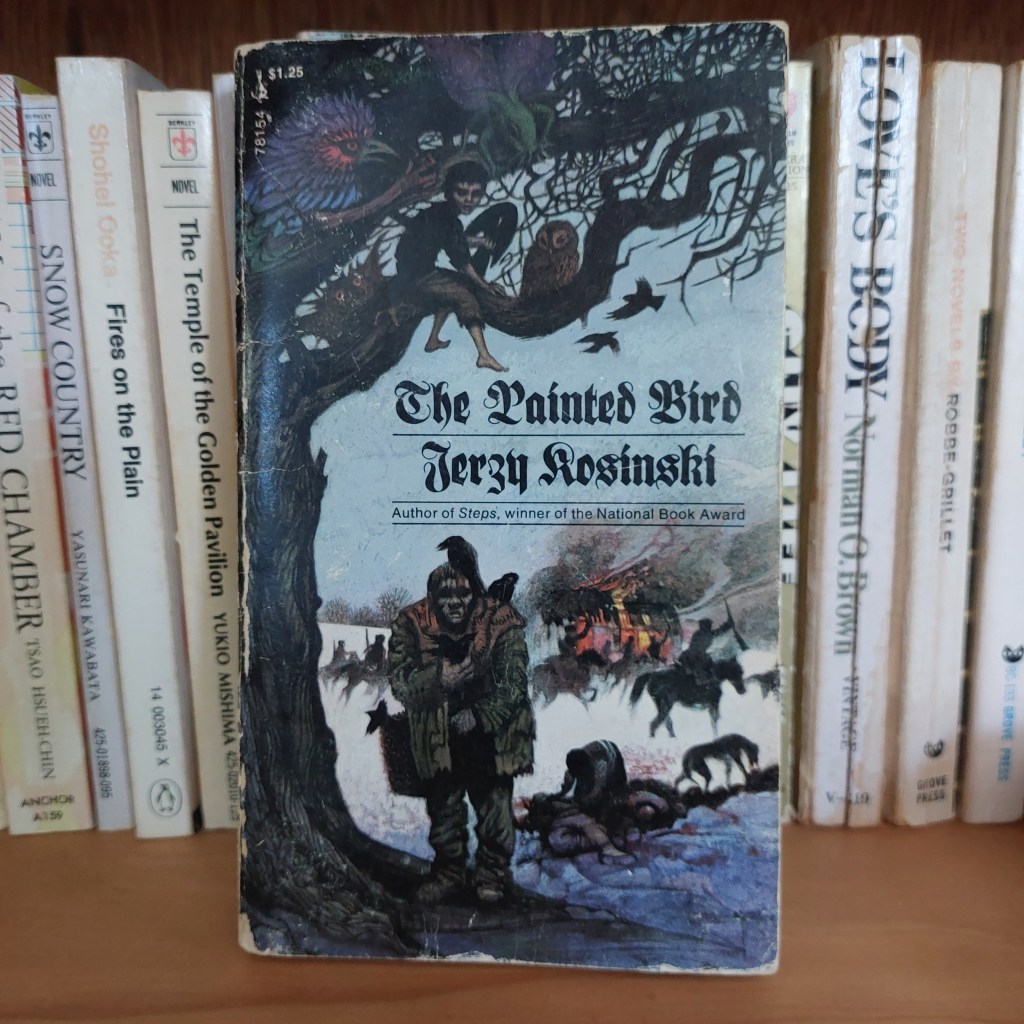
    In my novel “Penina’s Letters,” Henry Killknot finds Salty reading Jerzy Kosinski’s “The Painted Bird, and tells him he should be reading “Mr. Blue” instead:
    “Have you ever heard of a little book titled ‘Mr. Blue’ by Myles Connolly?”
    “Yes, we read it last year in Mr. Ford’s English class.”

    “Well, you should read it again. Read it once a year. That’s how you treat classics. Read them once a year. You should not be reading this crap Kosinski spews out.”

    “Have you read ‘The Painted Bird’?” I asked.

    “No,” he said. “I’ve been re-reading ‘Mr. Blue.’ You should consider falling in love with Our Lady, as Blue did, devoting your life to a worthy cause. This Kosinski fellow is a hack.” (93)

    I was in the 10th grade at Saint Bernard in Playa del Rey. I was getting to know the kid in front of me, whose background and home life was radically different from mine. He was reading a paperback, clandestinely, keeping it close in as he leaned over his desk. Curious, I asked him what he was reading. He ended up lending me the book, “The Painted Bird,” by Jerzy Kosinski, telling me as he passed it back under my desktop: “If you get caught with it, don’t tell where you got it.”

    “Suddenly I realized that something had happened to my voice. I tried to cry out, but my tongue flapped helplessly in my open mouth. I had no voice. I was terrified and, covered with cold sweat, I refused to believe that this was possible and tried to convince myself that my voice would come back. I waited a few moments and tried again. Nothing happened. The silence of the forest was broken only by the buzzing of the flies around me.” (“The Painted Bird” p. 125).1

    We were talking, Susan and my sisters and me, about why keep books, the old musty paperbacks with crackling old pages and covering old themes. Every out of print book adds value to a library. In 1996, folks in San Francisco did not think that: “The S.F.P.L. is now essentially broke, and relies on corporate benefactors. It has sent more than two hundred thousand books to landfills – many of them old, hard to find, out of print, and valuable.” (“The Author VS. The Library,” The New Yorker, by Nicholson Baker, October 14, 1996, p. 50).

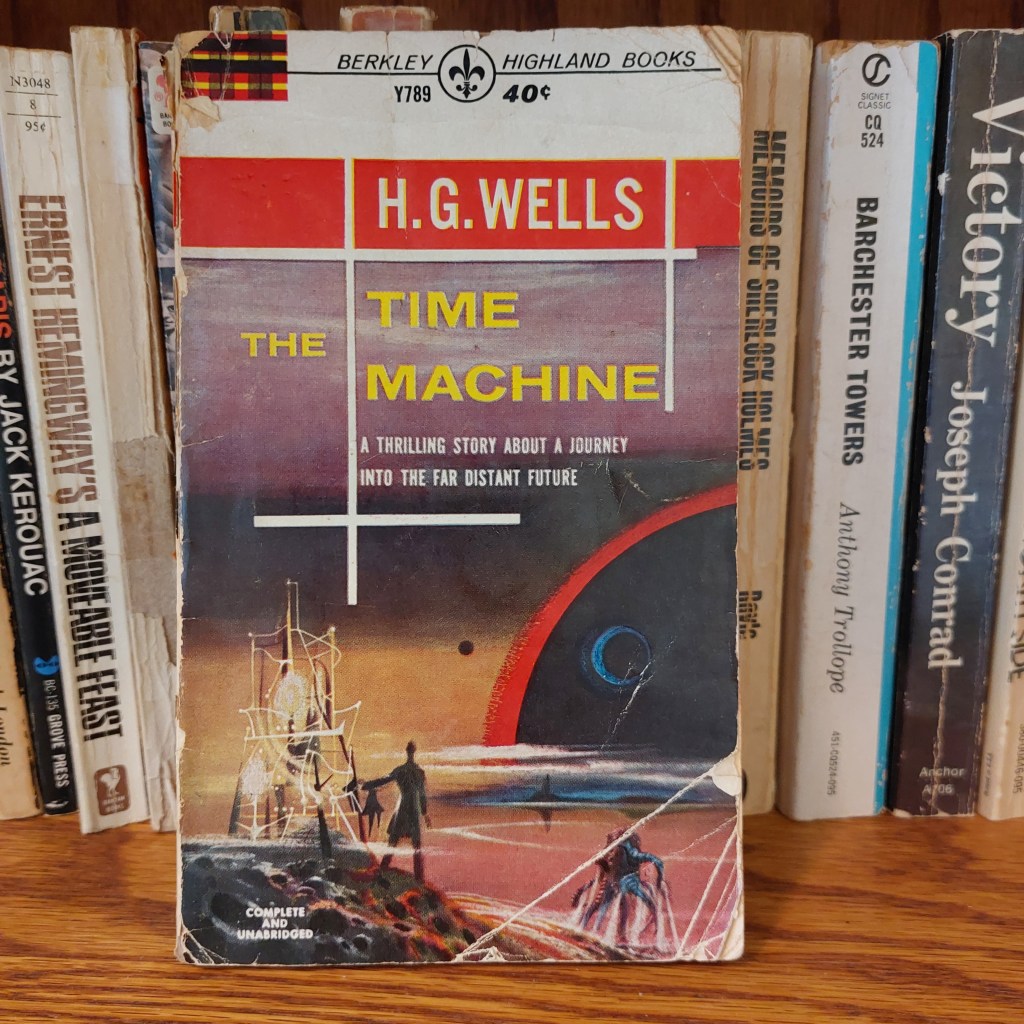
    Working on this post, I picked up my copy of “The Time Machine,” by H. G. Wells, and the cover fell off. I was looking for the passage where the Time Traveller finds the library of the future:

    “I went out of that gallery and into another and still larger one, which at the first glance reminded me of a military chapel hung with tattered flags. The brown and charred rags that hung from the sides of it, I presently recognized as the decaying vestiges of books. They had long since dropped to pieces, and every semblance of print had left them. But here and there were warped boards and cracked metallic clasps that told the tale well enough.” (103-104).2

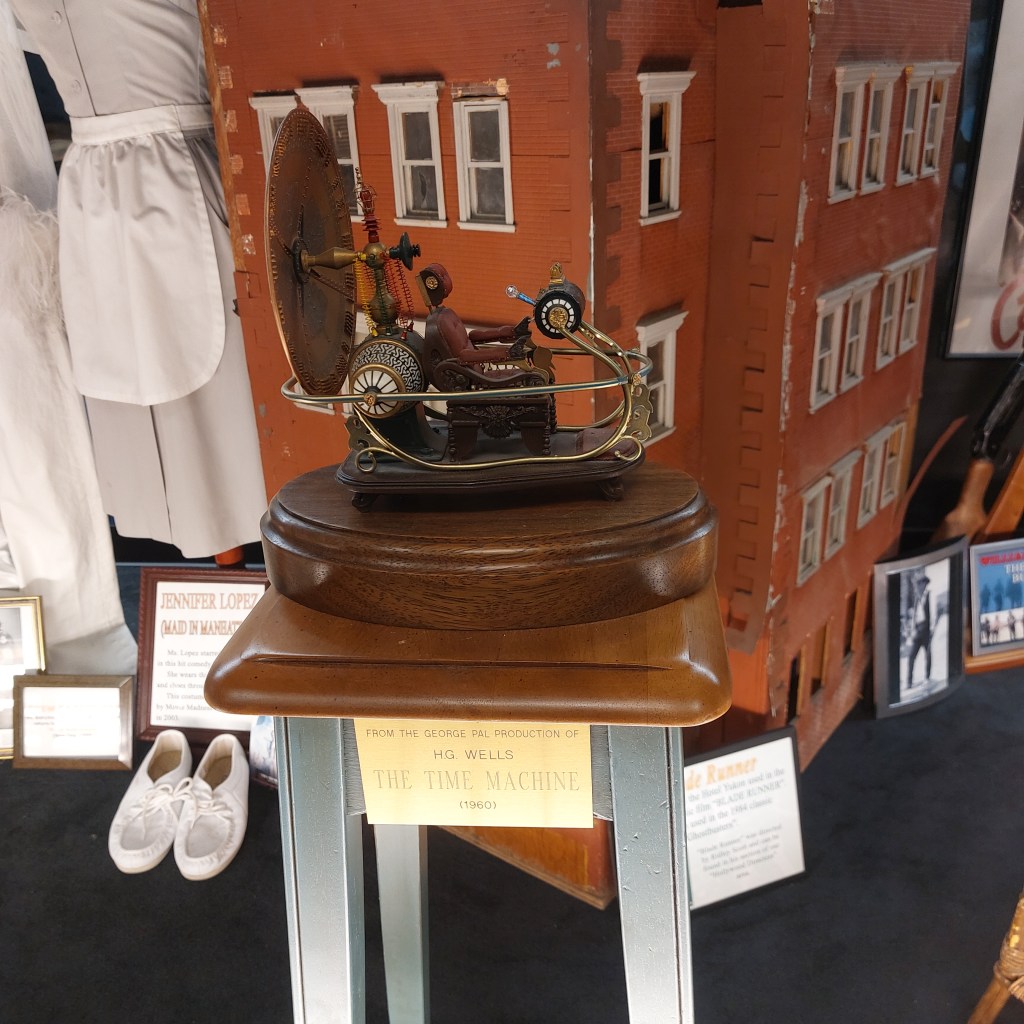
    The Time Machine on display at Movie Madness, from the 1960 film.
    1. Jerzy Kosinski, “The Painted Bird,” Houghton Mifflin, October, 1965. My copy, a Pocket Book edition, November, 1966, 5th printing, August, 1971, $1.25. (Not the copy lent me, since that would have had an older print date.) ↩︎
    2. H. G. Wells, “The Time Machine,” 1895, Berkley Highland Books Y789, New York, Tenth Printing, no date, 40 cents. ↩︎
  • More On A Personal Library

    We were talking about books, not the content of books, but why keep them, as they stack up, one after another, placed then a few on a bedroom window ledge, the book’s fore-edge facing out, the row then expanding, one after another, paperbacks, written in, too, the worse for wear, then the need for a bookcase, and the inevitable question: why all the books, probably won’t read them again, any one, maybe, but not all of them? And, of course, why not just get them from the library?

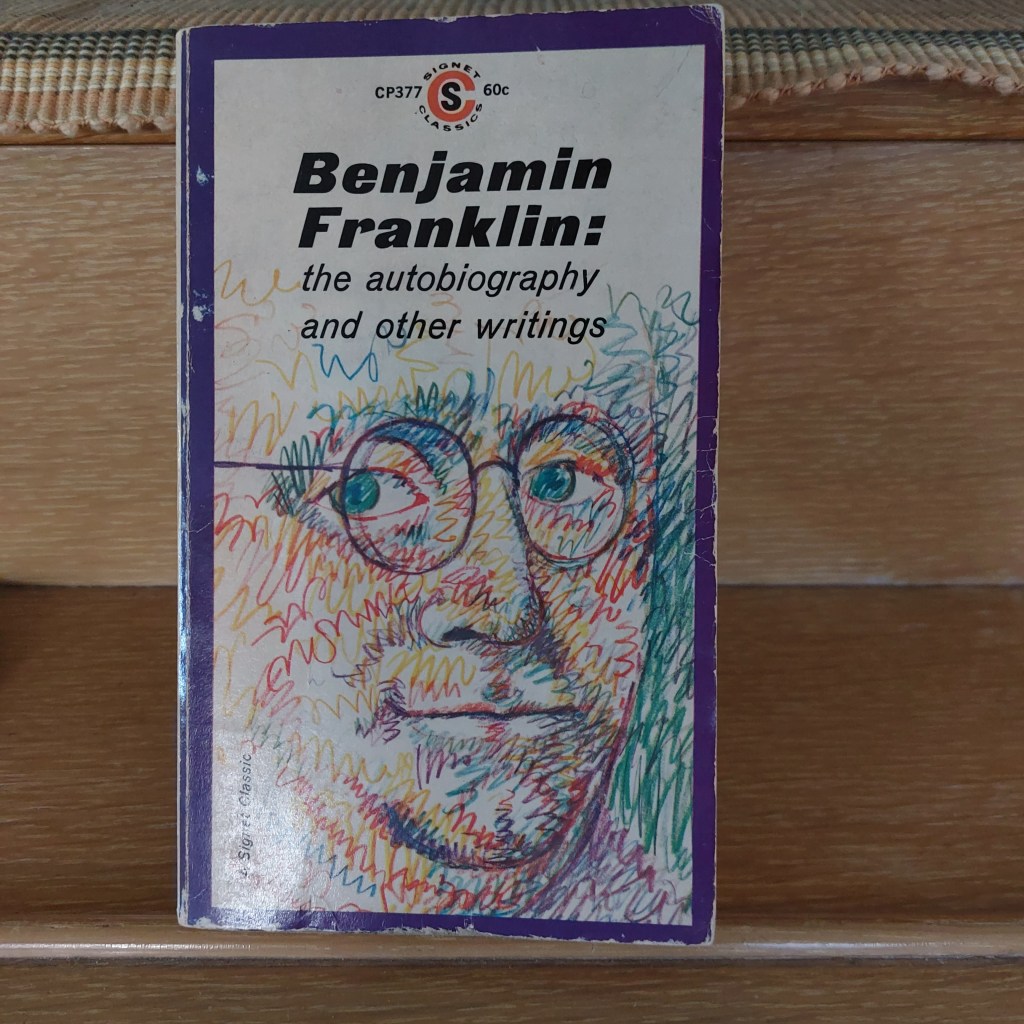
    In his autobiography, Benjamin Franklin talks about individual libraries, and knowing the friends in his reading group all have personal libraries, he suggests pooling them together, and thus the first subscription library is launched. Where did he get his calling to read books? He mentions his early enjoyment of reading and his father’s library:

    From my infancy I was passionately fond of reading, and all the little money that came into my hands was laid out in the purchasing of books. I was very fond of voyages. My first acquisition was Bunyan’s works in separate little volumes. I afterwards sold them to enable me to buy R. Burton’s historical collections; they were small chapmen’s books and cheap, forty or fifty in all. My father’s little library consisted chiefly of books in polemic divinity, most of which I read. I have since often regretted that at a time when I had such a thirst for knowledge, more proper books had not fallen in my way, since it was now resolved I should not be bred to divinity (26).1

    Doubtful I was destined for the divinity, nor did my father own any books. It was my Confirmation sponsor who encouraged me to read. He found me reading a comic book and suggested I read Classics Illustrated. We walked across the street to the Village Liquor Store to browse through their rack and he bought me copies of “Kidnapped” and “Moby-Dick.” Alas, I did not save those. Introduction to Saint Bernard High School in Playa del Rey included summer reading prior to entering the 9th grade – a reading list was sent, and I duly read, collected, and displayed the books on my bedroom window shelf, perfect size for paperbacks.

    Reasons for maintaining a personal library might include nostalgia that grows new rings with each reading year, sentimental journey, collecting books as a hobby or investment, or books close by used for reference and research, and the aesthetics of books and bookcases, or of course simply a hoarding impulse.

    With a personal library comes personal borrowers, many who consider a borrowed book a given. And indeed I have given books away. A couple of years ago, I posted that at around 3,000 books I gave away half. One should have an affinity of some sort for a book to keep it. And I do reread books. And some books are read through again and again, never finished, it seems, the James Joyce books, for example. Barbara Pym’s “Excellent Women” and Penelope Fitzgerald’s “Offshore” I’ve read several times in the last few years, and read them aloud to Susan.

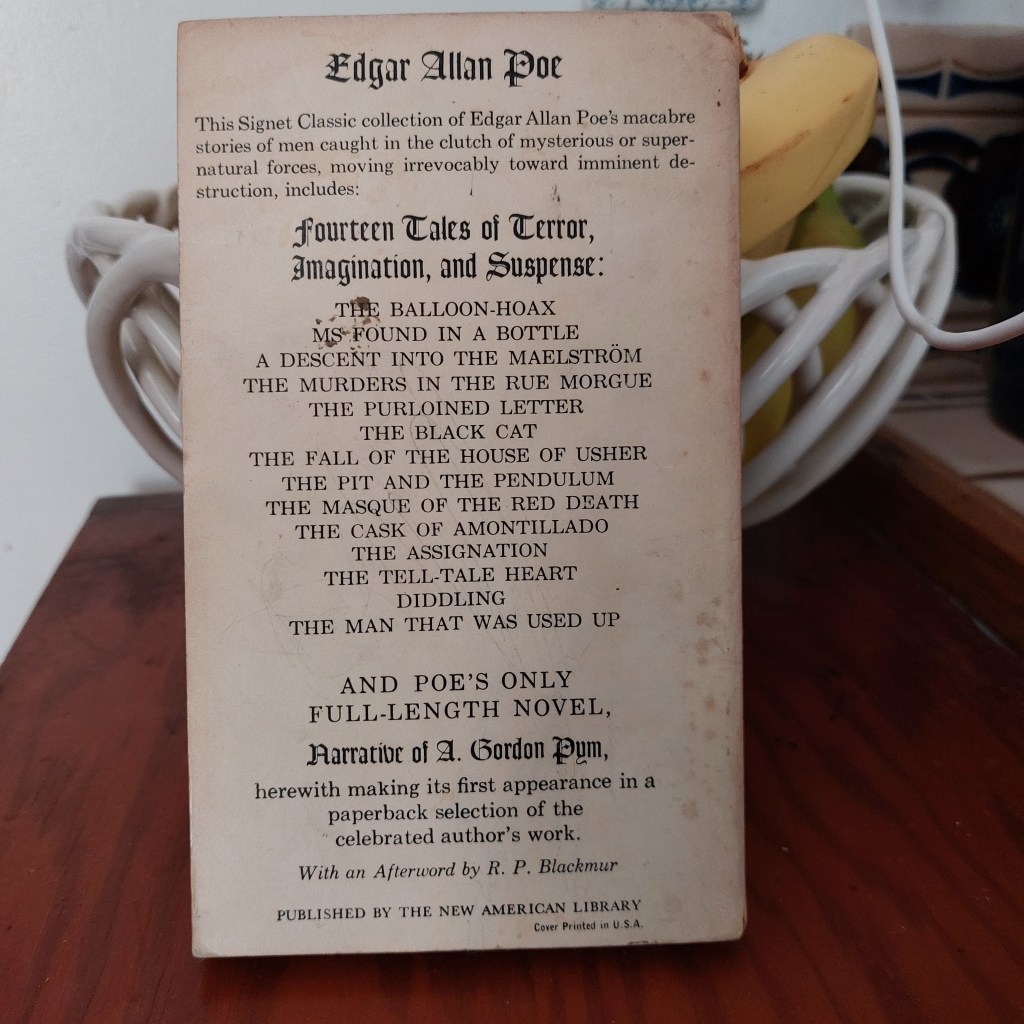
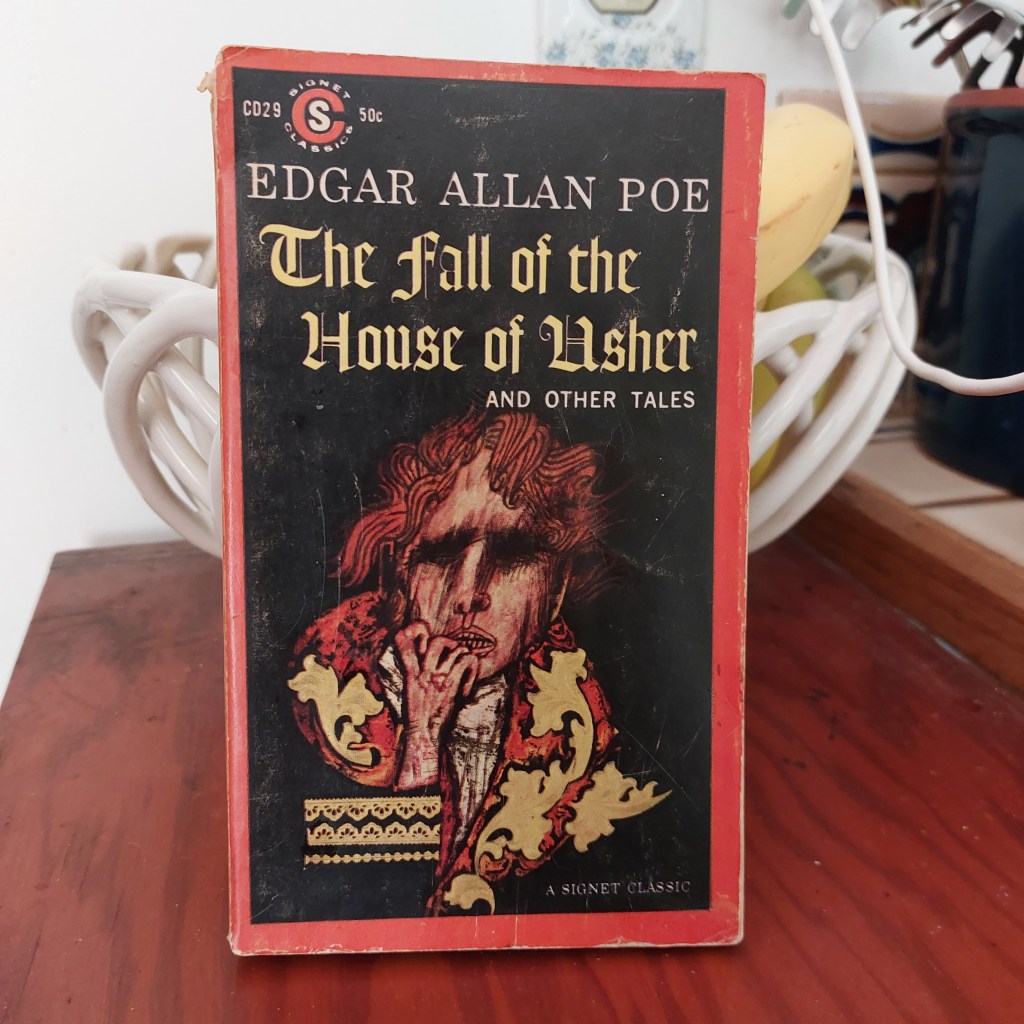
    One of the oldest books in my library is Edgar Allan Poe’s “The Fall of the House of Usher And Other Tales,”2 read in the 9th grade at St Bernard. I forget what we did that so annoyed Mr. Subiando one day, but I remember copying longhand “The Pit and the Pendulum” one long weekend, a class penance.

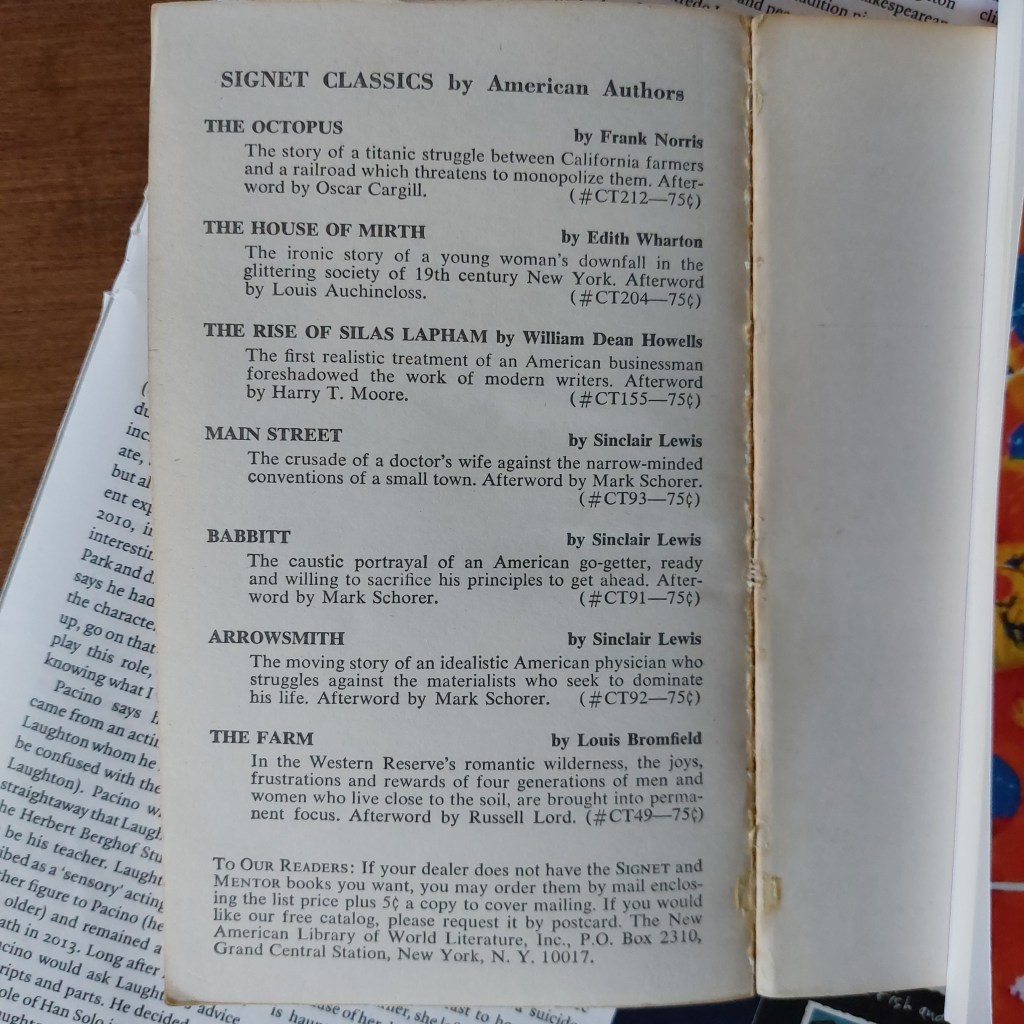
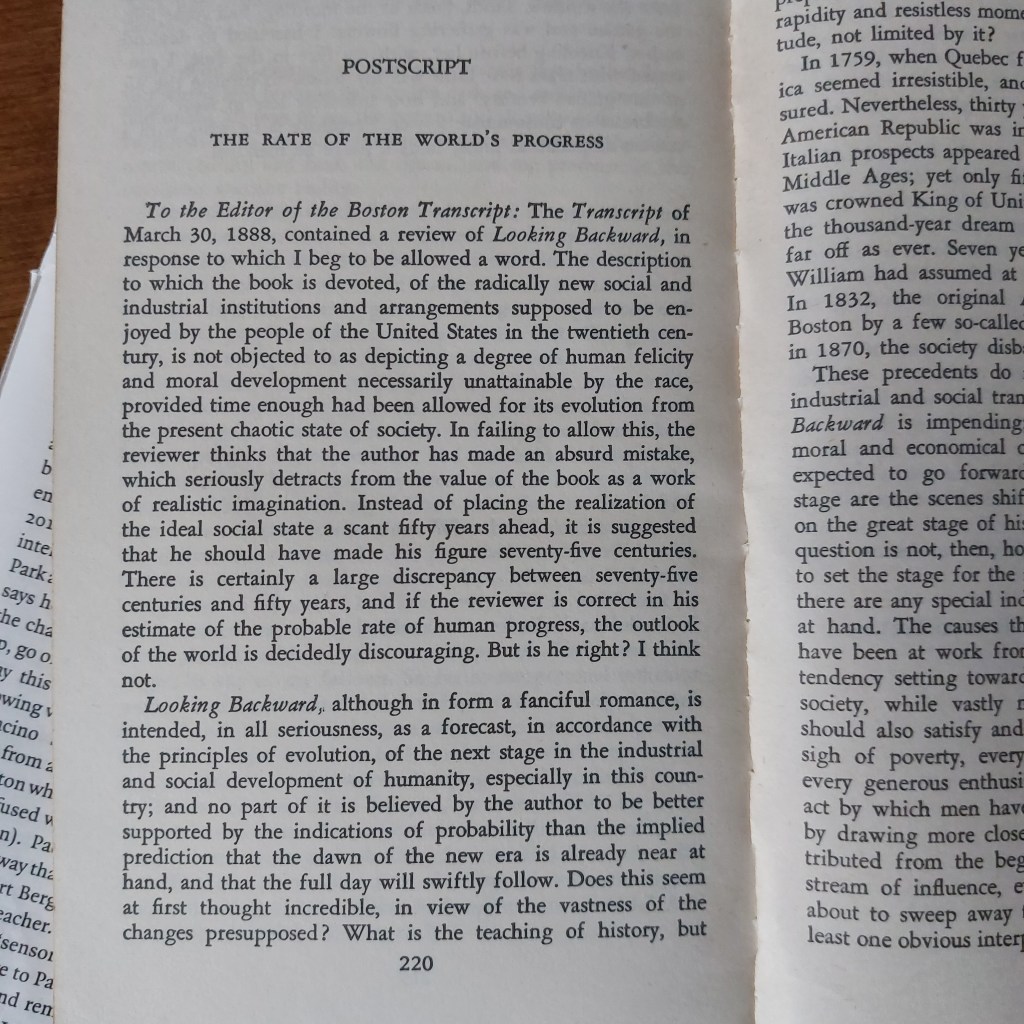
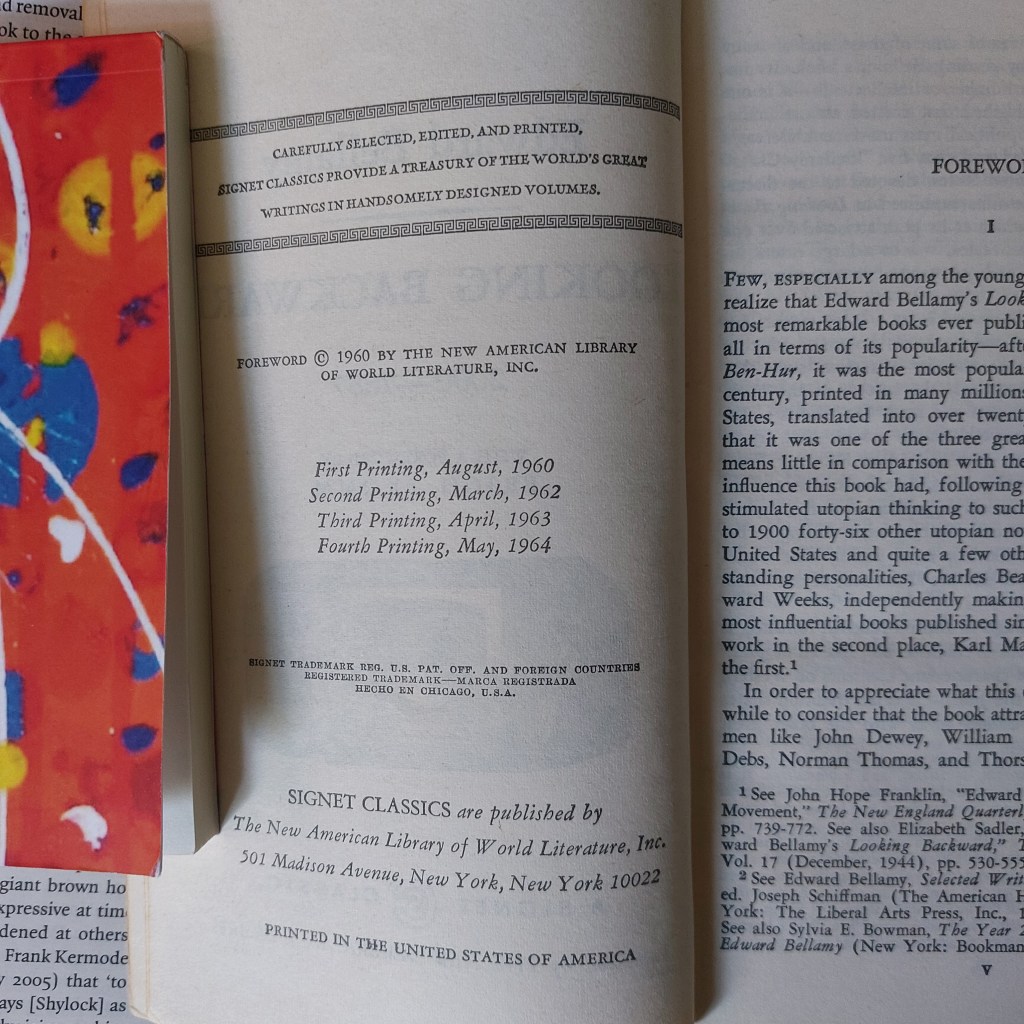
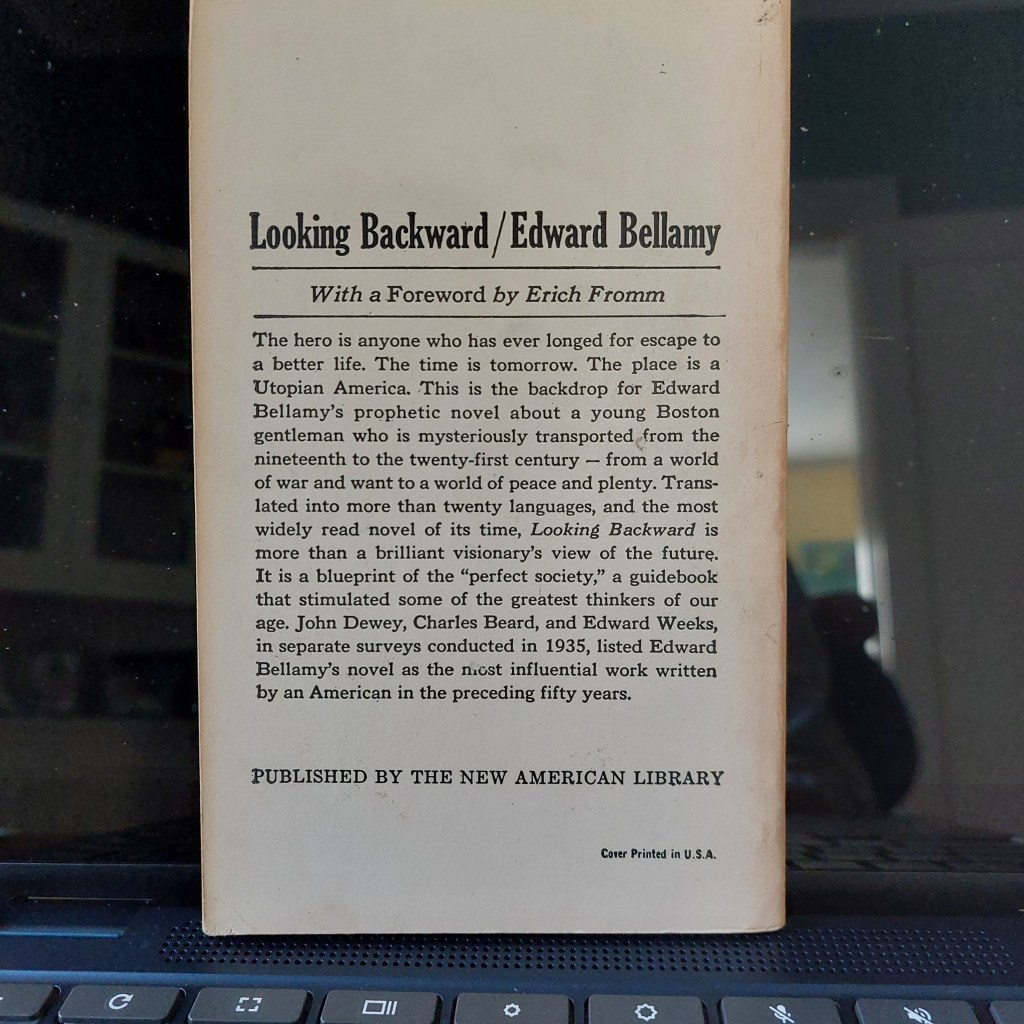
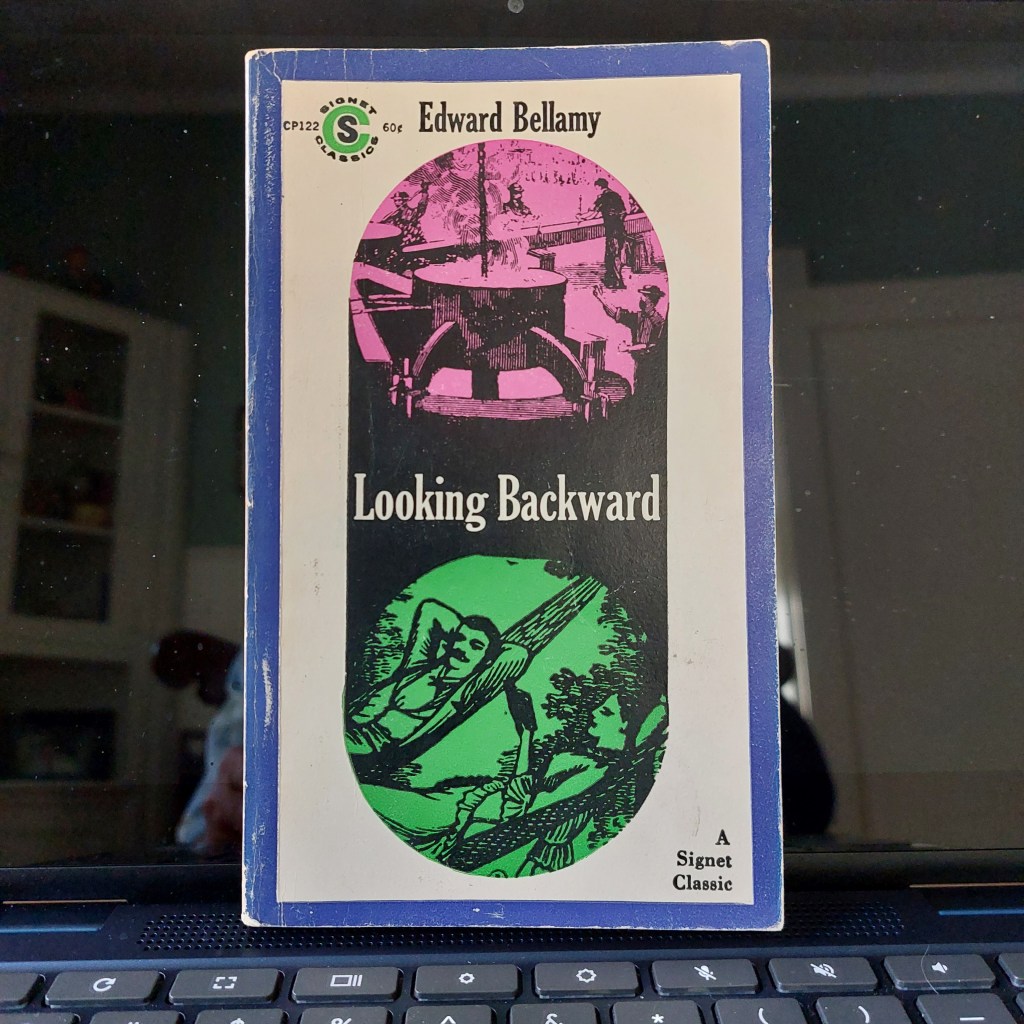
    Another book from that bygone bedroom window shelf, “Looking Backward,” by Edward Bellamy.3 The year is 2000 when Julian West awakes from the year 1887. Things have changed, of course, but for the better, and there is no need for a personal library:

    “Under the present organization of society, accumulations of personal property are merely burdensome the moment they exceed what adds to the real comfort” (89).

    Books in a collection can be burdensome, particularly when having to move abodes or rearrange a room. And old pages grow musty, stiff, spines arthritic. Books of the number I own suggest a sedentary lifestyle as well as a preference for private ownership unnecessary in Bellamy’s year 2000 and certainly obsolete, antiquated, old hat in 2025’s era of e-books:

    “I cannot sufficiently celebrate the glorious liberty that reigns in the public libraries of the twentieth century as compared with the intolerable management of those of the nineteenth century, in which the books were jealously railed away from the people, and obtainable only at an expenditure of time and red tape calculated to discourage any ordinary taste for literature” (115).

    Which brings me to Bluesky. I’ve opened a Bluesky account4 with the intent to use it to build a kind of catalog of my library. As such projects of mine go, cartoons on Substack, for example, now twice defunct, I don’t know how long I’ll keep up adding to and maintaining the catalog. And Bluesky is probably not the best place for such a project. I do prefer a simple life, free from adornment and tackle and stuff. Maybe I should concentrate on getting rid of the books rather than spending time cataloging them. But already the Bluesky project has proved useful in giving me pause to open and enjoy a few old paperbacks I’d not looked at for some time.

    A Bluesky personal library catalog? A personal library at all? What do you think?

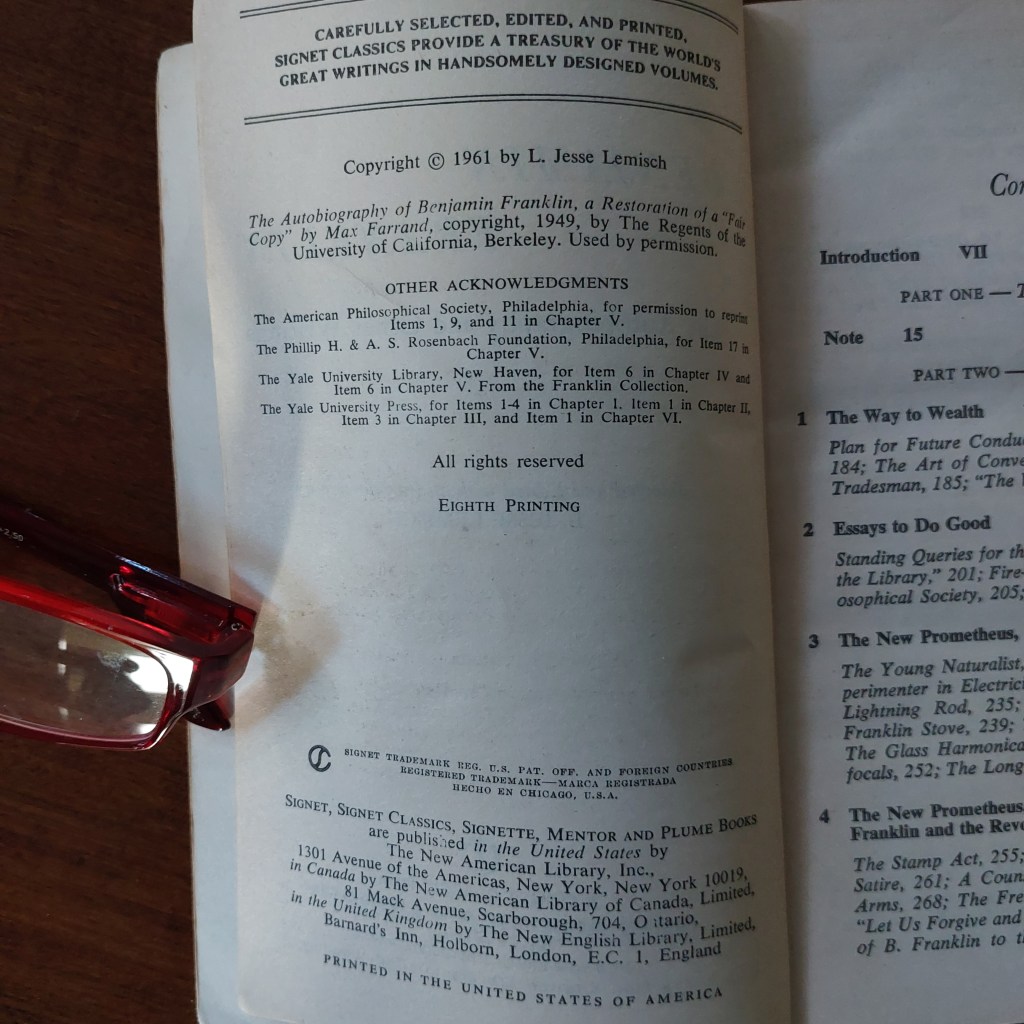
    1. Benjamin Franklin, “The Autobiography and Other Writings,” Signet Classics, 1961, CP377, Eighth Printing. From the copyright page: The Autobiography of Benjamin Franklin, a Restoration of a ‘Fair Copy’ by Max Farrand, copyright 1949.” ↩︎
    2. Edgar Allan Poe, “The Fall of the House of Usher and Other Tales,” Signet Classics, 1960, CD29, 50 cents. Afterward by R. P. Blackmur. ↩︎
    3. Edward Bellamy, “Looking Backward,” Signet Classics, First Printing, August, 1960; Fourth Printing, May, 1964. CP122, 60 cents. ↩︎
    4. ‪@joelinker.bsky.social https://bsky.app/profile/joelinker.bsky.social↩︎
  • Tele Pieces

    “Tele Piece #1” is the title finally settled on for the first of a planned series of short pieces played on the Telecaster Squier guitar.

    Squier not to be confused with Squire, as in Chaucer’s “The Squire’s Tale.” I considered titling the piece “The Squire’s Tele.” Chaucer’s tale for the squire is characterized by a bit of rambling, seemingly planned for a long piece, if planned at all, but interrupted by the Franklin, who might be in terms of social class considered subservient to the up and coming squire. And the Telecaster Squier guitar is often considered subordinant to the Fender American made Telecaster. Fender acquired the name Squier when it bought the Squier brand, a family name, in 1965. The V. C. Squier Company out of Battle Creek, Michigan began in 1890 and made strings for violins, banjos, and guitars.

    But the early Telecaster Squier is now considered a classic in its own right. In short, it’s a good guitar. Close to 20 years ago now, I was playing my Tele on Thursday evenings at a local wine bar, which closed almost as soon as it opened, victim of The Great Recession. I wasn’t up front or on a stage. I set up with a small room amp (Crate GFX-15) in a corner and played background instrumental pieces, mostly impromptu and rambling, or taking off on standards and going often I wasn’t sure where. Anyway, one night a family of four with some time to spend before their movie started across the street stopped in for a drink. They seemed inordinately interested in what I was doing. Most patrons just ignored me. Then the son, in his twenties, came over to chat. He and his father played guitar, and from where they were sitting he said they couldn’t tell if I was playing what he called a real Telecaster or a Squier.

    One of the first guitars out of the new Fender factory opened in Japan in 1982, this one is fitted with aftermarket Dean Markley and Seymour Duncan pickups, and it’s strung with D’Addario ECG24 XL Chromes Flatwound Electric Guitar Strings .011-.050 Jazz Light.

    The amplifier used in “Tele Piece #1” is a Fender Champion 20, with the Voice knob set to 02 Tweed Deluxe, and the FX knob set to 03 Reverb Hall. This combination gives a bit of mild amped style without too much distortion or fancy effects taking over. Filmed with a cell phone leaning against the bottom of the amplifier.

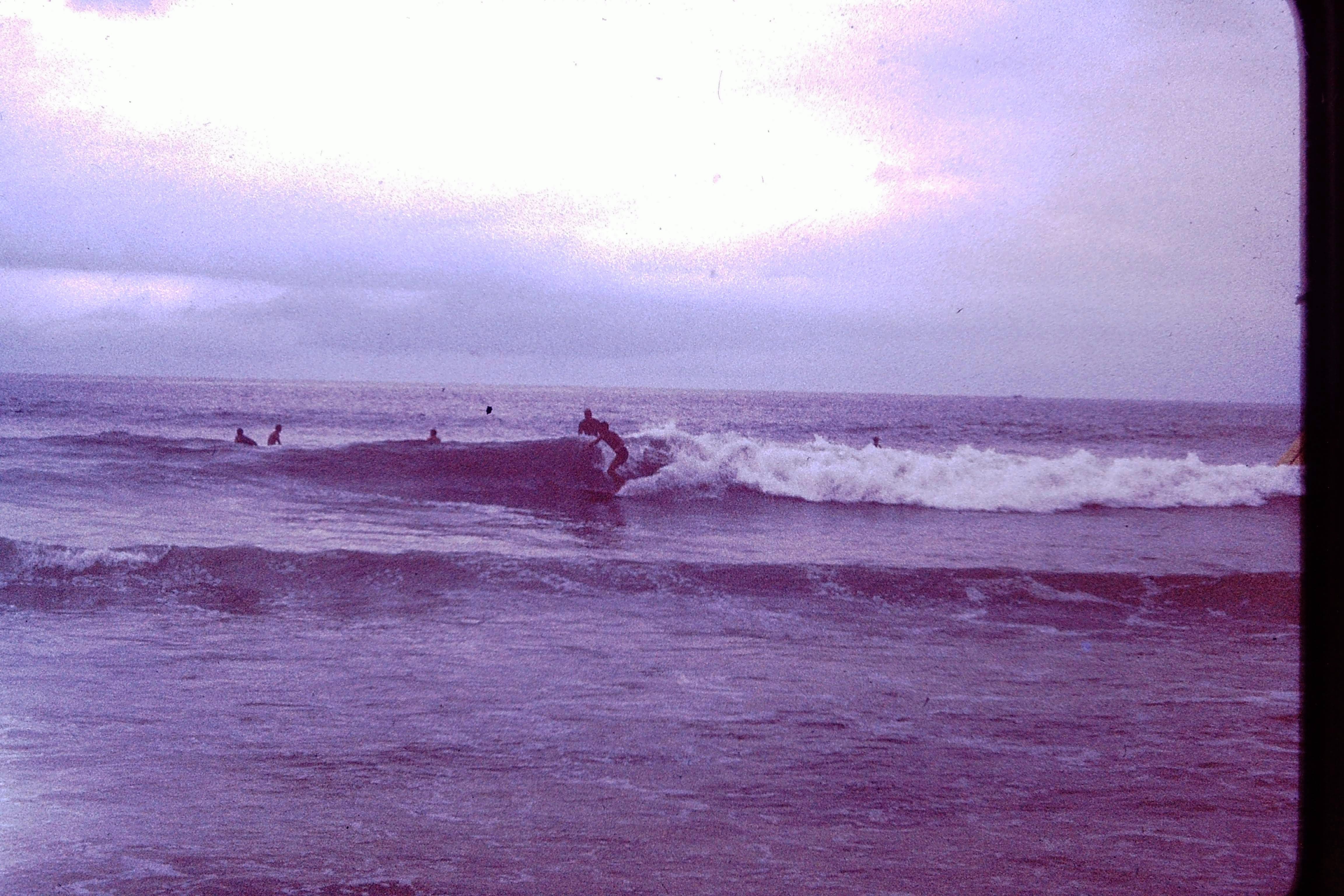
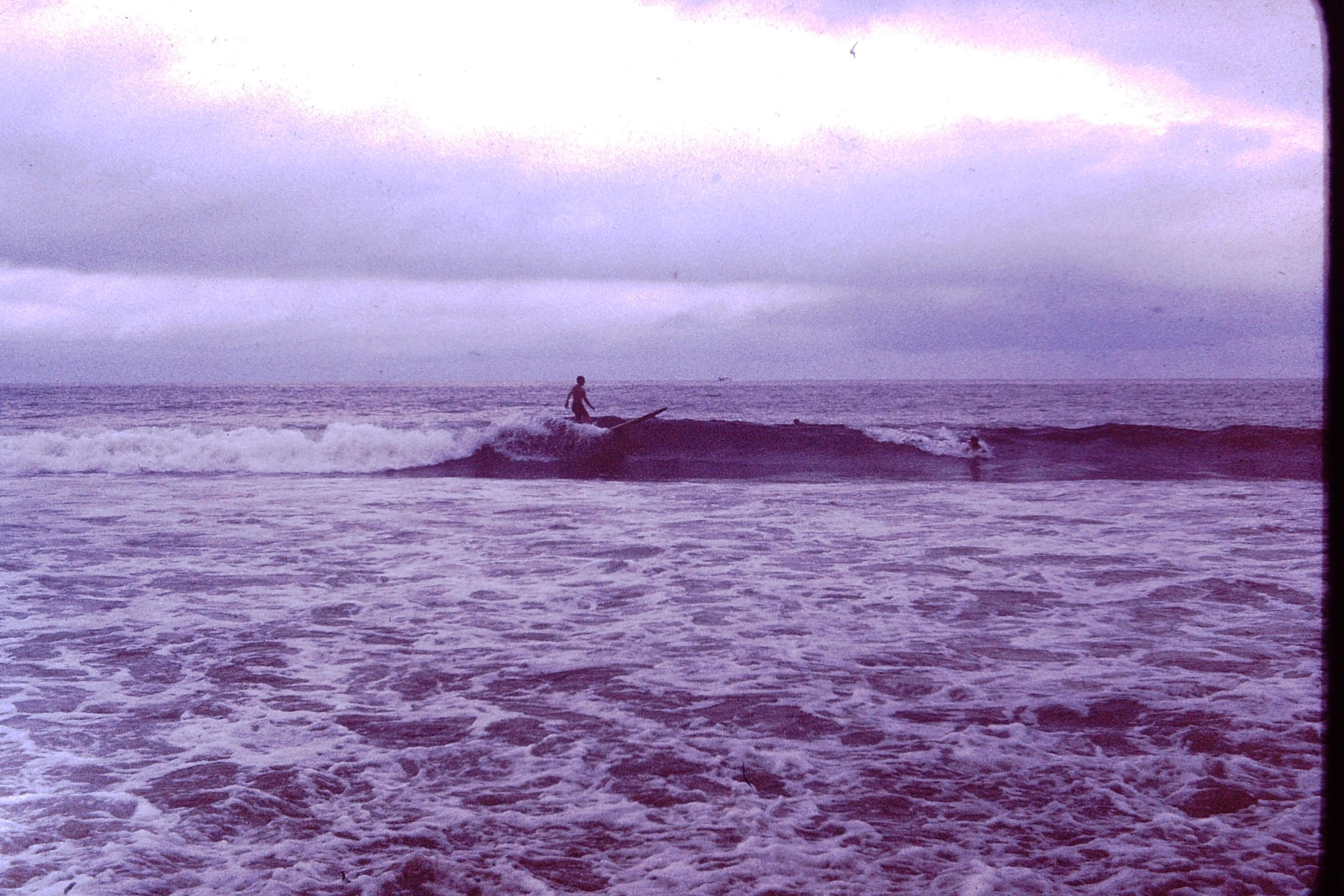
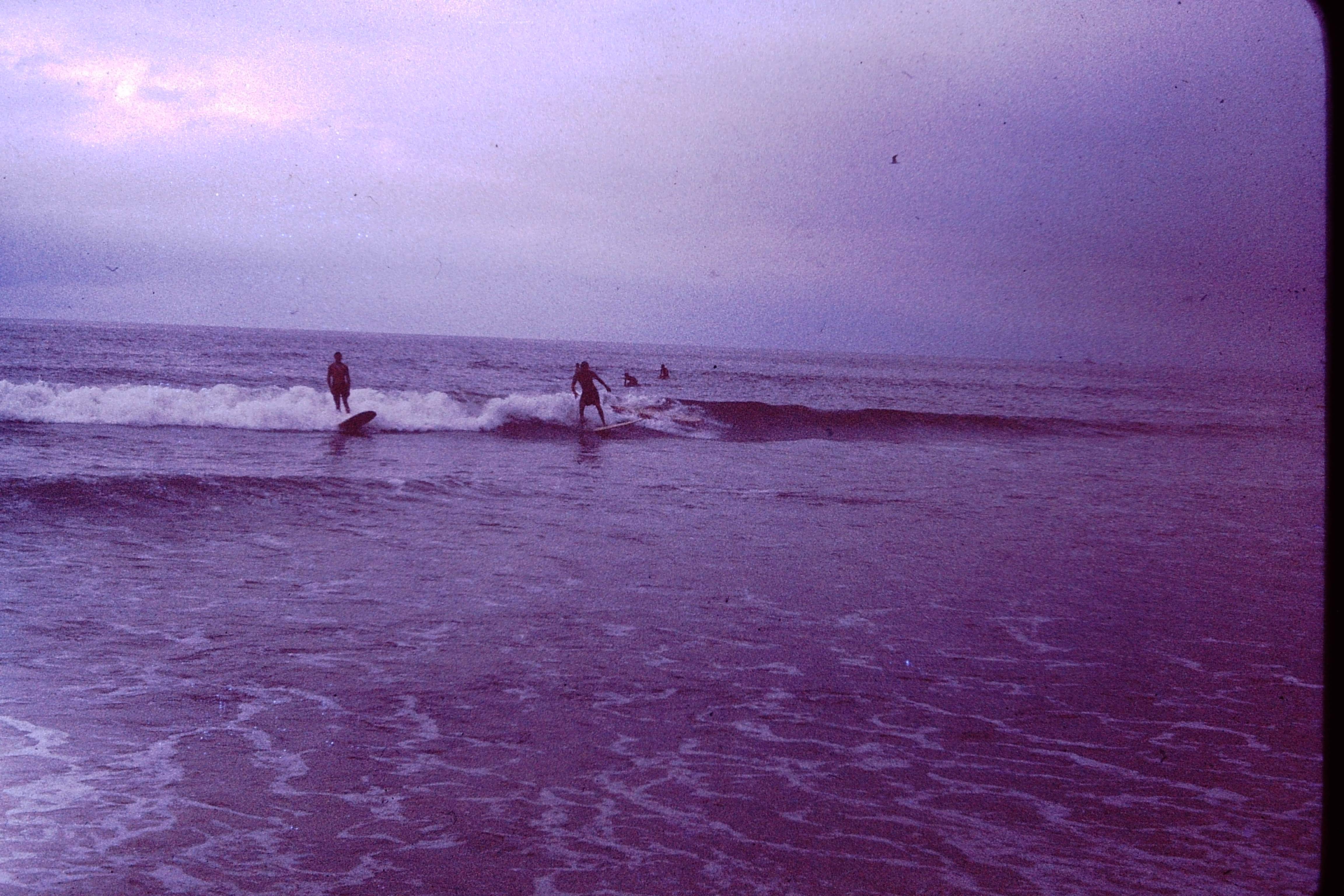
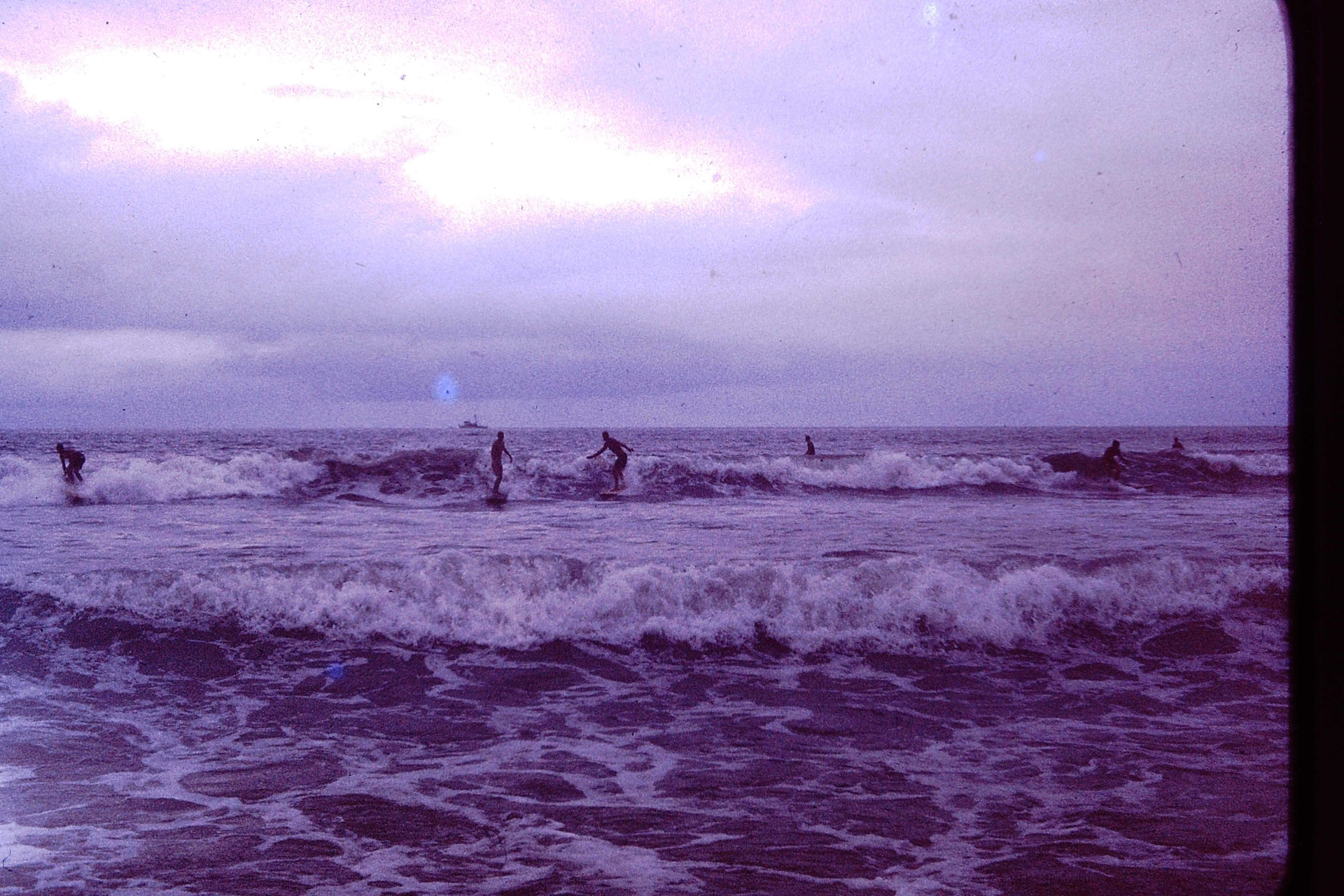
  • 60s & 70s Surfing Slide Show

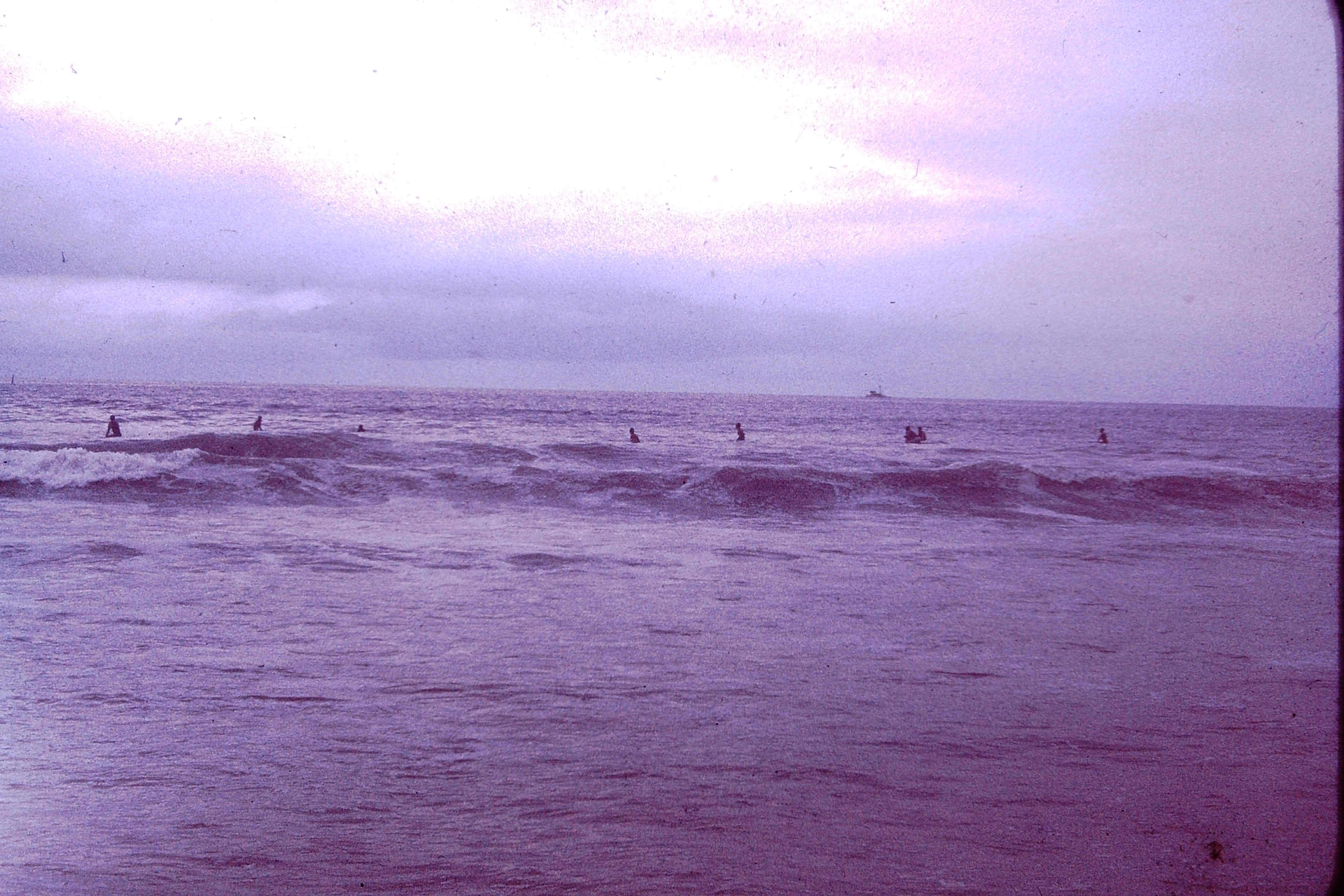
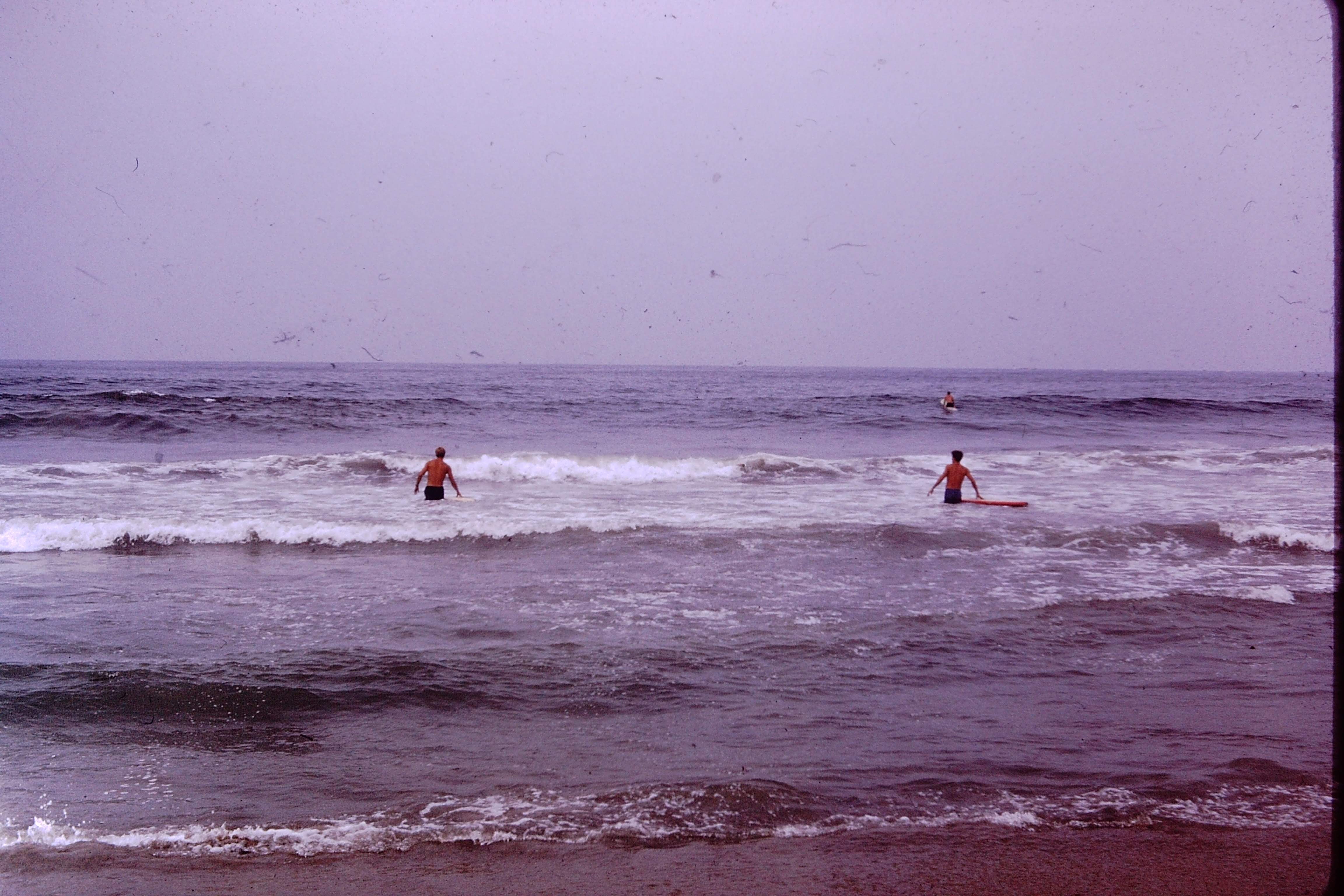
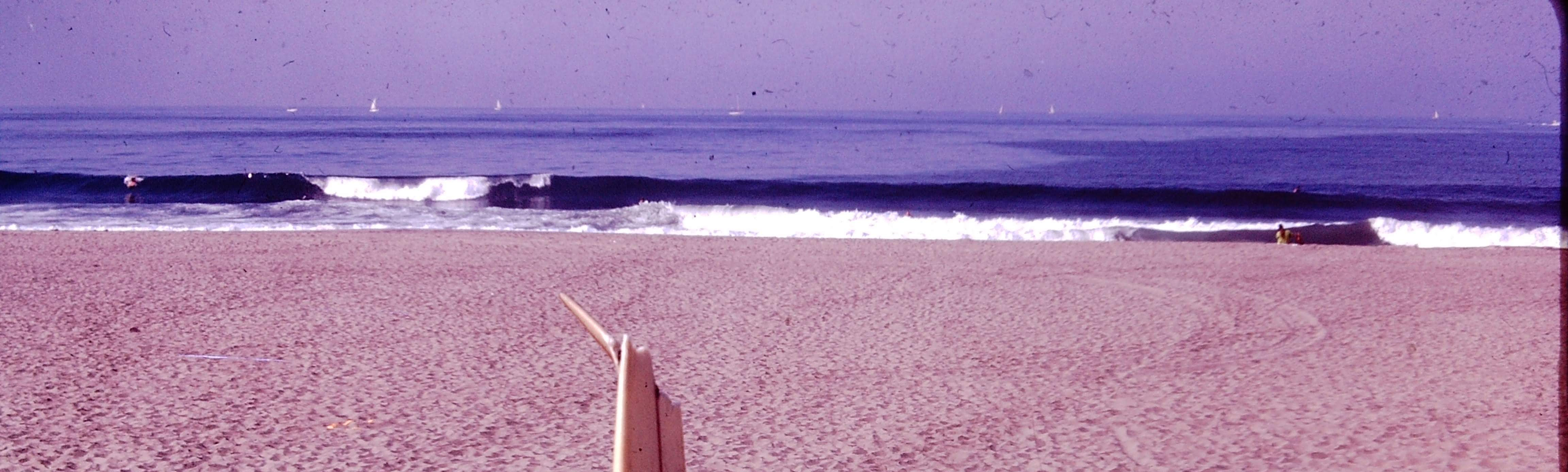
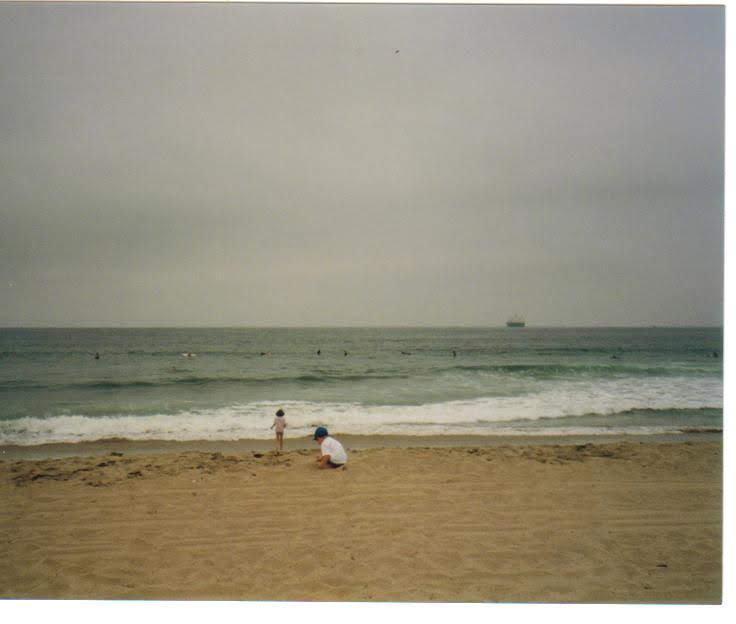
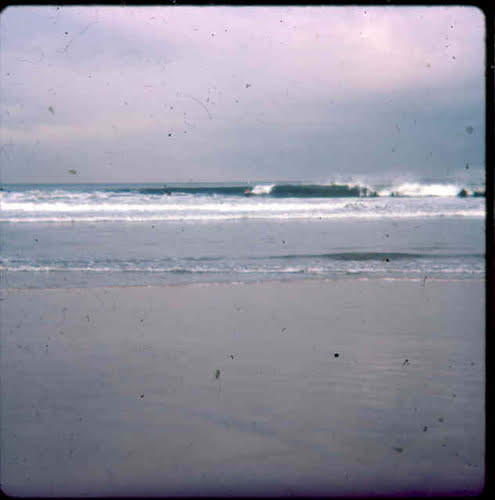
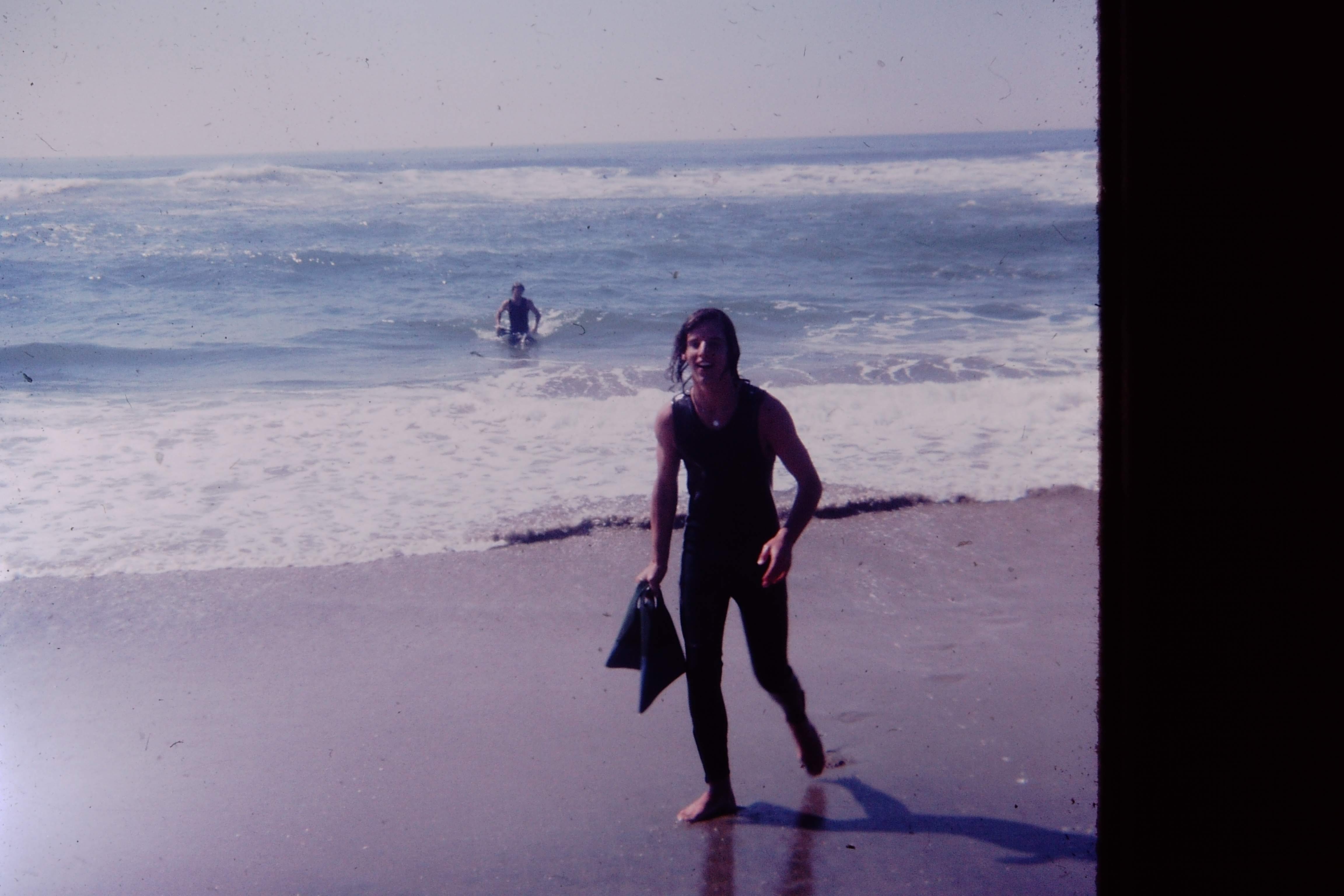
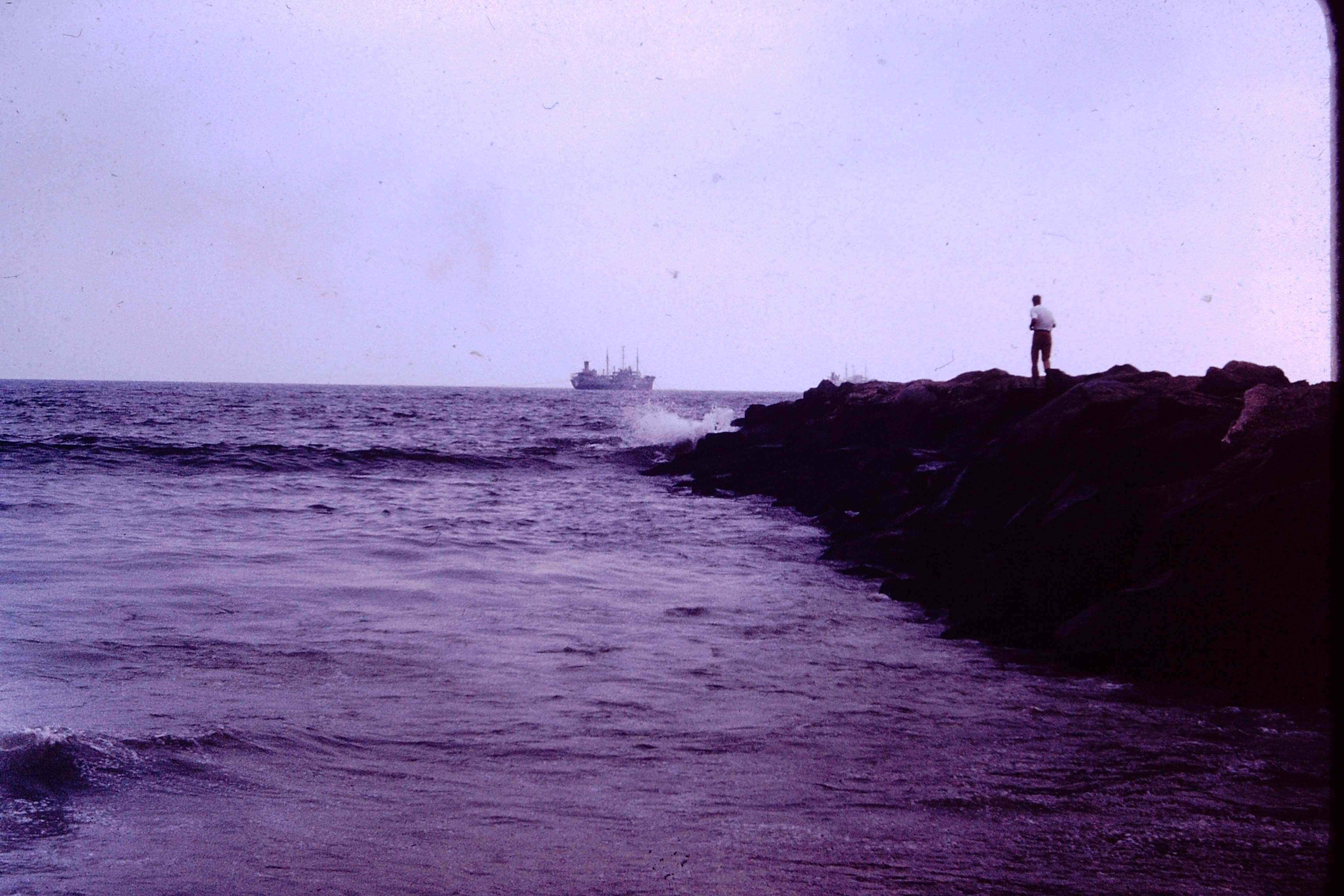
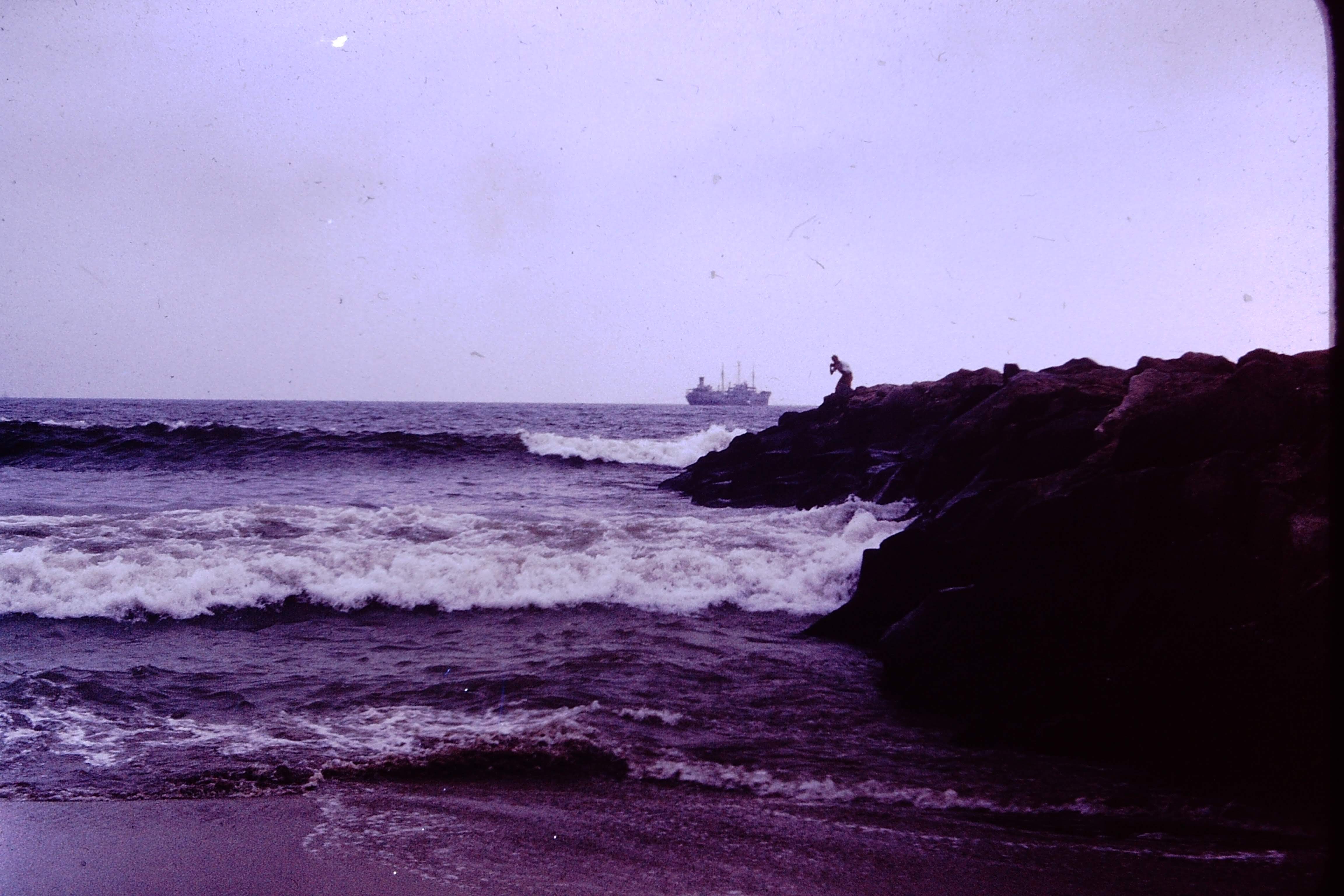
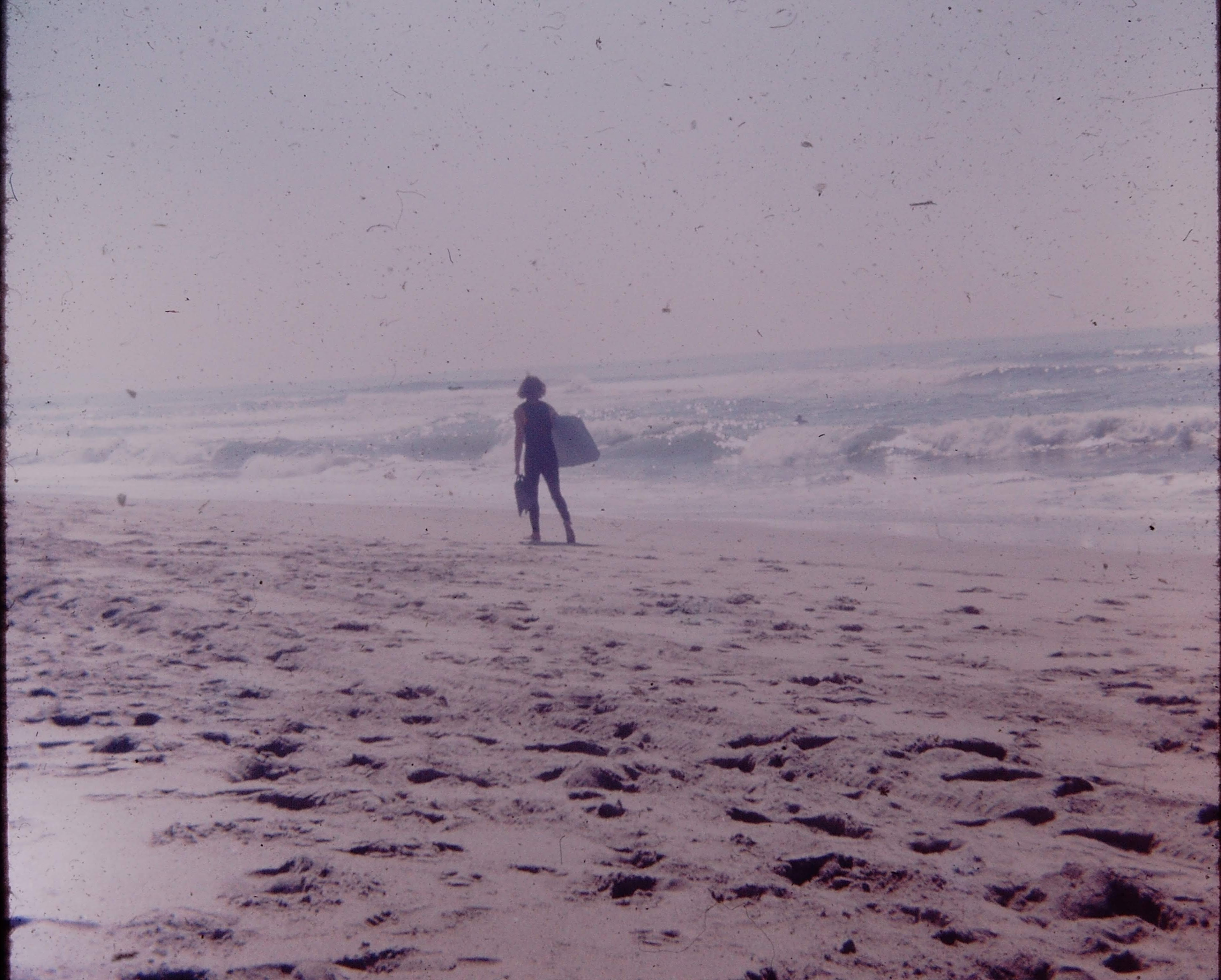
    We never tired of going down to the beach, in the mornings to surf, in the afternoons to boogie, in the evenings to walk, to catch the sunset. I bought a used Exakta 500 for surfing photos. The 50mm lens was too small, so I bought a used 120mm portrait lens. After the sun went down we sat out in the backyard and watched a slide show on the side of the garage wall.

    Surf films, streaming videos, and photos often depict surf spots as gardens of paradise, perfect waves, friendly sun, and green down to tan-white sand and then the waterline, clean blues and greens. Nothing industrial going on. Very good days are rare though, and we went down to the water anyway, regardless of conditions. And once in the water, it didn’t matter. Every wave was a Top 40 hit song, every photo a classic. The beach break at El Porto was our home spot, over the dunes from the El Segundo Standard Oil Refinery. The photos we took in the 60s and 70s might today look as bad as the waves we rode. AI Assistant wants to touch them up for me, but I prefer seeing the originals, even if those are now becoming as faded as the memory, dye fading and color shifting.

  • Guitar, Sewing Machine, and Typewriter

    I was browsing through my old stack of Frederick M. Noad guitar books, acquired when taking classical lessons back in the early 80s. In “Solo Guitar Playing II,” published in 19771, Noad’s comments are witty and engaging, critical and evaluative. He emphasizes an incremental and developmental approach to learning the instrument, the idea being to “master one level before moving to another” (13), but I’ve never met anyone who learned the instrument that way. I’m not even sure what a “level” is when it comes to actually playing, but levels may be more evident and necessary in instruction books than in sitting down on your own and discovering the instrument in your own hands. In any case, crawling is not a prerequisite to walking, and all beginning walkers are amateurs:

    “I have written this book primarily for the amateur, since of the enormous number of people who fall under the spell of the guitar only a handful become professionals, and those not always the best players” (13).

    In his introduction to “Lesson Nine, Style and Ornament: The Baroque Period,” including music from the years 1610 through 1750, since the 1950s in popular resurgence, Noad brought his students up to date on audience expectations, employing an ornamental writing style suitable to a discussion of the Baroque:

    “Although much genuine understanding has emerged from this revival, so has much specious academicism. The first wave of enthusiasts tended to be pedantic and unyielding in their opinions, giving rise to heated controversy and a surfeit of pettifoggery” (129).

    We may notice today that kind of expert or rule-bound performance insistence in other musical forms, including folk music concerts where the audience must pretend they are in a church where everyone can hear the pin drop. And as Noad wrote in 1977:

    “The result of this was that fine musical performances were often dismissed by the new cognoscenti on some technical ground, more often than not based on the execution of ornaments.”

    As if Django himself had ever reached a level where no further experiment was permissible if the music was still to be called Gypsy Jazz, where naming something supercedes the essence of the sound.

    But Noad goes on to say the rule-bearing aficionados had relented a bit:

    “Today a calmer approach reigns with the passing of what Louis Crowder2 has called ‘the panic period of Baroque interpretation,’ and we find with relief that Bach need not, or should not, be played with the regularity of a sewing machine” (129).

    Martin Messier has created music for the sewing machine, and Les Sewing Sisters have created music featuring sewing machines as musical instruments:

    I’ve never learned to sew, but I took typing lessons in high school, though I don’t recall typing much outside of class. The typing lessons were definitely developmental, jjjj ffff, etc., with bells going off all around the room, and keystrokes clicking and carriages returning at varying tempi. The classroom was an orchestra pit. What style each student brought to their instrument was a function of muscle strength and restraint, clarity of touch, rhythm and self-expression, each sitting with appropriate posture and attempting a graceful carriage as instructed, as if playing a guitar.

    The composer Leroy Anderson wrote a piece featuring a typewriter as a musical instrument in 1950. First performed in 1953, it’s often directed with humor, as if it’s not to be taken too seriously, but apart from the typewriter, the music in Anderson’s short piece sounds traditional, unlike, say, what a piece featuring a typewriter might sound like if written by John Cage. Two examples of the Anderson piece, titled “The Typewriter,” follow, the first directed seriously, the second with jocularity.

    1. Solo Guitar Playing, Book 2, An introduction to technique and repertoire for the intermediate guitarist, Frederick M. Noad, Schirmer Books, A Division of Macmillan Publishing Co., Inc. 1977. ↩︎
    2. Noad footnotes the Crowder: “See Crowder’s introduction to Denes Agay’s piano anthology, The Baroque Period (New York: Yorktown Music Press, 1971).” ↩︎
  • More Notes on “Forbidden Notebook”

    Never mind why, but so you have a notebook, or a blog, what do you write, and when? You begin to ignore other interests and responsibilities. You quickly become preoccupied with the possibilities of writing, and don’t see, or ignore, consequences. In “Forbidden Notebook,”1 Valeria begins to obsess over her writing and her notebook, which for Valeria are one and the same:

    “Michele wanted to keep me company and I said, ‘No, thanks, you go ahead, go to bed.’ But it was because, afterward, I intended to write. Now, under everything I do and say, there’s the presence of this notebook. I never would have believed that everything that happens to me in the course of a day would be worth writing down. My life always appeared rather insignificant, without remarkable events, apart from my marriage and the birth of my children. Instead, ever since I happened to start keeping a diary, I seem to have discovered that a word or an intonation can be just as important, or even more, than the facts we’re accustomed to consider important. If we can learn to understand the smallest things that happen every day, then maybe we can learn to truly understand the secret meaning of life” (35).

    Valeria writes mostly about what she can see and hear and reactions within reach. It’s 1950, and she’s aware there’s talk of the possibility of a new war. But she stays focused on her household and family, and on her job and friends and acquaintances. I keep reminding myself it’s a novel, not a real notebook. But that effect is part of Alba’s, the author’s, intent.

    Reading along, I began to think the unfolding household dramas amounted to a kind of soap opera. But Italian television in the 1950s did not include serial shows like those originating in New York City, fueled and sustained by TV advertising, akin to today’s social media set-up, where the audience easily confuses the real with the make believe. Nevertheless, I looked forward to each new installment-like chapter with a soap opera addiction.

    It wasn’t until I finished the book and went back to read the Introduction, followed by a Note from the Translator, that I discovered that “Forbidden Notebook” was indeed first produced as a serial, in an Italian weekly magazine, in real time, from December 1950 through June 1951.

    Coming to terms with the smallest things that happen every day can be difficult. We would probably have to let go of the fortunate distractions of the news, the media, radio, and television, reels and reels and reels of distraction – fortunate because without them we are forced to stare at an empty screen:

    “If we can learn to understand the smallest things that happen every day, then maybe we can learn to truly understand the secret meaning of life. But I don’t know if it’s a good thing. I’m afraid not” (35).

    Having decided its worth as a bad thing, how do you get rid of it? Valeria writes for herself, but in constant fear someone in her family will find her notebook, and, since she’s writing about them, and what’s outside their purview, the intimate details of her family interactions and her work life, her criticisms and disappointments, her thoughts and wishes, resentments and humiliations, her contradictions and doubts, to be discovered would jeopardize her standing as “mamma,” a name so full of assumptions and presuppositions it’s smothering, but to be rid of it is something she both wants and doesn’t want.

    “But maybe everything I’ve been thinking I see around me lately isn’t true. Maybe it’s the notebook’s fault. I should destroy it, I will certainly destroy it: I’ve decided” (39).

    She continues to debate with herself the value of her notebook, why she continues with it, worrying about it being discovered, where to hide it from her family, what and how to write:

    “Sometimes I think I’m wrong to write down everything that happens; fixed in writing, even what is, in essence, not bad seems bad. I was wrong to write about the conversation I had with Mirella when she came home late and, after talking for a long time, we separated not as mother and daughter but as two hostile women. If I hadn’t written it, I would have forgotten about it. We’re always inclined to forget what we’ve said or done in the past, partly in order not to have the tremendous obligation to remain faithful to it. Otherwise, it seems to me, we would all discover that we’re full of mistakes and, above all, contradictions, between what we intended to do and what we have done, between what we would desire to be and what we are content to be” (47).

    The writing in “Forbidden Notebook” is epistolary, as if each short chapter is a letter Valeria is writing to you, the reader, her audience, or, more to the point, letters to herself that you, the reader, have discovered. You have found her notebook, and are reading about her fears that someone might find her notebook.

    Later in the book, she reads through a collection of old letters Michele wrote to her when he was stationed across the sea, in World War II, and she confides she doesn’t recognize him or herself. But are not the letters a kind of notebook? Maybe, but letters are edited. The letter you write to your mother sounds very different indeed from the letter you write to your wife or mistress, boss or senator, different if written in times of happiness and safety versus times of stress and bombardment. Indeed, you are a different person as your circumstances undergo upheaval or fall to sleep.

    “Every time I open this notebook the anxieties I felt when I began to write in it return to mind. I was assailed by regrets that poisoned my day. I was always afraid that the notebook would be discovered, even if at the time it contained nothing that could be considered shameful. But now it’s different. In it I’ve recorded the chronicle of these last days, the way in which I’ve gradually let myself be drawn into acts that I condemn and yet which, like this notebook, I seem unable to do without. Now I’ve got into the habit of lying; the gesture of hiding the notebook is familiar to me, I’ve become very good at finding the time to write; I’ve ended up by getting used to things that, at first, I judged unacceptable” (189).

    She considers taking her notebook to the office, and finding time to write and a place to hide it there, but she still fears it being found and her being laughed at and losing prestige.

    “It’s strange: our inner life is what counts most for each of us and yet we have to pretend to live it as if we paid no attention to it, with inhuman security. Also, if I took the notebook to the office, I’d find nothing of my own when I came home” (199).

    And what if she dies, the notebook’s secrets revealed; but she thinks Mirella, if she finds it, would not read it. She thinks the notebook is the reason her life seems to be changing, her self-image evolving, and the fact she’s hiding something so important from her husband has her feeling she’s living in sin. Is to know one’s self a sin?

    “I know that my reactions to the facts I write down in detail lead me to know myself more intimately every day. Maybe there are people who, knowing themselves, are able to improve; but the better I know myself, the more lost I become” (233).

    She’s in the middle of her life, in the middle of her family, in the muddle of her thoughts, feeling alienated, even if being alone with her notebook is what she wants:

    “It began in wartime, because of the housing crisis. Or maybe because suddenly you could die and things had no importance compared with the lives of human persons, all equal, all threatened. The past no longer served to protect us, and we had no certainty about the future. Everything in me is confused, and I can’t talk about it with my mother or my daughter because neither would understand. They belong to two different worlds: the one that ended with that time, the other that it gave birth to” (247).

    She remembers a reason why she wanted the notebook to begin with:

    “I hoped that in it I would be able to fulfill without guilt my secret desire to still be Valeria” (252).

    In the end, Valeria’s notebook is out of place. What she imagined her family would think of her writing is probably right. She’s wasting her time and writing is causing herself grief and gaining her nothing. There are those who should not write, even if they can, even if they happen to be good at it, but what is good is also of course debatable. Her husband has written a screenplay, ironically his secret from Valeria. He reveals it when Valeria meets up with her old friend, Clara, now a filmmaker, and Clara agrees to look at Michele’s screenplay, but later she tells Valeria it’s not going to work out:

    “He’d like to change his life, leave the bank to devote himself to the movies. But you have to persuade him not to, Valeria….They wouldn’t have any faith in a man like Michele, who has spent all his life in a bank. They’d always judge him a dilettante; and in fact he would be, it couldn’t be otherwise” (196).

    Clara claims the script is too risque for producers to risk, but that might be hard for some readers to accept as true given the history of Italian cinema. In any case, we don’t get any of the script in Valeria’s notebook because she hasn’t read it, but we do get snatches in passing from her talks with Clara so we have some idea, but it remains vague, while Valeria’s concerns are modeled on the conservative, class, and religious values she has come of age in, even if her behavior flirts at times with betrayal of those values. When a rule is violated, is the offender blamed or the order behind the rule?

    If there are writers of secret notebooks today, of course we don’t know them. We assume they are there, working away, learning about themselves, maybe with productive results, maybe not, but either way, filling notebooks then throwing them out with the trash, or, maybe worse, saving them – for what? And of those who for various reasons try to share their writing, we find many forms of occasions of writing, of simple to outlandish claims with and without backing, full of personal details or no mention or sign of the author whatsoever, an anonymous blogger. But readers seldom have the same picture of the writers the writers have of themselves. Like flowers, some writing is perennial, some annual; some take root and in a friendly environment thrive, some wilt. Or writing is not a flower at all, more like a weed, an invasive, non-native weed, growing prolifically out of a crack in a street.

    1. “Forbidden Notebook,” by Alba De Cespedes. Originally published in book form in Italian as Quaderno Proibito in 1952 by Mondadori. I read the first paperback edition 2024 from Astra House, Translation by Ann Goldstein and Forward by Jhumpa Lahiri. ↩︎