Just caught up with a Toad post selected for repost on June 6 at berfrois: Intellectual Jousting in the Republic of Letters. Check out the post at berfrois, and have a look around their interesting magazine-site.
Category: Writing
-
Is the Internet Making Journalism Better?
The polls have closed over at The Economist debate. At issue was the following motion: “This house believes that the internet is making journalism better, not worse.” And Nicholas Carr, of “Is Google Making Us Stupid?” fame, instead of a concession speech, provides readers with a post on his Rough Notes blog containing a list of links to sources he used to help prepare his strategy. I’ve not finished perusing all of Carr’s references yet, but his post is obviously a valuable resource for students of the “stupid” and beyond debate. Read Carr’s “Is Google Making Us Stupid?” article in The Atlantic. Follow the debate at The Economist. Sift through Carr’s sources. Carr supports his claim that the effects of externalizing our central nervous system (as McLuhan put it) include negative neurological changes with what is considered by some (Jonah Lehrer) to be soft evidence.
-
Is Privacy the New Plastic?
In February, I posted on the film “Examined Life.” One of the featured philosophers in the film, Peter Singer, has an interesting article on ethics, privacy, and social networking and technology in this month’s (August) Harpers: “Visible man: Ethics in a world without secrets.” Is privacy the new plastic? (Use library if no Harper’s subscription.)
-
Invective Bagful
One might approach an inferno with caution, for dark words obscure the ill-lit path. Remember the scene in “City Slickers” when Ira and Barry claim to be able to identify the correct ice cream desert for any given meal? Of course there can’t be a correct answer, a right or wrong, yet their answers are persuasive. They seem to get it right. Just so, is there a right invective to suit a given malevolent character? The ubiquitous a__hole is the easily reached standby, a single scoop in a sugar cone. Some invectives the general interest reader might find offensive, even if earned by the target. Joyce used “rabblement” to round up the usual suspects: “Now, your popular devil is more dangerous than your vulgar devil. Bulk and lungs count for something, and he can gild his speech aptly.” Sometimes, though, the stream of invective seems preferred: “You unpatriotic rotten doctor Commie rat,” Bob Dylan’s farmer yells in “Motorpsycho Nightmare.” But the single word rant is probably the perfect invective, like the perfect ice cream desert, a single scoop of the only flavor possible. Still, if one wants to be remembered for one’s invective, perhaps the Spiro Agnew (from a phrase prepared by William Safire) approach is best: “nattering nabobs of negativism.” To what wordly-inferno do we credit this reflection on invectives? Over at one of our blog subscriptions, “My Life and Thoughts,” where we find the energetic and enterprising Elif pondering the right word for the forsoaken characters of Dante’s “Inferno.” Of course, there’s the possibility the discussion is a marketing ploy, which we approached without caution, but no worries, for there’s little invective in a marketing campaign.
-
Disney’s New “Winnie the Pooh”
Disney’s new “Winnie the Pooh” whimwhams from book to screen, true to the text, blending beautiful, glossy-black letters, like iron icons, into the plot and the characters’ actions. There are no static characters.
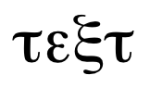 The dynamic characters learn the consequences of misreading a text. The academic, wise Owl plays the fool, foisting a bugaboo, mythical creature on the “Hundred Acre Wood” community. Winnie-the-pooh builds a ladder from scattered letters, and Pooh and friends climb the letter-ladder out of a pit of fallen text. Rated E: Excellent for Everyone!
 -
More on the disappearance of newspapers…

More evidence of the disappearance of newspapers: page 2 of the “a&e” section of last Friday’s Oregonian contains a small announcement: “Regal Cinemas discontinued its movie listings, which were advertising, from The Oregonian.” Regal has a full menu website with links to Hershey’s, Coca-Cola, 200k likes on facebook, 24k tweeters…; what does it need The Oregonian for? Now playing: “What we will miss when newspapers disappear.”
-
PLoS One sparks paradigm changes…
 PLoS One sparks paradigm changes in academic and research publishing. When will the Humanities catch up? Consider the Atlantic article, “Lies, Damned Lies, and Medical Science.” The science community is ahead of the Humanities in recognizing the hoaxes of academic and scholarly publishing. But over at the FQXi Community, the physicists are having a good time writing the new fiction.
 -
On Another Modest Proposal; or, Twitters with the Editors
We dropped in on our anon friends over at LROD this morning, reading the morning blogs over a cup of Joe, always interested in the latest rejection news, and followed a suggestion to an article by Bill Keller over at the New York Times Magazine, “Let’s Ban Books, or at Least Stop Writing Them,” about the time-consuming, low productivity, empty and worthless promise called writing a book. Bill knows, for in his position as executive editor at the Times, he’s seen many a sabbatical come back with sunburned hands holding a bellyflopped book. He even confesses he’s tried it twice, writing a book, both times coming up for air before finding the pearl, and he’s against the writing of any more books. Bill’s proposal is censorship fullproof: don’t ban books; ban the writing of books.
But these lazy cats at the Times are already writers, wallowing in ink and books, rich with paper and pens, we assume, expert at hammering out the text by deadline, so why do they need a sabbatical to write their boobook? Let them write it on their own time, like all us other hacks, for they’ve already a leg up on the process, not to mention free lunches with the agents, and twitters with the editors. That will separate the wheat from the chaff.
Yet a side benefit, though, should we adopt Bill’s idea to ban the writing of books, would be universal atonement for our guilt of not reading them.
-
On Poetry
 Some days ago, Susan suggested a book I’ve finally opened, Bill Bryson’s At Home: A Short History of Private Life. “It is always quietly thrilling,” Bryson says in the introduction, “to find yourself looking at a world you know well but have never seen from such an angle before.” He’s discovered a rooftop vista accessible through a hidden door. The experience causes him to realize that he’s a stranger to his house, an English rectory built roughly 150 years ago. He’s had an epiphany, for he decides that “it might be interesting, for the length of a book, to consider the ordinary things in life, to notice them for once and treat them as if they were important, too. Looking around my house, I was startled and somewhat appalled to realize how little I knew about the domestic world around me.”
I’d just opened the book, and already I had a bit of an epiphany of my own, for I realized that Bryson’s “quietly thrilling” experience resulting from a new perspective on an old thing is a practical definition of poetry. At least, that is what successful poetry often accomplishes, an image of a familiar thing viewed in a new light, in such a way that we feel a stranger to the thing, as familiar as it might be, and we want to research its origins, its purpose, and to revalue its uses – now that we’ve a new realization of the thing’s importance, as revealed by our newly found perspective; we want to get to know the thing all over again. We want to save it, rescue the thing from the rummage sale, for in poetry we find our own hidden door. Perhaps this revaluing of things, of changing our minds about what we want, is what all successful art accomplishes, and also explains John Cage’s silence as a place to find hidden sounds.
The poet practices legerdemain; he’s a sleight of hand man, as described in Wallace Stevens’s “The Sense of the Sleight-of-Hand Man”: “…So bluish clouds / Occurred above the empty house and the leaves / Of the rhododendrons raddled their gold, / As if someone lived there….” And, as Ferlinghetti added, “…and all without mistaking / any thing / for what it may not be.” For, as Stevens goes on, “The wheel survives the myths.” And finally, “It may be,” concludes Stevens, “that the ignorant man, alone, / Has any chance to mate his life with life.”
-
Now Playing at Plato’s Cave: “The Reel World”
Plato opened the first movie theatre, the audience chained to seats, unable to see the projectionist, and there were no refreshments or intermissions. You really had to be a movie buff to enjoy a film at Plato’s Cave.
McLuhan (Understanding Media, 1964) explained that we must be trained to see movies, for “movies assume a high level of literacy in their users and prove baffling to the nonliterate [the unlit].” If a man disappears from the screen, the nonliterate wants to know where he went. “But the film audience, like the book reader, accepts mere sequence as rational.” And perspective is gravity, gravitas. The nonliterate will not sit still and be quiet in a movie theatre. They lack the requisite cultural-etiquette training, which requires the natural, balanced sensorium (the five senses tuned so that no one sense dominates another) to be dominated by the sense of sight. “For those who thus fix their eyes,” McLuhan explains, “perspective results.” This is why hot buttered popcorn is so popular in movie theatres – the nose is hard-pressed to go two hours with nothing to smell. The movie theatre is the new voting booth, where we learn both what we’re missing and what we want. “What the Orient saw in a Hollywood movie was a world in which all the ordinary people had cars and electric stoves and refrigerators…That is another way of getting a view of the film medium as monster ad for consumer goods,” McLuhan said.
There are things we don’t want to see, movies we’ve no interest in, TV shows we channel surf away from, books we self-remainder to the rummage sale. We avoid certain conversations, too, closing our ears now to the sacred, now to the profane; there are things we don’t want to hear. Yet touch is the most involving of the senses, and the sense of smell is stronger than the sense of sight, and is tied to taste. Thus we say of a bad movie that it stinks. We instinctually avert our eyes from the ghastly, but when we want to see what we don’t want to look at, we go to the movies. “It is a spectacle,” Wallace Stevens said (“Chaos in Motion and Not in Motion,” 1945), “Scene 10 becomes 11 / In Series X, Act IV, et cetera. / People fall out of windows, trees tumble down, / Summer is changed to winter, the young grow old, / The air is full of children, statues, roofs / And snow. The theatre is spinning round,….”
“Blessed are those who have not seen and yet have believed” (John: 20-29). Blessed today might be those who have seen and yet still believe. Yet “a fool sees not the same tree that a wise man sees,” Blake said in “The Marriage of Heaven and Hell” (and which the neuroscientists are busy trying to explain). What should we see; what should we read? What are our choices? “It is not irritating to be where one is. It is only irritating to think one would like to be somewhere else,” John Cage said, in his “Lecture on Nothing” (Silence, 1973). Just so, Cage gives us 4’33” of silence, but not silence, for we hear what we hear, note what we note, for we have eyes to see, ears to hear. McLuhan predicted YouTube: “Soon everyone will be able to have a small, inexpensive film projector that plays an 8-mm sound cartridge as if on a TV screen. This type of development is part of our present technological implosion.”
The blogger gets McLuhan’s argument: “The typewriter…has caused an integration of functions and the creation of much private independence. G. K. Chesterton demurred about this new independence as a delusion, remarking that ‘women refused to be dictated to and went out and became stenographers.’” Just so, academics are beginning to refuse the traditional forms of sanctioned publishing, for the potential to blog brings about, as McLuhan said of the typewriter, “an entirely new attitude to the written and printed word.” Back inside Plato’s Cave and McLuhan’s (via Joyce) “reel world,” some critic tries to discern what we’re actually seeing and hearing, as if we don’t have eyes to see, ears to hear. Well, yes, but we can’t see the real thing. Behold, human beings living in an underground cave, blogging. This is a world of appearances, through a glass, lightly shuttering.


 The Coming of the Toads