Category: Writing

  • Born to Read

    Born to Read

    Born to read. How boring is that? You could have been:

    Born to Be Wild
    Born to Be Bad
    Born to Lose
    Born in a Trunk
    Born Again
    Born Before the Wind
    Born to Run

    Rock and roll is the universal elixir the alchemists sought. Most US kids know the formula, share autobiographical characteristics, the cultural DNA of the mid twentieth century: the disappointed father who in the economic growth following World War II can’t seem to turn anything into gold; his solitude, his drinking, his passive or active aggressive tendencies; his criticism of life in general, of his home and family in particular; his anger, controlled or not, his anger; his hatred of the jobs and loans and duns they’re able to squeak by with. His depressions. His relationship with his company store. The sixteen tons he loads at work, and the sixteen tons he brings home every day. His wife, your mother, if they stay together, and if they don’t. His loner kid who wants a guitar. The only sports the kid is into are surfing or the pool hall or guitar. The chaos of alienation, isolation, and depression stirs the dull dust of discontent.

    Many of the working class guys I grew up with could tell this story, have told this story, do tell this story. Up to the point where they don’t turn into gold. Then the story breaks, and they’re forced to contend with a present silence. Where did the existential choice to turn to rock and roll fail them? Bruce Springsteen was born to rock and roll. His autobiography, “Born to Run” ( 2016), tells the story most guys could tell, until, of course, he turns to gold. But whether we turned to gold, silver, bronze, or lead, the story will sound familiar to those born around 1950, in the heart of rock and roll, in a US small town.

    Small towns can be deceiving. Freehold, New Jersey, for example, is only a couple of hours drive to Brooklyn. What defines a small town though isn’t necessarily its proximity to the big city, but the local high school, where family values are tested in a melting pot and loners come of age, and the local churches, which, while professing belief in the same big bang book, remain at odds over how to read it. A local factory or refinery will help define a small town, or a mill, or a nearby ocean beach. A rail or main street might separate two sides of the town, and the one high school maintains the same resulting socioeconomic distinctions. The promise of high school is the get out of Dodge free card. But then there’s a draft, and the cycle repeats.

    The voice of “Born to Run” seems to have been edited the way a song might be mixed and remixed, filtered and sifted, until it’s as close to the pure gold style of a bestseller it’s gonna get. It’s clear and articulate, unfettered by literary or personal idiosyncrasies, professionally orchestrated and well organized. Which is to say, it sounds written, not spoken, something seemingly at odds with the roots of rock and roll. But the book itself is not rock and roll, nor was it intended to be. It’s about a working man who as a kid makes an existential decision to turn himself into a musician, a songwriter, an artist. And then turn the musician into gold. And then to sum it all up, to talk about the alchemy of his life.

    I especially liked the way the changing relationship with his father unfolds in non-contiguous chapters as Bruce and his father age, learn, change, yet remain the same, yet change again. Just so, the book balances a lot of balls in the air simultaneously, moving in turns from family to songs to concerts to the business of popular music and back to family again. Readers won’t doubt the veracity of the story, no matter how exaggerated or played down its various parts might be, for they will have lived much of it themselves.

    But rock and roll is a circus, and the circus can’t stay in any one small town. It must move on. And when it leaves town, it’ll take one or two loners with it, every time. The circus is a road show, a tour. And the circus is always looking for a new act, something to refresh its atmosphere and surprise its audiences. A new song. The same song, but a new song. Or, a new song that creates a similar feeling the old song made. That’s part of the alchemy. Does it really need all the spectacle? How big does the circus need to get? How many rings before you lose track of the center. What happens when the quintessential, archetypal circus outgrows the small town?

    Springsteen seems a kid who runs not for the sake of running, but because he can’t keep still. His book is not tabloid. It’s respectful, aims for honesty and transparency while steering clear of details that might only smear the message in further misunderstandings or too quickly satisfy the reader who comes on with preconceived notions and unquestioned assumptions. Springsteen admits to the frailties and insecurities that plague most of us, the depressions and anxieties that drop by out of nowhere to say their hellos and pay their respects every now and then, and the doubts about what we might be doing or how we are doing it at any given moment, including in the spotlight. If he sounds egotistical, narcissistic, self-centered, lonely, at times, it’s because he is, which he freely admits and tries to explain, but he’s also funny and full of fun, balanced, humble when he knows he needs to be. He seeks help when he realizes he can’t go it alone, or his understanding of what’s happening to him is incomplete. He’s critical of things he loves, the people and places and circumstances that help make him who he is; which is to say, he’s not cynical. He’s realistic. His book provides lesson after lesson of songwriting, concert making, of being a son and husband and father and businessman and citizen – lessons about working, about blue collar commitment to tools, about respect for others as well as how to build your own stage.

    There’s a scene late in the book where Springsteen takes his then teenage son to see a new, young band the kid’s been following. Backstage after the show, the bass player shows father and son a tattoo he has of the father on his arm. His son is gobsmacked, but later finds it funny, while Bruce realizes the tattoo says much more about the bass player than it does about him. That’s not him in the tattoo; it’s an image. An image of what? For that, you’ll have to read “Born to Run.”

    Entertainment is circus. Circus is defined by its boundaries, the circle, the entrance, enchantment in a spotlight (a smaller circle), the victorious exit amid applause. Though real life is also circular, boundaries are more fluid, and spectators get mixed up with the clowns and acrobats and the freaks. What goes around might come around, or not, might come around and slap you upside the head or whiff on by. Performers come and go, tents get moved, the circus goes on. Send in the clowns.

    “Born to Run” is about identity, finding one’s own, wanting it to be authentic and hoping to stay true to it, and what it takes over time to fuel that identity, its costs, and what it takes to forge an identity in a cold deck stacked against it. But you can’t just choose any identity. The existential question that involves defining the meaning of your own life can’t ignore whatever privileges or handicaps you are born into, regardless of how relatively light or heavy those appear to be. And one’s identity changes over the years. People change, even if the proximate cause of change is a world that won’t stay still. Being born to run turns out to be an advantage in a society that moves about like a circus. And the work is never over, the existential self-identity crisis. It’s a life long work. And one struggles against the identities others may try to insist upon, impose, brand: failure and loser; hero and savior; outcast and outlier; man of the hour or woman of the year; runner up or has been; employee of the month or slacker.

    But to say one is born to anything, however seemingly noble or rotten, is to concede, to acquiesce to chance, to renounce the birthright of being human, which is to choose. It’s not enough to be born once. One must be born again. But it’s not enough to be born again once, either. One must be born again every day. That’s the cycle. Every day there is a choice to be made. It’s no good saying, as some do, simply, I am what I am. One is born to nothing. Birth is hard work. But it’s the only thing we really have to do, to give birth to ourselves. Born to choose.

  • Rubbing Amber

    Rubbing Amber

    The new monks like moths gather to the light
    scree falls into the folds of their feathered skin
    robes amid foul screens callous bawls
    window shades pulled down
    the game glows with electric flames warm
    and hand wrapped wireless controllers
    fingers jostle the joysticks.

  • Tangential Narratives: Notes on Julia Cooke’s “The Other Side of Paradise: Life in the New Cuba.”

    Tangential Narratives: Notes on Julia Cooke’s “The Other Side of Paradise: Life in the New Cuba.”

    As a child can only be tangential to its parental revolution, what happens when the citizen is a child of the state that follows, the state that insists on adopting parental authority, never relinquishing its hold? The child learns to walk and talk in the surveillance of its parental shadows. Some children learn to escape into other families, baseball or boxing, music or resistance. Most want a narrative of their own. They must go off on a tangent.

    It may seem some sort of performance is required: “The self does not belong to its possessor…A person is a mask which has grown into the body, grown one with the body” (from chapter V Person, “Love’s Body,” Norman O. Brown, 1966). A state, too, may be such a mask.

    And when that self belongs to the state, is the state, revolution may become the mask. And the mask must be kept alive, at all costs. This is the state as a person, the corporation as a person. Symbols wash up with the tide. If states and corporations are people, what becomes of an actual person of substance? In practice, the further actual persons can move from the state or corporation claiming itself to be a person, the less likely the actual person is to be totally subsumed in the umbra of public eclipse.

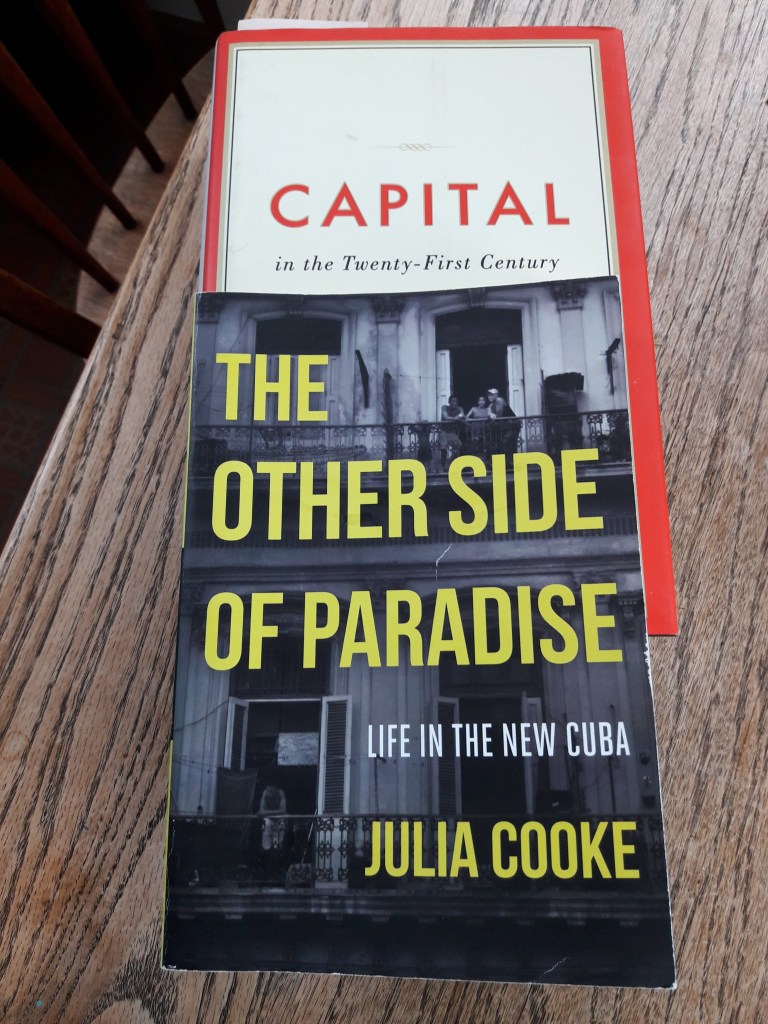
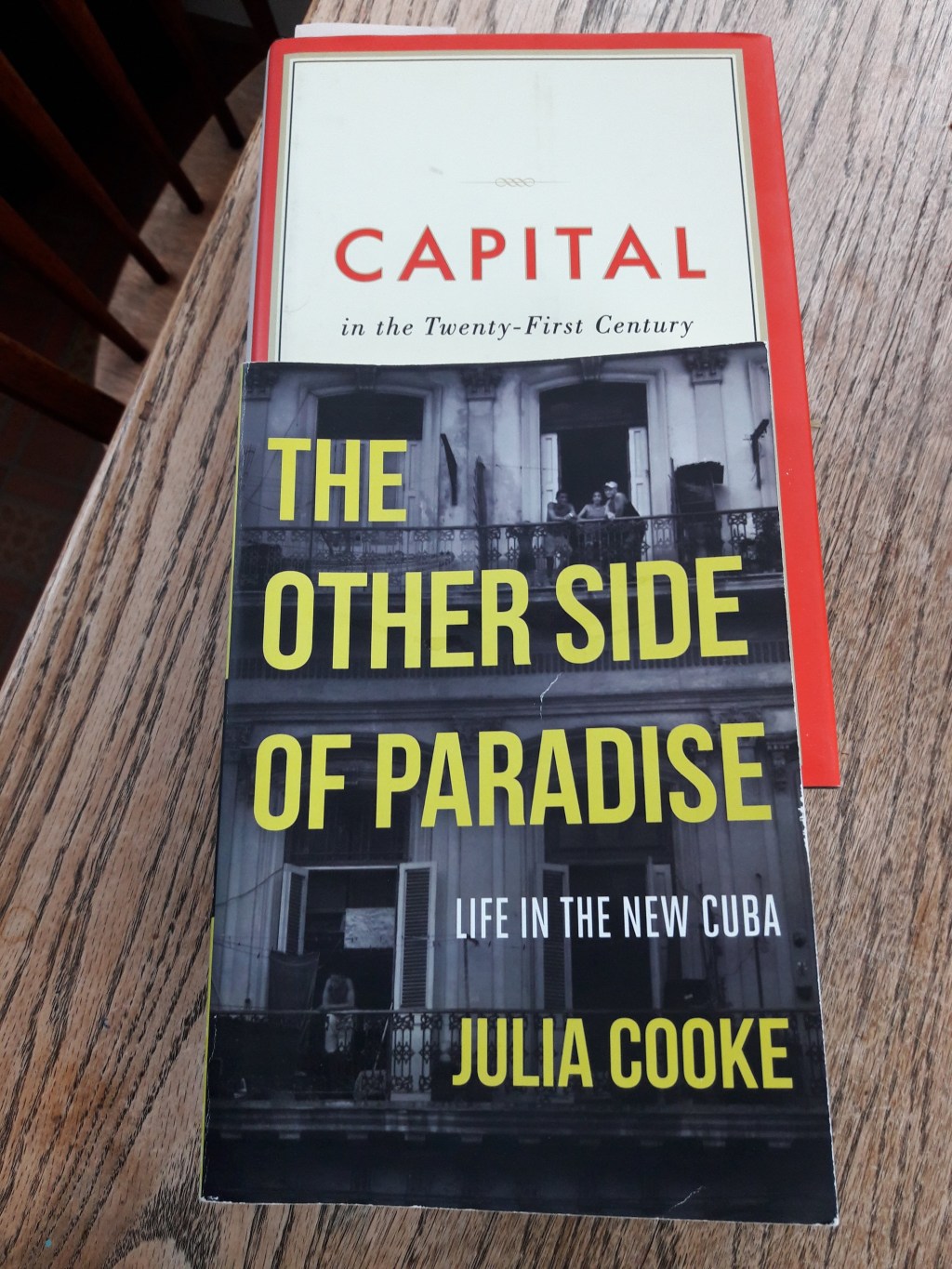
    A few weeks ago, rummaging through the neighborhood library box down around the corner, I pulled out “The Other Side of Paradise: Life in the New Cuba” (2014), by Julia Cooke. The book is a first person narrative of Cooke’s time living in Cuba on the local economy amid actual persons of substance, each with their own personal narrative, all complicated by the paranoia often created by the inability to completely know another person (let alone a state or a corporation), particularly when that person lives within the shadows created by a repressive rule.

    One of the ideas in Norman O. Brown’s “Love’s Body” is the state shaped like a body. Thus we get the head of state and the seat of government, the long arm of the law. And the body is huge, its shadow gigantic. And of course we get metaphor. And metaphor too becomes enmeshed in the narrative.

    The reductio ad absurdum of the gentrified neighborhood is an urban street lined with posh restaurants. And that’s it. No locksmith. No shoe repair. No bookstore or record shop. No hardware store. No haberdashery or hatter. No luthier, plumber, or deli. No butcher, no baker, no candlestick maker. And the sidewalk has been swept clean of buskers. Poverty is the inability to make something, for lack of skill and resources. Dire poverty, fearsome and terrible, is a state of constant need. The one surplus is time, a resource persons of wealth can never get enough of. Persons with time but nothing else can only wait. Poverty is the inability to start something up while waiting.

    Consumption of time is what corporations like Facebook peddle. It seems many persons have lost the ability to spend time doing nothing. Thomas Piketty argues that as capital continues to grow exponentially, income of persons with no capital falls (“Capital in the Twenty-First Century,” 2014). The poor will still have their labor power, but the 21st Century is already seeing needs for human labor diminish. What becomes of the poor person when he has not even his labor to sell? The block fills with Bartlebys. From page 531 of “Capital”:

    “With zero return on capital, man (or the worker) finally threw off his chains along with the yoke of accumulated wealth. The present reasserted itself its rights over the past. The inequality r>g was nothing but a bad memory, especially since communism vaunted its affection for growth and technological progress. Unfortunately for the people caught up in these totalitarian experiments, the problem was that private property and the market economy do not serve solely to ensure the domination of capital over those who have nothing to sell but their labor power. They also play a useful role in coordinating the actions of millions of individuals, and it is not so easy to do without them. The human disasters caused by Soviet-style centralized planning illustrate this quite clearly.”

    And one of those disasters, given Piketty’s view, has been Cuba, and the details, the description, of the specific and authentic person to person human disaster is one of the themes of Julia Cooke’s book. Of course there’s still the problem of narrative, the stories we create as we try to explain our predicament to others. Cooke lives among common persons coming of age in Cuba as Cuba is forced to change in its old age, personified by the aging and death of Fidel and the subsequent changes in leadership. The crash of the USSR, upon which Cuba had relied for economic aid, precipitates and rushes in local change. Still, the common person, the worker, seems occupied with two choices: wait for the opportunity to leave Cuba or stay and wait for more substantive change. Leaving is possible, though not easy, through both illegal and legal means. Both options are fraught with and rely upon bureaucratic and random chance happenings. And the motivation for each relies on a future narrative fictionalized in the present. Will I be glad I left or happy I stayed?

    Happiness is another theme. What is it? Do I mistake a general malaise and inertia resulting from dissatisfaction of wants and values with a permanent state of unhappiness? I seem happiest when hanging out with a few friends drenched in the heat of a Havana evening drinking bad rum out of improvised cups, listening to music, telling and listening to one another’s stories, discussing past, current, and the possibilities of future events, plans gone awry and the hopefulness of a new plan. But the extent of that telling and listening depends on who else is in the room, who else might be listening. And why they are listening. Paranoia lurks everywhere yet you’re never sure exactly from where it comes. Yet life in Cuba seems in some ways accessibly enjoyable: the weather, the sea and beach, one’s friends and family, the happy occasion of food. The lack of resources, without the boundless activities that seem to occupy persons elsewhere surrounded by sophisticated toys, pro sports, stadium rock, sponsored opera, and all the latest consumer stuff, the latest myphone, forces one into a different mode of life, but it doesn’t seem the case that this mode is unhappily different from the existential mode of unhappiness experienced when stuck in traffic in your 50 thousand dollar car in the latest but still inadequate infrastructure unable to find a good radio station in Los Angeles, Seattle, Miami, or Houston, illegally texting while driving to tell your kids you’ll be late, unable to get them to pick up their cell phones busy creating stories on Facebook and Instagram. And while you can afford not one but two 50 thousand dollar rigs, you’re pissed your health care options suck.

    Cooke’s book seems journalistic in intent, but is memoiristic in style and employs a creative, literary sentence structure and narrative form, including descriptive prose and conversational dialog. The book is also scholarly, researched, with a bibliography of sources and other references as backing and useful for further study. And the book is also something of a mystery. Cooke is in Cuba to experience and report on the changes in society and the effects on everyday citizens. To what extent are her subjects representative? For the most part, the focus is Havana, where she lives and keeps track of those she meets and lives among and with. But she’s interviewing them, clandestinely, with seemingly some degree of risk to everyone involved. Add to that the romantic Havana evening – but she’s quick to dispel romantic views of life within an oppressive, repressive, almost invisible regime. Practically no one she meets owns a rebuilt ’56 Chevy glistening down a Havana street. And she doesn’t hear, she reminds us several times, the Buena Vista Social Club playing Cuban jazz on every corner, if any corners. And the Cuban health care system is one of the best in the world.

    Even music, maybe especially music, and art, and literature, comes wrapped in narrative.

    “Adela hadn’t left Cuba. I had often wondered, in the year since I’d left Havana, if I really knew who Adela was…Once, drunk at a party with Lucia, a friend of hers had slurred to me that no one around me was who they said they were. He’d dated an American and the secret police had knocked on his door the day after she’d spent the night for the first time to interrogate him. I’d dismissed his words as boozy hyperbole, but the reality was, any one of my sources could have been someone spinning false stories of spliced families and sodden dreams” (207).

    There are universal truths regardless of where a narrative originates or how it changes from person to person. That business of “spinning false stories” could easily apply to conversations with anyone here in the States.

    The Other Side of Paradise: Life in the New Cuba, by Julia Cooke. Seal Press, A Member of the Perseus Books Group. 2014.

  • Whorlscope

    Whorlscope

    Whorled weary for this world’s woes
    worsened by winter’s whistling
    wicked wishes as worrying
    as this watch of one’s web life ebb,
    and if that’s not maudlin enough,
    sick of this car’s cough, too,
    its needy changes and fillings,
    its overheated tantrums, leaks,
    stalls, and traffic jams, the orange
    cones and potholes and all ways
    waged in fees and duns and one’s
    fief windblown like the shabby
    tatty cat hunkered for the night
    in the trash can gust opened.
    Some correlation perhaps:
    unhappiness and the automobile,
    for there is nothing mobile
    that is unwitting.

    Accidental and aleatoric lines
    alienate awareness precisely
    where we desire to go
    reading off the water
    listening listing cant
    in this sham breeze
    what would an alien see?
    Earthlings have wheels,
    their eyes light up at night,
    and there are these other
    creatures that wash them,
    feed them, and care for them.
    There appears to be a symbiotic
    relationship between the metal
    boxes and the asphalt lines.
    More study is needed to ascertain
    how the Earth benefits.

    Weary then of the keen privilege
    to sound dog-tired exhausted
    old hat hack comes to an end
    sidetrack dismantle yard
    all you need is love sang John
    I’m sick of love replied Dylan
    in Love Sick on Time Out
    of Mind full of walking
    and waiting.

    Turn off, tune out, drop in
    drop in sometime and say hi
    live within walls if you must
    but keep the doors open
    the windows loosely lighted.
    Get on now and move about
    nothing just motion one purpose
    one motion transforming
    breathing energy fizz of life.
    This is work, let us not
    automate our own motion.


  • An Impure Primer

    An Impure Primer

    A beastly catechism
    dog eared brown cat 
    drenched frozen
    green halo.

    I just kwikzilver
    looked.

    Mighty nice
    mice nook.

    Opening opinion pending
    please query
    queue quorum.

    Run straight
    toward universe
    vast wobbly.

    Exit your zero.

  • Feast of Epiphany

    Epiphany

    In the straw burrow farm mice.
    Get a little closer and you’ll see
    Nits in baby Jesus’s hair, lice,
    And a house snake in the olive tree.

    There’s beer on the breath of the three
    Sage men sitting under the olive tree,
    Playing games of cribbage,
    Ushering in a new age.

    The pieces are swaddled in wool.
    Mary’s breast-feeding the baby Jesus.
    Joseph takes out his tools
    To build a bed before the night freezes.

    Mary wipes Joseph’s brow,
    The wise men questioning how,
    Talking to Joseph about what he did,
    And what in the end might be in the crib.

    From an East Side Bus

    The lurching bus crowds forward,
    dogs away from the curb broken under
    the plum tree overarching the shelter.

    The bus thrashes on, wobbling
    in a fit of leaf blowing, phlegmatic coughing.
    The young, motley couple

    (we see them every day lately),
    their rusted stroller full
    of plastic blankets,

    empty bottles, and crushed cans,
    sleeps on the bench in the bus shelter
    covered with plums and damp purple leaves.

    “Epiphany” appeared in Rocinante, Spring 2009, Vol. 8

    The two poems for Epiphany were previously posted at the Toads on December 25, 2011.

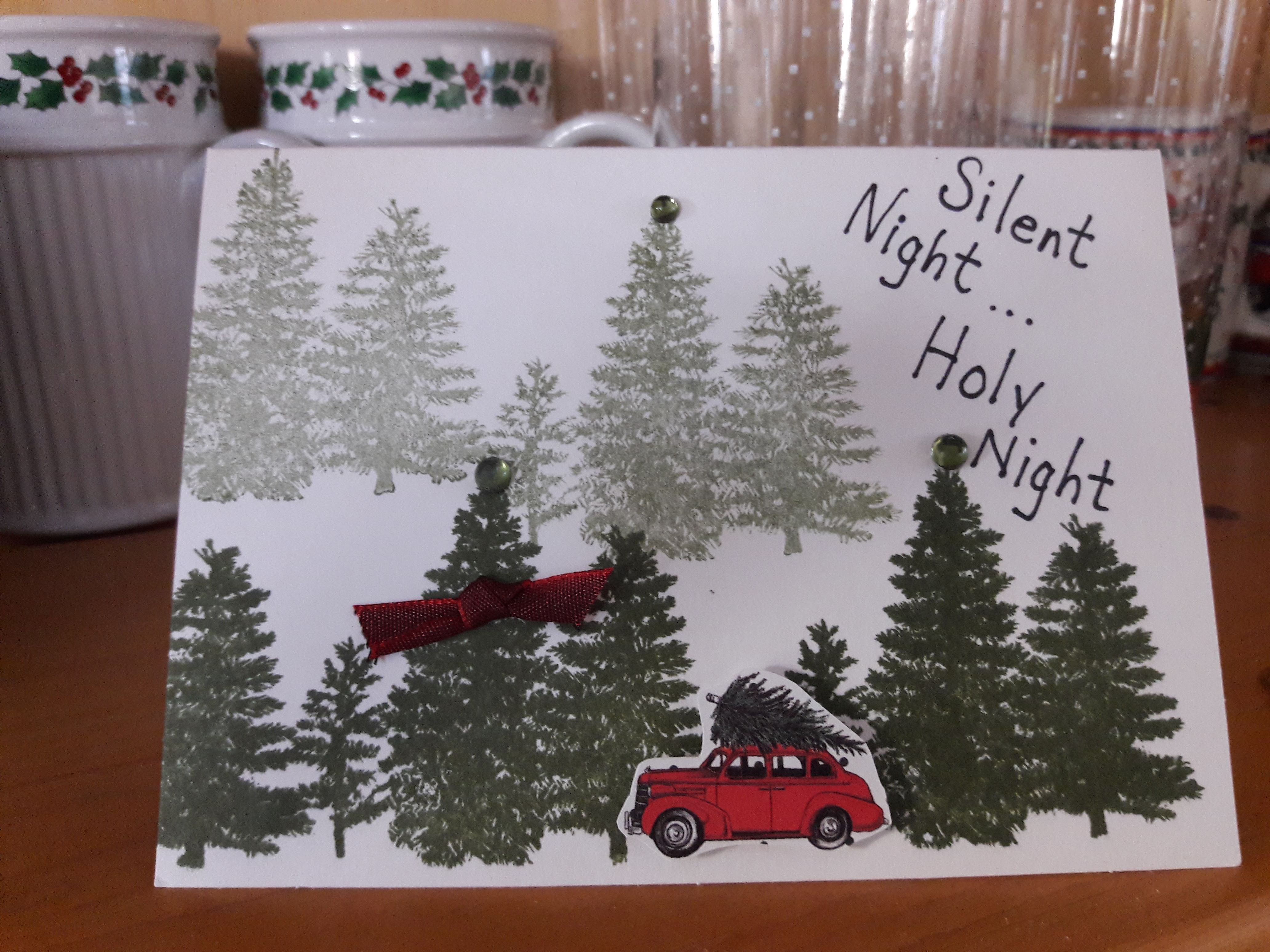
    2018 Christmas card by my sister Barbara.
  • Drizzle Rain

    Drizzle Rain

    A trip of plovers paused wading
    in the wet sand of an ebb
    tide each one after another
    across the sloping beach
    stopped and pecked and ran on.

    Up on 101 a swarm of workers
    on a wet sidewalk in winter
    huddled at the bus stop waiting
    and each one hopped aboard
    and nipped and gripped.

    They feed with their eyes
    and only pretend to be
    where they are,
    falsely brooding,
    but amusing, all the same. 

  • Epiphanic Cat

    A kin of kindly
    epiphany, unblinding, 
    not whiskey aflame
    in your raw throat,
    a mud dog’s bouche
    to your uncupped
    groin, but the silent
    soft brush of a cat
    rub against your leg
    to say hello
    and please
    pay attention
    to her.


  • This and That

    This and That had a quick chat.
    You go this way and I’ll go that,
    balanced on the brim of a hat.

    Said That, I which wish to set
    up this neither forget nor forgive
    any trespass near or far.

    As far as that goes, replied This,
    I’ll look forward to that there
    reminder, and with That,

    into the hat fell This,
    and next,
    out came That.

    Thus This fell forward nearby,
    while That fell far and away 
    back, and this chat was that.

  • The Awful Truth

    The Awful Truth

    How awful to be foul
    all of the time.
    One should wise up
    once in awhile.
    But uneasy, those
    strange gods above us,
    all who stir
    to one thing:
    “Three little people
    don’t amount
    to a hill of beans
    in this crazy world.” *

    * Rick to Ilsa
    at the end
    of Casablanca.

  • A Cutting Edge Paradox

    A Cutting Edge Paradox

    Mr. Groen maintained a modest but pleasant yard.
    Saturdays in season he cut the grass with a push
    mower, pruned roses, fertilized, spread compost.
    Martha Groen watered the beds full of crimson
    geraniums, purple peonies, tulips, daisies, and
    such that fancied her seasonal gardening moods.
    But back to back dry nasty winters followed by
    suns so hot the weatherman warned of drought,
    and the city curtailed yard watering with fines.
    Weeds bolted like bad thoughts coming from
    nowhere but filling the mind with oil and gas.
    Mites appeared, worms, mildews, the antithesis
    of a long forgotten paradisaical anthesis.
    They still sat out, but they let the yard go.