Category: Writing

  • Talk, 1969 (republished 2015)

    “Talk” is another book acquired some time ago but left initially unread, sitting in a stack on a table, even reshuffled, as if for a game of solitaire, or as if it needed to thaw or season before consuming, opened for a few bites but put back down for something else, but when picked up again finally found its taste delightful, finished, and thoroughly enjoyed. And nothing will do but I must talk about it. Did I pick “Talk” out of the free library book box down on the corner? I don’t recall, and it doesn’t really matter except that I’ve started these short short reviews here at The Toads I’m tagging “Lit Crit Shorts,” though they are not proper reviews, as was discussed off-line after my posting of an LCS of “The Ant.” By proper is meant the reviewer talks mainly about the book in hand, gives it a few stars, or fewer, to indicate degree to which it was liked or is being recommended: ***** or *** or *. Of course you can like something without it at all being good or good for you. In any case, I’m not interested in writing that kind of review. But neither are these so-called Lit Crit Shorts an original form. The New Yorker in a weekly feature publishes four “briefly noted” book reviews, single paragraphs, an art form in its own right. Clear and concise sentences too, unlike the ones you’ll likely stumble over here at The Toads, like miscreant directions in an unfamiliar part of town. Not that I can’t write a perfectly navigable sentence or a proper book review, one that will get a reader home safely. And there are templates for that sort of thing. Plates that match. And how do you cast something without a mold? Still, it’s the reflective, personal (as in personal essay) response to a reading I’m interested in, not a discussion of whether or not the thing holds true to a tradition or has lit out for some territory previously uncharted, though of course that’s important too and there’s no reason it can’t be included, in any form desired. Authors of course, their publishers and company, are interested in reviews that will cause their books to fly off shelves. Click here to order now! But if someone is not likely to read your book, why would they read a review of your book? And if they are going to read your book, why would they want to read a review of your book? Likewise, I won’t watch movie trailers, unless I’m not going to see the movie. And I’m not just talking about spoiler alert here. I love reading TNY “Briefly Noted” reviews, yet in some 50 years of reading The New Yorker, I’m not sure I’ve ever ran out and purchased a book as a result of seeing it “Briefly Noted.” I’m probably an exception here, but I’m not sure that readers of book reviews are the same readers as those of the books. I read book reviews for the book review, not for the book. And longer reviews demand, or should require, a degree of research the common writer is not likely qualified to conduct. And, yes, if there is such a thing as a common reader, why should there not also be someone called a common writer? We don’t all need or want to be specialists. The generalist can bring to a study a perspective the specialist is too close to envision. But the ease with which we are all able to opine these days calls for double checking of a speaker’s ethos, logos, and pathos – their means of persuasion, an ability to read into a speaker’s presuppositions, assumptions, and biases. And it does indeed appear, alas, the ability to check independently for reliability, credibility, authority – in short, to check sources – is startlingly uncommon. We don’t need to crave facts, or only facts, there’s no fun in just that; it’s good to able to deconstruct a statement to its constituent parts, to read the book in a bumper sticker. That is what mechanics do, and what readers ought to aspire to do. A prerequisite to talking about books is the ability to listen to a book, and it’s hard to talk and listen at the same time. You can follow that link, btw, to a New Yorker Page Turner book review from July 1, 2015, where the reviewer, Molly Fischer, finds the novel “Talk” “weirdly arduous.” It reminded her of Sartre’s play “No Exit,” where hell is described as “other people,” of which there are three, same as Rosenkrantz’s “Talk,” though Sartre included a valet. I also thought of “No Exit” while I was reading “Talk,” but I didn’t find reading “Talk” any more arduous than watching the TV sitcom “Friends,” which Stephen Koch suggests in his introduction to the 2015 copy might be a successor to “Talk.” I did think of tweets and today’s social media and the like, which Molly also tangents into, but only because of their notable absence from “Talk.” I liked “Talk” because it was written around and takes place in 1965, on the beach, with little to distract the characters but the distractions of their own making. They indeed come of age in an existential time and place, with the privilege of being able to make their own choices, and make them they do, with one another’s help through the knack (dare I say art) of talking and listening. And “Talk” is interesting for not only what is said but what the characters don’t talk about, or talk very little about. They no doubt would have very few followers on a social media platform like today’s Twitter. Their talk isn’t about nothing, in spite of its being existentially grounded. “Talk” reminded me also of Beckett’s “Waiting for Godot.” Waiting on the beach, “Talk” might have been subtitled. “Talk” I recommend especially for readers who today might be around the age of 30, as well as for readers who may have been somewhere in their formative years in the mid 1960’s. “Talk” is a modern classic.

    “Talk,” Linda Rosenkrantz, 1969; republished NYRB, 2015 *****
  • Dear Reader,

    Won’t you please tell me your rules,
    style flaws that send you over the edge,
    your conjugations, constructions, con-
    junctions, your clauses and marks
    memorized, when to be and not to be,
    double negatives and things dangling
    in white space and other wedded dark
    matter; for I will find immense
    pleasure in breaking & trashing
    the etiquette of your ways & days.

    Thanks,
    Nomere Ana R. Chist

  • Somewhere Else

    It was last April, in a piece titled “What is Essential,” we again mentioned John Cage, then in the context of the pandemic quarantine discussion:

    In John Cage’s “Lecture on Nothing,” we find the following comment: “It is not irritating to be where one is. It is only irritating to think one would like to be somewhere else.”

    “What is Essential,” April 24, 2020

    Of course, some places are more irritating than others, some conditions worse, but it seems common to living in any means people like to get away, out of town, go up to the cabin, drive out to the beach, go camping, sail the seven seas, see the world, go somewhere, anywhere, but somewhere else.

    Not talking here about those forced to leave home, from war or famine or wildfire or flood, abuse or political upheaval. Catastrophes are not “irritations.” A catastrophe is sudden and overturning; an irritation is slow and creeping, an itch one can’t quite reach. An earworm. One can live with any number of irritations, but one can not go on as before during or after a catastrophe. “Would like” suggests preference, unrelated to need, not desperate, but a privileged choice.

    “Where should we spend the weekend, in town or in the country?”
    “I don’t know. I’m bored with opera.”

    The COVID19 virus affects different people in different ways, depending on predicament, but literally everyone on the planet Earth has been affected, to one extent or another, slightly or severely. Wouldn’t it be nice to get away? Maybe that’s the attraction of Perseverance, of Mars, of space travel.

    “Earth is irritating.”
    “Let’s go to Mars.”
    “Good idea.”
    “I’ll book a flight today.”

    Can a simple irritation, almost unnoticeable until all goes quiet, grow into a catastrophe? It seems unlikely. Irritations come from within; catastrophes come with the wind. There’s talk of getting “back to normal.” That too seems unlikely. In fact, in any case, wasn’t there something particularly irritating with what was considered normal?

  • Universe as a Looper

    Having recently acquired a Roland Boss RC-1 Loop Station Looper Pedal, and after several faulty attempts to quickly master the electronic musical gadget, and with the Mars Rover Perseverance and related NASA coverage in the news, and having just come off a few posts with the theme of home, I’ve begun thinking of the universe as a looper.

    To begin in the middle of this current loop of thought – I read with interest an opinion piece from The Atlantic, “Mars is a Hellhole: Colonizing the red planet is a ridiculous way to help humanity” (Shannon Stirone, 26 Feb 2021). It’s a guns versus butter model argument. Says Stirone, taking the Earthbound wealthy would be Mars colonizer Elon Musk to task: “Musk has used the medium of dreaming and exploration to wrap up a package of entitlement, greed, and ego. He has no longing for scientific discovery, no desire to understand what makes Earth so different from Mars, how we all fit together and relate. Musk is no explorer; he is a flag planter.”

    A counter argument might suggest that Musk’s enterprise is not quite the United Fruit Company, nor is he spending money on Mars, but here at homebase Earth, creating at least some jobs, presumably, and advancing knowledge in the general and random way that can lead to discoveries that tangentially do help Earth, however speculative or foolhardy they may seem at the outset. At the same time, at least part of the wealth created goes toward philanthropic efforts.

    In any case, surely the universe will continue its looping design with or without Musk, with or without Earth, for that matter.

    The looper pedal is used to lay down a series of recorded notes or chords (or electronic noises or sounds) that then play back while being added to, overdubbed, with additional series of notes or chords which in turn loop back around – in the RC-1, for up to 12 minutes before relooping. The key is the overdubbing and the circular motion. There is a beginning and an end to the loop, but no end, theoretically, to the looping phase, each one of which has a bearing on all the rest, and no end, again theoretically, to the overdubbing, each dub contributing to a new whole.

    I’m now in the process of creating a musical composition using the looper. It will be a fugue that begins with a big bang and expands with overdubbing and recapitulations for the entire 12 minutes available to approximate a musical cosmological model of the universe. I’ll use 12 loops within the loop, ending by then recording the finished now finite whole loop using the Garage Band app on my laptop, and erasing the original from the looper station to free it up for more creations.

    I do wonder how this fugue I’ve planned will help humanity, or will aid in space exploration or the colonization of Mars. It seems certain it won’t. But the universe will not be able to ignore it. My fugue will be part of the big looper and its seemingly even greater indifference.

  • Inventories

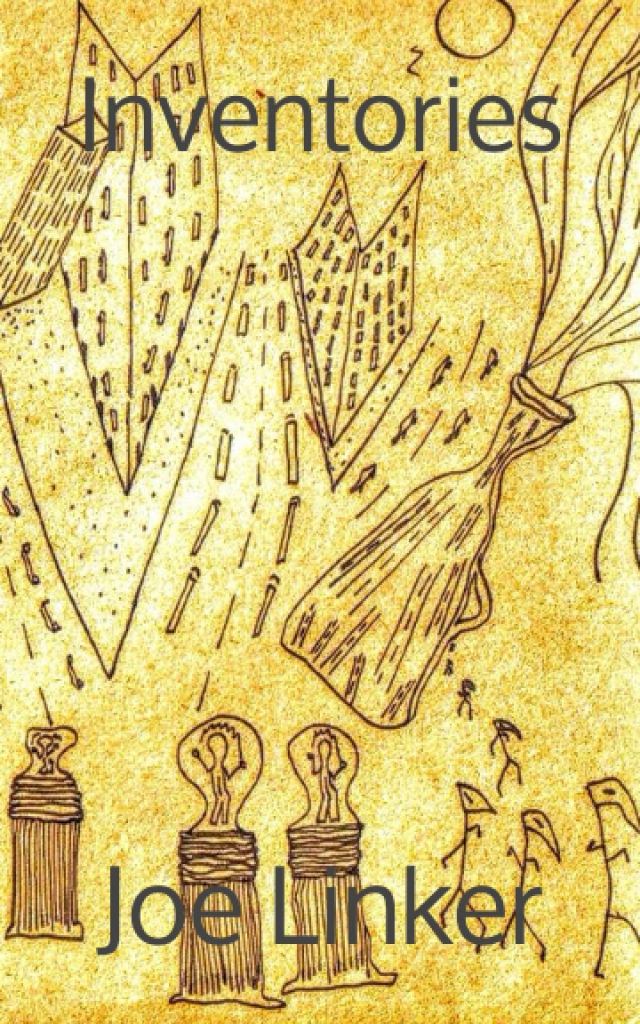
    Part human, part deity, these working gods are restless. What happens when one wants out? Episodes of a god on the run, “Inventories” is now available in paperback book format. “Inventories” first appeared here, at The Coming of the Toads, near daily installments over several months in 2020, a quarantine exercise. The text was revised for this book publication first edition.

    ASIN : B08VM82YRK
    Publisher : Independently published (February 2, 2021)
    Language : English
    Paperback : 190 pages
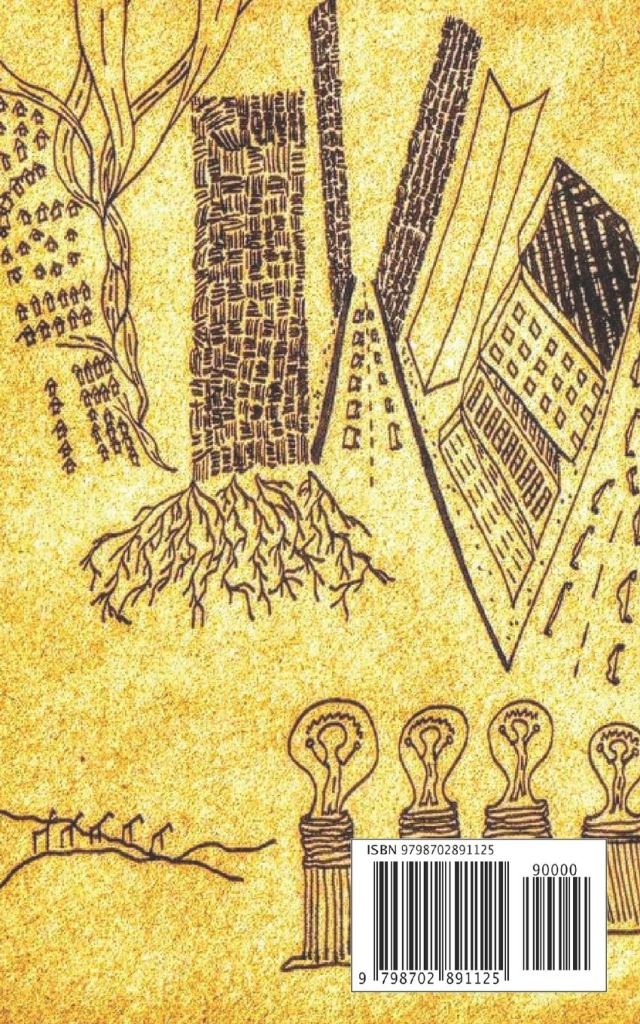
    ISBN-13 : 979-8702891125
    Item Weight : 9.4 ounces
    Dimensions : 5 x 0.48 x 8 inches

  • Furies

    The furies fly in from the desert, weave like wasps from their cool eve nests, disturbed and attracted by bile, envy, and insolence. One lands in the ear canal: “Erinyes, erinyes,” echoes from one side of the head to the other. She stirs the wax and lays her eggs. It’s a cuckoo wasp, emerald and gold. She’s got hold of your thoughts her young will eat away, furious and urbane.

  • Where to Write

    We often wax wasted writing what to write, how to write, why write at all. A refreshing sidebar might discuss where to write. We could compose while walking, a kind of no place to write, or allplace, which Wallace Stevens did, composing lines, poems, in his head as he walked from his rather palatial home through local paths through the park to his desk at the Hartford in New Haven where he transfigured from poet Wallace Stevens to Wally, Claims Manager. He wouldn’t forget his words from his morning walk commute. Hemingway said he could write anywhere, though maybe we are not as good writing in some places as others. In Cuba, Papa wrote standing up at a typewriter placed atop a casement or podium. During the war, Jacques Prévert wrote at sidewalk cafe tables in Paris, the leaves falling, one imagines, weather also being a kind of place, or, as Hemingway points out, place being a kind of weather. In any case, we sit down now to write this post in new writing digs. We have three choices of where to write in our current quarantined predicament, apart from the ubiquitous pocket notebook which with pen goes everywhere, for unlike Wally, we are poor at remembering our words, and must write them down or they disappear like birds out of the corner of the eye: the basement, the main floor, the upstairs. Since we write using an electric, we need to be near an outlet, and since the basement in winter is often damp, our choices where to plug-in quickly diminish to two. The living room is comfortable, with couch, no television, much light from windows, with a limited view of the sidewalk and street through the twisted branches of a giant rhododendron Cynthia. The kitchen is nearby, coffee refills within easy reach, and Susan will not have come down yet, and we sometimes gas up imagining what she might be dreaming, fuel for priming the writing carburetor. But we’ve moved to the upstairs back bedroom, now sitting at an old oak desk, three drawers on the right, a wide thin drawer across the sitting space, a pull out board on which in the old days someone might have set a manual typewriter. This desk is quite heavy, solid panelled sides and front, such that it must have been intended to sit in an open space, not against a wall, and it’s difficult to move around. It creaks complaints in various seams when jostled, and probably won’t withstand any more moves down the stairs. We’ve had it, at one time and another, in the basement and in different rooms on the main floor and upstairs. It presently sits at an angle off center toward the middle of the room, affording a view out a wide window facing east-northeast, over roofs and growing trees in the foreground, buildings nestled in trees and streets, lit at night, and, farther out, the opening of the Gorge, the Washington hills tapering down from the north, the Oregon Cascades steeping sharply down from the south. In the distant sky, airplanes can be seen coming in for landings at PDX. Down in the yards, closer in, birds are seen fittering, frittering, flittering, fluttering about: crows in the tops of the firs, flickers and jays lower down, hummingbirds, all sorts of bushtits and the like, flocks of them. The occasional racoon or possum at dawn or dusk, coming or going, though one must get up from the desk and go to the window to see those. This view is a distraction. This is not a good place to write. Back to the living room. One can’t get any writing done upstairs with a such a view that all one wants to do is to go out and fitter with the birds, not sit in and write.

  • Nothing but the Oldies

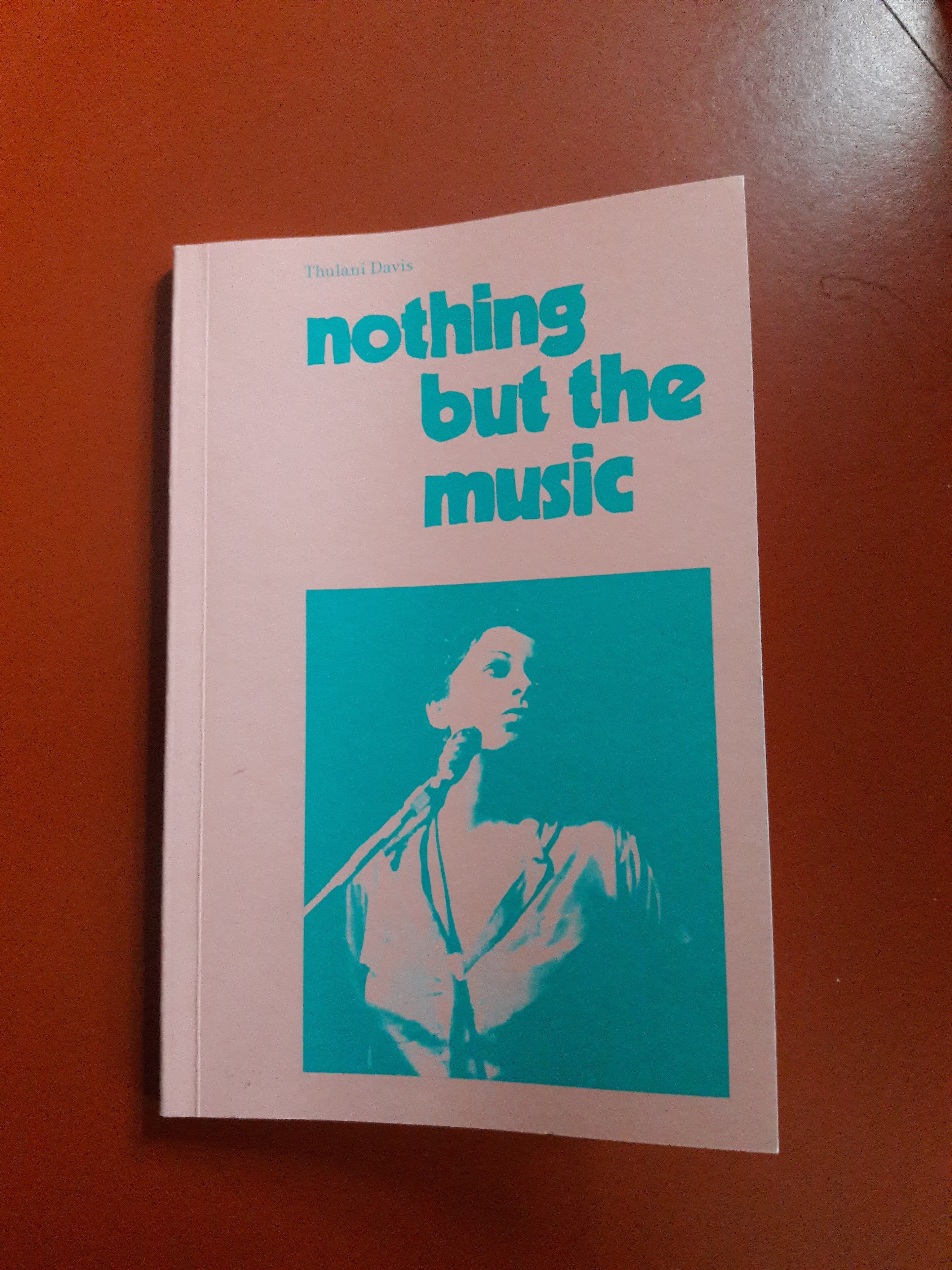
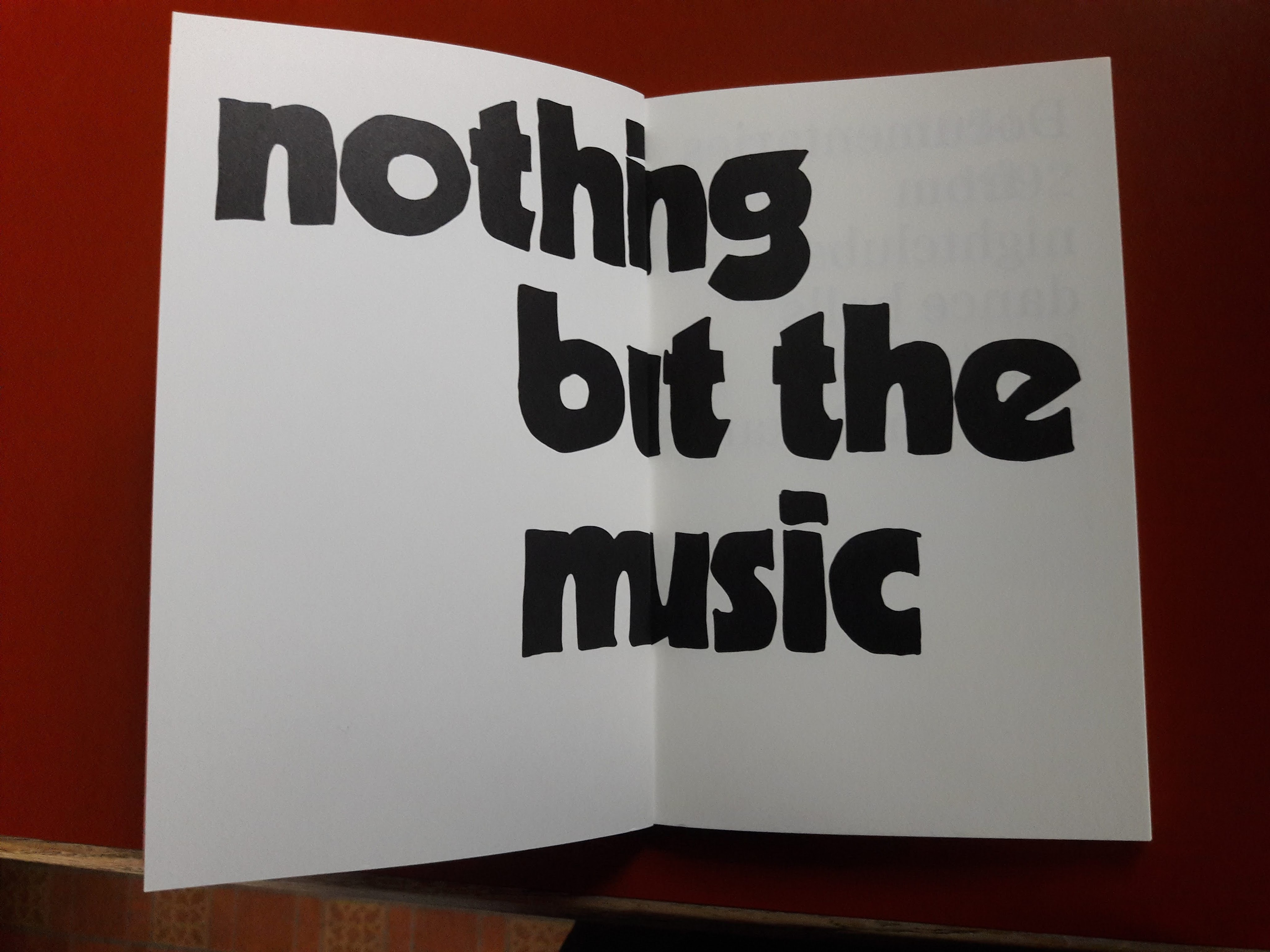
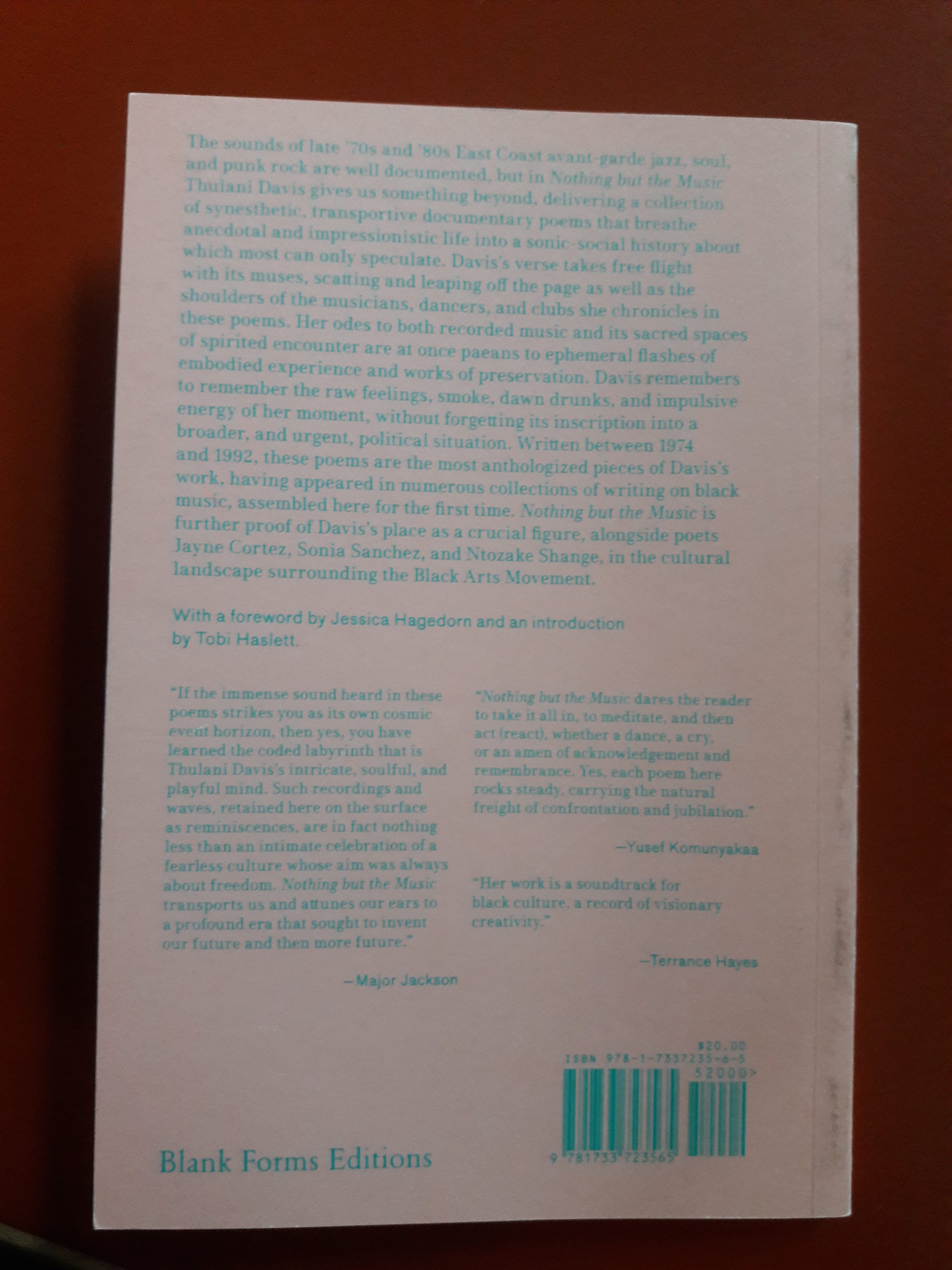
    “nothing but the music” (2020, Blank Forms Editions, Brooklyn) is a kind of compilation, a box set, of pieces composed by Thulani Davis over the years 1974 to 1992, lines written while listening to live music or reflecting on the experience of an avant garde art form as it’s happening, and before it might be neutered by mainstream commercialization too influenced by those with control of the means of production. Most of the Davis pieces appeared in poetic form in alternative press issues over the years and some were set to music. The scores are informed, and may be read with reference to, performance and theatre, jazz and punk, R&B, and mixed forms or art form synesthesia, the courage and risks found in the places music is born, but the rewards too of achievement, however much that success may appear to some as failure. The music’s codification (its reliability, approvals, its aesthetic argument) might be seen in the cost for a ticket to get in: $20 – for a 63 page paperback, made possible in part by support from the Robert Rauschenberg Foundation and the Andy Warhol Foundation for the Visual Arts.

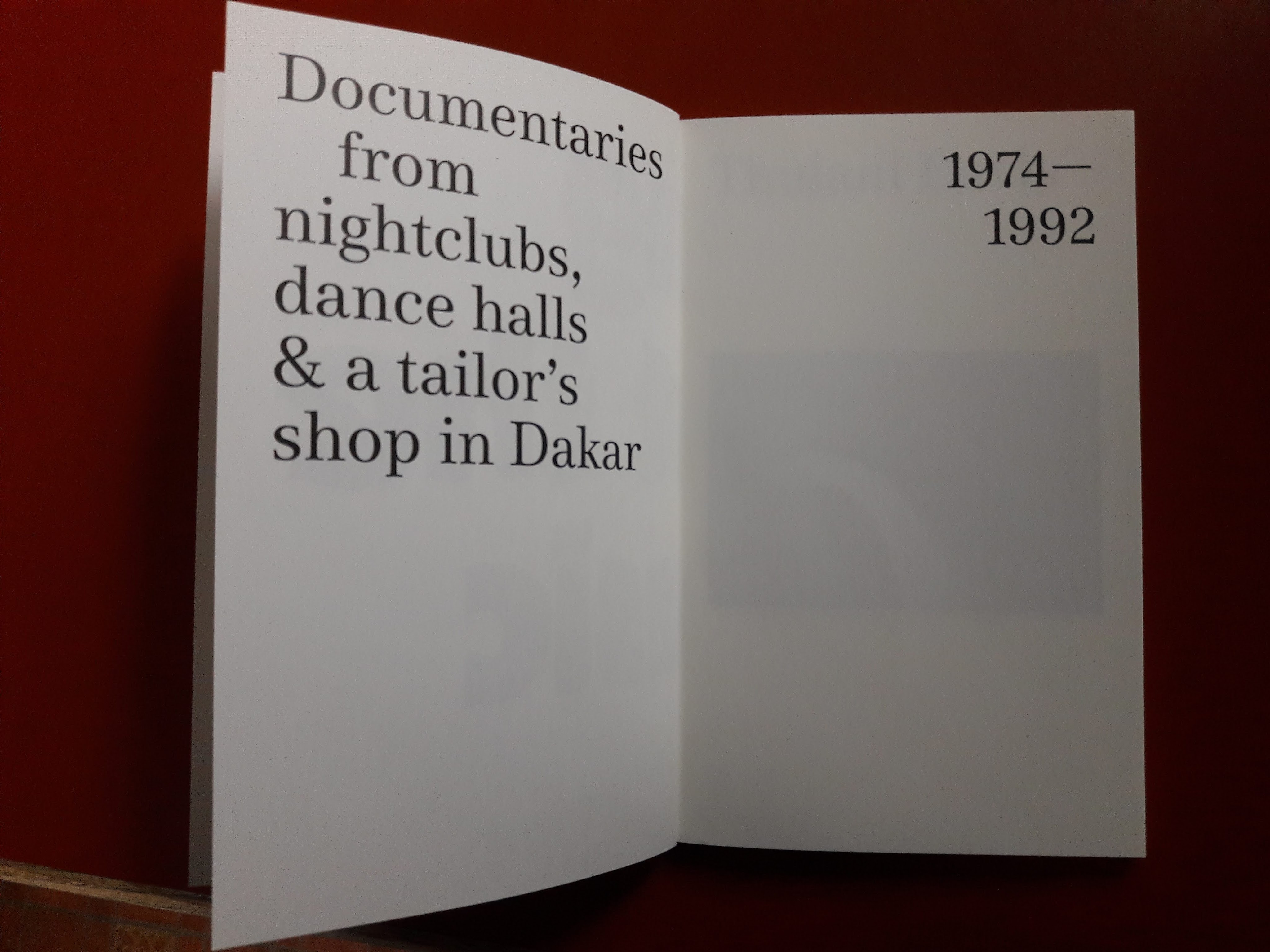
    Is the music now artifact? The oral argument, written or recorded, becomes a document. What the music feels like, in words, what it stands for, and stands against. The importance of the work, these pieces, these entries, is found in the subtitle: “Documentaries from nightclubs, dance halls & a tailor’s shop in Dakar.” Or, in the words of the book’s epigraph:

    “to the artists
    & dharma guides
    who coax us
    minute by minute
    from retold pasts
    & possible futures
    ever
    to the present
    moment”

    Each piece is sourced at its end with a date and location and often the names of the musicians. For example: “1982, CBGB, New York”; “April 27, 1977, The Rogue & Jar, Washington, DC. The players: David Murray, Hamiet Bluiett, Charles “Bobo” Shaw, Fred Hopkins. The poet: Ntozake Shange”; “April 15, 1975. Five Spot, New York. The Cecil Taylor Unit: Cecil Taylor, Jimmy Lyons, Andrew Cyrille.” That last piece just cited, “C. T. At The Five Spot,” begins:

    “this is not about romance & dream
    it’s about a terrible command performance of the facts
    of time & space & air”

    …and moves on:

    “ripple stamp & beat/ripple peddlin’
    stomps taps of feet slick poundin’ out
    tonal distinctions between/keys & sticks”

    …and ends:

    “I have heard this music
    ever since I can remember/I have heard this music”

    (22-23)

    If music is a cultural argument, an aesthetic fight, it must come complete with a thesis statement about which some will disagree, backed with claims with examples, illustrations, supported with evidence and sources. It’s not enough to dress the part and go punk for an evening; one must want to be hardcore punk, and harder still. The wall does not give way so easily. It’s not enough to listen to the radio or buy the recording; one must enter the mosh pit. Who can survive it?

    “the punks jumped on the stage
    and dove into their friends
    let their chains beat their thighs
    the crowd thought death
    in two-minute intervals
    heavy metal duos and creaming murder

    the band of twelve year-old rockers
    wished they could do it
    come like that on the refuse
    of somebody else’s youth”

    from “Bad Brains: A Band”: 1982, CBGB, New York

    We find, in “nothing but the music,” in addition to the music itself, criticism, analysis, reaction, conclusions, as well as questions for further research. What happens when the avant garde becomes tradition?

    “Not just history not just Trane
    No not what we heard about
    What we heard
    Just what we hear
    It always being night
    We’ll still be there
    Dancing the dissonant logic
    The loneness
    Just playing music
    He speaking to himself
    Really paying us no rabbitass mind
    Digging what himself was doing
    T-monius and ‘al-reet’”

    from “T-Monius”: February 17, 1982, 122nd Street, New York (50-51).

    In a life of disenfranchisement, art may be the only place to find certain freedoms: of expression and voice, enjoyment and creativity, play and work coming together in a spirit of desire and interests, not of servitude or boredom, and where one may object to a status quo in a statement with examples of new possibilities. And beauty, where beauty may come to rest, looking tired and worn out, where she can mix with the crowd and feel at home and dig the music. And truth hangs out in the rhythm section. Some hep young cat might ask, “What was it like?” And the answer is important, how we answer, what we say, what we hold back. We are old now, and passing, older than we ever imagined. You can’t breakdance at 70 like you could at 17, Cornel West said in his ten minute section of Astra Taylor’s Examined Life: “Time is real.” Yes, and you can find it in the music:

    “giving a spring to the dance
    of who we are/unexpected beauty
    beauty we have known ourselves to be
    like reaching old age & infancy in a breath
    of this is the music
    knowing we can’t be us
    & be afraid of who we are”

    X-75-Vol. 1, Henry Threadgill “Side B (Air Song/Fe Fi Fo Fum)” (31-32).

  • “The Morning” & “Just Write Anything!”

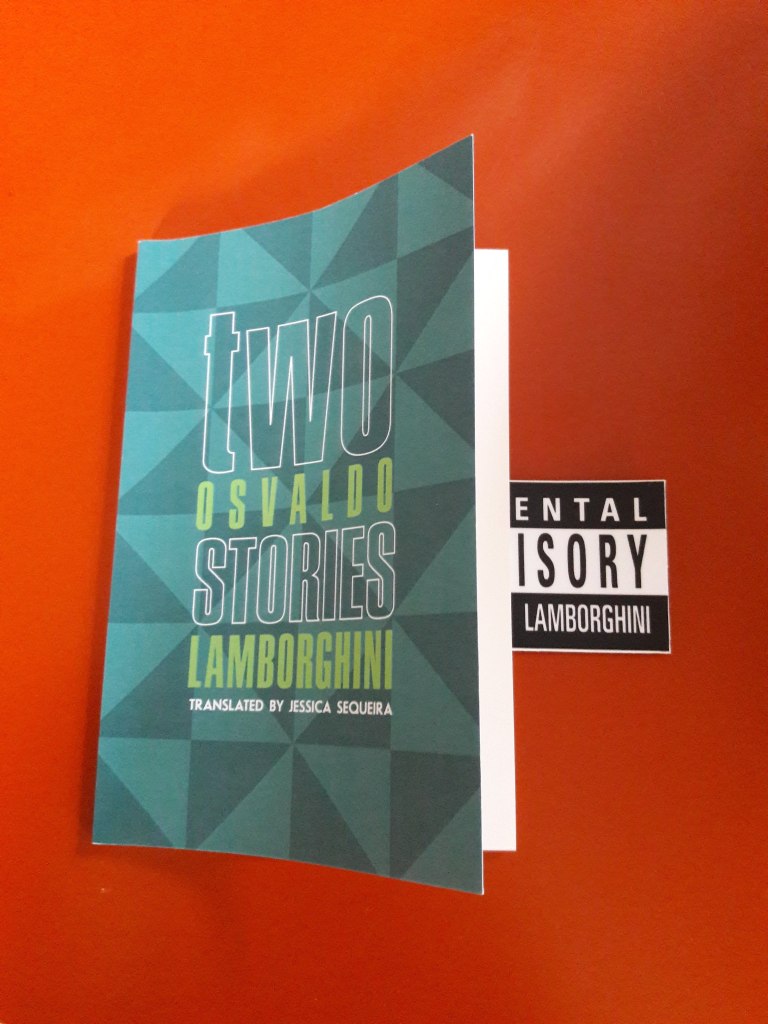
    Two Stories by Osvaldo Lamborghini, translated by Jessica Sequeria, just out from Sublunary Editions (Seattle), measures a mere 80 pages (4 and ½” by 7” by ¼”) and contains the pieces “The Morning” and “Just Write Anything!” and also an introduction (by Cesar Aira, translated by Adrian Nathan West), an acknowledgements page, a 4 page translator’s note, and 62 endnotes (in a font size so small this reader’s used eyes required over-the-counter reading glasses of +3.50 strength), almost as long as either story – indeed, a third story – as well as a Parental Advisory warning label (suitable for bookmark use), modified to read:

    P A R E N T A L
    A D V I S O R Y
    OSVALDO LAMBORGHINI

    One is tempted to form a review as response in a supposed style of the stories:

    In the beginning was the word. And the ice dam(n) broke, the word escaped, and all hell broke loose, as in a Blow-up. A devil’s drool (“Las Babas del Diablo,” Cortazar). It was all done on a typewriter. That tin bell kept us awake. Its tintinnabulations. And he had to send his only son, or daughter, as the case may arise, to supply some endnotes, but he didn’t explain to what end. And the notes musical, in a sense, pleasant. One confessed to eating the plums. Bless me Father, for I have eaten the plums. They were purple. And the season Lent. We had given up meaning for the season, without reason. And the church filled with words, every pew stuffed end to end. And every word related. In each word all the genetic material of the language, of all the languages, of the uttered universe. Prokaryotic flagellum. To allow word movement. The words stood, knelt, sat, stood, and filed out, one by one, pew after pew, line after line. Some disappeared. Through the blank pages of the cosmos, along the gaucho trails along the green rivers in the gorged valleys below the ghastly ghostly mountains, seeping through the pampas and the full drainage basins, out to sea. The sea, the sea! Wordomics. This is my body, a comics: “To ourselves … new paganism … omphalos” (Joyce, Ulysses).

    Of the two stories, “The Morning” and “Just Write Anything!,” the latter is perhaps the more accessible, comprehendible if not understandable, than the former, but the first, “The Morning,” one might find more enjoyable. The two stories might have been written for two different audiences (although Aira’s introduction suggests Lamborghini didn’t write to any particular audience), but neither seems within the purview of the common reader. But what is within the purview of the common reader? Slogans? Well, slogans are comprehendible, but rarely understood. They become like magic words, spells. In the US today, MAGA might serve as an example; an argument of proposal in no need of backing, it is not an argument at all, but an order, a command. Authoritarian. Enter, sex, and why we need a parental advisory. Sex, like politics, manipulative, special interest, you scratch my back I’ll scratch yours. For the working class, sex is one thing, for the middle class, something else. The middle class wants relief from guilt, a guilt the working class does not feel. The middle class wants to enjoy, to experience pleasure, guilty it has benefits others don’t, but not enough that it can’t also enjoy envy of those who have more. Thus the middle class craves perfumes and brands, must have fantasy and escape, ritual that includes punishments and rewards. The working class has not time nor appetite for values which can’t readily be seen, measured, felt. As for Peronism and whether or not readers need a background in Argentine history to appreciate Lamborghini, Peronism might not be substantially different from any other ism around the world seeking to exploit one class by numbing another class for the enrichment of a third class, except that Peron started out wanting to make all of the people happy all of the time. But of course there are always those who don’t want to be happy, or don’t care to be made happy. Politics is sex without love.

    In other words, for the working class, the word innuendo means exactly what it sounds like, while for the middle class, it can only suggest what cannot in what is sometimes called polite society (on the endangered species list) be directly talked about, and must be submersed in ambiguity, doubt, and mistrust. Enter Peron, that is to say, to wit, an imputation that what is valued most in each class can somehow be conjoined, but the ballroom can’t hold everyone.

    Click here, on the belly button, where you were tied to your mother, treading water in the salt marsh. You were still nullifidian then. All gills and fins. Your mother’s voice coming muffled through the cloudy water. And then your cry, and then your sucking, and then your sleep, and then the tin bell, and the rhythm rolling. The next time you awake, you are swaddled in the bottom of a dory, your father at the oars, your mother tending a fishing line, all against a muddy current in coastal waters.

    Lamborghini’s writing is probably not egalitarian, not as evidenced by these two stories or the three poems appearing in Firmament No. 1 (Sublunary Editions, Winter 2021), not that it needs to be, yet it contains all the characteristics readers generally value. Humor surrounded by horror. The sweets and sours and bitters and salts of life. It is a writing of associative addition, one image conjuring up or giving way to another, the narrative like a bus ride, the bus stopping at the end of every sentence to let someone off and to take on another rider. Though these riders are not necessarily characters – they may be ideas, or props. Repetition is therefore valued, and memory encouraged. So that at the end of “The Morning,” if asked what it is about, we can say it is about a character savaged. But the common reader wants her back scratched, not whipped.

    The form (forms) of these two short stories appears very different in each, the one on the open sea, the other back and forth where the rivers spread in the tidal marsh. Jessica Sequeira’s “endnotes” are indispensable, and actually a pleasure. For one thing, it’s comforting as a reader to know you’re in the same boat as other readers, translators, critics. That is to say, the difficulty is not yours alone, not yours at all. You are now able to read. And while the endnotes clarify, elucidate, inform, they also project, surmise, guess.

    Sublunary Editions is an independent press out of Seattle. You can find a copy of Two Stories by Osvaldo Lamborghini here.

  • Essentials and their Equivalents

    The essentials get hoarded by the rich, the fluff, and the oofy, the pantry stuffed with truffles and beans and such, starch and flour, coffees and chocolates, the hall closet full with bamboo bathroom tissue, the library stacked with first edition hardbacks, clean copies dust covers intact, and a few handmade porcelain jars and a cast bronze abstract sculpture catching some sunlight through weeping glass, the boudoir walls dressed with formal wear and evening gowns made from wet fly wings, the garden roamed with roses, wisteria, and a cherry tree, and three peacocks playing near a pond. Others make do with equivalents, pink flamingos made from plastic, for example. The necessities of life change slowly, and vary from place to place, person to person, time to time. What profits youths to join jobs where like their mothers and fathers would have made happier children? Predicament is everything. And connotations take us away. White, blue, or pink collar? What’s behind door number four? The privileged get on the job training. Someone cleans the privy, the house of office, wash the washroom the washer person. The human path is littered with exuviae, as one’s growth outstrips one’s capacity for change, “a nine-hundreds-year-old name” not a gift but a curse. When any name or experience will suffice, a number, a meal, a drink, or its equivalent.