Category: Writing

  • On the Wings of the Dove

    Caleb Crain has posted an interesting Leaflet devoted to questions of consciousness and an afterlife. If there is an afterlife, why (Caleb tells us Henry James in particular wondered) has no human soul ever come back to haunt or cheer its former digs? James might have been conflating consciousness with brain. (Calling consciousness “mind,” Buckminster Fuller radically distinguished between the two.) Caleb wonders about the infinite possibilities inherent in a consciousness that thinks about itself.

    Reading Caleb’s post, and thinking about his aloof Henry, I began to wonder for myself. If consciousness is infinite (as James and Caleb both seem to suggest possible), it must be round, with no beginning and no end, and not linear, so we might also wonder not only about a possible afterlife, but about a prior life, and why has no one ever visited there, or have any memory of it. If we fear or wonder about death and an afterlife, we might recall that we’ve experienced it before, for where were we before we were born, if not dead, which we seem to have survived, for here we are.

    An electrician I once had over to the house to work on some wiring told me, apparently working under some severe predispositions and assumptions that I was the Christian of his definitions, that he didn’t believe in anything he couldn’t see or measure. Thus he brought his rudimentary science into my darkened basement.

    William Blake held “the following Contraries to be True:

    – Man has no Body distinct from his Soul, for that call’d Body is a portion of Soul discern’d by the five Senses, the chief inlets of Soul in this age.
    – Energy is the only life and is from the Body, and Reason is the bound or outward circumference of Energy.
    – Energy is Eternal Delight.”

    William Blake, The Marriage of Heaven and Hell, 1793

    The five senses then, work not so much to let reality (consciousness thereof) in, but to keep it out, for to take it all in at once would drown us, suffocate us, consume us, like Rilke’s angel (a kind of interpretive translation of the opening of Rilke’s First Elegy follows):

    “Who, if I yelled out in my street, would hear me among the Angels’ Orders? And even if an angel hugged me quickly to her heart, I’d be consumed like a candle in her powerful embrasure. For beauty is the terrible beginning, that we hardly and barely (since so recently from the womb) endure, but here we still are, and while we wow in wonder the angel cools us, scores us, and her disdain destroys us even as she sustains us. Every angel is terrifying. And so I hold myself and hear my own and sole note of dark sob. God! Who can we reach out to with our need? Not angels, not one another, and the Disney animals see at once we are not at home in Oz, where all must be an interpreted world. That leaves us some tree on a hill, our eyes return to morning after morning, leaves us our child’s street and our parents and friends of old habits that drank and smoked there, loitered, and never left home. Only the angel can wear those magic slippers, hear those perfect notes. Oh! And the night, the night, well here it comes! When the wind full of space blows on our face, the night exists, is here, we want the night, but as soft as she is, she wounds, lists hard chores to be done the morrow, and we only the single of heart. It is not easy to be a lover. Lovers use each other to explore their only fates. You still won’t see? Throw the emptiness in your heart into the space of breath. Maybe the birds will feel the sudden burst of air with a passioned flight.”

    from the first Duino Elegies, modified for this post
  • Apple’s Tale

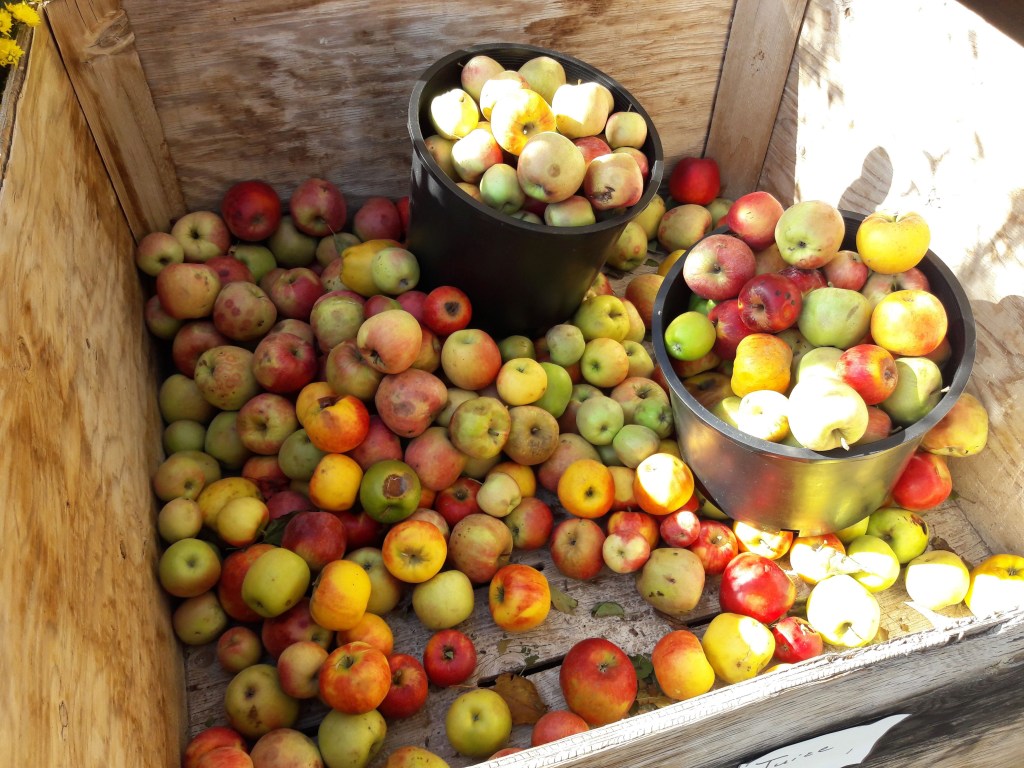
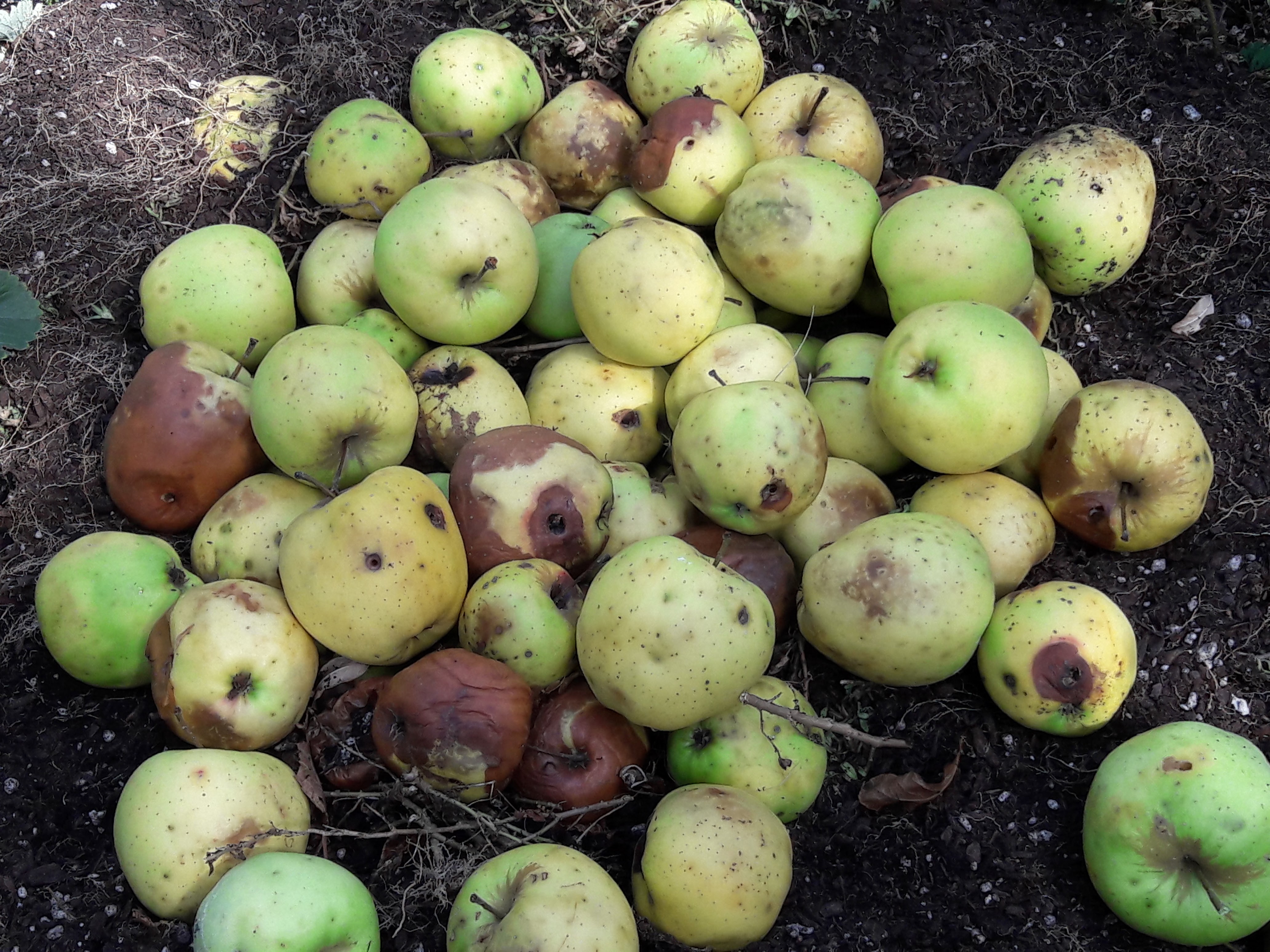
    I could have been applesauce. Or a French apple tart. Or a Viennese strudel, dessert following an outdoor Oktoberfest Mozart concert. Something fit for a queen. Instead, some two-bit squirrel is eyeing me for a quick bite of fodder. I could have been a hard cider. I suppose I still might be.

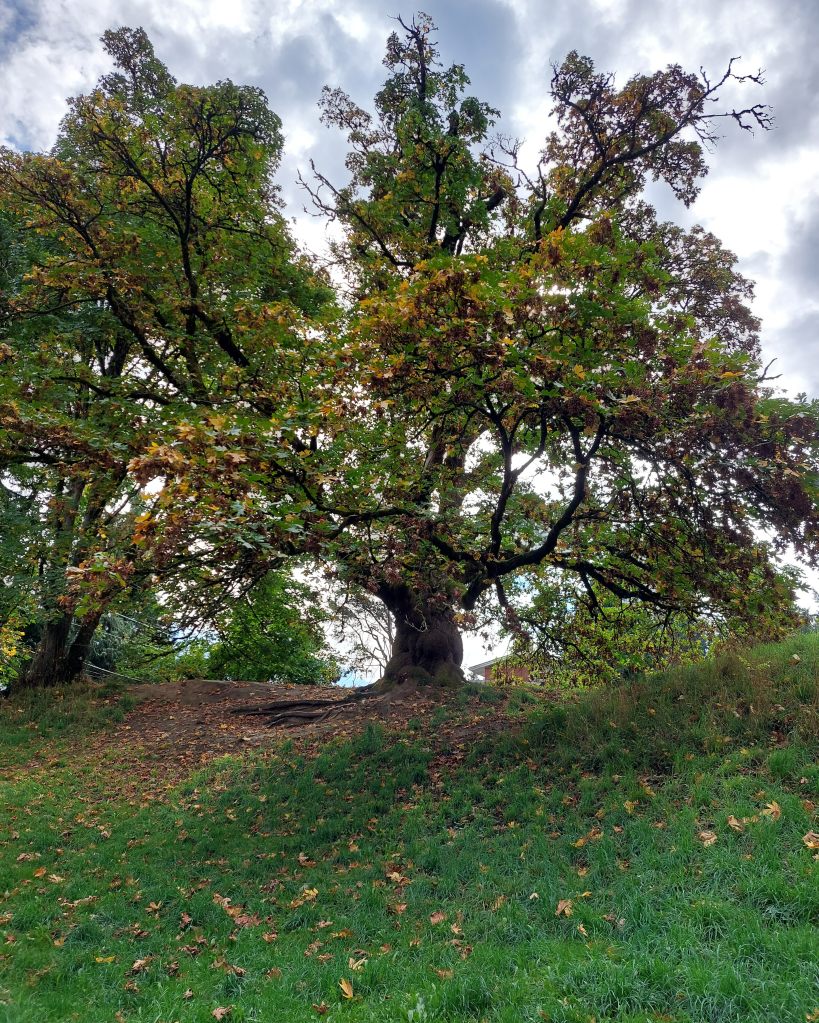
    They say we don’t fall far from our tree, but if your tree is on a steep hill and you get squeezed out early by self-thinning siblings and you hit the ground bouncing and spinning, you might end up, as I did, in a patch of dry grass on the edge of a grade school playground.

    We live to be eaten. And it’s what we want. It’s complicated, and I don’t pretend to understand it all, but ever since I was awoken by the bees, those giant furry honey bees, and the little masons, the breeze also stirring my imagination – anything seemed possible on that early Spring morning when we got our first taste of sunshine and our petals felt like wings and we thought we might fly with the bees through the trees.

    My tree was planted as part of an orchard up on the hillside sometime in the late 1800’s. There are not too many of those early trees still around. They watched the city grow slowly from across the river and up the Eastside slope – growth that took out a lot of trees.

    Funny how things grow and move around and live off one another. It takes cooperation for life to thrive.

    I was hoping to be part of a bushel full of my siblings that might make its way to some outdoor market. That was fantasy. My old tree is lucky to produce a single peck these days. And it’s been a hard go since that day awhile back the temperature reached 117 degrees. We prefer the chill side, but still, we’re not all that picky. We start off cold, slumber in the warm shade of summer, and finish cool. Life is not bad being an apple. And there are, contrary to idiom, no bad apples, just poor storage.

    But a crop of boys one decade used the apples for their backyard baseball games. Wooden hardball bats. Talk about applesauce. The old tree was happy to see the boys grow up and move on. Another family took exceptional care of the tree. Every year careful pruning, watering, thinning, picking – and storage in their cool, dry basement. They made applesauces, cobblers and crisps, and prize ribbon-winning pies. But that family also moved on. An older couple that spent most of their time travelling abroad moved in and let my tree grow wild, apples falling and rotting, fermenting, covered with wasps in the fall. Those years the yard was full of birds. One year there were skunks. Raccoons were common. And a family of possums took up residence under the back porch, though they mainly fed off the slugs and bugs and tiny rodents attracted by the fallen apples.

    All this and more my tree passes on to its apples, how to open to the coming of the bees, the loss of petals, the June drops, our capricious caretakers – the humans who covet us. We know our past, and fancy we know something of the present, but guessing our future is tricky.

    One day, hidden in the schoolyard grass, I was found by a dog chasing a ball, and I was picked up by a boy and put in his jacket pocket, and I went for a walk with the boy and his dog around the playground. Over a fence I was tossed, into the back of a nursery, in among the rose bushes potted for sale.

    I got picked up again, looked at closely and felt all over, and put in a paper sack with an assortment of other apples. We were weighed and paid for and carried out of the nursery and walked off, winding our way up the side streets of the hillside.

    An old woman received us at the door and carried us through the house, out a kitchen door, and onto a back porch where she took us out of the bag and placed us one by one upon a table. A murmur of softening filled the air. 

    And there I saw my tree, out in the yard, looking as old, no – much older – than the old woman standing on the porch next to us, picking us up one by one, smelling, feeling, softly rubbing, looking closely. I don’t know what she’s going to do with us. She looks like she could be a fritter type. I’m hoping for a good old-fashioned apple pie. A la mode.

  • Labor Day

    I’m giving up
    I’ve quit drinking beer
    and now no more
    ice cream, potato chips,
    or salt peanuts.

    And I’m tossing out my books
    dumping the personal
    paperback library
    hard they fall
    off the emptying shelves.

    And friends no more
    I’m ditching them all
    who gave up on me
    long ago anyway.

    And my host
    from Galilee
    He becomes harder
    to follow as the trail
    narrows and winds
    up thru the dry hills.

    Today’s the day
    Labor Day
    I throw it all away
    beginning with this
    espresso poem
    for as you can see
    hopefully I keep
    a little poetry.

  • Theory of Meaning

    What is mental may mislead us,
    the physical, on the other hand,
    for example, in a cloud you see
    an elephant, but that elephant
    is mental, not physical, while a
    physical animal in a living room
    could be mentally misconstrued
    as a ceiling cloud; the mental
    is also physical, and vice versa.

    We might call, in this discussion,
    what is physical, the denotative
    meaning, and what is mental,
    the connotative meaning. They
    are both meanings, both valid
    experience, and one plays off
    the other. Denotative meanings
    describe, while connotative
    meanings suggest. Further,

    we may easily and without
    argument agree on clouds,
    but to say a cloud is an
    elephant is a statement
    about which there may be
    some disagreement. Either
    way, rain begins to fall and
    the farmer is happy while
    the weekend golfer pissed.

    Let’s make sense together, you and me:
    Our needs are simple:
    water and food, shelter, one another.

    We think we are thinking beings
    but that’s not to say
    this rock and paper don’t exist.
    The rock quivers to its icy core
    when the voice speaks its thunder
    and the elephant walks
    through the room.

    All thought is substantive, bears
    out, vindicates the light of all
    we see and miss which absolves
    the darkness. The rock too thinks,
    thinks, “I am a rock; I have it easy.”
    Don’t worry about meaning. We
    play hide and seek, turn sounds
    into music, shelter in rocks,
    plant tomatoes under elephants.

    By meaning we mean passing
    a baton in a conversational relay.
    Ask the easy questions first:
    who, what, when, where, why,
    and how – the architect built
    on nothing, why then should
    nothing distract you?

    Meantime, last night I slept
    on my guitar, while the blinds
    blew in the breeze of the open
    window, and night birds flew
    in and out, around the room,
    each with its own song.

  • Field Notes 28 Aug 23

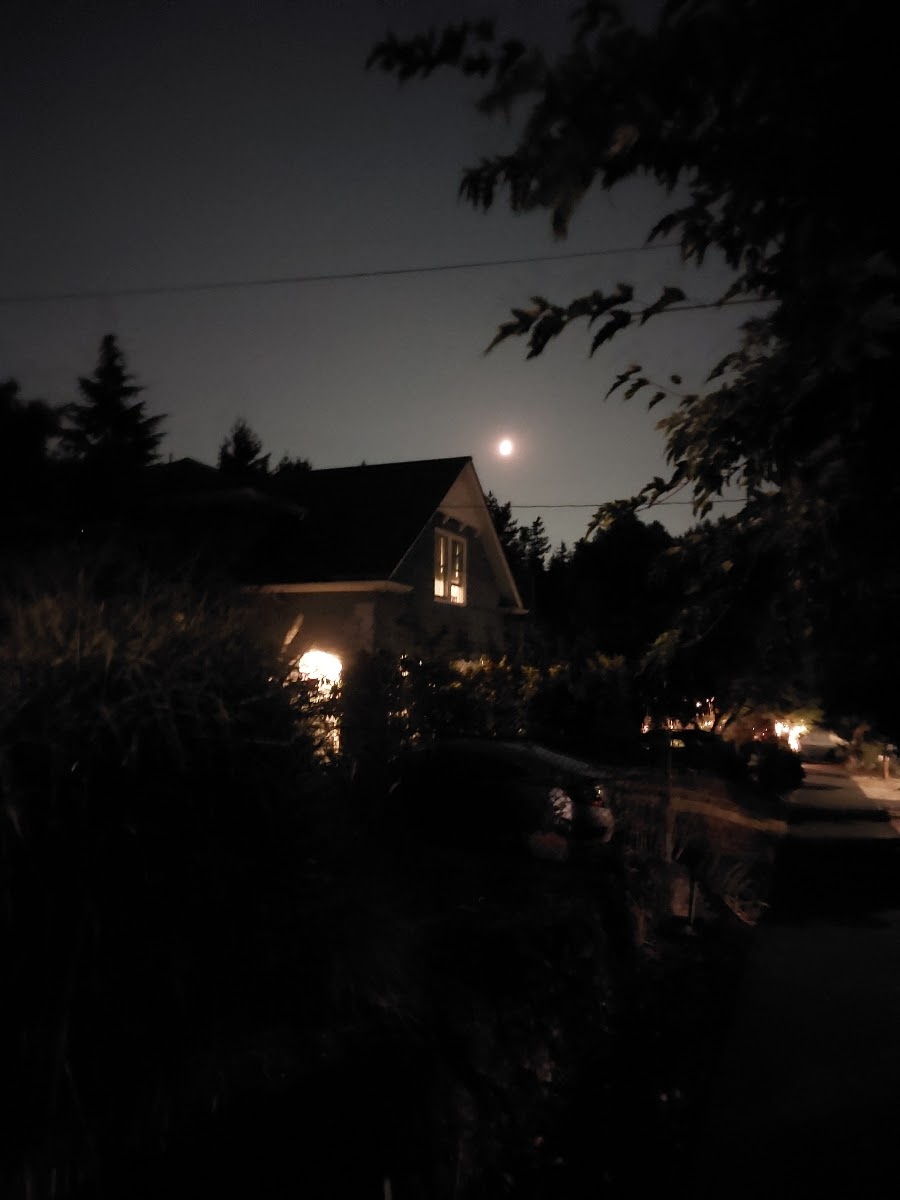
    Walked a mile last night with Eric, curlycue around the neighborhood streets late in the evening, the blue moon rising over the houses and over the firs up on the dark volcano, first cool evening in awhile, feeling the ocean air arrive like an old steamship foreshadowed by tugboats pushing and pulling against a tide. Earlier had sat out in the drive with the guitar, disturbing the universe, though no one seemed to mind, a few passersby walking dogs giving me a nod, the International Play Music on the Porch Day passing locally like any other day.

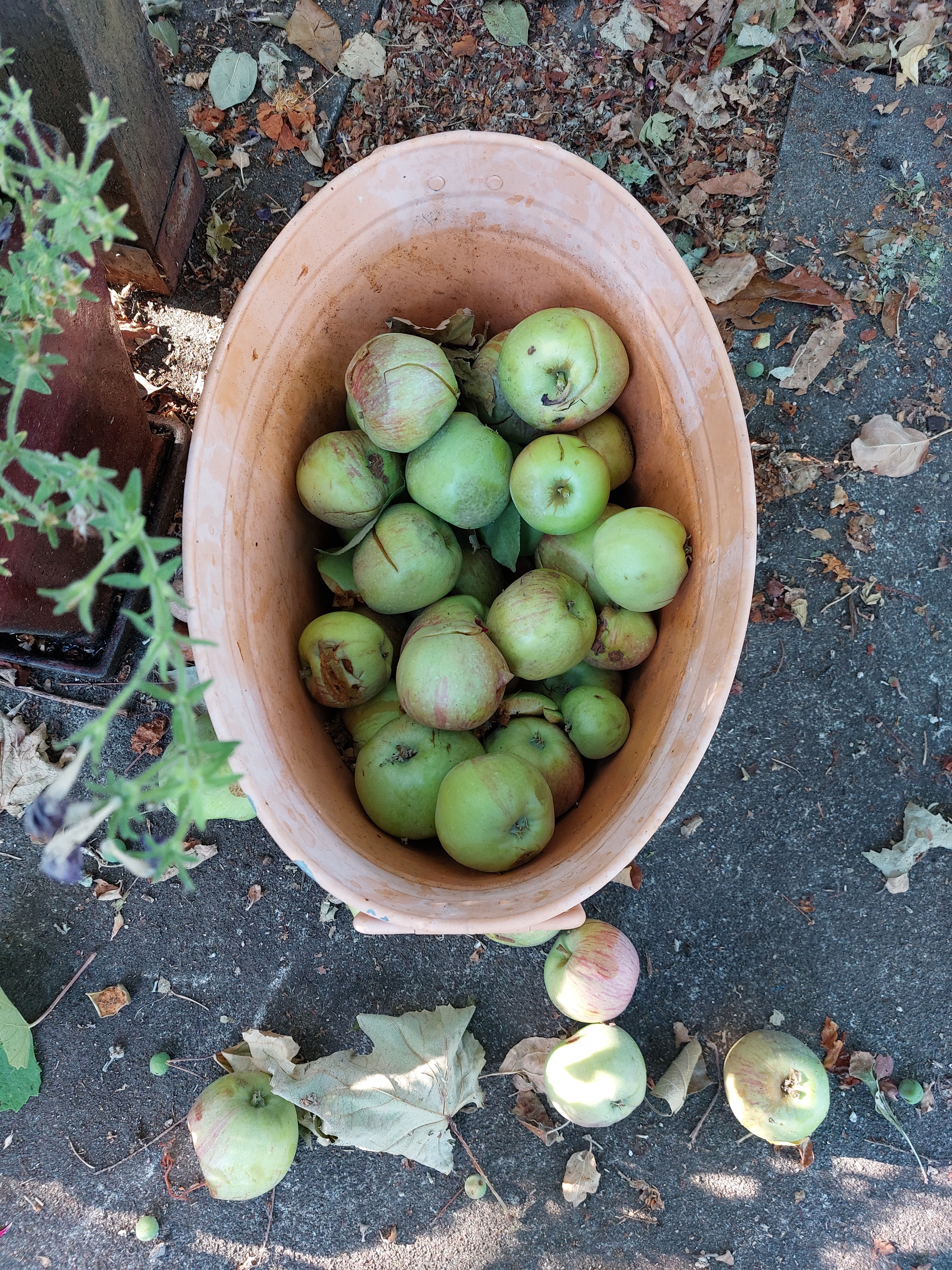
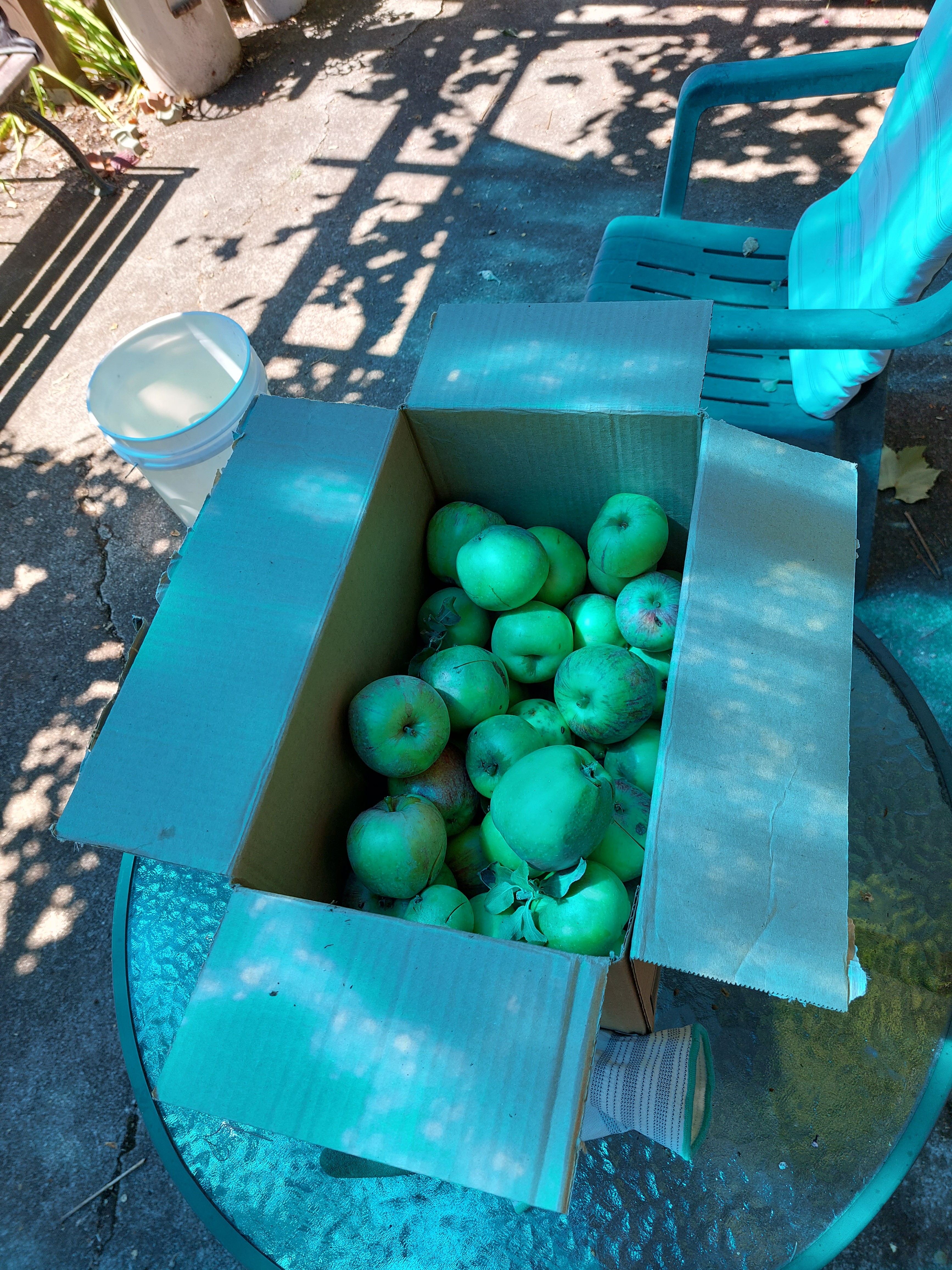
    The neighbor’s Brobdingnagian apple tree, high up above the border wall, half of which hangs out and over our grape pergola, too high to pick, seems to have come close to finishing its self-harvest drop, around a dozen or more bushels falling on our side of the wall this year, a bumper crop, peck after peck after peck we’ve picked up and bagged.

    Meanwhile, peaches are in season. Fresh peaches, juicy and tender, slightly fuzzy, plump, pink and red and yellow and orange. Nectarines are also peaches, but without the fuzz, smooth, and the pit of the peach is akin to an almond. This is what comes from looking things up, a new pastime. Of the numerous poets who have tried to get their hands around a peach, perhaps none have squeezed as close yet stayed afar as Andrew Marvel, in his poem titled simply “The Garden” (circa 1650), where he seems to prefer the actual peach to any metaphor that might point elsewhere for one’s fuzzy orbs:

    “What wond’rous life in this I lead!
    Ripe apples drop about my head;
    The luscious clusters of the vine
    Upon my mouth do crush their wine;
    The nectarine and curious peach
    Into my hands themselves do reach;
    Stumbling on melons as I pass,
    Ensnar’d with flow’rs, I fall on grass.”

    Andrew Marvel

    Why “curious”?

    “I grow old … I grow old …
    I shall wear the bottoms of my trousers rolled.

    Shall I part my hair behind? Do I dare to eat a peach?
    I shall wear white flannel trousers, and walk upon the beach.
    I have heard the mermaids singing, each to each.

    I do not think that they will sing to me.”

    from “The Love Song of J. Alfred Prufrock,” T. S. Eliot, 1911

    One of these days, I’ll compose my own poem to the peach, maybe “Portrait of a Peach,” which is to say, one you cannot eat, dare or not. Lately, Susan’s been offering ripe peaches on a plate to nibble through the slow afternoon, so soft, so cool, so sweet, so refreshing. Love peaches, love to see two, side by side, each to each, within easy reach.

    Speaking of growing old and wearing trousers rolled, yesterday, lightly working outside, I came close to falling twice. The first time, I caught my pant cuff on a hook under the outdoor couch. I nearly fell into a cluster of flower pots. The second time, the foot whose turn it was to move forward on the porch somehow stuck in place, and the pot I was carrying was tossed so I could stop my fall with the arm that was holding it. The pot fell and broke in two, splattering the walk with potting soil. And somehow I found myself sitting on the porch step. Not quite a fall, then, a sit?

  • River Town

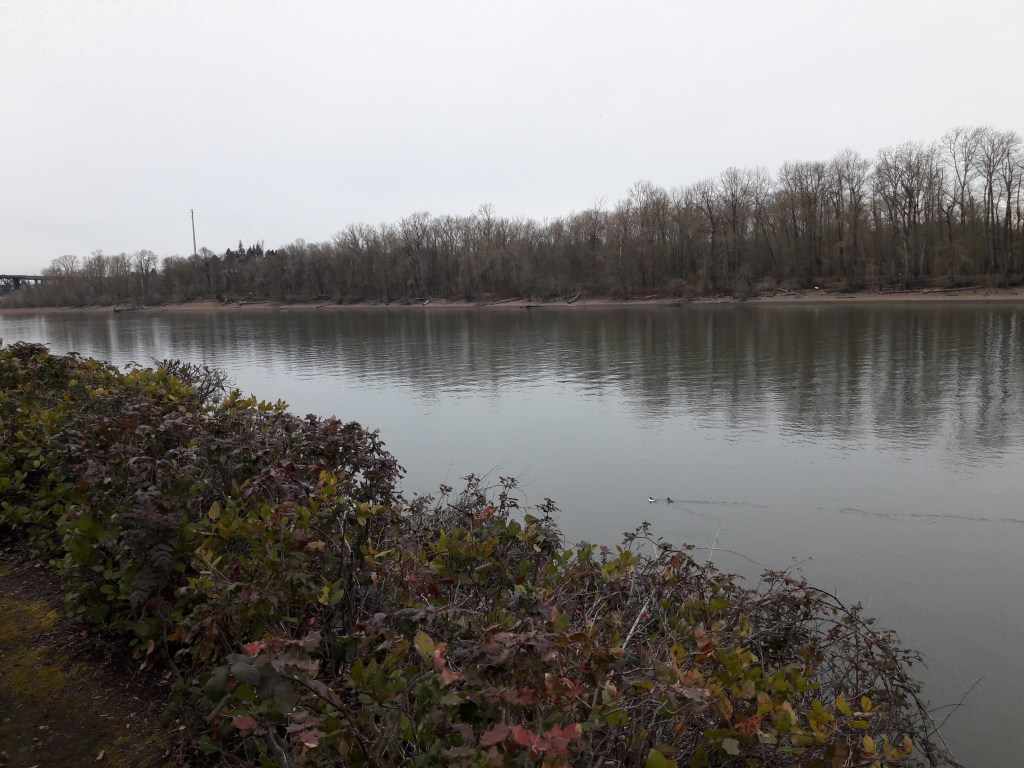
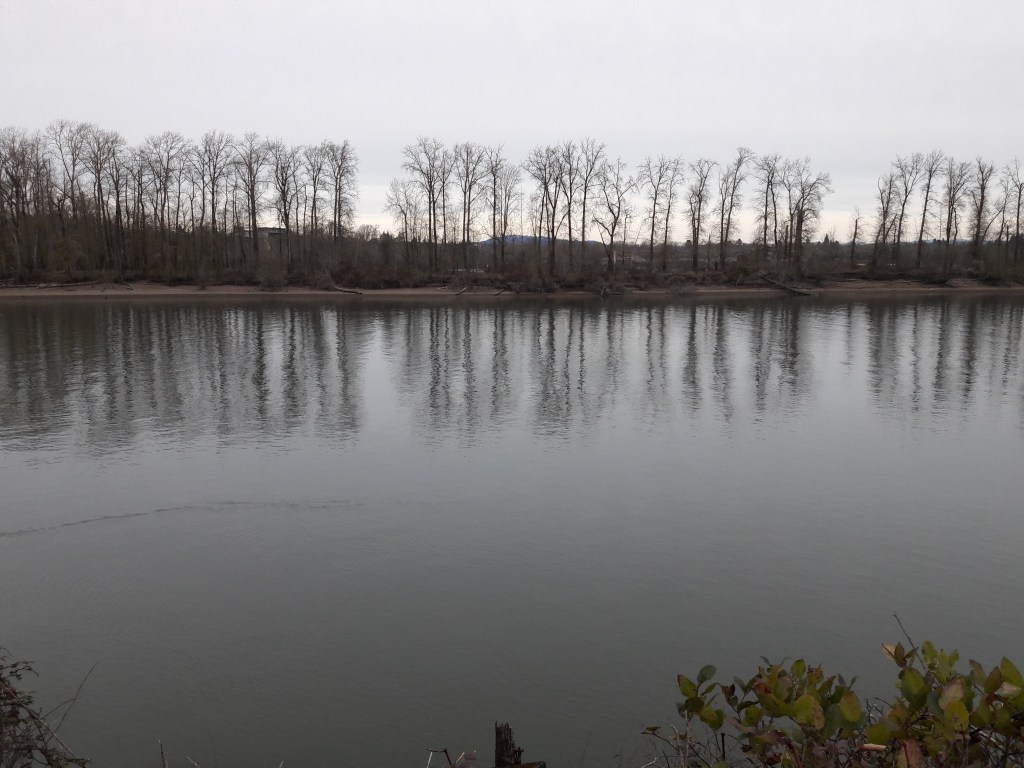
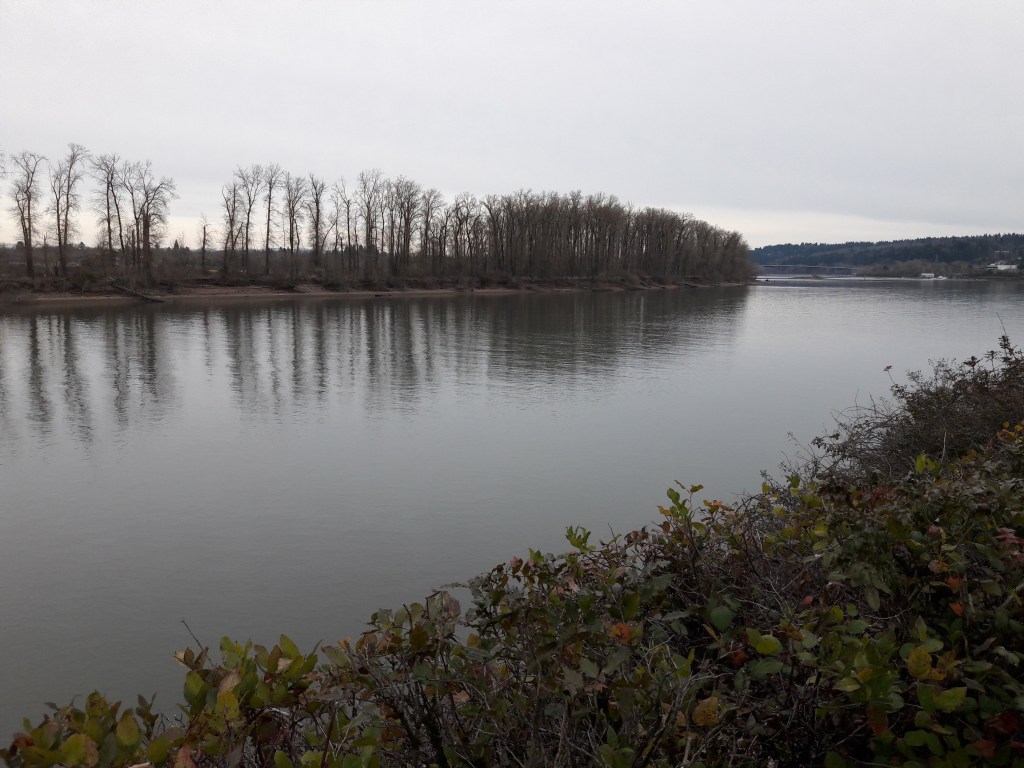
    I live in a river town, know
    my way around, walk
    here and there and won’t
    be nobbled, neither bounder
    nor leaper, foot after foot
    forge forward, as need be.

    Someone offers me a lift,
    and forgetful I get in,
    but befogged where
    this drifter gets his
    directions, mindful then
    I alight and walk home.

    I’ve yet to learn to keep
    quiet, tho no longer tip
    the cup, and what books
    I wrote won’t remain,
    my purpose no longer
    easily to entertain.

    Moonlight spills on streets
    silent rivers of summer heat
    cool night but rivers don’t
    sleep and walkers walk
    to avoid being driven
    to despair with no air.

    This is not a myth I am
    with you all the way,
    each stream wiggles
    down to the big rivers,
    the sound of the water
    breezes thru dry brush.

  • Get Real

    To make art, to make things
    out of other things, to engage
    in artifice, a confidence game:
    “Get real,” your critics say.
    The earth is a rug
    constantly being pulled
    out from under you.

    The artificial is real: the bread
    and wine camouflage the need
    to sacrifice the poor lost lamb,
    not to mention the virgin,
    created by man made
    design critics to avoid
    her real predicament:

    “Poor and rich belonged to the same world and placed themselves on a common, even sliding scale, but beggars could not. The ptochos was someone who had lost many or all of his family and social ties. He was a wanderer, therefore a foreigner for others, unable to tax for any length of time the resources of a group to which he could contribute very little or nothing at all…a ptochos was a shocking reality for the Greco-Roman world” (272). 1

    “The beatitude of Jesus declared blessed, then, not the poor but the destitute, not poverty but beggary…Jesus spoke of a Kingdom not of the Peasant or Artisan classes but of the Unclean, Degraded, and Expendable classes” (273). 2

    1. Gildas Hamas quoted in John Dominic Crossan’s “The Historical Jesus: The Life of a Mediterranean Jewish Peasant” (272). 2. Crossan gloss of Gerhard Lenski (273).

    Who then or now could write
    a poem who is not at least poor
    real poor or in spirit or metaphor?
    Yet the beggars make their signs
    and hold up their poems
    along the roadsides,
    the least of publications,
    the yeast of city life.

    “What is needed, then, is not insight into the Kingdom as future but a recognition of the Kingdom as present. For Jesus, a Kingdom of beggars and weeds is a Kingdom of here and now” (Crossan, 283).

    What is real
    will not be
    found staring
    at the universe
    through artificial eyes
    to catch a glimpse
    of dawn’s first light,
    nor descending
    to the bottom
    of the sea
    in rich pods
    to study ancient
    shipwrecks,
    nor in any travel
    nor in any poem.

    But surely we must
    avoid the real
    at all cost
    and become more
    artificial.

  • Leaving Nature

    Let’s go, then, you and AI,
    evenings lined up streaming
    across the screen held upon
    a tablet, let’s go where comma
    dose takes a back seat rigged
    to getting there, being there.
    Let’s take a trip, swishing
    rhyme in time, north by
    northwest, and go climb
    those frabjous rock sculpted
    heads: Granite, Art Stew,
    Gillian Fish holding a glass
    of Golden Wine. Don’t ask,
    don’t ask, let’s just go.

    In the room the crawdads come and go
    singing of a fellow follow afterglow.

    My fall was not sudden chance,
    still crush accident, the collapse
    of dawn cultivation nightly forecast.
    Unlikely I’ll keep track losing
    the harvest, but no turning back
    to nature I did not let go of.
    Nature creeps thru the city where
    cats carry rats into living rooms,
    and not only that but just try
    to find a place to park out at
    the ball-field – let’s go, take me
    out to the brand new ballgame.

    This mural robot painted going
    upcountry where nature seems
    suspect, a solo sober primitive
    guitar in the Valley of the Moon
    played pizzicato inharmonicity.
    An audience of two at a corner
    table in a tavern near the wharf,
    waitress telling her cat proudly
    prancing whiskers wished clean
    a blue-belly lizard into her lucky
    little studio apartment couched
    under the jets along the highway.

    Another trip, a different time
    and place, all the same, still,
    let’s go, not to get it over with –
    we’re out of coffee, and let’s
    pick up some more ice cream
    raspberry and mango sorbet.
    I can’t remember the last time
    I had a box of Cracker Jack,
    but I’m sure the surprise is
    nature’s leaving us alone
    hiding out in the mangrove
    adapting to our own changes
    what we’ve called man made
    night plastic light glowing
    these imitation mermaids
    singing to one another
    while we walk along the beach
    listening and combing one
    another’s hair, nature’s leaves,
    playing games and having fun,
    and we stay leaving nature.

  • Keeping Cool

    Heat rises its long reach from molten core
    squeezed under kitchen table pressures.

    The grasses and weeds in the yard yellow
    naturally gone dry for late summer days.

    Long hours, short nights of slow heat and
    little sleep, but the cars are street discreet.

    A wet rag wringed and wrapped around
    the back of your neck under your hair.

    The artificial breeze of the electric fan,
    the whirring windows open all night.

    Shades closed the room this darkened
    cave where the laptop glows cool blue.

    The cat nice asks that you not lap so near,
    her fur matted where she prefers to nap.

    All the weather apps say the same thing:
    “Where have all the flowers gone, long…”

    The cows and bulls a hard beating breath
    sucked under ranch rugs, deep keen heat.

    Artificial air, ice pops, ice cream, sorbets,
    thongs, cutoffs, old truck windows down,

    toxic blooms, wildfire smoke-drift, fresh
    red hot chili peppers, snow melt rivers,

    ice-cold beer, County Fair watermelon,
    under maple tree the guitar gone dulce.

    And your sweet cool voice breezes down
    the evening as we open the stuffy house

    and listen to a baseball game on radio
    players far off dance on a hot diamond.

    And hence to bed where we do not sleep
    in this weepy whimpering August dust.

  • The Smell of Music

    How will mash sailors make it to the couch
    if you their bright lighthouse stop talking?
    How will the blue cowboys smell the guitar
    if you stop picking up where you left off?

    You must finish what you begin even
    if you bring it to an end like the swells
    not cresting breaking happily into mush
    waves at high tide too deep to wade.

    Things are happy then sad then happy
    again, like flowers, like the blue bells
    swells rising up and over and falling
    into laughter and rolling in silliness.

    Waves like bells deep and sonorous
    sounds you can smell like seaweed
    drying on barnacled covered rocks
    that’s the half purpose of poetry:

    That you smell what others hear
    that you hear what others taste
    that you taste what others feel
    that you feel what others seal.

    When sense and sound blend
    with your surroundings sitting
    on the couch and you get up
    to adjust a lighthouse throw.

    I’ve opened comments I hope
    you leave one and I’ve included
    a photo which might be easier
    to comment on than the poem.

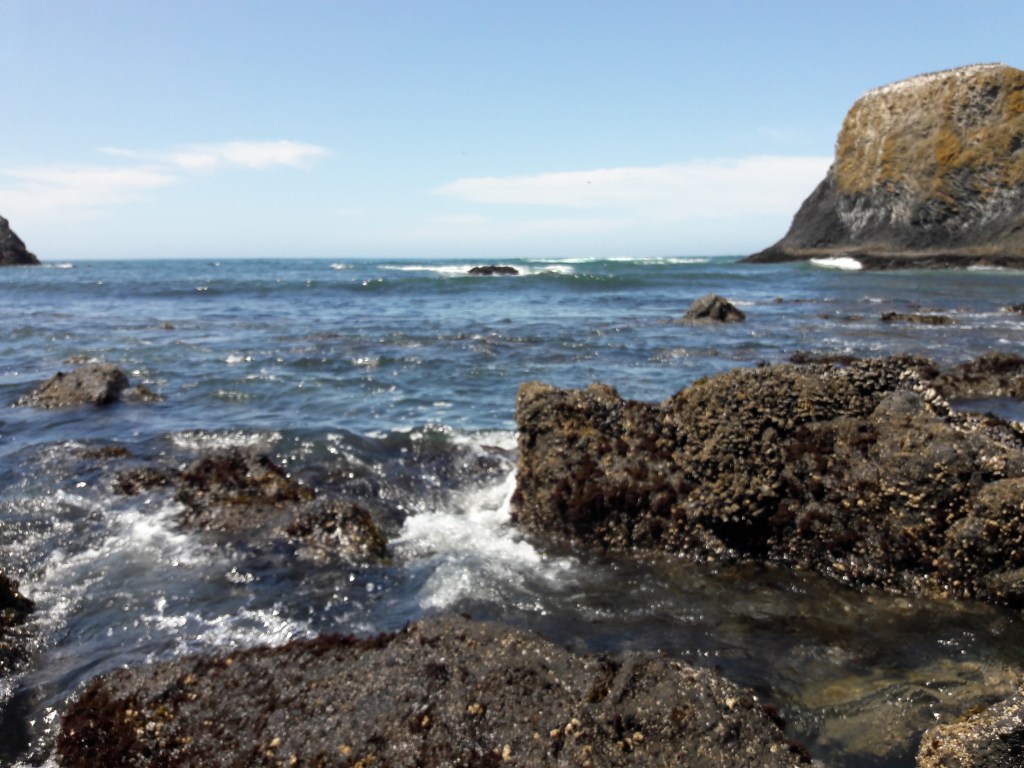
    Cobble Beach below Yaquina Head Lighthouse, 2019.

    Photo: Cobble Beach, below Yaquina Head Lighthouse, Oregon Coast, 2019, on the way home from trip to Healdsburg.

  • Beauty and the Spirit

    Only the ugly create, the fallen.
    The beautiful have no need.
    The ugly bleed outside in.
    The beautiful, without sin, 
    wear that elliptical grin 
    viewed in the museum
    by the ugly in line again. 

    And yet the most beautiful
    creature to walk the abyss
    astounds us with a world.

    But, “What ugliness is this
    you’ve allowed to exist?”
    the Spirit shaking
    over the deep waters asks.
    “What version are you on?”

    “I don’t work with numbers,”
    Beauty replies.
    “What comes next?” asks the Spirit.
    “I’ve not made well-nigh yet.
    That will take time.”