Category: Poetry

  • How to Compose Your Poems; or, What’s So Funny?

    Rarely if ever does my élan vital express itself in such a way that I’m spirited to imagine a life writing away from the blog and appearing in other rags mags zines or dreams. So I’m not sure what had come over me when a short time ago I submitted alas unsolicited a piece intended as humor if not hilarity but certainly on the droll side of the street to not one but two unsuspecting webzines. It was the same pitch but each written from a different angle etched or drawn to what I felt might be the proper editorial lilt of the zines in question. After a few days my vital on the wane I withdrew one and a short time after that the other was returned declined. Not to go too deep into these waters, but I then decided to post the piece or pieces here at the Toads, such was my confidence in my own funny business. But it’s hard to be funny when you are thinking about it, and which piece would I post? One view was a bit more sarcastic, not very helpful, and not in keeping with the gentle persuasion usually practiced here at the Toads. The other was perhaps a bit too light, like leaves falling but not from a wind.

    Anyway, I then posted the piece on my own blog, here at the Toads, and then withdrew it myself, a self declining procedure. And then Susan asked why did she get two emails with the same title and both unable to read. What tangled webs we weave when weaving loose and goose via the web. I figured out my mistake. The first piece I had started back on March 8, and it sat in my unpublished (and unpolished) bin where I let it stew awaiting a reply from the zines I’d submitted to. When I did pull it out from the in progress bin and let it fly to the blog yesterday, March 16, it posted with its start date of March 8, thus confounding. Interesting. In any case, here it is yet again a third time a charm, but with a few additives, the two different voices brought into one. Is it funny? Well, what’s funny?

    The Expressionist Poem

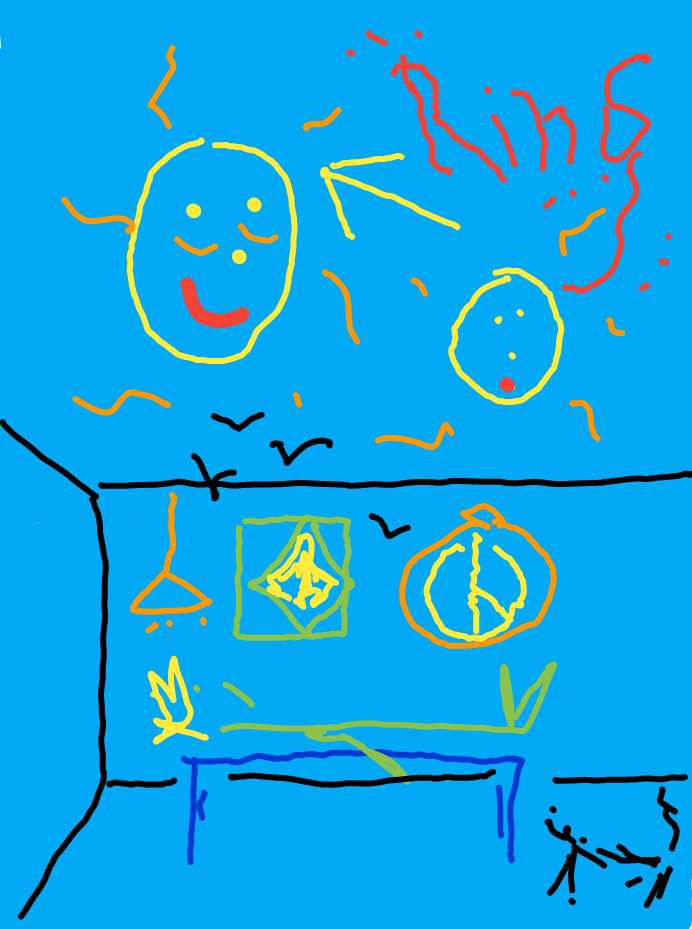
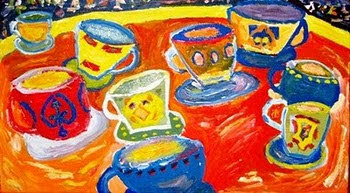
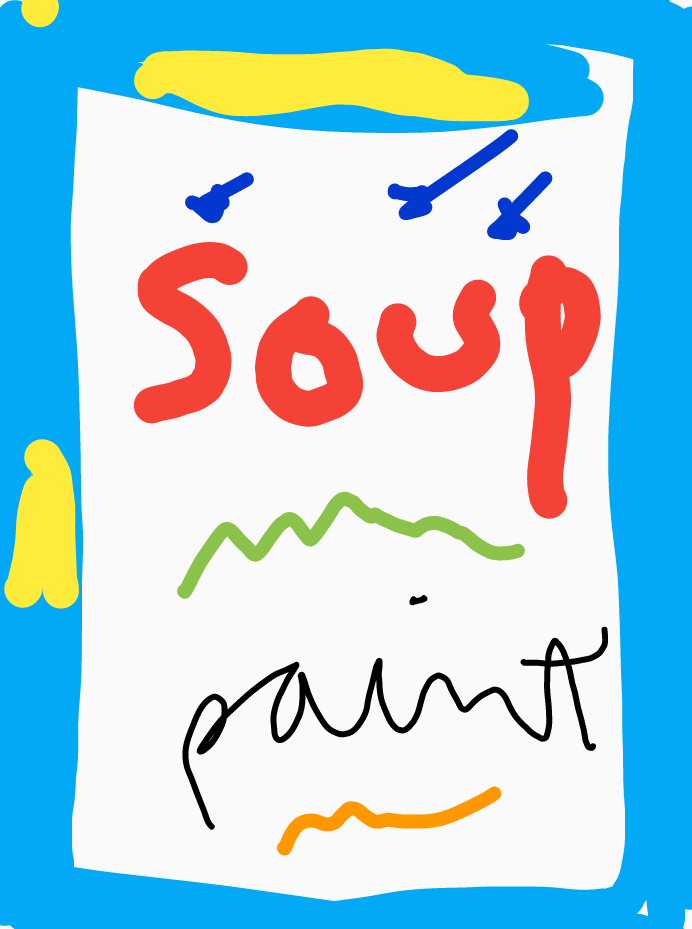
    You can’t even draw a cartoon sketch using stick figures – how are you going to make an oil painting? But you love color, and vivid, oily, oozing wet paints. You squeeze a tube of pea green onto a cream white canvas and using a squeegee smear the paint into the coarse warp and weft, dripping drops of black, yellow, and white paint as you go. Composing an expressionist poem is like the paint scenario above, but you use words instead of paints. No one will notice the difference, but some will complain they don’t understand, to which you might reply, what’s to understand about hue?

    The Political Poem

    You want peace, and you’re willing to fight for it. Your poem is a protest sign, a bumper sticker, a lawn sign, graffiti on a post, a bill on a telephone pole. You don’t count syllables and you don’t take no for an answer. You submit and resubmit relentlessly. You are not patient – you are stubborn. Then some nasty neighbor you think is the enemy lends you a gratuitous hand. Senseless. Unjustified. Nevertheless, you try to thank them, but they turn the other cheek. The pecuniary poem is often disguised as a political poem, or mistaken for one. The question is not, who will have the money, but who will have the poetry, but the answer is the same. Two examples of political poetry can be found 100 years apart, the first in Walt Whitman’s “Leaves of Grass” and his other writings, the next in Allen Ginsberg’s “Howl” and his other writings. Whitman and Ginsberg remain the best examples of political poetry and also provide the template for the line that works best for the sub-genre.

    The Funny Poem

    From the rear of the classroom you heckled a joke at the teacher and the other students laughed. You thought it might be fun to be a stand up comedian, but when you get in front of an audience you break out in hives. But the funny poem doesn’t just tell a joke. It is witty and wise and takes a long time to master. It is the poem of the mime. Sarcasm is not necessarily satire. The master of satire is still Jonathan Swift, whose essay “A Modest Proposal” could have been written yesterday in as much as it’s still about today.

    The Anti-Poem

    You abhor poetry, it’s a hateful thing, and you attempt to infiltrate its postmodern ranks with rants and fury, rhyme and sense, rhythm and music. Your hate is epic, but your talent is nought. You find a job pumping gas. You come to realize the anti-poem has become de rigueur in the house of living poets. To write an anti-poem today, you must reinvent the wheel of poetry. You will begin a new trend, the anti-anti-poem. You consider changing your name to Gilgamesh when some lady riding a Pinto pulls in and wants her windows washed. You join the Big Quit, walk away from the filling station, as you realize too that poetry is a wheel without an axle. If you find yourself feeling anti, or anti-anti, or however many antis make a day, remember these words from the Preacher: “One generation passeth away, and another generation cometh: but the earth abideth for ever.” 

    The Moody Poem

    Apropos of absolutely nothing, three pieces of rusty apple, a chunk of Garrotxa goat cheese, and a half-full bottle of Vouvray in your knapsack, three college degrees framed and hanging on your office walls (office hours M-W-F, 1 to 2), and a long list of successful publications (albeit in paywalled journals not well read by even your peers), leaving a reading, a blue mood like gauze cheesecloth falls over your fizzog, and you escape to a local pub where you start your first modish moody poem, about a feeling of loss in the midst of plenty, which turns into a four pint memoir. The master of the moody poem might be Leonard Cohen. Surprisingly though many of his songs are not in minor keys. Nor did he as far as I know keep office hours, publish in obscure journals, or what have you.

    Poem Standard

    The poem standard usually is about a lovelorn topic: a waning moon, a laundromat at 3 in the morning, a simple puppy love jilt, dubiety, trains, solitude, leaving home, returning home – but everyone’s moved away. Cars, surf, homesickness are all permissible topics. Keep it short and sweet, or bittersweet, but avoid sounding angry. The poem standard is bi-partisan. To get inspired, think slow dance wearing socks on the gym floor while a live band plays “Louie Louie” at a time when there was no such thing as a crappy instrument.

    The Theoretical Poem

    The theoretical poem is never actually composed, only discussed.

    The Mother’s Day Poem

    The Mother’s Day Poem is not theoretical. You should write one every day, even if it’s never discussed.

    Painting with Text Poem
  • Daylight Saving

    once again we sing this silly song of time
    as if God’s clock rings wrong twice a year
    but round ’twas when took aback last fall
    against the strong headwind westward ho
    we all fell for it but now (& leap to it too)
    spring daff & doff ahead toward summer
    & round we’ll be come fall harvest fat fed
    oblong & elongated from all these pushes
    & pulls springs & falls leapings & bounds
    round & round we go egads & for all that
    why not take some few years off & fall all
    the way back to say 1964 & Beatlemania!
    but no not a second time not one second
    time around you’ve danced your chance.

  • Think Again

    I thought once again
    and again and again
    and still the nagging
    thing rang an alarm
    clock in an assembly
    line repetitive factory
    too much time on my
    hands think again our
    Supervisor said again

    I thought twice thrice
    four to the bar again
    with my factory wife
    any number of numb
    clock ticking times X
    and after time was up
    the world no more in
    need of time clocks
    we laid off thought

    thought again and again
    of my time on the line
    spent thinking not off
    the pieces clicking by
    but on some other
    think I can’t now seem
    to remember again
    lost as I am to thoughts
    again and again and again

  • Monolithic

             A 
           block
          of white
         stone grows
         in a mist no
        birds perch at
        the top point of
       this blank obelisk
      its single ray upward
      knows no pair yet gem
      hardly pretentious is
      what it appears to be
      monolithic nothing no
      more no less at worst
      at stone's base amass
      a rock dove messenger
      pigeon dazed and dumb
      fallen dagger edifice
      never before end this
  • Relaxing Reads

    Barbara Pym’s novels are relaxing reads. I found her while reading and following Penelope Fitzgerald, Elizabeth Taylor, Elizabeth Bowen – other 20th-century British female writers I’ve been reading and have grown to appreciate and like and want to share. I finished the Hermione Lee biography of Penelope some time ago. Writers, like the rest of us, don’t always lead exceptional or excellent lives. And a biographer needs tools and supplies to work with. I recently read Susan Cheever’s biography of e. e. cummings – much material for a biographer to work with there: Harvard and its takes and mistakes; both World Wars and post-war worlds; the Great Depression; the eccentric poet at work and play; the effects of criticism and changing popular and academic tastes on a writer’s occasions for work; notes and diaries; interviews; and correspondence. But readers interested in 20th Century British history and literature will find good reference and enjoyable works among these women writers: Bowen was born in 1899, Taylor in 1912, Pym in 1913, and Fitzgerald in 1916. They are not modernists in the sense of James Joyce or Samuel Beckett or Virginia Woolf or Gertrude Stein, even if they constitute a newer generation. Their novels are characterized by realistic prose and dialog, and as for history, the settings are often domestic, about family and relationships, work, church as social community place (think jumble sale, what here we call rummage sale), not so much about historical events as about the effects of the great tides on individuals in society, but of the person in an outlier sense. Consider Nenna in “Offshore,” living on the barge Grace on Battersea Reach on the Thames with her two young girls, estranged from her strange husband who in a final desperate argument-ending-blow, yells at her, “You’re not a woman!”

    I ordered a copy of Paula Byrne’s Pym biography, “The Adventures of Miss Barbara Pym” (2021, William Collins, London). I’m on page 179 of the close to 700 page tome. I started out reading the inside cover blurb on the author, Paula Byrne, which mentions, “She is founder and lead practitioner of ReLit, the charity for literature and mental health.” Having never heard of ReLit, I looked it up and found a site illustrating a small organization’s devotion to using literature to assist those struggling to handle the slings and arrows of daily life, whether king, knight, or knave. From ReLit’s About page:

    “ReLit is the Foundation for bibliotherapy: the complementary treatment of stress, anxiety and other conditions through slow reading of great literature, especially poetry. We believe in the power of words to restore and relight the human mind.”

    Apt words have power to assuage / The tumors of a troubled mind / And are as balm to festered wounds (John Milton, Samson Agonistes)

    ReLit: reading for wellbeing, retrieved 7 Feb 24

    I discovered on the ReLit site, and ordered from Alibris a used copy, a book titled “Stressed, Unstressed: classic poems to ease the mind” (2016, William Collins, London). The poems are indeed for the most part classic, the youngest poet included born in 1952, Linton Kwesi Johnson. The book is divided into 12 chapters devoted to themes related to dealing with stress, for example, “meditating,” “feeling alone,” “living with uncertainty,” “positive thinking.” (Stressed, unstressed also of course about the forms of poetic syllabication and lines.) Each chapter is introduced by a short explanatory essay on the given theme. The book is not an escape portal, though. The poems may or may not help the afflicted in a time of need. But as Jonathan Bate says in his introduction: “If words can do the work of drugs, what is to lose by putting them in our mental health first aid kit? There is nothing to lose and everything to gain.” Of course there are many different kinds of poetry and poetic definitions. The book “Stressed, Unstressed” uses the Wordsworth definitions: “the spontaneous overflow of powerful feelings” or “emotion recollected in tranquility.” Further into the book, we find mindfulness strategies discussed, and I was reminded of the Thich Nhat Hanh “how to books” (e.g. “How to Relax”), which focus on calm breathing and attentiveness to the moment.

    I think I might prefer, to the poetry as a means toward relaxation, the novels of Barbara Pym as well as Penelope Fitzgerald, Elizabeth Taylor, and Elizabeth Bowen. Too often, for me, poetry, like the classic country western song, often plays upon the emotions in the way of pathos, stirring the emotions rather than calming them. In any case, all of the subject of this post has me wondering if readers here at The Coming of the Toads find for the most part relaxing reads or stuff that gets the dander up. My hope is for the former, the relaxed, the three breaths you take while waiting for the page to change.

  • Emotive

    Everybody in a car 
    nary a door ajar.
    The world is our oyster
    full of pearls
    (Shucks! A flat tire!)
    and perils.
    A penny for your thoughts -
    As if we had either.
  • The Game Is A Foot

    “The game is a foot, I’m certain of it,”
    said the poet who talked the walk datum.
    To bloviate down his shorts and long waits
    about town he strolled and spoke and sprayed
    the populace with one-off quips and quotes.
    A foot player he was who climbed high limbs
    lofty the poet tree of mystery.
    Came he then to a steep stairway and down
    he went a long way down a circus clown.
    Loose freely from his three-rings born
    he returned to la-la-land a surfboard
    under his arm covered in salt and sand.
    “If life be a game,” he said, “play I will
    in waves never still twirl the pencil’s twill.”

    “We take it as a given that games are useful, productive, redeeming forms of human experience and expression.”

    The Poety Game
  • The Poetry Game

    Is poetry a game? A game of solitaire. But inasmuchas one might anticipate an audience, a gnip gnop match. Or on a polo grounds, the sport of kings, but some riders on stallions and others on donkeys. But if poetry is a game, or even if just at times it might be considered a game, in a certain environment or context, so what?

    How does one play poetry? What are the rules of the game? A chase, in pursuit of meaning. Or mere entertainment, in which meaning may or may not play a role. We read that Wittgenstein found game useful in his thoughts on language. From the Stanford Encyclopedia of Philosophy:

    “Language-games are, first, a part of a broader context termed by Wittgenstein a form of life (see below). Secondly, the concept of language-games points at the rule-governed character of language. This does not entail strict and definite systems of rules for each and every language-game, but points to the conventional nature of this sort of human activity. Still, just as we cannot give a final, essential definition of ‘game,’ so we cannot find “what is common to all these activities and what makes them into language or parts of language” (PI 65).”

    Biletzki, Anat and Anat Matar, “Ludwig Wittgenstein”, The Stanford Encyclopedia of Philosophy (Fall 2023 Edition), Edward N. Zalta & Uri Nodelman (eds.), URL = <https://plato.stanford.edu/archives/fall2023/entries/wittgenstein/&gt;.

    Is poetry maybe a “language-game”? Looking around for a suitable answer, I found this in the online “Wittgenstein Initiative”: Wittgenstein said,

    “Philosophy should really be written only as one would write poetry.”

    WRITING PHILOSOPHY AS POETRY: LITERARY FORM IN WITTGENSTEIN 7 July 2015 ARTICLES
    by Marjorie Perloff, Stanford

    But reading on, I find this not all that helpful to our opening question (Is poetry a game?). And it didn’t take long to be subsumed online by articles relating to Wittgenstein and our use of words, in poetry or otherwise. But another maybe significantly different translation, by the way, shows Wittgenstein saying,

    “Philosophy ought really to be written only as a form of poetic composition.”

    Ioana Jucan. Date: XML TEI markup by WAB (Rune J. Falch, Heinz W. Krüger, Alois Pichler, Deirdre C.P. Smith) 2011-13. Last change 18.12.2013.
    This page is made available under the Creative Commons General Public License “Attribution, Non-Commercial, Share-Alike”, version 3.0 (CCPL BY-NC-SA)

    Will come back to form, but for now, so I backed out of search mode and returned to my own thoughts, if I can be said to own a thought, which of course is absurd. But to move on.

    But even if we are to satisfactorily say what a game is, it would still be left us to consider a definition for poetry. A search for a definition of poetry of course brings into view a petri dish full of ideas. Then this, again from the Stanford Encyclopedia of Philosophy:

    “Hegel considered a mode of understanding fundamental nature to be more advanced the more that it abstracts from concrete sensuous presentation and the more that it can turn contemplation back onto itself. There is a scale within types of art in this respect; visual art is less advanced than music, which is itself less advanced than poetry (1807 [1979]). While self-conscious Romantic poetry allows us to see our rational self-determining nature as minded beings, it nonetheless remains imperfect as a mode of knowledge of spirit. Philosophy, in its endless capacity for self-conscious reflection, “is a higher mode of presentment” (in Cahn and Meskin 2007, p. 181) and can ultimately supplant art as a mode of knowing the world’s essential structure.”

    Peacocke, Antonia, “Aesthetic Experience”, The Stanford Encyclopedia of Philosophy (Spring 2023 Edition), Edward N. Zalta & Uri Nodelman (eds.), URL = <https://plato.stanford.edu/archives/spr2023/entries/aesthetic-experience/&gt;.

    I include form as a rule of poetry. Poetry is first a game of forms. Form still may not be enough to make poetry a game. But to cut to the chase, poetry I claim shares many of the characteristics of a game: competition (for publication, recognition, awards); rules (of form and content, even if self-made and one-off, but historically many rules of form); players and spectators; a field (the page, a stage). But that is all in the game world of entertainment, one might argue – what of the world of art?

    Well, art is the biggest game of all. But again, so what? I’m not using game there as a pejorative. We take it as a given that games are useful, productive, redeeming forms of human experience and expression. But there might be a pejorative sense in some context of using the word game to describe poetry. One cheats, one competes unfairly, engages in gamesmanship, one joins the politics of academia and writes up yet more rules to ensure one’s seat is not taken or shaken, one cancels another often for reasons the critic can’t find jurisdiction over or legal standing for in terms of the writing itself, one joins a group or school of poets or poetry where surely games are played. One questions purpose, occasion, argument, claims. One finds that a poem is an argument, with its statements and claims clothed in metaphor or other hide-and-go-seek maneuvers. And out of bounds we find the critics who act as line judges.

    But what about poetry as art and art as sacred? Poetry with a capital P that stands for Word – with a capital What? Yes, the screed of the scrawl. Of course, any game can be perverted, which is why amateur games may be preferable to professional games, usually better. To play for financial gain or fame sometimes puts a burden on the player to maintain the integrity of the game. Betting and lotteries bring in another round of running about where most folks lose. The worse for wear is when pretensions creep onto the field, or when one pretends to gain access to the field. And of course one can always be ejected from the game, or kicked off the team, sent back to the minors. The values of poetry change from time to time.

    And the question arises, if poetry is a game, what of the other genres: fiction, memoir, the essay. Just earlier tonight, watching Walter Matthau with Glenda Jackson in the film “Hopscotch” (1980), and Matthau’s character sits down to write a book. His memoirs, he tells Jackson. He says he’s going to tell the truth. Oh, she replies, fiction. Why do we so often equate poetry with truth? Aren’t poets as capable of lying (and pretension) as the rest of us? Of playing games in that pejorative sense? And in the positive sense of game I’ve tried to propose above, borrowing in part from Wittgenstein, the poet who can’t play the game of poetry won’t be a winning poet.

  • A Cloudy Day

    She lives on the floor
    of the spheres
    about her ears
    rivers of clouds swirl.
    Her celestial gown
    flows and steams
    swiftly in variable
    winds shifting east
    to west west to east
    a sweeping trail
    of light and wet dust.

    Deeper still the mud
    rock ocean floor
    the water almost
    solid so pressed.
    Mote stuffs suspend
    where nothing not
    comparable is created
    has no fixed shape
    and nothing rises
    slowly to the surface
    of its own floor.

  • The Worrywart

    The worrywart worries not
    buried in his book waiting
    for the plot to go wrong

    Like the groundhog whistler
    he hides himself away, his
    lamp casts a long shadow

    He avoids the light of day
    wishes all in his path
    would just go away

    To hear his chatter bores,
    his worry puss and golden
    guts galore, but what worries

    me is his stagecraft, an act
    he doesn’t actually know
    anything about shadows,

    and when the penultimate
    page turns blank he’ll worry:
    printer’s error or by design?

  • Slide Show

    All is lost
    whispers this ghost
    as the moon passes
    over the firs
    a galvanized pipe
    shaving from a
    threading machine

    This ghost found
    to haunt our
    gaudy present

    Via benefits
    toys for boys
    buoys for weary
    ones still at sea

    The moon moves on
    slow goes the night
    click, click, light
    from an old slide show