The clock is the most totalitarian of instruments, brutal and tortuous in its omnipresent place, its tick, tick, tick neither musical nor metrical, its singular forever forward motion that can only be circular not once portraying the true feeling of time, which can only be experienced in a still state. The watch, the clock’s child, suggests a semblance of private ownership, but it must be set to the public heartbeat. Only in a trap can time be kept. The clock is a syllabus for a curriculum of time in which two horses run a race clip-clopping in opposite directions.
-
In Other Words
In other words, a mushroom. Every poem is a mushroom, a fruit body arising from its poetic fungus, often popping up overnight. Harold Bloom might have said that. What Bloom actually said was, “Poetry lives always under the shadow of poetry.” Some poems, of course, are not edible, but all have stems and caps and gills, just like mushrooms. The stinkhorn poem is distributed worldwide, and its horrid smell attracts flies and insects no matter where it calls home. Poets are very much like the toads who sit atop the stools the easier to snag flies with their tongue. Some mushrooms are said to be magical and to possess psychic healing qualities, though just as often eaters of these mushrooms become delirious. The same is true of some poems. There are many similarities of mushrooms and poems, but one should probably not confuse one for the other, but if you treat a book properly, it will over time produce mushrooms, if not poems.
-
Befogged
Not Alfred Prufrock’s fog, the little yellow neighborhood cat come smelling, touching, and arching once, wags, then slinks furtively off and licks herself to sleep, the house warm and safe in her arms. But the fog that falls from a hairball night, wet and thick, as sleazy as the backuped drains running up the gutters down on skidrow. A light that illuminates nothing. And the only sound one hears is the tinkle of a bell like the carriage return signal on a fin de siè·cle typewriter, the kind T. S. Eliot might have used.
-
Song 96
O sing a new song, boots on the ground or barefoot across the earth. Sing along day to day, night to night, where you have been, what you have done, in your room, on the road. Ignoring boundaries, marvelous people working wonderful machines. The heavens are high, the earth low. Cows fly, clouds flow. Strength and beauty rest in the industrial zone, the train tracks well worn. Around the trashcan warm your hands, drop what you have into the fire, and come into the camp, voices trembling with song. This is a safe zone, though not firmly established. Self-built. Let the busses be glad, and let the roads rejoice. Let the freeway roar, and all the traffic born upon it. Let the telephone poles sleep, let the power go out. Let the people speak, let them vote with hope, with faith in the game, with love for the song.
-
Salsa Party on the Moon
In the news, water discovered on Earth’s moon: Not so much water apparently though that NASA will start shaping surfboards for its astronauts; nor is discovered quite right – confirmed or proven more precise. Meantime, of course, what with someone always turning up the global warming thermostat in the house, we’ll soon be wanting to bring some of that moon water down to Earth. And where there’s water, there could be also be tomatoes. And where there’s tomatoes, there could also be salsa. Now, a salsa party on the moon – countdown! And where there’s water, there’s sound, so the previously assumed to be silent moon, if you put your ear to the crater, just might produce some good vibes after all; and what’s a salsa party without music?
-
The Anglers
They line the streets, sitting out at sidewalk cafes, watching the passersby, angling for what they might catch. Patiently they wait, nursing a coffee through a first frost morning, almost napping off over a warm afternoon beer, coming back in the evening for a smooth glass of purple pinot noir or a shot of postprandial espresso. The burbling, gurgling, murmuring river of cars drifts along, punctuated by busses and trucks, bicycles, pedestrians crossing, a cop on a Harley, a delivery truck snagged on a rock, three buskers in an open boat. The anglers move along too, changing spots, carrying their birdcages of verbs, baskets of nouns, hooks and swivels and spinners tucked in their tackle box notebooks. And I move upriver, looking for a new hole, so hungry I will not catch and release a cliche, but will pick out its bones and pan-fry the fillet in butterfat in a cast iron skillet.
-
Settings
Settings is everything. If you don’t get your settings under control you risk exposure to a crowd of marketeers and advertisers, scammers and schemers, grammarians and auditors, spelling and lingo specialists, APA and MLA experts and all sorts of self-appointed stylists, and there you are, slipping down swell after swell of pop ups as you fall into the troughs between paragraphs, your settings in disarray. Not that marketing or advertising are intrinsically bad or wrong. But you can’t just sit there. You must ensure fork and spoon and knife and teacup are correctly situated, properly placed, not to move them, mind you, but to observe their movement around the table. Just kidding, that – don’t know anybody frets over those settings anymore, but in writing, there seems to remain a force, a sitting army ready to be activated to a sentence disaster (run-on or fragment), a paragraph catastrophe (its topic sentence decapitated), a thesis statement emergency (no one in disagreement). Fonts and points are important though, for the setting of the hens relies on easily reached clucks and clicks and the broody trance setting in. Yet, if you want to be set completely free, the thing to do is disable, disarm, disengage, dissemble, disassemble. The problem we have been set is to first find settings and to then calibrate and if no pop ups appear, to celebrate. I don’t know what set me to thinking about settings, just sitting here, wondering if it’s worth getting into or not, the topic, floating on the open sea of writing, settings uncleated, set loose with pen and paper as with oar and boat, where propriety is indeed a kind of table setting so that the tea party does not go mad, rarely though all that useful navigating an open sea, a blank sheet, subject to the predicates of clockmaking winds.
-
Of Friendship
“Those friends thou hast, and their adoption tried, Grapple them to thy soul with hoops of steel,” the bumbling Lord Polonius in Shakespeare’s play “Hamlet” tells his son Laertes in a rant of advice often repeated since as sage and sound. But who wants to be grappled with a metal belt? Neither is friendship a luxury cruise liner where one might go shopping for a friend. A rowboat, maybe, lost on some stormy night on some stormy sea in some stormy argument, a crew of two with only one oar. A lack of friends may be associated with loneliness, and one is often never so lonely as when part of a crowd in which one can find no partner. Acquaintances and neighbors are often confused with friends when they are not. Likewise, parents, children, and siblings, when impressed as friends are often the first to jump ship. A friend at court can hardly be trusted, neither is one’s cohort a circle of friends. A friend in need is not free. To simply like is not necessarily to befriend. What is the focus point of a circle of friends? One’s spouse must not be mistaken for one’s friend, nor one’s friend mistaken for one’s spouse. Friendship is not a vessel, unless it is a ship of fools.
-
Of Cliche and Sadness
What can be said of cliche that has not been said? Sadness, too, floods the sensorium. Snorkeling along face underwater, sadness cannot talk, and hears only its own sorrowful breath. Cliche will sleep deep and wait out winter and will rise up again come spring, already gone to seed before the yellow narcissus awakes.
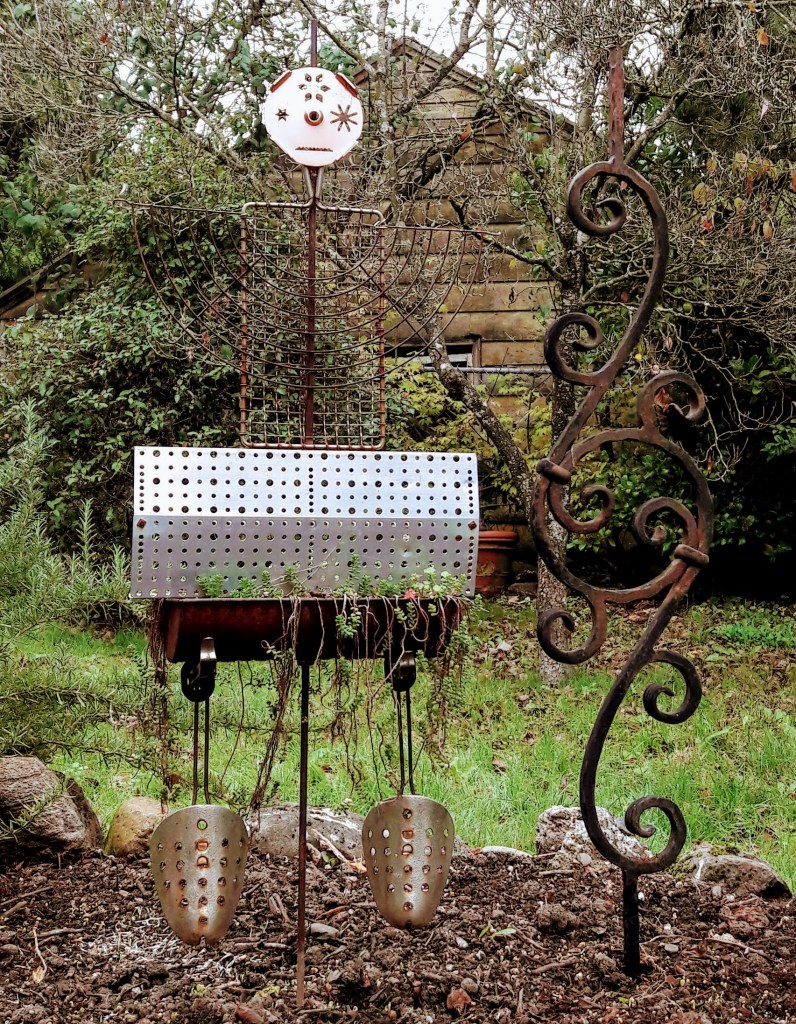
 The Coming of the Toads