Month: August 2025

  • Bugging Out

    In “Through the Looking Glass,” Alice converses with a gnat:

    “I know you are a friend,” the little voice went on; a dear friend and an old friend. And you won’t hurt me, though I am an insect.”
    “What kind of insect?” Alice inquired a little anxiously. What she really wanted to know was, whether it could sting or not, but she thought this wouldn’t be quite a civil question to ask.

    A gnat is a small fly, but this one seems huge, as gnats go:

    She found herself sitting quietly under a tree — while the Gnat (for that was the insect she had been talking to) was balancing itself on a twig just over her head, and fanning her with its wings. It certainly was a very large Gnat: “about the size of a chicken,” Alice thought. Still, she couldn’t feel nervous with it, after they had been talking together so long.

    Alice tells the gnat she’s not overjoyed when she sees an insect, because she’s afraid of them, particularly the larger ones.

    I’m not fearful of bugs, spiders and such. It’s the season here though when I’ll run into an orb-weaver spider web spread across the walkway between tree branches, face level, too, but invisible unless backlit with the rising sun, and I feel the sticky web as it envelops my face. I shake my shirt and comb through my hair with my fingers and watch a little reddish bug falling to the ground.

    Then came another of those melancholy little sighs, and this time the poor Gnat really seemed to have sighed itself away, for, when Alice looked up, there was nothing whatever to be seen on the twig, and, as she was getting quite chilly with sitting still so long, she got up and walked on.

    A problem with bugs is not that they are gigantic, but that they are small, and they are quick, and usually invisible to us. If you allow yourself, you might get all obsessive about bugs hiding behind baseboards, in the yard, or in your hair. But most bugs we never see, and they don’t bother us, in spite of the fact that about 10 quintillion bugs are living on Earth at any given moment.

    I enjoy reading blogs foreign to me, made possible by Google Translate. I recently read a blog post by a Japanese woman about centipedes. I was curious, having myself come across a couple of centipedes in our humble abode this summer. But this woman was nonrationally fearful and sprayed her unfortunate centipedes with excessive amounts of insecticide. She even posted a word of caution to potential readers at the top of her post, concerned some might be scared out of their wits reading about bugs, and she posted a deliciously horrible photo of a centipede slightly curled. Maybe something was lost in translation.

    Not too long ago I posted a piece on ants in our coffee maker. The infestation was so severe we had to abandon the electric coffee maker, and I went back to using a manual French press. I was reminded of E. O. Wilson, who changed his mind about how evolution works, as he found group altruism at work in ant colonies. He said that cooperative workers were more successful than competitive ones. Thus he favored altruism as a collective trait. His reversal of his prior position on the matter greatly upset his scientific community; many stuck in the web of their old position.

    As if real bugs aren’t enough, we find in Kafka’s story “The Metamorphosis” a metaphorical bug. A human awakens one perfectly normal morning to find himself turned into a true liking of his image, for he’s already living the life of a bug, a small bug-like creature working a menial job for the hive. Not all bugs are insects, but for our purposes here, I’m calling them all bugs. Bugs may seem a far fetched idea for an anthropomorphic story, but E. B. White wrote a very successful book with “Charlotte’s Web,” about a pig, a spider, and a little girl living on a farm. When walking outdoors this time of year, and watchful of walking into a web, always be sure to check for web messages.

    Science Lesson: I once knew a bug who for a short time kept a blog. Bugs don’t leave likes or comments; they leave bites and itches. Why are there so many insects living here on Mother Earth? Bugs have had a long time to adapt. Nature tends to overseed tiny organisms. Elsewhere no doubt there are planets full of bugs, oceans where none have yet decided to leave their salty paradise, tiny and invisible even to our new space telescopes. They don’t send messages and have no need for technology other than their own three part harmonies. Bugs are not picky eaters. Bugs are good pollinators and some, centipedes, for example, feed on other bugs perhaps dangerous to humans. Centipedes are not particularly harmful to humans. They are masters of the 100 yard dash.

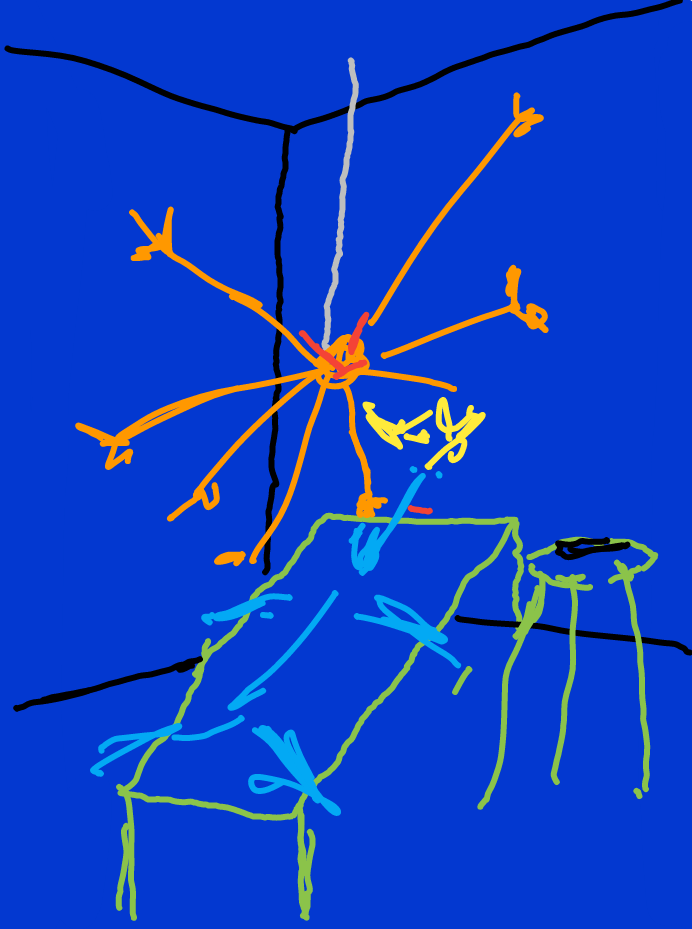
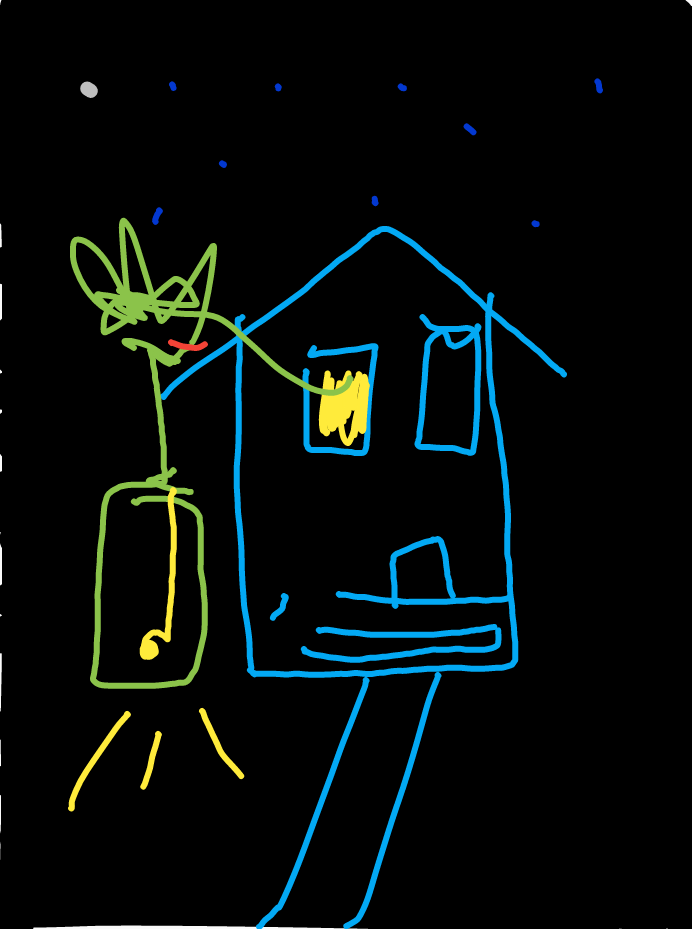
    Theory: I had a friend in high school I admired for he was fearless and loved snakes. Then I discovered he was afraid of spiders. Whenever a spider was at hand, he called me in to deal with it. Over time, I developed a theory: people afraid of spiders are not afraid of snakes, while people afraid of snakes are not afraid of spiders. Occasionally, as the topic may arise, I’ll ask the question in conversation – below I’ve created a “poll” to test my theory (and to test the format of a poll, which for this blogger is a first). Please feel free to answer the poll, or leave a comment below to the post, or simply enjoy the cartoons I’ve added at the end. Time now to bug out.

    Update: I’ve already been advised my poll block didn’t work, so I’ve removed it. Not sure what I did wrong. But please feel free to answer the question (Snakes or Spiders) in a comment to the post below. And enjoy the cartoons!
  • Manual for Intuition

    Buckminster Fuller was the most optimistic of scientists. He believed synergy solves the problem of entropy. Synergy, simply put, is working together to achieve more. Synergy is sometimes defined as a whole unpredictable from the sum of its parts (1+1 = 3). And Fuller thought there is enough to go around:

    “Once man comprehended that any tree would serve as a lever his intellectual advantages accelerated. Man freed of special-case superstition by intellect has had his survival potentials multiplied millions fold. By virtue of the leverage principles in gears, pulleys, transistors, and so forth, it is literally possible to do more with less in a multitude of physio-chemical ways. Possibly it was this intellectual augmentation of humanity’s survival and success through the metaphysical perception of generalized principles which may be objectively employed that Christ was trying to teach in the obscurely told story of the loaves and the fishes.1

    Dostoevsky said the same thing in his “Notes from Underground” (1864):

    “I admit that two times two makes four is an excellent thing, but if we are to give everything its due, two times two makes five is sometimes a very charming thing too.”

    Though Orwell in “1984” (1949) suggested we be careful with arithmetic and keep an eye on who’s controlling the data. William Blake also reasoned reason could be a tyranny (“The Book of Urizen,” 1794).

    For my own alone little part of the network, I’ve been wondering about the popularity of Doors, Wordless Wednesdays, and other prompts, and have opted to contribute a little poem on the subject of synergy and entropy:

    Loves and Fishes

    Planets like cauliflower
    heads can’t go it alone;
    entropy a flat bald universe,
    produces no combs.

    Love like the neutrino
    difficult to detect,
    plentiful and invisible,
    with no electrical net.

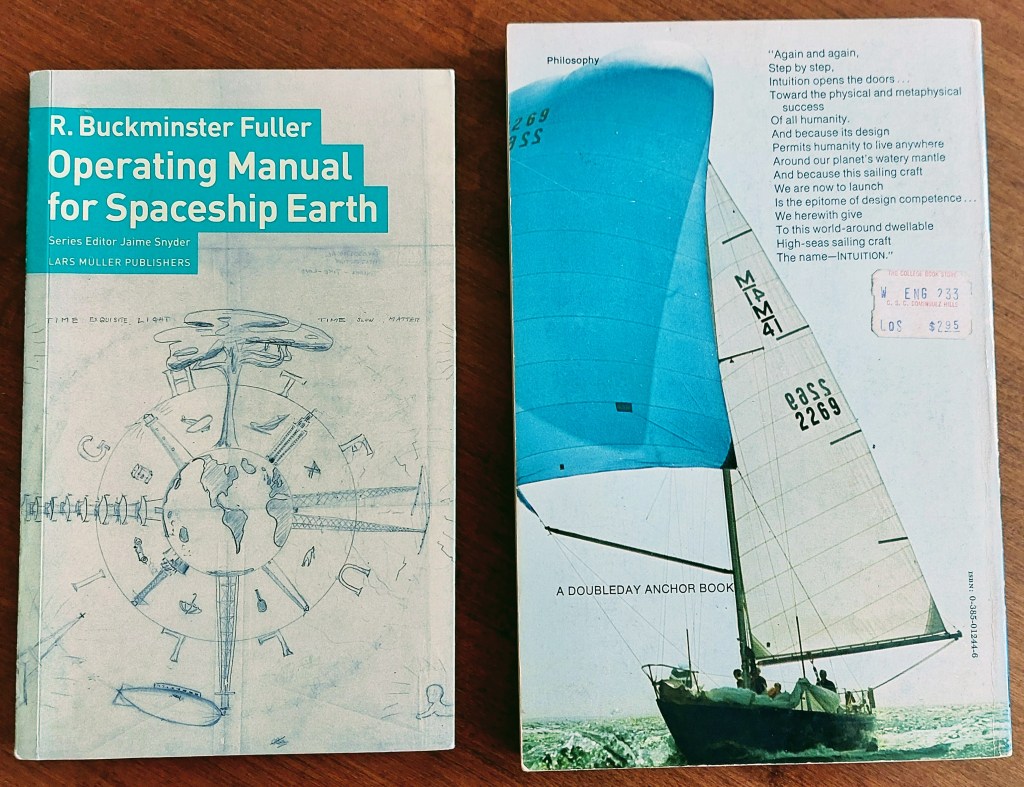
    1. “Operating Manual for Spaceship Earth,” R. Buckminster Fuller. First published 1969, new edition 2008/2011, edited by Jaime Snyder. Lars Muller Publishers. ↩︎
    Operating Manual for Spaceship Earth (1969) and Intuition (1972) – books by Buckminster Fuller
  • Songs with Moon in Title

    There’s a full moon this week, the daytime temps near 100, so we’ve been out walking late, out for some cooler air, the house so hot. A while back I made a playlist of songs with the word moon in the title:

    It’s Only a Paper Moon, Moonlight in Vermont, Moon River, Fly Me to the Moon, Moonglow, Paper Moon, Moondance, Moonlight in Vermont, Havanna Moon, Blue Moon of Kentucky, Blue Moon, Polka Dots and Moonbeams, The Moon Song, By the Light of the Silvery Moon, Moonlight Serendade, Moonlight Becomes You, No Moon at All, Oh You Crazy Moon, Shame on the Moon, Walking on the Moon, How High the Moon, When My Moon Turns to Gold Again, Au Clair de la lune, The Stars the Night the Moon, Shine on Harvest Moon, Harvest Moon, Moonlight (Claro de Luna).

    When we got back from our walk I played a few of the moon songs on the acoustic guitar. Still later, still unable to sleep, I got out of bed and from the open window took a photo of the moon. There’s nothing special about that photo, taken with my cell phone, of the moon over the fir trees over the old they say extinct volcano in the city.

    “Ah, they’ll never ever reach the moon, at least not the one we’re after,” sang Leonard Cohen, in “Sing Another Song, Boys” (1971), which doesn’t have the word moon in its title, so it didn’t make the playlist.

    Things appear different at night, are different. There are so many distractions during the day, chores, reels, but it’s different at night.

    “It’s easy to be hard-boiled about everything in the daytime, but at night it is another thing,” says Hemingway’s Jake Barnes, in “The Sun Also Rises,” from 1926.

    But a full moon can take the edge off of things at night, soften the heat. Draws you up. And besides, unlike Hemingway’s Jake, lately I’ve been looking forward to the night, a book waiting on the nightstand, moonlight streaming through the open window, lucky to have Susan by my side, not having Jake’s problem, my playlist of songs with moon in the title streaming in the kitchen earlier while I put together something cold for dinner, playing in my memory. Memories of the Moon. Moon Momentoes.

    And you don’t want to go getting too literal about it, so-called science of the thing, the light of the silvery moon, how it’s dead, and it doesn’t really have its own light, but is simply reflecting the sun. The mechanics of the thing. There you go again. See, you’ve ruined another night. The moon is a cartoon.


  • The Guitar: From Garage to Museum

    I first picked up a guitar when I was around 12 years old. A late blooming prodigy? No, simply one of hundreds of thousands of kids directly or indirectly influenced by the rise of popular music through the 1950s and 60s. To pick up the guitar was an essentially existential post WWII experience. Guitar know-how had traditionally been handed down informally and orally, self-taught or augmented by mixing one way with another, a folk working class pastime, played for small get together often sit-out entertainment, and that’s how I began, with a guitar gifted to me by one of the neighbor boys, who had gone off to a minor seminary where he’d joined a band with some dormmates. He came home for the summer with an electric guitar and passed on his old acoustic to me. He taught me to play “Washington Square” and “The Green Leaves of Summer.” A year later, after my girlfriend at the time landed on the guitar jumping off the top bunk, I purchased another acoustic used from an ad in the South Bay Daily Breeze.

    A guitar wasn’t always a cheap instrument. The industrial revolution and mass production changed the guitar from a hand crafted parlor instrument to, some might still argue, an adulterated version, easily purchased, or scrap apple made. If living in a rural area in the late 19th or early 20th century, you could buy a guitar through mail order, via a Sears or Montgomery Ward mail catalog. Today you can buy a playable guitar (one that holds its tuning and is easy on the fingers) for around $200.00. That’s roughly the same price (proportionately) a similar guitar would have cost in the 1960’s or the 1920’s or in 1900. A good example today is the Gretsch Jim Dandy model, available via mail order from Sweetwater for $189.00, more for an electric or solid top version, but that 189’ll work fine.

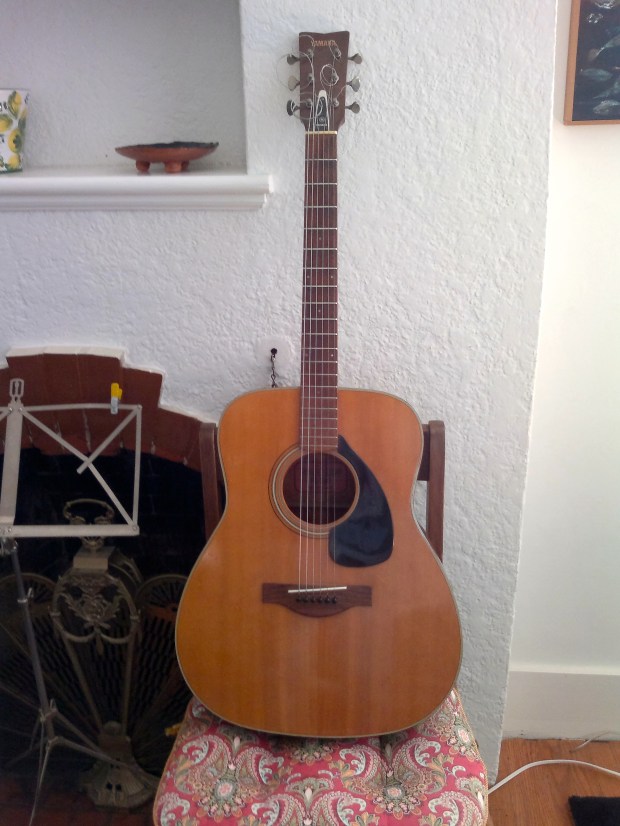
    The Gretsch Streamliner I played in the previous post I bought via mail order from Sweetwater during the pandemic for $500.00. The Fender amp was another $120.00. My Yamaha Red Label FG180 is the first new guitar I bought, for $100 in 1970, when I got home from active duty. That Yamaha was a Martin dreadnought knockoff. It looked, and arguably sounded like, a custom made and more expensive Martin guitar. My Yamaha still does, after years of sitting quietly set aside while I played other guitars, the Yamaha resting long after the abuse it suffered as a member of the 140th Engineers motor pool. But unlike the Martin I might have purchased in 1970, the Yamaha FG180’s value has not increased much. It’s probably still worth around $100, there’s a hairline crack in the headstock, otherwise, maybe $300; doesn’t matter, it’s not for sale, nor is it likely to go on loan to a museum.

    There is some evidence and certainly rumor of music groups playing Yamaha guitars while on tour in the 1970s – to protect and save their more expensive Martins and other collectibles from potential damage or theft given the rough travel they had to experience while on the road. In the 90’s, Martin created a practical line, called “Road Series,” guitars made for touring, made tough and cheaper than their custom lines. Can anybody hear the difference? Aficionados or snobbish critics may argue so, and maybe you can in a recording sound booth with machine listening aid, but in an auditorium or outdoor venue, at a stadium concert, through the hum and hee-haw of a crowd? Doubtful. Back in the 70’s, Yamaha had developed a more expensive line than the FG’s, which stood for Folk Guitar, called the L Series, where the L signalled Luxury.

    Is the brouhaha over vintage instruments warranted – where the provenance (who played it and where) is worth more than the materials, the labor, or the sound of the actual guitar? Some guitars are better than others, but how much better? Ornate decorative designs don’t make a guitar sound better. Some features will attract one player but not another. How a guitar fits, how it feels in the hands or on the lap, its weight, its fretboard width and length, are all arguably more important than the guitar’s aesthetic appeals.

    Then there are the Picasso guitars, 1912 to 1914, on display on-line at MoMA. Hard to think of anyone actually playing any of those designs, according to the MoMA introduction notes, “Cobbled together from cardboard, paper, string, and wire, materials that he cut, folded, threaded, and glued.”

    Back in May, Nick Paumgarten, in The New Yorker, wrote about a huge but unknown collection of vintage guitars that was about to become an unprecedented Metropolitan Museum of Art exhibit. The previously eschewed low class industrial made and played guitar was about to go live, or dead, depending on your point of view. As Dylan sang in “Visions of Johanna”: “Inside the museums, infinity goes up on trial.” In any case, there does seem to be some strange kind of commodification happening when the value of an object is magnified by who touches it, and some might feel a guitar being inside the museum ironically betrays the guitar’s meaning. Paumgarten quotes The Met curator:

    “Except the guitars exhibit a higher art and artistry themselves—first, as objects. There’s high-quality craftsmanship, but it’s different. The guitar is the object of the people. We always talk about it as ‘the people’s instrument.’ American music is bottom-up. So many art forms are top-down. It’s different from the rest of our instruments collection, which is often for the élite.”

    “You shouldn’t let other people get your kicks for you,” Bob Dylan sang in “Like a Rolling Stone.” Nor should you spend more than necessary for a guitar if you want to sound like Bob Dylan. Or the Stones, or Metallica. And if you want to sound like The Ramones, well, Johnny Ramone bought his Mosrite guitar used in 1974 for around $50. It might be worth a bit more than that today, about a million dollars more, but its value today has nothing to do with the sound it might make.

    Gear changes (swapping out pickups, for example) players or their techs make to factory models, and modifications made to recordings in the studio by sound techs, make a guitar difficult or impossible to reconstruct or imitate, no matter how much you pay for the guitar. Amplifiers, pedals, and other sound changing devices further complicate guitar provenance if what you’re looking for is an original sound not your own. `A player needs to make things their own. There’s little point in trying to sound exactly like your guitar hero, whether it’s Segovia or Django. Guitar value is enhanced by the provenance of its player and the venues and recordings where it was played, but players need to create their own space. A guitar needs to sit out, always accessible, or it won’t get played. The more you pay for a guitar, the less likely it will be allowed to sit out. And sitting out is what it’s all about, if you want to be essentially existentially experienced.

    Looking over readings related to The Met exhibit, I’m reminded of the scene in Antonioni’s film “Blow Up” (1966), where the main character, Thomas, played by David Hemmings, wrestles for the guitar neck thrown into the crowd by Yardbird player Jeff Beck, only to toss it onto the sidewalk upon running out of the venue. That’s the same Jeff Beck who donated equipment to The Met and provided a congratulatory statement used in their press release upon the opening of their guitar exhibit. And Antonioni doubled down on the irony at the end of what is now referred to as The Yardbird Scene when a curious passerby picks up the guitar neck, looks it over, and tosses it back down onto the sidewalk. It was just a prop; it’s not in The Met exhibit.

    ~~~

    Readings:

    “A Secret Trove of Guitars Heads to the Met,” Nick Paumgarten, The New Yorker, May 19, 2025.

    “The Met Receives Landmark Gift of More than 500 of the Finest Guitars from the Golden Age of American Guitar Making,” May 19, 2025, The Met Press Release, retrieved 10 Aug 2025.

    “Picasso: Guitars 1912 – 1914,” Feb 13 – Jun 6, 2011, MoMA.

    “Road Series,” Martin Guitar Website, retrieved 10 Aug 2025.

    “L Series,” Yamaha Guitar Website, retrieved 10 Aug 2025.

    “Former Rolling Stones Musician Mick Taylor Claims His Stolen Guitar is at The Met,” Smithsonian Magazine on-line, 4 Aug 2025.

    ~~~

    1970 Yamaha Red Label FG180
  • Country Afternoon in the City

    “Country Afternoon in the City,” a mellow piece played on the Gretsch G2420 Streamliner Hollowbody Electric Guitar with Chromatic II Tailpiece (year 2021: with Maple Top, Back, and Sides, Nato Neck, Laurel Fingerboard, and 2 Humbucking Pickups. “Village Amber” finish). Strings are D’Addario Chromes Flatwound Jazz Light. Fender Champion 20 amplifier set to: Voice = 02 Tweed Deluxe (Green) and FX = 10 Delay+Reverb (Orange). Gain, Volume, Treble, Bass, and FX Levels all set to 5. Filmed with cell phone, 3 mins 14 secs.