Month: February 2011

  • Spring Reading List: The Double Dream of Baseball

    We awoke this morning in Portland to a snow folks looked forward to like opening day. Alas, Portland will have no opening day this year, for Portland baseball was at the end of last season kicked out by soccer.

    In the notes to John Ashbery’s “The Double Dream of Spring” (1970), we find he’s taken the title from a painting by Giorgio de Chirico, but neither the painting nor the book appear to have anything directly to do with baseball, though Ashbery does mention a “ball of pine needles” in his poem “Summer.”

    This got me thinking of a Spring Training reading list, pastime reading while the players are warming up in spring training and we await opening day. The whiffle ball bats and balls are still in the bucket in the back yard. Never did bring them in for the season. The cold tempers the bats.

    Anyway, to the Spring Training reading list:

    At first base, Ernest Hemingway’s The Old Man and the Sea (1952). “I would like to take the great DiMaggio fishing…Maybe he was as poor as we are and would understand.”

    At second, Ring Lardner: Haircut and Other Stories. My Scribner paperback copy shows a UCLA Student Store date of Feb 1, 1964, ½ price off $1.25. It’s falling apart. I hadn’t opened it in awhile, and this morning found a Mariners ticket stub at page 141: Seattle Mariners vs Cleveland Indians, Thursday, August 1, 2002, 7:05 PM. Aisle 132, Row 26, Seat 10. “If all the baseball writers was where they belonged they’d have to build an annex to Matteawan” (“Horseshoes”).

    At third, Tim O’Brien’s The Things They Carried (1990). You can’t wait to get home, but then “The war was over and there was no place in particular to go.”

    At shortstop, Bernard Malumud’s The Natural (1952), mainly because of the error of Hollywood’s ending, and we want to get the story right.

    We’ll put the poets in the outfield: in center, The Complete Poems of Marianne Moore (1967), “Writing is exciting and baseball is like writing”; in left, 100 selected poems by e. e. cummings (1926), “in Just- / spring / when the world is mud- / luscious…”; and in right, The Happy Birthday of Death (1960), by Gregory Corso: “Herald the crack of bats! Hooray the sharp liner to left! Yea the double, the triple! Hosannah the home run!” (“Dream of a Baseball Star”).

    Behind the plate, Glory Days with the Dodgers, and Other Days with Others by Johnny Roseboro, with Bill Libby, (1978). Out of print and rare – I read a library copy. This book is a good story of what can happen and often does when winter follows the glory days of summer.

    And on the mound, Ball Four: My Life and Hard Times Throwing the Knuckleball in the Big Leagues (1970), by Jim Bouton. “To a pitcher a base hit is the perfect example of negative feedback” (Steve ‘Orbit’ Hovley to Bouton).

    It’s a good game, baseball, and if you can find a ballpark that’s fairly quiet between innings, and it’s a warm evening – and if you can or you cannot, you’ve a book to wile away the time, like some outfielder without much to do, because Koufax is on the mound, well, there’s no better way to spend a few hours when you’ve “no place in particular to go.”

  • Fear and Loathing in Lexical Vegas

    Over at Language Log we find a discussion on “words we hate.” I can’t tell if discuss is one or not. But some words strike some as literally offensive, or cause physical stress, a kind of lexical anxiety. This is not about disdain for the simple malapropism, or of academic scorn for the wrong word in the wrong place, but of word phobia, a word like some dreaded dog we walk around the block to avoid.

    What is the source of this strange malady, a fear of certain words? Perhaps some words do have facial expressions. Lenny Bruce tried to solve part of the problem, the dirty words versus dirty minds dichotomy. In the beginning was the word, and “the fall is into language” (O. Brown, Love’s Body, 257). Lenny may have gone down with his solution in part because we don’t want a solution; we need words we abhor.

    So I googled (a word I don’t like, but don’t hate, but like certain tools we’d rather not have to pick up, the plunger, for example, the plumber’s helper, knowing we’re headed for another good word, “by means of suction,” add rubber cup and we’re having some fun here, sometimes we just have to grab it and get on with things – though to google hasn’t always been this way: from the OED: 1907 Badminton Mag. Sept. 289 The googlies that do not google) “words we love,” and guess what? The words we love are the same words we hate.

    Perhaps James Joyce best explains words that cause fright: “Every night as I gazed up at the window I said softly to myself the word paralysis. It had always sounded strangely in my ears, like the word gnomon in the Euclid and the word simony in the Catechism. But now it sounded to me like the name of some maleficent and sinful being. It filled me with fear, and yet I longed to be nearer to it and to look upon its deadly work” (“The Sisters,” in Dubliners, 1916).

  • Wall Street Journal Springs Honorifics from Sports – Cut in Pay?

    Messres and Mesdames: Fans at Chicago Day at White Sox Park between ca. 1908 and ca. 1925.

    Mr. Jason Gay, sportswriter for The Wall Street Journal, has just announced that The Journal this week will begin dropping honorifics in its sports section pages.

    This means that instead of “Mr. Piniella, after kicking his hat and dirt in the direction of the first base umpire, then pulled the first base bag from its mooring and tossed it down the right field line,” we’ll get “Piniella,” without the “Mr.,” and then the rest of it.

    The timing of the WSJ decision seems right as we enter baseball spring training season, and we wonder if the WSJ editorial style change, yet another concussion to the prestige of sports, will change baseball’s position as the country’s number one sport honorific – its status as the national pastime.

    We briefly entertained the idea of honorifics here at the Toads blog (Mr. Dylan; Mr. Shakespeare), to pick up the slack, but Mister isn’t much of an honorific after all if you consider that it originally was used as “A title of courtesy prefixed to the surname or first name of a man without a higher, honorific, or professional title” (OED). In other words, to designate the bleacher bums. “Hey, Mister, mind gettin’ your dog out of my beer?”

    The word Mister used to refer to one’s occupation: Shortstop Mister. But that shouldn’t mean that we need to call Derek Mr. Jeter. In any case, only in some special cases is the use of Mr., or Mister, or Sir, an honorific, for Mr. adds distance and denies familiarity. More from the OED:

    1722 H. Carey Hanging & Marriage 8 Squeak: Pray ye, Mr. Stubble, let me alone. Richard: Ay its Mister, is it?

    1888 J. W. Burgon Lives Twelve Good Men I. 440 ‘Well, Mr. Burgon?’‥‘Mister at the end of 20 years!‥I wish you wouldn’t call me Mister’.

    1993 S. McAughtry Touch & Go xxii. 174 Well, Mister Bighead, we’ve both been there, Bucksie and me both, so up yours.

    We wondered too if WSJ writers get paid by the word, and, if so, if dropping honorifics means a cut in pay, yet another blow to this country’s number two waning national pastime, newspapers.

    Photo “Messres and Mesdames,” at Library of Congress.

  • “Examined Life”: Socrates on Ice; or, Engaged Life: Riding the Clutch with Today’s Philosophers

    In Astra Taylor’s film “Examined Life” (2008, DVD 2011), the camera captures contemporary thinkers walking through everyday environments that reflect and frame their dialogue. But there’s not much dialogue, more monologue, which is what I assume is Martha Nussbaum’s complaint in her upset and defecting review in The Point Magazine, “Inheriting Socrates” (Winter, 2010).

    I can only assume, since part of the point of The Point Magazine seems to be open conflict with open access. In any case, Nussbaum’s point in what we do have is clear: “…I found Examined Life upsetting…a betrayal of the tradition of philosophizing that began, in Europe, with the life of Socrates….” The film is upsetting to Nussbaum because the cast features “figures in cultural studies or religious studies or some other related discipline (I’d call Cornel West a political theorist), but what they do is not exactly philosophy as I understand it.”

    Philosophy as Nussbaum understands it is no doubt Socratic dialogue that admits “no special claim, no authority.” Socrates “doesn’t like authority,” and certainly “doesn’t like long speeches.” But the segments in “Examined Life” run only ten minutes; the real problem for Nussbaum, and, perhaps, for the film, is the lack of dialogue and what Nussbaum considers the lack of “rigorous argument, or with the respectful treatment of opposing positions.”

    We may find, however, the opposing positions in the filmed environments, for philosophers live in the world, the same world the rest of us live in, and why we should saddle the film with any kind of philosophical expectation is unclear. Why would we criticize a film for not being what it was not intended to be? Wouldn’t we all agree that “Jaws” is a terrible romantic comedy? “One might quarrel, first, with the choice of participants,” Nussbaum argues. “Peter Singer, Anthony Appiah and I are all solidly within philosophy, as that discipline is usually understood.” Understood by whom?

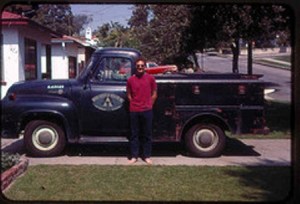
    One day, my Dad came home with a used 1949 Ford pickup truck, a six cylinder, three speed on the column, no air, no heat, no seatbelts, no radio, no-nonsense truck. He handed me the keys, and I backed the truck out of the driveway, my first stick shift experience. Hardly anyone drives sticks anymore – most of our transmissions are automatics; so too are our philosophies, automatic shift transmissions that allow for smooth acceleration through the busy vicissitudes of our popular culture. Automatic too, it seems, is Nussbaum’s insistence on the so-called rigor of an automatic philosophical tradition transmission. In other words, I think Socrates would have enjoyed Astra Taylor’s film “Examined Life.”

    Nussbaum also gets ten minutes in the film, so it’s a bit surprising she winds up finding the film “upsetting.” Indeed, her segment is one of the most speech-like presentations, as she appears raw-nosed and cold walking along Chicago’s Lake Shore Drive. Still, her point in her ten minute segment is clear: she wants all of us to be able to live rich and capable lives. But that seems consistent with what the other philosophers in the film want for us also.

    According to Cornel West, the lover of wisdom must have courage: “Courage is the enabling virtue to think, love, hope.” West, if not a philosopher in Nussbaum’s understanding of the tradition, is certainly a character, and characters make better film subjects than philosophers. West is the star of the film. His ten minutes are spread across three segments, and his reappearances create a happy motif, for his love of life is apparent and contagious – and his syntax moves in curious, unexpected directions.

    Meanwhile, Slavoj Žižek strolls through a London dump, where he advises don’t idealize, accept, learn to love the world in all its imperfections. “We should become more artificial,” Zizek says, and give up the romantic notion of becoming one with nature. He’s a realist, as is Cornel West, who seems to agree with Zizek when he says give up on the idea of having the whole, a romantic notion, he says, that inevitably ends in disappointment. As it turns out, Nussbaum comes across as the romanticist philosopher. She can’t love Zizek’s garbage. And it’s ironic, in the end, that the most romantic philosopher seems least comfortable out in the cold and trash of everyday existence. Still, she has a point: we shouldn’t go to philosophers for how to live our lives, and most of the philosophers in the film seem bent on just that, telling us what we should do, what we need to do, how we should live – well, that’s a bit of an exaggeration, but it allows for a closer examination of Nussbaum’s point, which is that the true philosopher (as I understand how she understands it, and I could certainly be wrong here) doesn’t tell others how to live, but tries to help them become capable of making and living their own “human dignity.” But exactly to that end, “Examined Life,” if not a great film, if an imperfect film, is a necessary film.

    And what about riding the clutch? Saves on the brakes, my Dad told me. Your brakes will always last longer with a stick shift, he said.

    Note: Scott McLemee reviewed the film for Inside Higher Ed before Nussbaum’s defection was published, and he used the word “transformative” to describe the segment with Astra’s sister, Sunuara. I agree; Sunara’s segment transcends all the other arguments.

    Update, Nov. 12, 2011: The Point Magazine, since I wrote the above post, has improved its website. The full text of an article from Issue 2 (the same issue as the Nussbaum article) discussing the film “Examined Life,” by Jonny Thakkar, “Examined Life: What is Popular Philosophy” views the film with Nussbaum’s concerns but leaves the theatre with different conclusions. Thakkar’s discussion of philosophy in the streets versus in the academy is definitely on point: for what is philosophy, who does philosophy best, where should philosophy be done, and what happens when philosophy gets into the wrong hands? Thakkar’s quote of Bernard Williams is more than mere touching: “…his [Williams’s] last essays reveal a man disillusioned with his academic career, which had ‘consisted largely of reminding moral philosophers of truths about human life which are very well known to virtually all adult human beings except moral philosophers.’ It was, he owned, ‘less than clear that this was the most useful way in which to spend one’s life, as a kind of flying mission to a small group isolated from humanity in the intellectual Himalaya.’”

  • “What’s Happening?”; or, the Faux Social Finish of Verb People

    To twitter is indeed to sound off like a bird. “No full sentence really completes a thought,” said Hugh Kenner, in The Pound Era (1971), throwing a rock into several generations of roosting English grammar teachers: “And though we may string never so many clauses into a single compound sentence, motion leaks everywhere, like electricity from an exposed wire. All processes in nature are inter-related” (157). This from the “Knot and Vortex” chapter, where Kenner introduces the “self-interfering pattern,” using Buckminster Fuller’s sliding knot illustration: “The knot is a patterned integrity. The rope renders it visible” (145).

    Social networking as experienced via Twitter or Facebook allows for no stillness. One is always in flight. One is not a noun; as Buckminster Fuller said, “I seem to be a verb.” Nouns represent dead flight, the verb at rest in its grammatical nest: “The eye sees noun and verb as one, things in motion, motion in things,” explains Kenner (157).

    Verbs have no permanency. What’s happening must constantly change. Twitter is a rush of tweets each jolting the flock to flight, while posts on Facebook fall down the page like crumbs from a plate at a reception. Nothing is saved because in the social network world there are no nouns. The text is a mirage, the words constantly falling, falling down, down feathers falling through the electric light.

    Ezra Pound’s short poem “In a Station of the Metro” is a perfect tweet: “The apparition of these faces in the crowd; / Petals on a wet, black bough.” The short poem with title fills the tweet space with 40 characters to spare, fixes the stare of twitterers but momentarily, as the faces can only pause in apparition not even of ink, but of light, and the social connection is a faux finish. People are verbs, constantly changing tense.